财政稳定

Search documents
南非财政迎来转折点:17年来首次实现债务稳定
Zhong Guo Xin Wen Wang· 2026-02-26 02:20
Core Viewpoint - South Africa's finance minister announced that for the first time in 17 years, the country's debt has stabilized and is expected to continue decreasing, creating opportunities for tax cuts and infrastructure investment [1] Group 1: Fiscal Stability and Economic Growth - The government debt-to-GDP ratio is projected to peak at 78.9% in the 2025/26 fiscal year [1] - The minister expects the economic growth rate to rise to 1.6% in 2026, up from 1.4% in 2025, with a mid-term average growth rate forecast of 1.8%, reaching 2% by 2028 [1] - The fiscal strategy focuses on stabilizing debt, investing in infrastructure, and improving expenditure, resulting in a significant reduction in the budget deficit and declining debt servicing costs [1] Group 2: Revenue and Taxation - South Africa benefits from rising global commodity prices, leading to a substantial increase in mining profits, which boosts corporate tax and mineral royalty revenues [2] - Fiscal outlook improvements, along with tax revenue exceeding forecasts by 28.8 billion rand (approximately 1.82 billion USD), allowed the government to cancel a planned tax increase of 20 billion rand (approximately 1.26 billion USD) and raise the annual tax-free investment limit by 10,000 rand [2] - The budget contrasts sharply with the previous year, which saw three revisions due to tax increase disagreements [2] Group 3: Market Reactions - Financial markets reacted positively, with the rand appreciating by 0.8% against the dollar, government bond yields dropping below 8%, and the benchmark stock index rising by 1.5% to a record high [2] - Analysts described the budget as robust, achieving fiscal consolidation goals [2] Group 4: Criticism - The South African Trade Union Congress criticized the budget for focusing on balancing accounts rather than actively stimulating economic growth or addressing unemployment issues, arguing it fails to respond to the fundamental crises faced by the working class [2]
波黑联邦副总理克拉列维奇与国际货币基金组织代表团会谈,双方聚焦2026年联邦预算与财政稳定
Shang Wu Bu Wang Zhan· 2025-12-13 13:55
Group 1 - The core viewpoint of the article highlights the discussions between the Deputy Prime Minister and Minister of Finance of Bosnia and the International Monetary Fund (IMF) regarding the economic outlook and fiscal policies of the Federation of Bosnia [1] - The IMF emphasized the importance of maintaining long-term fiscal stability in the Federation of Bosnia during the meeting [1] - The meeting welcomed the efforts of the Federation's Ministry of Finance to advance the new Transaction Tax Law and discussed the technical assistance that the IMF would provide to the ministry [1]
柬埔寨拟发行5.2亿美元国债筹措投资性支出
Shang Wu Bu Wang Zhan· 2025-11-14 15:05
Core Points - The Cambodian government announced a significant fiscal plan to issue government bonds totaling 21 trillion riels (approximately $5.2 billion) by 2026 to fund investment expenditures and maintain budget stability [1] - The Deputy Prime Minister and Minister of Finance, Aun Pornmoniroth, emphasized the need for domestic and international borrowing plans to sustain economic growth amid changing global conditions [1] - The government also plans to borrow 2.25 billion Special Drawing Rights (approximately $3.1 billion) from international financial institutions and development partners, an increase of 230 million Special Drawing Rights compared to 2025 [1] - The increase in borrowing is driven by the rising demand for public investment to stimulate economic growth and the necessity for favorable loan terms [1] - Despite the new borrowing plans, the current and medium-term public debt situation is expected to remain "sustainable" and "low-risk" [1] - The government is committed to enhancing project management and implementation efficiency while maintaining fiscal stability [1][2] Summary by Categories Fiscal Strategy - The Cambodian government aims to issue 21 trillion riels (approximately $5.2 billion) in government bonds to finance investment expenditures and ensure budget balance [1] - The fiscal management law draft reflects the government's commitment to prudent debt management and strategic investments in productive sectors to support sustainable growth [2] Borrowing Plans - The government plans to borrow 2.25 billion Special Drawing Rights (approximately $3.1 billion) from international financial institutions, marking an increase from the previous year [1] - The increase in borrowing is based on the need for public investment to stimulate economic growth and the importance of obtaining favorable loan conditions [1] Debt Management - The Cambodian government assures that the public debt situation will remain sustainable and low-risk despite the new borrowing initiatives [1] - There is a commitment to improve project management and maintain fiscal stability [1][2]
英国政治风暴+预算案临近:英国资产在恐慌抛售与追捧间摇摆 通胀挂钩债券被疯抢
智通财经网· 2025-11-12 13:43
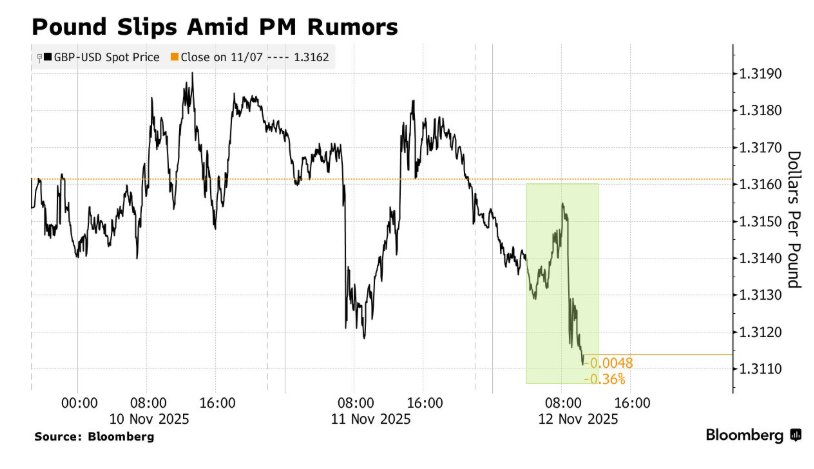
Group 1 - The latest political turmoil in the UK is negatively impacting asset performance, with increasing market volatility as a controversial budget proposal approaches [1][2] - Speculation regarding Health Secretary Wes Streeting challenging Prime Minister Keir Starmer has raised concerns among Wall Street strategists, indicating that such rumors could harm UK assets in the long term [2][4] - The British pound has depreciated by 0.4%, trading at 1.3105 USD, while the yield on 10-year UK government bonds has increased by 3 basis points [2][4] Group 2 - The upcoming budget announcement on November 26 is expected to include tax rate increases to balance the budget, which could further dampen market sentiment [2][4] - Political uncertainty is seen as detrimental to both the pound and UK government bonds, with past political missteps leading to significant market reactions [4] - The trade-weighted strength of the pound has fallen to its lowest level since January, reflecting ongoing concerns about fiscal deficits [4] Group 3 - A record demand for inflation-linked bonds has been observed ahead of the budget, alleviating some concerns about debt sustainability [6][7] - The recent issuance of inflation-linked bonds totaled £4.25 billion, with investors submitting over £69 billion (approximately $91 billion) in bids, indicating strong market interest [6][7] - The UK government bond market has shown strong performance in October, attracting major investment firms, which may provide some relief to the Chancellor [6][7]

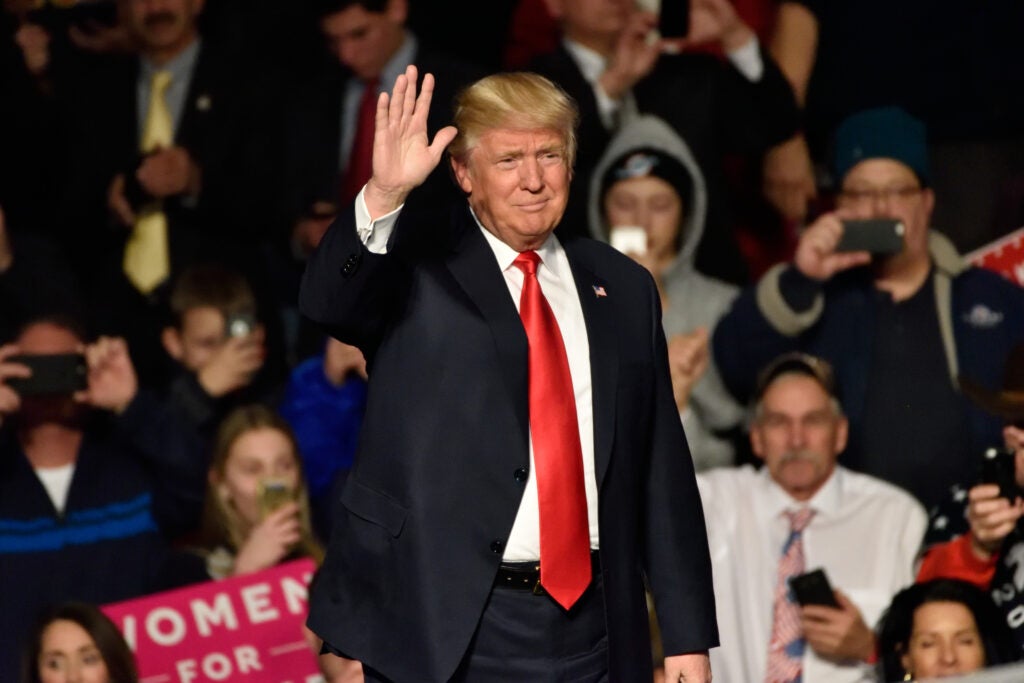
Trump’s Controversial Tariffs Generate Nearly $350 Billion, Becoming ‘Very Significant’ US Revenue Source, Says Economist - Invesco QQQ Trust, Series 1 (NASDAQ:QQQ), SPDR S&P 500 (ARCA:SPY)
Benzinga· 2025-09-23 08:39
Core Insights - The tariffs imposed by President Trump have generated approximately $350 billion in annualized revenue for the U.S. government, becoming a significant source of federal revenue [1][2][3] Revenue Generation - Tariffs now account for about 18% of annual household income tax payments, indicating their substantial impact on the U.S. economy and trade policy [2] - The current annualized tariff collection is among the largest in recent history, highlighting the importance of this revenue stream [3] Economic Implications - The tariffs are seen as a potential tool to help manage the national debt, which stands at $37 trillion, as noted by the Committee for a Responsible Federal Budget [4] - The Congressional Budget Office estimates that tariffs could reduce the deficit by up to $4 trillion over the next decade, although economists believe this will primarily slow debt growth rather than eliminate it [5] Market Stability - Initially viewed as a concern, tariffs have become crucial for U.S. financial stability, helping to shield the country from global bond market turmoil [6] - The tariffs have created a policy dilemma for the Federal Reserve, as they may contribute to economic slowdown and rising unemployment [7] International Impact - While tariffs have benefited U.S. revenue, countries like China are withdrawing from the U.S. market, as evidenced by a net purchase of only $2 billion in U.S. securities by foreign investors in July 2025 [8] Business Concerns - Over 100 leading business figures, including Fortune 500 CEOs, have expressed concerns regarding the economic effects of Trump's policies, acknowledging both short-term benefits and long-term risks [9] Market Performance - Amid the tariffs, the SPDR S&P 500 ETF Trust and Invesco QQQ Trust have seen year-to-date increases of 14.06% and 18.03%, respectively [10]