货币信用体系重估

Search documents
黄金2025:70%狂飙与金融“新锚”的诞生
Sou Hu Cai Jing· 2026-01-02 15:08
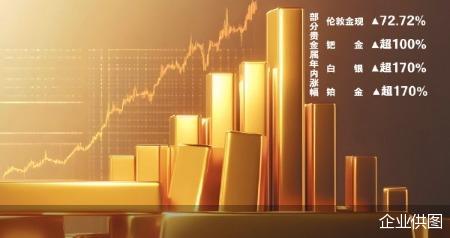
Market Overview - The gold market experienced a significant transformation in 2025, with prices soaring from around $2,600 to nearly $4,600 per ounce, marking the largest increase since the 1979 oil crisis, with a rise exceeding 70% [1][3] - London spot gold recorded an annual increase of over 60%, achieving its strongest performance in 46 years [1] Price Dynamics - The year began with gold prices fluctuating between $2,600 and $3,000 per ounce, but by March, it broke the $3,000 mark [3] - In September, driven by factors such as the Federal Reserve's interest rate cuts, gold saw its highest monthly increase of 11.92% [3] - By October, gold prices surpassed $4,000, and by December 26, it reached a historic high of $4,549.96 per ounce [3] Precious Metals Sector - The entire precious metals sector saw a correlated rise, with silver prices increasing nearly 150% and platinum reaching a historic high above $2,300 per ounce [4] - The traditional pricing logic of gold being strong when the dollar is weak has shifted, with a new multi-faceted market structure emerging [4] Central Bank Behavior - The decline in the dollar's share of global foreign exchange reserves from over 70% to around 58% has prompted central banks to diversify their reserves, significantly increasing gold holdings [4] - As of November, China's central bank held 7.412 million ounces of gold, marking a continuous increase for 13 months [4] Industry Impact - The surge in gold prices has led to significant stock price increases for gold-related companies, with some stocks like Zhaojin Gold rising by 228.97% [6] - Major mining companies are accelerating global acquisitions, with Zijin Mining planning to invest $1.2 billion in a large gold mine in Kazakhstan [6] Investment Trends - Investment strategies are shifting from traditional gold bars to gold ETFs and online investment products, with global physical gold ETF inflows reaching $5.2 billion in November [6] - The Chinese market led the inflows, contributing $2.2 billion [6] Consumer Behavior - High gold prices have reshaped consumer markets, with a notable resurgence in "gold crafting" businesses [7] - Retail trends indicate a preference for smaller, high-quality gold items, with companies like Laopuhuangjin seeing stock price increases of 156.22% [9] Market Speculation - Discussions around a potential "gold bubble" have emerged, with analysts noting that gold prices have exceeded long-term forecasts [10] - The market dynamics have shifted beyond traditional interest rate frameworks, focusing on a deeper reassessment of the monetary credit system [10]



贵金属“牛市”能否跨年
Bei Jing Shang Bao· 2025-12-28 16:09
Core Viewpoint - The global precious metals market experienced an unprecedented bull market in 2025, with gold prices rising over 70% and silver soaring more than 170%, driven by central bank purchases, geopolitical risks, and supply-demand imbalances [1][4][9]. Group 1: Market Performance - In early 2025, gold fluctuated between $2,600 and $3,000 per ounce, while silver ranged from $28 to $32 per ounce [3]. - By mid-March, gold broke the $3,000 per ounce mark, achieving a 19.01% increase in Q1 [3]. - In Q2, platinum surged by 36.58%, while gold and silver had modest gains [3]. - By September, gold reached $3,857 per ounce, marking an 11.92% increase for the month, the highest monthly gain of the year [3]. - In Q4, silver rose by 70.04%, with platinum and palladium increasing over 50%, and gold up by 17.49% [3][4]. Group 2: Market Drivers - The primary driver of the bull market was the expectation of loose monetary policy from the Federal Reserve, alongside economic pressures and geopolitical uncertainties [4][8]. - Central banks globally purchased a net total of 634 tons of gold in the first three quarters of the year, with a record monthly increase of 53 tons in October [7]. - The shift in market dynamics has moved from traditional drivers like dollar weakness to a more complex interplay of factors including central bank behavior and supply-demand structures [7][8]. Group 3: Future Outlook - For 2026, the market is expected to see structural differentiation rather than a uniform rise, with gold supported by ongoing central bank purchases and potential interest rate cuts [9][10]. - Silver and platinum may exhibit stronger price elasticity due to persistent supply shortages, despite some anticipated new production [9][10]. - The overall precious metals market is likely to enter a phase of high volatility and differentiation among various metals, with gold expected to remain stable but with limited upside compared to 2025 [10].