货币发行

Search documents
——2026年3月流动性月报:3月政府存款与现金回流能带来多大贡献?-20260310
Huafu Securities· 2026-03-10 11:48
Group 1 - The report indicates that the government deposits increased significantly in January, reaching a historical high of 6.5 trillion, which was higher than expected, contributing to a decrease in the excess reserve ratio to 1.1% [3][16][24] - The report forecasts that the broad fiscal deficit in February may reach 1.28 trillion, which is among the highest levels for the same period in previous years, with government deposits expected to decline by approximately 390 billion [4][24][33] - The report highlights that the central bank's monetary policy remains supportive, with net liquidity injections through various tools, including MLF and reverse repos, totaling 9 trillion in February, which has helped maintain a stable funding environment [5][43][44] Group 2 - The report anticipates that in March, the broad fiscal deficit could be at its highest level for the year, with government deposits expected to decrease by about 830 billion, which may provide liquidity support [7][57][72] - It is projected that the issuance of currency in March will decrease by approximately 1.16 trillion, primarily due to the timing of the Spring Festival, which will impact liquidity positively [7][57][72] - The report notes that the demand for credit is expected to remain weak, with March's credit issuance estimated at around 3.20 trillion, reflecting a year-on-year decrease [7][73][75]
这国央行宣布:发行新货币!
Sou Hu Cai Jing· 2025-12-29 11:10
Core Viewpoint - The Central Bank of Syria announced the issuance of a new Syrian pound, with a conversion rate of 1 new Syrian pound to 100 old Syrian pounds, starting a currency replacement process that will begin on January 1, 2026, lasting for 90 days [1][3]. Group 1 - The new and old currencies will coexist during the replacement period and will have equal legal tender status [1]. - The currency replacement process may be extended if necessary, with decisions announced 30 days prior to the end of each extension [1]. - All bank account balances and electronic accounts in Syria will be settled in the new Syrian pound starting from January 1, 2026 [3]. Group 2 - The design and issuance of the new currency incorporated international security standards and anti-counterfeiting measures, while also highlighting Syria's cultural, historical, and geographical features [3]. - The exchange process between the new and old Syrian pounds will be completely free, prohibiting any commissions, fees, or taxes [3].

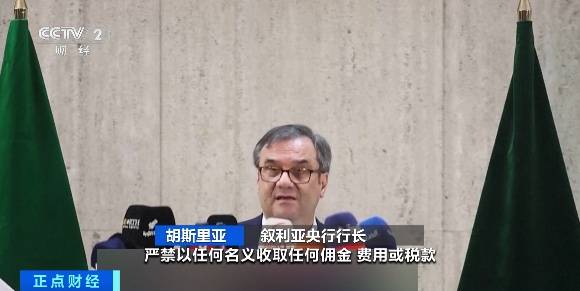
叙利亚央行发行新货币 与现行货币兑换比为1比100
Yang Shi Xin Wen· 2025-12-28 20:40
Core Viewpoint - The Central Bank of Syria announced the issuance of a new Syrian pound, with a conversion rate of 100 old Syrian pounds to 1 new Syrian pound, effective from January 1, 2026, for a period of 90 days, which may be extended [1] Group 1 - The new and old currencies will coexist during the currency replacement period and will have equal legal tender status [1] - The currency replacement process will begin on January 1, 2026, and all bank account balances and electronic accounts will be settled in new Syrian pounds from that date [1] - The Central Bank of Syria emphasized that the design and issuance of the new currency adhered to international security standards and anti-counterfeiting measures, while also reflecting Syria's cultural, historical, and geographical features [1]
各国纸币不同面额的头像都不一致,人民币当初是怎样规定的?
Sou Hu Cai Jing· 2025-05-03 08:52
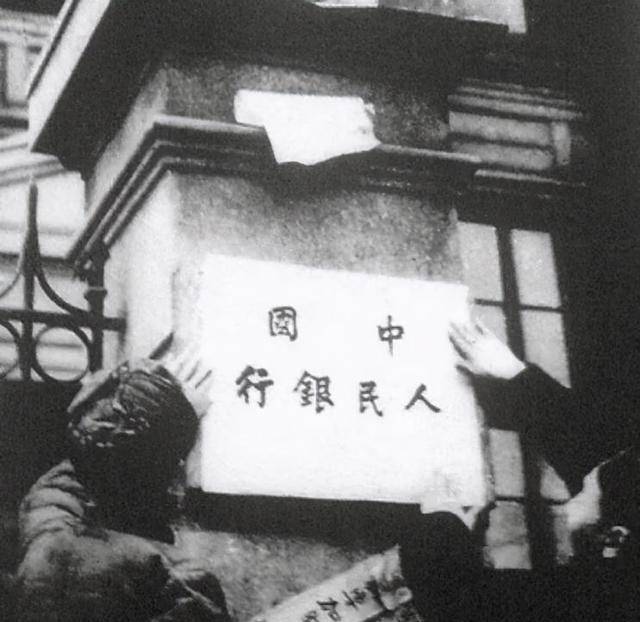
Core Viewpoint - The establishment of a unified currency in China was driven by the need for economic stability and development during a time of social upheaval and military conflict, leading to the issuance of the Renminbi (RMB) in 1948 [1][3][6]. Group 1: Historical Context - In 1947, the Chinese Communist Party recognized the necessity for a unified currency due to the diverse local currencies hindering economic growth [1]. - The People's Bank of China was established in April 1948 to oversee the design and issuance of the new currency [3]. Group 2: Design and Approval Process - The initial design of the RMB included the image of Chairman Mao, but he rejected this idea, emphasizing that the currency should represent the state and not individual leaders [4][8]. - The final design of the first RMB featured images reflecting the people's production and lifestyle rather than individual portraits, which was approved and issued on December 1, 1948 [4][6]. Group 3: Subsequent Developments - The People's Bank of China issued a total of 62 versions and 12 denominations of the RMB from 1948 to 1953, which were well-received by the public despite the absence of Mao's image [6]. - The second RMB series was designed in 1955, again without Mao's portrait, adhering to his wishes against personal cultism [11]. - The fourth RMB series, introduced in 1983, initially featured a maximum denomination of ten yuan, but later expanded to include fifty and one hundred yuan notes due to economic growth [14][16]. Group 4: Inclusion of Mao's Image - In 1988, after Mao's passing, the decision was made to include his image on the 100 yuan note, marking a significant change in currency design policy [18]. - The fifth RMB series, launched in 1999, featured Mao's portrait on all denominations, a rare occurrence in global currency design, reflecting his enduring legacy and popularity among the Chinese people [20].