
外汇占款

Search documents
——2026年3月流动性月报:3月政府存款与现金回流能带来多大贡献?-20260310
Huafu Securities· 2026-03-10 11:48
Group 1 - The report indicates that the government deposits increased significantly in January, reaching a historical high of 6.5 trillion, which was higher than expected, contributing to a decrease in the excess reserve ratio to 1.1% [3][16][24] - The report forecasts that the broad fiscal deficit in February may reach 1.28 trillion, which is among the highest levels for the same period in previous years, with government deposits expected to decline by approximately 390 billion [4][24][33] - The report highlights that the central bank's monetary policy remains supportive, with net liquidity injections through various tools, including MLF and reverse repos, totaling 9 trillion in February, which has helped maintain a stable funding environment [5][43][44] Group 2 - The report anticipates that in March, the broad fiscal deficit could be at its highest level for the year, with government deposits expected to decrease by about 830 billion, which may provide liquidity support [7][57][72] - It is projected that the issuance of currency in March will decrease by approximately 1.16 trillion, primarily due to the timing of the Spring Festival, which will impact liquidity positively [7][57][72] - The report notes that the demand for credit is expected to remain weak, with March's credit issuance estimated at around 3.20 trillion, reflecting a year-on-year decrease [7][73][75]
12月金融数据点评:外汇占款企稳支持货币扩张
Western Securities· 2026-01-16 04:46
Loan and Credit Trends - In December, new loans amounted to 910 billion yuan, down from 990 billion yuan in the same month last year[1] - Household loans decreased by 91.6 billion yuan, significantly lower than the 350 billion yuan increase in the same month last year[1] - Corporate loans increased by 1.07 trillion yuan, surpassing the 490 billion yuan increase from the previous year[1] Social Financing and Government Support - New social financing in December was approximately 2.2 trillion yuan, lower than the 2.85 trillion yuan in the same month last year[2] - The stock of social financing grew by 8.3% year-on-year, a slight decrease from 8.5% in November[2] - Net financing from government bonds was 683.3 billion yuan, significantly lower than the 1.76 trillion yuan increase in the same month last year[2] Monetary Policy and Currency Trends - M2 money supply grew by 8.5% year-on-year in December, an increase from 8% in the previous month[2] - M1 money supply growth slowed to 3.8%, down from 4.9% in the previous month[2] - Foreign exchange reserves decreased by 2.7 billion yuan, but the decline was notably smaller than in previous months[2] Risk Factors - Potential risks include geopolitical tensions, a declining real estate market, and insufficient domestic policy support[4]
固收|从“外汇占款到“资金中枢”央行“两难的变与不变
2025-11-16 15:36
Summary of Key Points from Conference Call Industry Overview - The discussion primarily revolves around the Chinese economy, focusing on the impact of currency exchange rates, particularly the renminbi (RMB), on exports and monetary policy [1][2][3]. Core Insights and Arguments - **Export Surplus Accumulation**: China's export surplus has accelerated, attributed to price differences between China and the US, as well as other countries. This trend reflects a long-term shift in competitiveness due to China's low inflation amidst global inflation [1][2]. - **Increase in Corporate Foreign Exchange Settlement**: There has been a significant increase in corporate foreign exchange settlement surplus, indicating a shift from hoarding US dollars to converting them into RMB assets. This trend may lead to upward pressure on the RMB and requires the central bank to consider increasing monetary supply to meet market demand [1][3]. - **RMB Appreciation and Economic Transition**: RMB appreciation plays a crucial role in China's economic transition. Historical examples from Japan and South Korea suggest that currency appreciation can indicate successful economic transformation. High-tech industries may benefit, while labor-intensive sectors could face challenges [1][5]. - **Impact on Domestic Demand and Prices**: RMB appreciation has complex effects on domestic demand and prices. It may lower import prices while simultaneously increasing domestic prices for goods, leading to a dual effect on inflation [3][9]. - **Central Bank's Monetary Policy Strategy**: The central bank's strategy has evolved through different market phases, focusing on nominal GDP growth and balancing monetary supply with market changes. The current phase of RMB appreciation presents a dilemma between supporting exports and allowing natural currency appreciation [10][11]. Additional Important Insights - **Shift in Corporate Behavior**: The current trend of increasing foreign exchange settlements suggests a growing confidence among enterprises in the RMB, which could indicate a long-term shift in currency dynamics [6]. - **International and Domestic Environment Changes**: The changing international landscape, including US interest rate cuts and a weaker dollar, alongside rising domestic asset returns, influences corporate preferences for holding RMB assets [7][8]. - **Future Monetary Policy Predictions**: Depending on nominal GDP trends, two scenarios for monetary policy and their impact on the bond market can be anticipated for 2026. A rebound in nominal GDP may lead to tighter monetary policy, while continued low GDP may necessitate more accommodative measures [12][13].
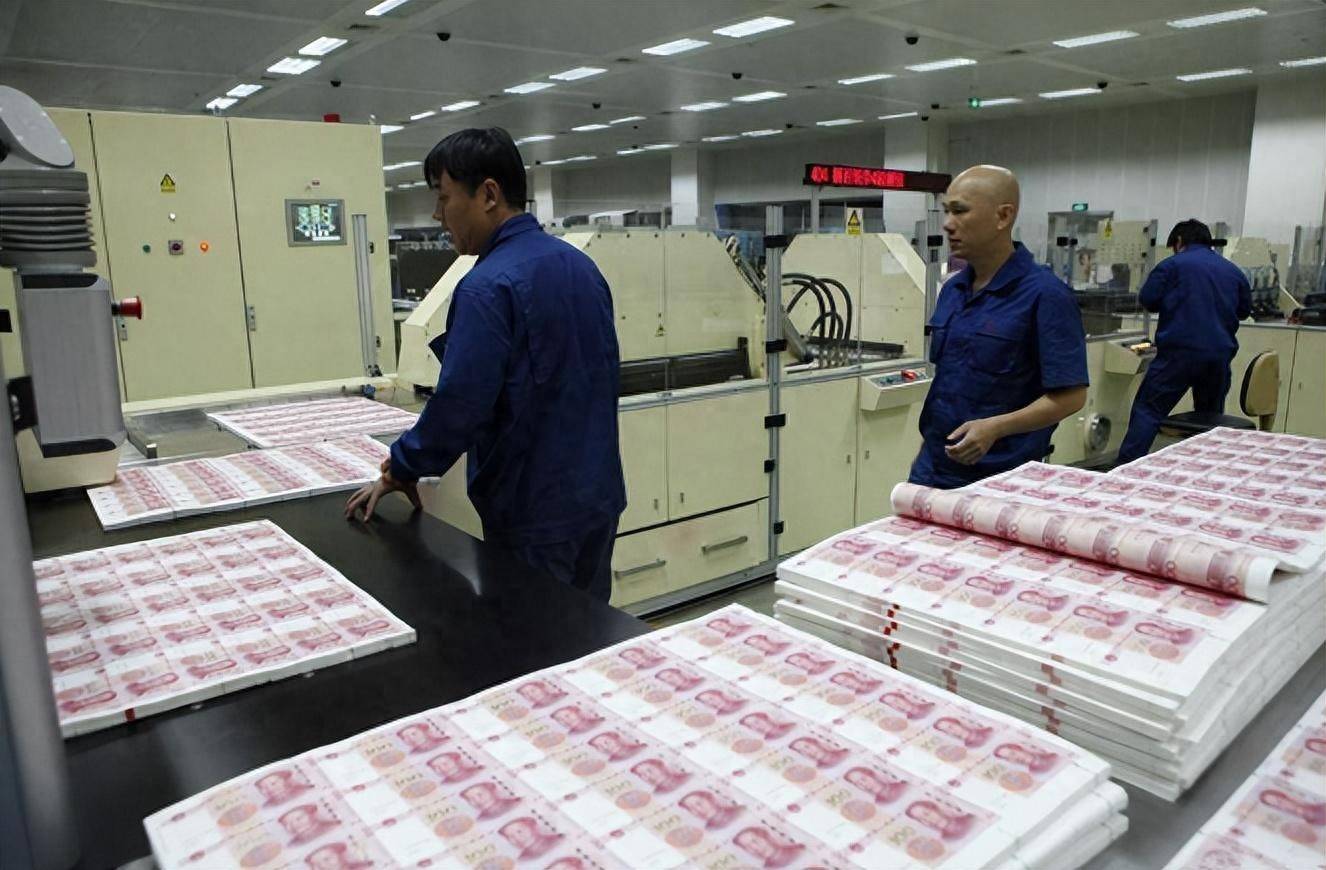
央行"印钱",为啥你没感觉?新钱先炒房炒股,菜价工资短期动不了
Sou Hu Cai Jing· 2025-10-07 09:48
Core Insights - The essence of "printing money" is the central bank increasing the money supply through specific methods, which raises concerns about currency devaluation, although the average person may not perceive this impact directly [1] Group 1: Modern Monetary System - Understanding the process of money creation requires a breakdown of the logic of the modern monetary system, which has evolved since the abandonment of the gold standard in 1971, allowing central banks to issue currency based on national credit rather than gold reserves [3][4] - Central banks can create money through three main methods, including foreign exchange transactions where commercial banks convert foreign currency into local currency, leading to an increase in the central bank's foreign reserves and the corresponding base currency [4][6] Group 2: Central Bank Operations - The "MLF" (Medium-term Lending Facility) is a typical operation where the central bank lends to commercial banks, impacting borrowing costs and subsequently influencing loan rates for individuals and businesses [4][5] - When the central bank conducts MLF operations, it increases its assets and liabilities on the balance sheet, creating new money backed by collateral from commercial banks [6] Group 3: Economic Impact - A significant portion of newly created money does not directly enter the real economy but remains within banks and financial institutions, leading to asset price inflation rather than immediate consumer price increases [7] - The modern monetary system allows for the anticipation of future money to stimulate short-term economic growth, but this can lead to increased debt levels across households, businesses, and governments, amplifying economic cycles [7][8]

资金观察,货币瞭望:外部形势严峻,资金面均衡偏松
Guoxin Securities· 2025-04-15 07:44
Group 1 - The report indicates that the external environment is severe, leading to a balanced and slightly loose funding situation, with expectations of a slight decline in market interest rates in April [3][5][87] - In March, the central bank increased liquidity, resulting in a slight easing of the funding environment, with average interbank and exchange repo rates mostly declining [3][12][55] - The average overnight transaction volume in the interbank market increased compared to the previous month, while the exchange's overnight transaction volume decreased [42][49] Group 2 - Key indicators in the overseas currency market show that the Federal Reserve paused interest rate cuts in March, and short-term U.S. Treasury rates remained stable [7][9] - Domestic monetary market indicators reveal a slight easing in March, with average repo rates declining, while fiscal deposits increased significantly [5][11] - The report predicts that fiscal deposits will continue to rise in April, with a slight decrease in the excess reserve ratio expected [56][66][81] Group 3 - The report highlights that the average yield on short-term bonds increased in March, with specific changes in yields for various types of bonds [13][32] - The average annualized yield of money market funds decreased slightly in March, indicating a trend of declining yields [37][41] - The report notes that the central bank may use monetary policy tools such as reserve requirement ratio cuts to counter external pressures [76][87]