货币放水

Search documents
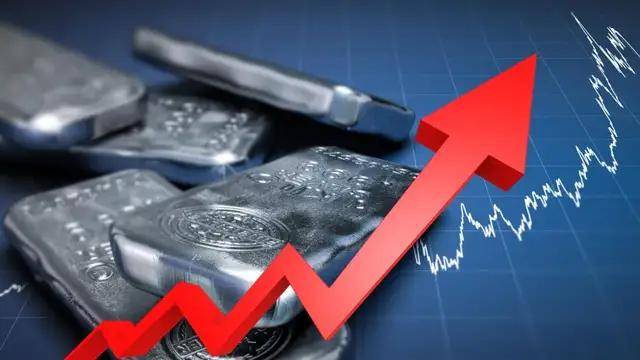
白银疯涨,钻石暴跌,世界真癫
Sou Hu Cai Jing· 2025-12-11 13:22
Group 1 - Silver has surged significantly, reaching $61 per ounce, marking a nearly 110% increase this year, outperforming gold and platinum [3][4] - The Federal Reserve's recent interest rate cut of 25 basis points has increased liquidity in the market, leading to higher demand for precious metals like silver [7][9] - Silver's industrial applications are expanding, particularly in solar energy, electronics, and electric vehicles, which are driving up demand [9][11] Group 2 - The supply of silver is constrained, with the World Silver Association predicting a fifth consecutive year of market deficits by 2025 due to limited production capacity [13][15] - In contrast, diamond prices have plummeted, with cultivated diamonds seeing a price drop of over 50% from their peak, largely due to oversupply and changing consumer preferences [16][19] - The decline in marriage rates in China has contributed to reduced demand for diamonds, as fewer people are purchasing engagement rings [20][23] Group 3 - The market dynamics indicate a shift towards precious metals as a safe investment amid economic uncertainty, while diamonds are losing their appeal due to oversupply and changing societal values [27][31] - The disparity in consumer behavior reflects a broader trend of cautious spending and prioritization of essential investments over luxury items [29][33]

巨大变化出现!未来几年要好好存钱
大胡子说房· 2025-06-21 05:22
Core Viewpoint - The current monetary policy has not led to inflation despite significant increases in the money supply, indicating a disconnect between monetary expansion and consumer price increases [1][3][6]. Group 1: Economic Indicators - In May, the Consumer Price Index (CPI) decreased by 0.2% month-on-month, while the Producer Price Index (PPI) fell by 0.4% month-on-month and 3.3% year-on-year, showing a lack of price increases in both consumer and producer levels [1][2]. - The broad money supply has increased from 200 trillion to 300 trillion over the past 4-5 years, indicating a substantial monetary expansion without corresponding inflation [1][2]. Group 2: Global Trade and Tariffs - The trade tensions between China and the U.S. have disrupted the traditional economic model where China produces goods and the U.S. consumes them, leading to a surplus of goods in China and downward pressure on prices [7][12][13]. - The ongoing tariff disputes are expected to maintain this pressure, preventing inflation from rising as goods remain unsold and prices continue to drop [15]. Group 3: Consumer Behavior - Current government subsidies and consumption incentives are merely shifting future demand forward rather than creating new demand, as consumers with existing purchasing power are not incentivized to spend more [16][20]. - The wealth distribution issue is significant, as a small number of wealthy individuals hold a disproportionate amount of wealth, limiting overall consumer spending from the broader population [22][24]. Group 4: Investment Opportunities - Companies should focus on catering to the wealthy consumer segment, as there is potential for new consumption patterns among affluent individuals, despite their overall limited spending capacity [27][30]. - Exploring international markets for growth opportunities is crucial, as domestic growth becomes increasingly challenging; companies are encouraged to seek expansion in developing countries [37][41]. - In a deflationary environment, maintaining cash reserves in interest-bearing assets is advisable, as money is expected to retain or increase its value over the coming years [43][44].

巨大变化出现!未来几年要好好存钱
大胡子说房· 2025-06-10 04:29
Core Viewpoint - The current monetary policy has not led to inflation despite significant increases in the money supply, indicating a disconnect between monetary expansion and consumer price increases [1][3][6]. Group 1: Economic Indicators - In May, the Consumer Price Index (CPI) decreased by 0.2% month-on-month, while the Producer Price Index (PPI) fell by 0.4% month-on-month and 3.3% year-on-year, showing a lack of price increases in both consumer and producer levels [1][2]. - The broad money supply has increased from 200 trillion to 300 trillion over the past 4-5 years, indicating a substantial monetary expansion without corresponding inflation [1][2]. Group 2: Global Economic Dynamics - The trade tensions between China and the U.S. have disrupted the traditional economic model where China produces goods and the U.S. consumes them, leading to a structural imbalance in supply and demand [7][9][12]. - The imposition of tariffs has resulted in a surplus of goods in China, causing prices to drop and further weakening consumer spending [13][15]. Group 3: Consumer Behavior - Current government subsidies and consumption incentives are merely shifting future demand forward rather than creating new demand, as consumers with existing purchasing power are not incentivized to spend more [16][20]. - The wealth distribution issue is significant, as a small number of wealthy individuals hold a disproportionate amount of wealth, limiting overall consumer spending power [22][24]. Group 4: Investment Opportunities - Companies should focus on catering to the affluent consumer market, as there is potential for growth in luxury and high-end products despite overall economic stagnation [27][36]. - Exploring international markets for growth opportunities is essential, as domestic growth becomes increasingly challenging; companies should consider expanding into developing countries [37][41]. - In a deflationary environment, maintaining cash and investing in interest-bearing assets can be a prudent strategy, as money is expected to retain its value [43][44].