贸易协议谈判

Search documents
突然,崩了!刚刚,紧急“救市”!
Sou Hu Cai Jing· 2025-12-08 11:05
Group 1 - The Reserve Bank of India (RBI) is intervening in the market to stabilize the Indian Rupee, which has recently depreciated significantly against the US Dollar, surpassing the psychological barrier of 90 [1][2] - Since June, the RBI's intervention has led to a reduction of approximately $38 billion in foreign currency assets within the foreign exchange reserves [1][6] - The Indian Rupee has depreciated by nearly 4.5% this year, making it one of the worst-performing currencies among 31 major currencies, second only to the Turkish Lira and Argentine Peso [2][8] Group 2 - The RBI's intervention strategy aims to balance curbing speculation while avoiding excessive depletion of foreign reserves and liquidity in the banking system [7][8] - The RBI has been selling foreign currency at a rate of up to $1 billion per minute to manage the depreciation pressure [2][5] - The central bank's actions have led to significant liquidity issues in the banking system, prompting the RBI to announce a liquidity injection of approximately $16 billion [6] Group 3 - The RBI's future intervention capacity may be limited due to a net short position of approximately $64 billion in forward contracts as of October [8] - Factors contributing to the Rupee's depreciation include an expanding trade deficit, punitive tariffs imposed by the US, and capital outflows, with foreign investors selling $17 billion worth of Indian stocks this year [8][11] - Ongoing trade negotiations between India and the US are critical for the future trajectory of the Indian Rupee, with potential agreements offering the RBI a chance to stabilize the currency [9][10]
日本股市狂飙创新高 日元走势全线疲软
Jin Tou Wang· 2025-10-27 02:55
Group 1 - The Japanese yen weakened against other G10 and Asian currencies due to positive risk sentiment, with the USD/JPY exchange rate at 152.9600, up 0.07% [1] - Moody's economists predict that the Bank of Japan will likely maintain interest rates this Thursday due to poor trade performance and weak domestic demand, impacting economic outlook [1] - The Nikkei 225 index surpassed 50,000 points for the first time in 75 years, driven by optimism regarding the new Prime Minister's support for stimulus policies and positive news from U.S. trade negotiations [1][2] Group 2 - The Nikkei index's surge followed Prime Minister Kishi's policy speech proposing economic growth stimulation and increased defense spending, coinciding with President Trump's upcoming visit to Japan [2] - The USD/JPY exchange rate is currently between 152.79 and 153.17, with expectations of continued yen weakness due to upcoming risk events, including the U.S. Federal Reserve and Bank of Japan meetings [3] - The USD/JPY may test levels of 154.00 and 154.66 if it breaks above 153.29, as the yen remains under pressure [3]
美国总统特朗普在抵达苏格兰之前宣称,将于周日会见欧盟(委员会主席冯德莱恩)。相比“敲定美国与英国的贸易协议最终版本”这个说法,双方更大程度上是加速谈判。
news flash· 2025-07-25 19:53
Group 1 - The core viewpoint of the article is that President Trump announced a meeting with EU Commission President Ursula von der Leyen, indicating a focus on accelerating trade negotiations rather than finalizing a trade agreement with the UK [1] Group 2 - The meeting is positioned as a step towards enhancing discussions on trade, rather than concluding a definitive trade deal [1] - The emphasis on accelerating negotiations suggests ongoing complexities in reaching a final agreement [1]
知情人士:巴基斯坦财长赴美促签贸易协议
news flash· 2025-07-18 13:40
Core Insights - Pakistan's Finance Minister Muhammad Aurangzeb is negotiating in the U.S. to finalize a trade agreement before the end of August [1] - The U.S. has presented a detailed list of demands to the Pakistani delegation, including the reduction of tariffs and non-tariff barriers as a condition for the trade agreement [1] - Initial expectations from Pakistan were to reach an agreement by early July, but negotiations have taken longer than anticipated [1]
印度官员:印度贸易代表团本周赴美参加贸易协议谈判,与美国就第一阶段贸易协议进行会谈。
news flash· 2025-07-14 12:39
Group 1 - The Indian trade delegation is set to visit the United States this week to engage in negotiations regarding the first phase of a trade agreement [1]
南非贸易部发言人:我们仍然致力于与美国进行贸易协议的谈判,双方的对话保持建设性和富有成效。
news flash· 2025-07-07 08:34
Group 1 - The South African Department of Trade is committed to negotiating a trade agreement with the United States, indicating that discussions remain constructive and productive [1]
美商务部长放弃谈判,跑去度假了
中国基金报· 2025-07-06 00:28
Group 1 - The U.S. Secretary of Commerce, Raimondo, was scheduled to meet with EU Trade Commissioner Šefčovič to discuss a trade agreement between the EU and the U.S. [1] - Raimondo left Washington early to go on vacation in Italy with family, delegating the meeting to Treasury Secretary Yellen [1] Group 2 - Elon Musk announced the establishment of a new political party called the "American Party" [2]

特朗普称不考虑延长关税谈判最后期限
财联社· 2025-07-01 20:36
Core Viewpoint - The article highlights President Trump's skepticism regarding the potential trade agreement with Japan and his willingness to impose significantly higher tariffs on Japanese imports, indicating a tough stance on trade negotiations [1]. Group 1: Trade Negotiations - President Trump has no plans to extend the July 9 deadline for trade negotiations with various countries, including Japan [1]. - There is uncertainty about reaching a trade agreement with Japan, as Trump expressed doubts based on previous dealings [1]. Group 2: Tariff Implications - Trump mentioned the possibility of imposing tariffs on Japanese imports ranging from 30% to 35%, which is substantially higher than the previously announced 24% tariff rate on Japanese goods [1].

特朗普称不考虑延长关税谈判最后期限
news flash· 2025-07-01 20:32
Core Viewpoint - The article highlights President Trump's firm stance on not extending the July 9 deadline for trade negotiations with various countries, particularly Japan, expressing skepticism about reaching an agreement [1] Trade Negotiations - President Trump stated that he has doubts about the possibility of reaching a trade agreement with Japan, indicating that previous dealings have not led to a clear outcome [1] - The U.S. has already engaged in discussions with Japan, but the President remains uncertain about the success of these negotiations [1] Tariff Implications - Trump mentioned the potential for imposing tariffs on Japanese imports, suggesting rates of "30% or 35% or any number we determine," which is significantly higher than the previously announced 24% tariff rate on Japanese goods [1]
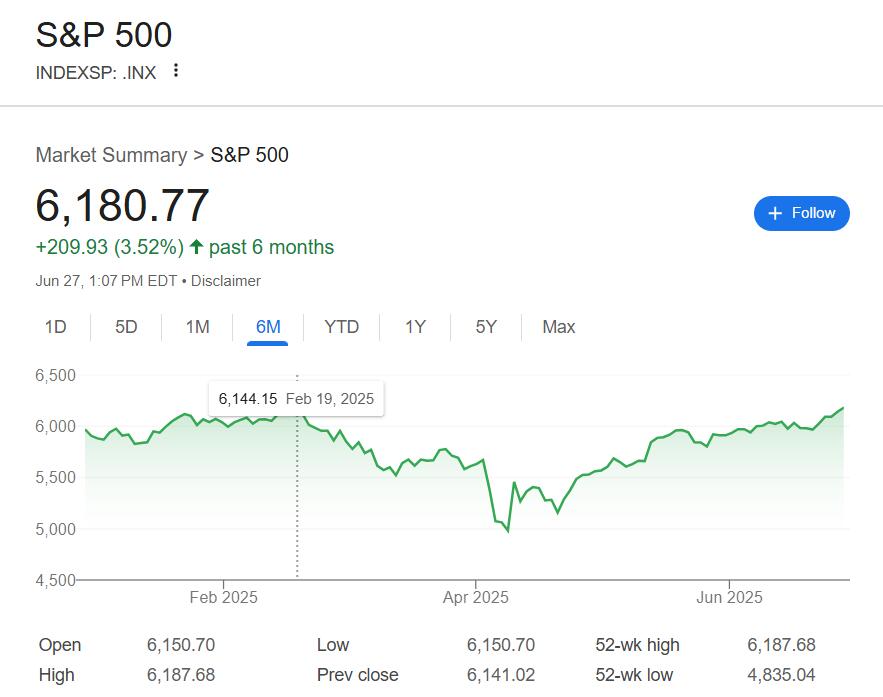
7月9日”关税大限“推迟两月?美财长暗示或可延至9月1日,标普冲向历史新高
Hua Er Jie Jian Wen· 2025-06-27 18:03
Core Viewpoint - The statements from Trump administration officials have increased investor confidence in the prospects of reaching trade agreements, leading to a significant rise in U.S. stock markets, with major indices poised to set historical highs [1][2]. Group 1: Trade Negotiations - U.S. Treasury Secretary Mnuchin indicated that the trade agreement agenda of the Trump administration could be completed before Labor Day, suggesting negotiations may extend beyond the July 9 deadline [1][2]. - Mnuchin mentioned that the U.S. has completed agreements with the UK and reached consensus with China, implying these two countries are no longer part of the current negotiations with the 18 key trade partners [1][2]. - Mnuchin also noted that if agreements can be reached with 10 to 12 of the 18 important trade partners, the administration believes it can finalize trade agreements before Labor Day [2]. Group 2: Deadline Flexibility - White House Press Secretary Levitt stated that the July 9 deadline is not critical, and President Trump could offer agreements to countries that do not reach a deal by the deadline, indicating a potential for flexible tariff rates [6][7]. - Economic Council Chairman Miran expressed that extending the deadline for sincere negotiating partners is reasonable, emphasizing the importance of not jeopardizing ongoing negotiations with punitive tariffs [8]. - Mnuchin's earlier comments suggested that the administration is likely to extend the deadline for countries engaging in good faith negotiations, marking the first public acknowledgment of flexibility in the tariff timeline [8].