
量化紧缩结束

Search documents
QT结束叠加美联储鸽派立场!“华尔街神算子”乐观展望:标普500年底前剑指7300点新高
智通财经网· 2025-12-02 06:45
Group 1: Market Outlook - Tom Lee from Fundstrat predicts a strong performance for US stocks in December, with the S&P 500 potentially rising to 7300 points by year-end, indicating a 10% increase from current levels [1] - Despite a poor start to December with a 0.53% drop in the S&P 500, Lee remains optimistic, attributing potential market gains to the end of quantitative tightening by the Federal Reserve [1] - Lee draws parallels to September 2019, when the S&P 500 rose over 17% within three weeks after the end of quantitative tightening [1] Group 2: Market Dynamics - The volatility in November led to a healthy reset of positions among fund managers, aligning with Goldman Sachs' view that the market is entering December with a clearer structure [2] - Goldman Sachs noted a significant improvement in market breadth, with the S&P 500's breadth indicator rebounding from -150 to +150, indicating a broader market participation [2] - The "volatility fear index" from Goldman Sachs also showed a similar trend, currently at around 5, slightly above its three-year average [2] Group 3: Federal Reserve Influence - Lee believes that the Federal Reserve's dovish stance will continue to support both stock and cryptocurrency markets, with major indices showing significant gains last week [3] - The anticipation of further rate cuts by the Federal Reserve is seen as a key driver for market sentiment returning to a risk-on mode [3] - Lee emphasizes that if the Federal Reserve maintains its dovish position, it will serve as a substantial market catalyst [4] Group 4: Long-term Projections - Major Wall Street firms have set optimistic targets for the S&P 500 by the end of 2026, with JPMorgan forecasting 7500 points and potential for 8000 points if rate cuts continue [5] - Morgan Stanley also shares a bullish outlook, predicting the S&P 500 will reach 7800 points, citing the end of the recent market sell-off as a good opportunity for positioning [5] - Deutsche Bank anticipates a 14% increase in earnings per share for the S&P 500, driven by AI-related growth spreading beyond major tech stocks [6] Group 5: AI and Earnings Growth - The investment wave in artificial intelligence (AI) is seen as a significant factor supporting the bullish outlook for US stocks, with expectations of strong earnings growth [6] - UBS projects that the AI-driven market rally will continue into 2026, with a target of 7500 points for the S&P 500, underpinned by robust corporate earnings [6] - HSBC also sets a target of 7500 points for the S&P 500, expecting a 12% growth in earnings per share driven by macroeconomic stability and AI investment [7]
“市场渴望12月降息”,高盛交易员:情绪低迷,但许多客户认为“比特币若止跌,美股年底还会有行情”
美股IPO· 2025-11-24 03:41
Core Viewpoint - Goldman Sachs indicates that multiple technical indicators show the market is in a dangerous zone, with calls for the Federal Reserve to cut interest rates in December. However, some positive factors are emerging, suggesting that concerns over economic growth may be overstated and liquidity conditions could improve [1][3]. Market Sentiment and Technical Indicators - Despite the S&P 500 index only being a few percentage points off its historical highs, market trading sentiment has plummeted. Goldman Sachs' chief trader noted that a recent 100 basis point rebound was viewed as one of the "most failed" rebounds in recent years, with trading floor atmosphere resembling that of a market crash [3]. - Various technical indicators from Goldman Sachs show the market is in a precarious state: liquidity is drying up as volatility rises, the S&P 500's Gamma value has turned negative, and defensive sector rotation is intensifying, signaling panic [3][7]. Fund Flows and Sector Rotation - The U.S. stock market has seen buying pressure for three consecutive weeks, but investors are shifting their allocations towards defensive sectors, particularly healthcare and durable goods, while selling off "unprofitable" sectors [4]. - Analysis of institutional holdings shows that hedge funds and mutual funds are consistently overweight in healthcare while being underweight in information technology, a rare consensus [6]. Systematic Selling Pressure - The S&P 500 index has recently breached short-term thresholds, indicating that systematic selling pressure is just beginning. If the market remains flat for a week, it could lead to $50 billion in selling pressure, and $62 billion if flat for a month [6]. - Goldman Sachs' futures strategy team suggests that the current situation is akin to "the first half of the first inning, with two outs but the bases loaded," indicating that selling pressure is likely to escalate [6]. Volatility and Derivatives Market - Multiple stock volatility indicators have issued warnings, with the "volatility stress" index reaching 9.5 out of 10. Top-tier liquidity has evaporated, and implied volatility surged following Nvidia's earnings report [9]. - The average daily trading volume of S&P 500 options has reached $3.5 trillion, surpassing the total market value of the Russell 2000 index, indicating heightened market activity [10]. Emerging Positive Factors - Despite the prevailing market gloom, Goldman Sachs identifies several potential positive factors: concerns over economic growth may be exaggerated, clarity in Federal Reserve policy, improving liquidity support, and the potential for AI productivity gains extending beyond the tech sector [12]. - The Atlanta Fed's latest GDP forecast for Q3 stands at 4.1%, a notably high figure, especially given the classic head-and-shoulders pattern in cyclical/defensive sector ratios [12]. - The liquidity situation may improve as recent pressures have prompted the Federal Reserve to consider resuming bond purchases to expand its balance sheet [12]. AI Productivity and Risk Appetite - The AI productivity theme has gained traction in client discussions, with the potential for companies to enhance productivity and generate more earnings, which could benefit non-tech sectors within the S&P 500 [13]. - Many clients view high-beta assets like Bitcoin as risk appetite indicators, suggesting that a recovery in Bitcoin's performance could signal a market rebound by year-end [13].


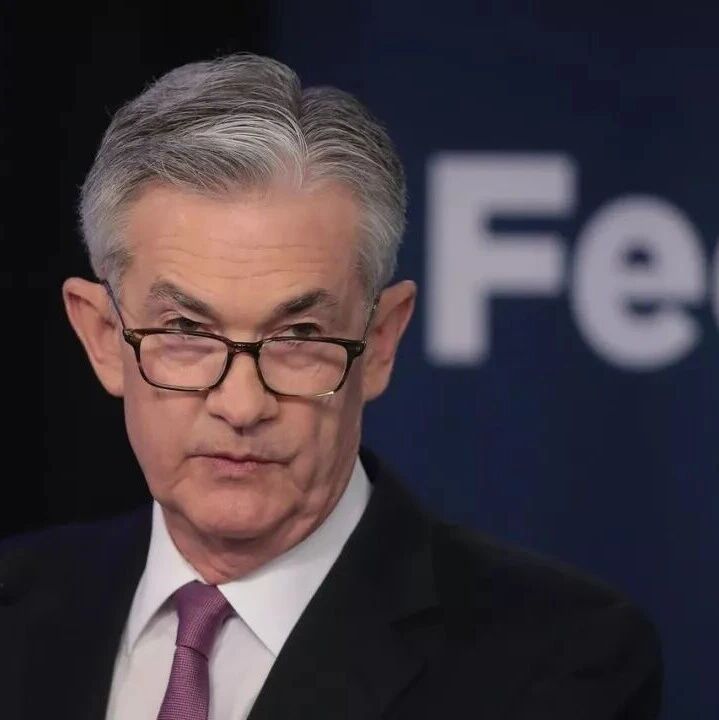
鲍威尔释放鸽派信号
Zhong Guo Ji Jin Bao· 2025-10-14 23:18
Core Viewpoint - Federal Reserve Chairman Jerome Powell indicated that the Fed may halt the reduction of its balance sheet in the coming months, supporting investor expectations for another rate cut this month [2][5]. Economic Outlook - Powell noted that the outlook for inflation and employment has remained largely unchanged since the last meeting in September, emphasizing increasing signs of a weakening labor market [2][3]. - The Fed lowered interest rates by 25 basis points last month, marking the first cut of 2025, which Powell described as a "risk management" move to support the weakening labor market [2]. Labor Market Concerns - Powell reiterated that "downside risks to employment appear to be rising," citing low levels of layoffs and hiring, as well as declining perceptions of job opportunities among residents and recruitment difficulties among businesses [3]. - The government shutdown has hindered the release of official economic statistics, leading the Fed to monitor non-government data sources, which may pose challenges if the situation persists [3]. Diverging Views Among Officials - There are differing opinions among Fed officials regarding the appropriate policy path, with some advocating for further rate cuts while others express caution due to potential inflationary pressures from tariffs and the persistent inflation above the 2% target [3]. Market Reaction - Following Powell's speech, U.S. stock indices rebounded, with the Dow Jones erasing a decline of approximately 600 points [4]. - Analysts noted that Powell's remarks reinforced expectations for a rate cut in October, with various financial institutions confirming a dovish shift in policy tone [5].