金融普及教育

Search documents
第二届“中邮保险·紫荆杯”全国高校辩论赛圆满落幕:中央财经大学勇夺桂冠,北京交通大学荣获亚军
清华金融评论· 2025-10-14 09:39
Core Viewpoint - The article highlights the successful conclusion of the second "China Post Insurance・Zijing Cup" National College Financial Education Debate Competition, emphasizing the importance of financial literacy and education in promoting inclusive finance and risk prevention [1][3]. Group 1: Event Overview - The debate competition attracted participation from 48 universities and included 51 debate matches, with over 400 participants competing [1]. - The final competition was held at Tsinghua University, where the Central University of Finance and Economics team won the championship, and Beijing Jiaotong University secured the runner-up position [1][28]. Group 2: Importance of Financial Education - Zhang Wei, representing the organizing committee, stated that financial education is crucial for enhancing public financial literacy and preventing financial risks, thereby contributing to high-quality development in the financial sector [3]. - The event showcased the social responsibility and innovative practices of universities in promoting financial knowledge and talent development [3]. Group 3: Perspectives from Industry Leaders - Han Guangyue, Chairman of China Post Life Insurance, emphasized the significance of financial literacy as a foundation for benefiting the public and expressed hope that the competition would become a prestigious event in financial education [6]. - Liang Tao, former Vice Chairman of the China Banking and Insurance Regulatory Commission, discussed the challenges posed by artificial intelligence in financial consumer protection and provided five recommendations for addressing these challenges [8]. Group 4: Debate Topics and Insights - The final debate focused on the topic "In the AI-driven era of pension finance, should we prioritize 'rights first' or 'emotional care'?" with participants discussing systemic risks and the essence of pension finance as a social security mechanism [16][18]. - Judges and participants highlighted the need for a balance between economic security and emotional support in pension finance, especially in the context of technological advancements [20][22][27].

金融普及教育小使者招募令|第二届“中邮保险·紫荆杯”全国高校金融普及教育辩论总决赛
清华金融评论· 2025-09-29 11:36
Core Viewpoint - The article emphasizes the importance of financial education and consumer protection, aligning with the principle of putting people first in financial work, as articulated by General Secretary Xi Jinping at the Central Financial Work Conference [1]. Group 1: Event Overview - The "Zijing Cup" National College Financial Education Debate Finals will take place on October 12 at Tsinghua University, inviting young individuals to participate as "Financial Education Ambassadors" [1]. - The event aims to transform professional financial knowledge into accessible content for the public, enhancing overall financial literacy [3]. Group 2: Content Creation Requirements - Participants are required to capture the essence of the debate through various media formats, including articles and videos, ensuring the content is engaging and understandable for a non-professional audience [3]. - The content must reflect correct viewpoints, promote positive energy, and align with national financial policies and regulations [3]. Group 3: Participant Qualifications - Candidates should possess a strong understanding of current financial policies, demonstrate political sensitivity, and embrace the public welfare values of financial education [5]. - Skills in writing, content planning, video production, and a keen interest in finance and economics are essential for participants [5]. Group 4: Incentives for Participation - Participants will receive varying monetary rewards based on the quality of their work, with opportunities for exposure and recognition at the event [9]. - Additional benefits include a commemorative certificate and creative gifts for attendees [9].
让金融教育成为青年人才培养的重要一课丨金融普及教育专题
清华金融评论· 2025-09-24 09:08
Core Viewpoint - The Chinese financial market is experiencing rapid growth in product scale, with significant increases in bank wealth management and public funds, indicating a deep integration of finance into everyday life and the economy [3]. Group 1: Financial Education Initiatives - The complexity of financial products has increased, necessitating higher levels of financial literacy among consumers to protect against fraudulent activities [4]. - The Chinese government has initiated several policies since 2015 to incorporate financial literacy into the national education system, aiming to enhance the financial knowledge of citizens [5]. - Financial institutions, including Everbright Securities, have actively engaged in financial education, particularly targeting youth in schools [5]. Group 2: Differentiation of Financial Education - There is a clear distinction between "financial literacy education" and "financial professional education," with the former aimed at all youth and the latter focused on training professionals [6][7]. - Financial literacy education is essential for all young people to navigate financial situations and prevent financial crimes, not just for those pursuing finance as a career [8]. Group 3: Content Quality Improvement - Current financial education efforts often lack depth and rigor, with many institutions outsourcing content creation to third parties lacking financial expertise [9]. - There is a tendency to prioritize presentation over substance, leading to superficial educational materials that fail to convey essential financial knowledge [9]. - The curriculum often lacks coverage of emerging financial topics such as digital currencies and ESG, resulting in outdated content [9]. Group 4: Recommendations for Enhancing Financial Education - It is suggested that industry associations should lead the development of standardized educational content and frameworks to ensure consistency and coherence in financial literacy education [10]. - Financial institutions should provide training for educators to enhance their expertise in delivering financial education [10]. - Collaboration between financial institutions and educational institutions should be strengthened to create practical learning experiences for students [10]. Group 5: Evaluation of Financial Education Effectiveness - A mechanism for evaluating the effectiveness of financial education initiatives should be established to ensure ongoing improvement and accountability [11]. - Positive feedback from regulatory bodies can incentivize financial institutions to engage more actively in educational activities [12]. - Standardized evaluation metrics should be developed to assess the impact of financial education on students, incorporating feedback mechanisms to gauge quality [13][14]. Group 6: Adapting to Modern Educational Needs - Financial education for youth should incorporate engaging formats, such as multimedia and interactive content, to align with their preferences [16]. - The integration of artificial intelligence in developing educational materials can enhance engagement and effectiveness in teaching financial concepts [16]. - Overall, financial literacy education is crucial for safeguarding public assets and fostering a stable financial market, promoting rational investment behaviors among the youth [16].
舌战玖安,央财北交“险”胜|南京大学、四川大学荣获第二届“中邮保险·紫荆杯” 全国高校金融普及教育辩论赛季军
清华金融评论· 2025-09-20 09:54
Core Viewpoint - The article emphasizes the importance of financial education and consumer rights protection in enhancing national financial literacy, as demonstrated through the "Zijing Cup" national college financial education debate competition organized by Tsinghua University and Zhongyou Insurance [2][4][5]. Group 1: Event Overview - The financial education campaign, themed "Protecting Financial Rights and Supporting a Better Life," was jointly organized by the Financial Regulatory Bureau, the People's Bank of China, and the China Securities Regulatory Commission from September 15 to 21 [2]. - The second "Zijing Cup" national college financial education debate competition received participation from 48 universities, with four teams reaching the semifinals [2][5]. Group 2: Key Participants and Contributions - Zhang Wei, a representative from Tsinghua University, highlighted the significance of public financial knowledge and skills in protecting consumer rights and enhancing understanding of financial matters [4]. - Cao Yong, the business director of Zhongyou Insurance, noted the company's commitment to integrating financial education into its development strategy, showcasing its growth and industry standing with total assets exceeding 700 billion yuan and ranking among the top eight in the industry [5]. Group 3: Debate Topics and Insights - The first debate focused on whether to prioritize supply-side reform or demand-side cultivation to activate the 30 trillion yuan silver economy, with Nanjing University advocating for demand-side stimulation and Beijing Jiaotong University emphasizing supply-side improvements [6]. - The second debate addressed the future development of inclusive finance, debating whether to prioritize social value or commercial sustainability, with Central University of Finance and Economics supporting social value and Sichuan University advocating for commercial sustainability [8]. Group 4: Judging and Evaluation - The semifinals featured a distinguished panel of judges from academia and debate circles, reflecting the high standards and professionalism of the event [10].
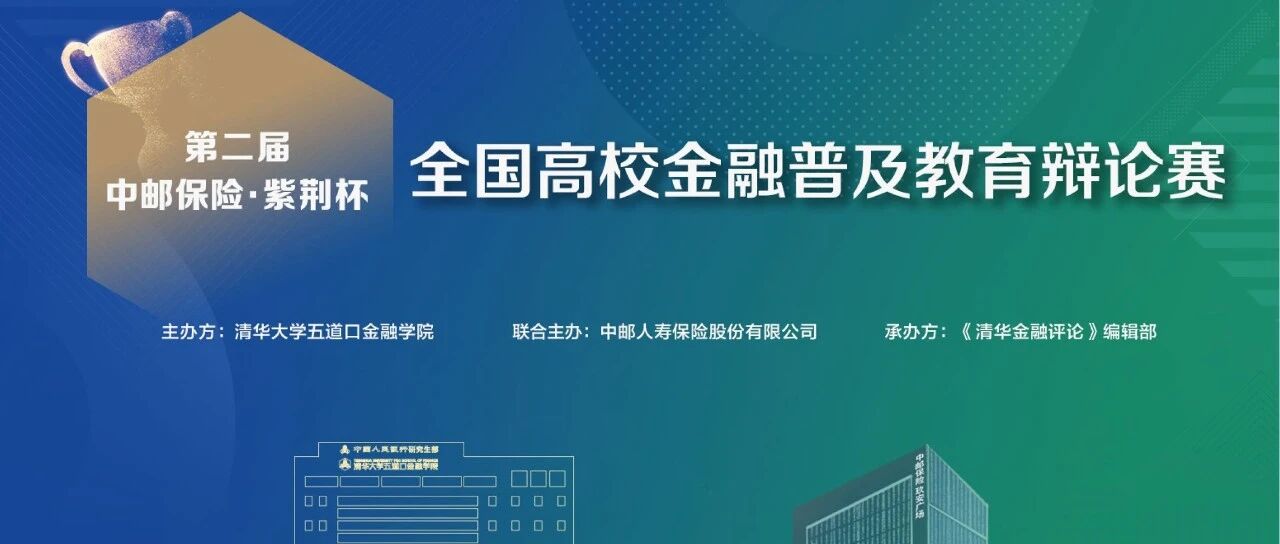
第二届中邮保险•紫荆杯全国高校金融普及教育辩论赛正式启动
清华金融评论· 2025-07-31 12:11
Core Viewpoint - The article emphasizes the importance of protecting financial consumers' rights and enhancing financial education as a shared responsibility of the financial industry, aligning with the political and people-oriented nature of financial work [2][3]. Group 1: Financial Consumer Protection - Xi Jinping highlighted that financial work must stand firm on the people's stance, enhancing the diversity, inclusiveness, and accessibility of services to better protect financial consumers' rights [2]. - The 20th National Congress of the Communist Party of China called for the establishment of mechanisms to protect financial consumers and combat illegal financial activities [2]. - Tsinghua University's Wudaokou School of Finance aims to cultivate financial leaders and promote financial consumer rights as part of its social responsibility [2]. Group 2: Financial Education Initiatives - The "Zijing Cup" national college debate competition on financial consumer rights, co-organized by Tsinghua University and Zhongyou Insurance, aims to enhance national financial literacy through youth participation [2]. - In 2025, the event will evolve into the Zhongyou Insurance Zijing Cup National College Financial Popularization Education Debate Competition, focusing on promoting financial knowledge relevant to daily life and building a strong national financial culture [3]. Group 3: Event Organization and Participation - The event is co-hosted by Tsinghua University Wudaokou School of Finance and Zhongyou Life Insurance, with the editorial department of "Tsinghua Financial Review" as the organizer [4]. - A diverse range of universities across various regions in China are invited to participate, including notable institutions from Northeast, North, Central, South, East, Northwest, and Southwest regions [4]. - The competition structure includes preliminary rounds, semi-finals, and finals, with specific timelines and criteria for team selection and performance evaluation [7]. Group 4: Registration and Participation Guidelines - The competition does not charge registration fees, and travel subsidies will be provided for up to four team members from participating universities [8]. - Participants must adhere to the core socialist values and ensure personal safety during the event [9]. - The event encourages public participation in proposing debate topics related to financial education, with incentives for selected submissions [10].