
铁路网建设

Search documents
达16.5万公里
中国能源报· 2026-01-04 12:22
Group 1 - The core viewpoint of the article highlights the significant achievements of China's railway network during the "14th Five-Year Plan" period, with total railway operating mileage increasing from 146,300 kilometers to 165,000 kilometers, a growth of 12.8% [1] - High-speed rail mileage increased from 37,900 kilometers to 50,400 kilometers, representing a growth of 32.98%, establishing the world's largest and most advanced high-speed railway network [1] - In 2025, the China National Railway Group completed fixed asset investments of 901.5 billion yuan, a year-on-year increase of 6%, and put into operation new lines totaling 3,109 kilometers, including 2,862 kilometers of high-speed rail [1] Group 2 - The China National Railway Group plans to further advance railway network construction during the "15th Five-Year Plan" period, aiming for a total railway operating mileage of approximately 180,000 kilometers by 2030, with high-speed rail reaching around 60,000 kilometers [2] - The plan includes achieving a double-track rate and electrification rate of 64% and 78% respectively, enhancing strategic trunk corridors, and significantly improving regional connectivity and freight network capacity [2] - The goal is to essentially establish a world-class modern railway network with a comprehensive "eight vertical and eight horizontal" high-speed rail system [2]


全国铁路营业里程达16.5万公里 高铁超5万公里
Yang Shi Wang· 2026-01-04 06:04
Core Viewpoint - The article highlights the significant expansion of China's railway network, particularly focusing on high-speed rail, with ambitious targets set for the upcoming years [1] Group 1: Railway Network Expansion - By the end of 2025, the total railway operating mileage in China is expected to reach 165,000 kilometers, with high-speed rail exceeding 50,000 kilometers, establishing the world's largest and most advanced high-speed railway network [1] - During the 14th Five-Year Plan period, the railway operating mileage will increase from 146,300 kilometers to 165,000 kilometers, representing a growth of 12.8%, while high-speed rail will grow from 37,900 kilometers to 50,400 kilometers, a growth of 32.98% [1] Group 2: Passenger Volume and Future Plans - By 2025, the railway is projected to handle a passenger volume of 4.255 billion trips, reflecting a year-on-year increase of 4.2% [1] - In the 15th Five-Year Plan period, the China National Railway Group will continue to advance railway network construction, aiming for a total railway operating mileage of approximately 180,000 kilometers by 2030, with high-speed rail reaching around 60,000 kilometers, significantly enhancing regional connectivity [1]
“钢铁动脉”畅内外 赋能发展新跨越
Xin Lang Cai Jing· 2025-12-27 18:42
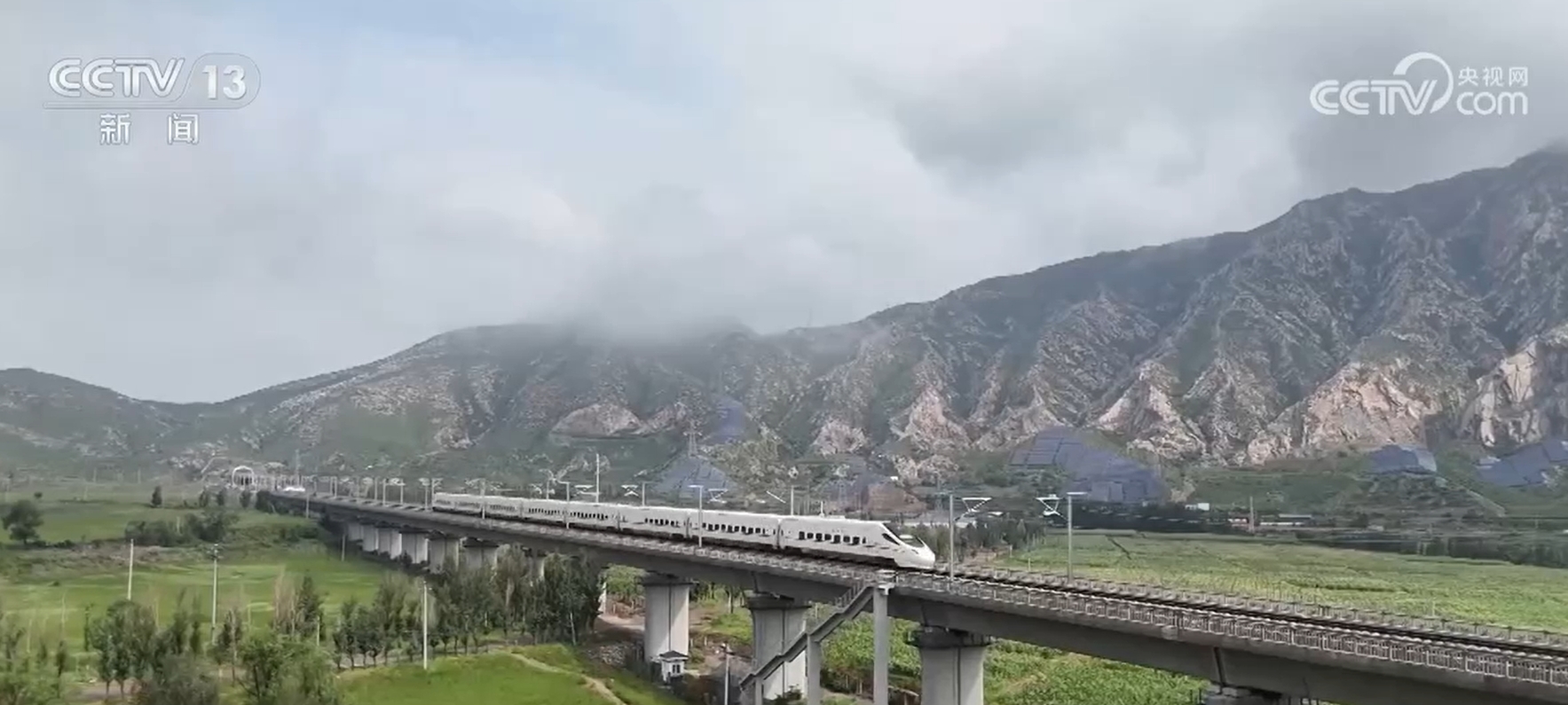
Core Viewpoint - The development of the railway network in Inner Mongolia is significantly enhancing regional connectivity and economic growth, with a focus on both passenger and freight transport efficiency. Group 1: High-Speed Rail Development - The Baoyin High-Speed Railway connecting Baotou and Yinchuan is set to open on December 23, 2025, reducing travel time to under 3 hours [1] - The Jidaguan High-Speed Railway will officially commence operations on December 31, 2024, marking a new chapter in high-speed rail connectivity between Inner Mongolia and Shanxi [2] - By the end of the 14th Five-Year Plan, Inner Mongolia's railway operating mileage is expected to reach 15,500 kilometers, ranking first in the country, with high-speed rail mileage reaching 880 kilometers [2][3] Group 2: Freight Capacity Enhancement - The electrification of the Jitong Railway, completed in November 2024, has increased its annual freight capacity from 36 million tons to 80 million tons, significantly improving logistics efficiency [5][6] - The Tangbao Railway's capacity has surpassed 200 million tons, with over 80% of this being coal, supporting energy demands in major regions [6] - Innovative transport models, such as the zinc industry "circular special train," have emerged, enhancing the efficiency of raw material and product transportation [6] Group 3: Economic Impact and Statistics - In 2024, Inner Mongolia's railway freight volume reached 940 million tons, accounting for 18.2% of the national total, while passenger volume was 56.81 million, ranking 25th nationally [7] - The region's railway freight turnover reached 314.78 billion ton-kilometers, representing 8.8% of the national total, highlighting the railway's critical role in the local economy [7] - The railway's contribution to the region's comprehensive transport system is significant, with freight and passenger transport accounting for 37.5% and 55.9% of the total transport volume, respectively [7] Group 4: Future Prospects - The ongoing construction of the Taizicheng to Xilin Hot Railway will provide new travel options and reduce travel time to Beijing to approximately 3 hours, enhancing accessibility [4] - The railway network is expected to continue evolving, facilitating economic resilience and connectivity, and supporting high-quality development in Inner Mongolia [8]

哥伦比亚政府优先推进6项国家级铁路项目
Shang Wu Bu Wang Zhan· 2025-08-19 16:00
Core Insights - The Colombian government has prioritized six national railway projects, aiming to complete structural designs by August 2026 and initiate some project tenders [1] - The total investment for these projects is expected to exceed 94 trillion pesos, approximately 23.4 billion USD [1] - The National Infrastructure Agency is collaborating closely with embassies, banks, and companies from China, South Korea, Qatar, and Mexico to leverage their expertise in railway network development [1] Summary by Categories National Railway Projects - Six railway projects have been designated as national priorities, including the Transoceanic Corridor and various Pacific corridor segments [1] - Specific projects include Yumbo–Caimalito, Buenaventura–Palmira, and the Bogotá–Belencito railway corridor [1] Investment and Financials - The anticipated investment for the railway projects is over 94 trillion pesos, which translates to around 23.4 billion USD [1] International Collaboration - The Colombian government is engaging with international partners from China, South Korea, Qatar, and Mexico to enhance the development of its railway infrastructure [1]
盘兴高铁全线铺轨完成,南凭高铁3座新车站全面竣工
Huafu Securities· 2025-07-27 05:48
Investment Rating - The industry rating is "Outperform the Market," indicating that the overall return of the industry is expected to exceed the market benchmark index by more than 5% in the next 6 months [14]. Core Insights - The completion of the Panzhou to Xingyi high-speed railway marks a significant milestone for Guizhou Province, achieving the goal of "high-speed rail connectivity for every city." The railway spans approximately 98 kilometers with a design speed of 250 km/h, featuring a bridge and tunnel ratio of 90.66%, which is the highest among Guizhou's high-speed rail lines [3][4]. - The South Ping high-speed railway, connecting Nanning to the border city of Pingxiang, has also seen progress with the completion of three new stations. This railway is 201 kilometers long and is designed for a speed of 250 km/h, enhancing regional connectivity and economic development [4]. - The "14th Five-Year Plan" outlines ambitious goals for China's railway network, aiming for a total operating mileage of 165,000 kilometers by 2025, including 50,000 kilometers of high-speed rail. By 2035, the target is to reach approximately 200,000 kilometers of railway, with 70,000 kilometers being high-speed rail. This long-term goal is expected to create significant market opportunities for the rail transit equipment industry [5]. Company Summaries - China CNR Corporation: A global leader in rail transit equipment supply, maintaining the top position in revenue within the industry [5]. - China Railway Signal & Communication Corporation: A leading provider of rail transit control systems, recognized for its technological expertise [5]. - Times Electric: A prominent supplier of traction and conversion systems, consistently leading the domestic market [5]. - Sifang Control: Specializes in railway transportation safety equipment, becoming a core supplier in the high-speed rail monitoring sector [5]. - Shenzhou High-speed Railway: A leading enterprise in intelligent operation and maintenance equipment for rail transit, serving a wide range of clients including national railways and urban rail systems [5]. - Huizhou Technology: Focuses on providing operation and maintenance equipment and integrated solutions for rail transit, with extensive experience in technology development and project implementation [5].
云南铁路建设正酣
Zhong Guo Xin Wen Wang· 2025-05-06 07:10
Core Viewpoint - The construction of key railway projects in Yunnan, including the Wenmong Railway, Yukun High-speed Railway, and Dazhu Railway, is progressing rapidly, contributing to the development of transportation infrastructure and regional economic growth in Southwest China [1][2]. Group 1: Wenmong Railway - The Wenmong Railway is 116 kilometers long with a design speed of 160 km/h, forming an essential part of Yunnan's transportation network and facilitating new trade routes [1]. - Over 150 construction machines and more than 600 workers are actively engaged in the construction of the Wenmong Railway, achieving significant progress during the recent holiday [1]. - Specific achievements include 42 meters of tunnel excavation and the completion of 8 pile foundations and 2 concrete bases [1]. Group 2: Yukun High-speed Railway - The Yukun High-speed Railway is a critical component of China's railway network, stretching 699 kilometers, with 388.6 kilometers located in Yunnan [2]. - Once completed, the railway will reduce travel time from Chongqing to Kunming from 5 hours to approximately 2 hours [2]. - The construction of the bridge at the Yukun High-speed Railway is nearing completion, with 77% of the continuous beam work finished and 96% of the pier work completed [2]. Group 3: Dazhu Railway - The Dazhu Railway spans 330 kilometers, with 76.5% of its length consisting of bridges and tunnels, playing a vital role in enhancing the railway network and promoting western development [2]. - The railway will connect to the China-Myanmar border, significantly impacting economic and social development along its route and enhancing Yunnan's openness to Southeast Asia [2]. - Construction activities at the key control project, the Gaoligong Mountain Tunnel, are ongoing, showcasing the dedication of workers in challenging underground conditions [2]. Group 4: Overall Impact on Yunnan - Yunnan has transitioned from being a peripheral part of China's railway network to becoming a central hub for railway transportation towards South Asia and Southeast Asia [2].
轨交设备Ⅱ行业定期报告:沪渝蓉沿江高铁建设取得新进展,1~2月铁路完成固定资产投资685.4亿元
Huafu Securities· 2025-03-09 02:38
Investment Rating - The industry rating is "Outperform the Market" [5][12] Core Insights - The construction of the Shanghai-Chongqing-Chengdu high-speed railway has made significant progress, with fixed asset investment in railways reaching 68.54 billion yuan in January and February, a year-on-year increase of 5.1% [3][4] - The operational mileage of railways is expected to continue growing, with a target of 200,000 kilometers by 2035, creating vast market opportunities for the rail transit equipment industry [4] Summary by Sections Investment Highlights - The Shanghai-Chongqing-Chengdu high-speed railway's Wuhan to Yichang section has successfully completed track laying, connecting with other high-speed rail lines [2] - Key railway projects, including the Chongqing East Station and the Xi'an to Yan'an high-speed railway, have made positive progress [3] Market Opportunities - The "14th Five-Year Plan" aims for railway operational mileage to reach 165,000 kilometers by 2025, with high-speed rail reaching 50,000 kilometers, indicating a robust growth trajectory for the rail transit equipment sector [4] - The report suggests focusing on leading companies in the rail transit equipment sector, including CRRC Corporation, China Railway Signal & Communication Corp, and others, which are well-positioned to benefit from this growth [4]