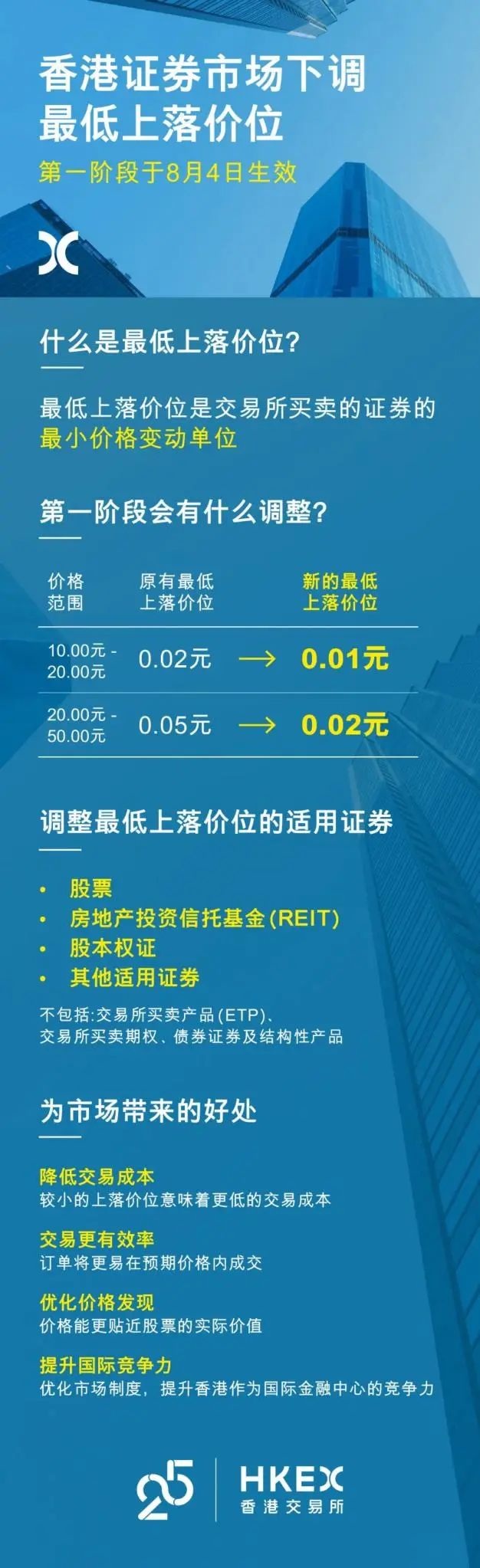
降低交易成本

Search documents
“结构性降息扩容”释放促转型信号
Lian He Zi Xin· 2026-01-16 11:42
Policy Overview - The central bank's structural monetary policy focuses on "interest rate cuts and expansion" targeting agriculture, small enterprises, private businesses, and technological innovation, without implementing total "reserve requirement ratio (RRR) cuts or interest rate reductions" for now[4] - The recent policy shift indicates a transition from "leading the market curve" to "synchronizing with the market," reflecting a more precise and coordinated monetary approach[4] Monetary Policy Details - The central bank lowered the re-lending and re-discount rates by 25 basis points (BP), with the one-year re-lending rate now at 1.25%[4] - An additional 500 billion yuan in re-lending for agriculture and small enterprises has been allocated, with a 1 trillion yuan re-lending specifically for private enterprises[4] - The re-lending quota for technological innovation and transformation has been increased by 400 billion yuan, and a combined risk-sharing tool for technological innovation and private enterprise bonds has been established with a total re-lending quota of 200 billion yuan[4] Economic Context - Since the implementation of previous policies, domestic inflation has shown a mild recovery, with the Consumer Price Index (CPI) increasing by 0.8% year-on-year in December 2025, and the Producer Price Index (PPI) declining by 1.9%[5] - Exports achieved a year-on-year growth of 5.5% in 2025 despite external challenges, indicating sustained competitiveness[5] - The Hang Seng Index led global markets, while the Shanghai Composite Index reached 4,100 points on January 15, 2026, highlighting improved market confidence[5] Future Outlook - The central bank emphasizes that the space for RRR cuts is greater than for interest rate reductions, with an increased focus on government bond operations to manage liquidity[6] - The absence of specific policies for the real estate market suggests that future support will likely rely more on fiscal measures rather than monetary policy, such as interest subsidies and reduced transaction costs[7] - Overall, the structural monetary policy reflects a balance between stabilizing growth, mitigating risks, and promoting transformation amid ongoing economic challenges[7]
利好再续!换房退个税政策延至2027年底,交易成本下降 焦点热议
Xin Jing Bao· 2026-01-15 03:37
Core Viewpoint - The extension of the housing tax refund policy aims to alleviate market pressures and stimulate housing transactions by reducing transaction costs for taxpayers selling and purchasing homes [2][3]. Group 1: Policy Details - The tax refund policy will be effective from January 1, 2026, to December 31, 2027, allowing taxpayers to receive a refund on personal income tax paid when selling their homes if they purchase a new home within one year [2]. - If the purchase price of the new home is equal to or greater than the selling price of the current home, the entire amount of personal income tax paid will be refunded; if less, the refund will be proportional to the new home's purchase price [3]. Group 2: Market Implications - The policy reflects ongoing efforts to support the housing market, as indicated by its second extension since its initial introduction in September 2022 [3]. - The reduction in transaction costs is expected to enhance market activity and stabilize overall tax revenue, addressing the sluggishness in the housing market, particularly in the secondary housing sector [3][4]. - The current market shows a significant slowdown in the "sell one buy one" cycle, with decreasing total prices in secondary housing transactions, which the tax refund policy aims to alleviate [3]. Group 3: Related Tax Adjustments - Recent adjustments to the value-added tax on housing sales have also contributed to lowering transaction costs, with the tax rate for properties sold within two years reduced from 5% to 3% [4].


侃股:散户投资者不必太在意券商佣金费率
Bei Jing Shang Bao· 2025-09-15 13:03
Group 1 - Many brokerage firms are lowering commission rates to attract retail investors, but for many, the commission rate is not as significant due to minimum commission policies [1][2] - The reduction in commission rates has led to a situation where, for small investors, the commission fee becomes less relevant once it reaches a certain low point [1][2] - Investors with smaller transaction amounts may benefit more from negotiating the removal of the minimum commission rather than focusing solely on lower commission rates [2] Group 2 - The trading habits of investors significantly impact their overall trading costs, with long-term holding strategies potentially leading to greater profitability despite minimum commission fees [3] - Frequent trading can result in high cumulative trading costs, making it essential for investors to reduce trading frequency to manage expenses effectively [3]
下调!港交所最新宣布!
券商中国· 2025-07-29 05:51
Core Viewpoint - The Hong Kong Stock Exchange (HKEX) has announced a reduction in the minimum price fluctuation unit for trading securities, effective August 4, aimed at lowering transaction costs and enhancing market efficiency [1][3][6]. Summary by Sections Minimum Price Fluctuation Adjustment - The minimum price fluctuation for securities priced between HKD 10 and HKD 20 will be reduced from HKD 0.02 to HKD 0.01, and for those priced between HKD 20 and HKD 50, it will be reduced from HKD 0.05 to HKD 0.02 [2][5]. - This adjustment applies to stocks, Real Estate Investment Trusts (REITs), and equity warrants [2][4]. Benefits of the Adjustment - The initiative is expected to lower trading costs, facilitate order execution at expected prices, improve market efficiency, and enhance the price discovery function [3][6]. - The HKEX plans a second phase of adjustments in mid-2026, which will further reduce the minimum price fluctuation for securities priced between HKD 0.5 and HKD 10 by 50% [3][8]. Settlement Cycle Changes - The HKEX is also considering shortening the stock settlement cycle from T+2 to T+1, aligning with international practices [10][11]. - This change aims to reduce market risk and improve capital efficiency for market participants [15]. Market Context - The HKEX has been actively working on reforms to lower transaction costs and enhance liquidity, with the goal of increasing its international competitiveness [3][10]. - As of mid-2025, the HKEX is expected to have over 2,600 listed companies, with an average daily trading volume of HKD 240.2 billion [13].


港交所,重大变革!下周一生效
Zheng Quan Shi Bao· 2025-07-28 11:35
Core Viewpoint - The Hong Kong Stock Exchange (HKEX) is implementing a phased reduction in the minimum price fluctuation for stocks, aimed at lowering trading costs and enhancing market efficiency, with the first phase effective from August 4, 2023 [1][6]. Group 1: Phase One Implementation - The first phase will adjust the minimum price fluctuation for stocks priced between HKD 10 to 20 from HKD 0.02 to HKD 0.01, and for stocks priced between HKD 20 to 50 from HKD 0.05 to HKD 0.02, representing a reduction of 50% and 60% respectively [5][9]. - A preparatory period of at least six months is allocated before the implementation of both phases, with the first phase set to be reviewed after its implementation [5][10]. - A pre-launch test is scheduled for August 2, 2025, to ensure that market participants are ready for the changes [7][8]. Group 2: Phase Two Considerations - The second phase is expected to be implemented around mid-2026, contingent on the review of the first phase's effectiveness [4][6]. - Concerns have been raised regarding the potential impact of the second phase on lower-priced securities, particularly regarding the narrowing of bid-ask spreads and its effect on liquidity [9][10]. - HKEX believes that the reduction in minimum price fluctuation will lower transaction costs for active investors, thereby increasing trading volume and market liquidity [10].