
降低社会综合融资成本

Search documents
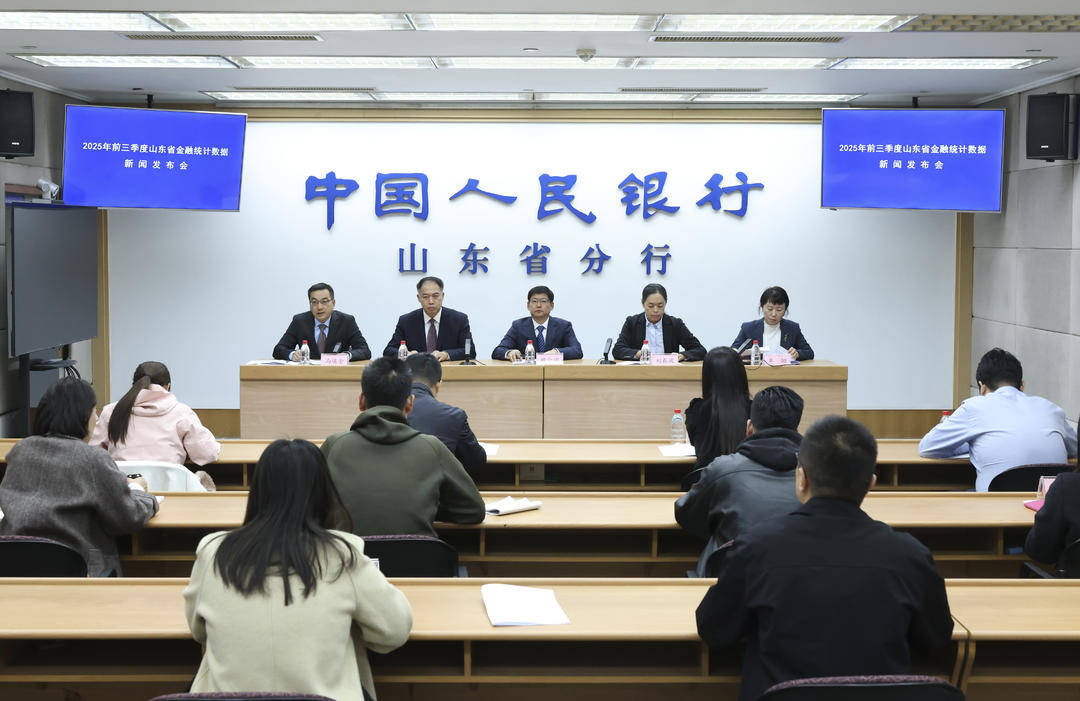
降综合融资成本,山东省已对43万笔、1.73万亿元企业贷款进行成本明示
Sou Hu Cai Jing· 2025-10-27 23:27
Core Insights - The People's Bank of China Shandong Branch has implemented measures to reduce financing costs for enterprises and residents, resulting in a significant decrease in loan interest rates [3][4] - The average interest rate for newly issued corporate loans in Shandong Province is 3.63%, down by 0.32 percentage points year-on-year [3] - The bank's policies are expected to save borrowers approximately 169 billion yuan annually in interest payments [3] Group 1: Corporate Financing - The Shandong Branch has focused on lowering corporate loan costs through structural monetary policy tools and adjustments to the Loan Prime Rate (LPR) [3] - A total of 43,000 loans amounting to 1.73 trillion yuan have had their comprehensive financing costs clarified, leading the nation in both number and amount [3] Group 2: Residential Financing - The interest rate for first-time homebuyers on five-year and above loans has been reduced from 2.85% to 2.6%, saving borrowers 1.2 billion yuan annually [4] - The new commercial personal housing loan rate is 3.05%, reflecting a year-on-year decrease of 0.28 percentage points [4] Group 3: Future Directions - The Shandong Branch will continue to guide banks in implementing interest rate policies and self-regulatory management to maintain a favorable interest rate environment for economic recovery [4]

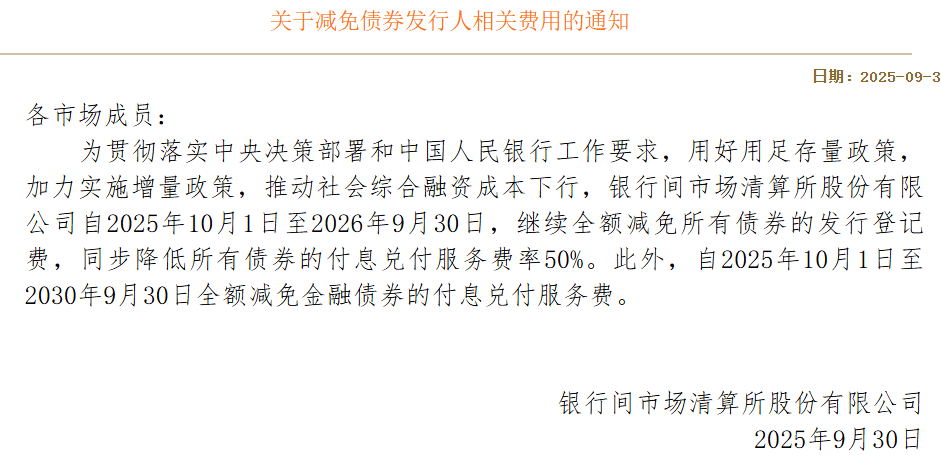
上清所:继续全额减免所有债券发行登记费
Sou Hu Cai Jing· 2025-09-30 02:53
Core Insights - The Shanghai Clearing House announced a continuation of fee reductions for bond issuance and servicing to support the central government's financial policies and reduce overall financing costs in the market [1] Group 1: Fee Reductions - From October 1, 2025, to September 30, 2026, all bond issuance registration fees will be fully waived [1] - The service fee rate for all bond interest payment and redemption will be reduced by 50% during the same period [1] - From October 1, 2025, to September 30, 2030, the service fee for financial bonds' interest payment and redemption will also be fully waived [1]
结构性货币政策工具将持续发力 聚焦重点领域和薄弱环节
Zhong Guo Zheng Quan Bao· 2025-08-05 23:42
Core Viewpoint - The article discusses the ongoing efforts of the People's Bank of China (PBOC) to implement structural monetary policy tools aimed at supporting specific economic sectors and addressing weaknesses in the economy amidst a complex external environment [2][3][4]. Group 1: Structural Monetary Policy Tools - Structural monetary policy tools are essential for providing targeted support to specific economic sectors and weak links [3]. - The PBOC plans to focus on supporting technological innovation and boosting consumption through these tools, with significant funding allocated for various initiatives [3][4]. - By May 2025, loans for technological innovation and transformation are expected to reach 1.7 trillion yuan, which is 1.9 times the amount at the end of 2024 [3]. Group 2: Financing Costs and Economic Support - The average interest rate for new corporate loans from January to June was approximately 3.3%, down about 45 basis points from the previous year [5]. - The PBOC aims to lower overall financing costs to promote high-quality economic development, with a focus on improving the transmission of monetary policy [5][6]. - The PBOC has initiated pilot programs in several provinces to clarify the comprehensive financing costs for enterprises, with expectations for further expansion of these trials [6]. Group 3: Liquidity Management - The PBOC has reduced the reserve requirement ratio by 0.5 percentage points, injecting approximately 1 trillion yuan into the market to maintain ample liquidity [7]. - The central bank will continue to adopt a moderately loose monetary policy stance, utilizing various tools to ensure sufficient liquidity for government bond issuance and credit provision [7]. - Analysts predict that the PBOC will maintain a net injection of liquidity through medium-term lending facilities (MLF) to support the economy and counter external fluctuations [7].
这项新规今起实施!预计每年可节省约11亿元
Guo Ji Jin Rong Bao· 2025-07-01 13:26
Group 1 - The new credit reporting service fee standards will save users approximately 1.1 billion yuan annually starting from July 1 [1] - From July 1, 2025, the baseline service fee for commercial banks querying corporate credit reports will decrease from 20 yuan to 9 yuan, and for personal credit reports from 2 yuan to 1 yuan [1] - Certain financial institutions, including rural commercial banks and consumer finance companies, will benefit from preferential pricing, with corporate credit report fees set at 4.5 yuan and personal credit report fees at 0.5 yuan [1] Group 2 - Individuals can query their credit reports for free online, and the first two queries at a physical counter are also free, with subsequent queries reduced from 10 yuan to 5 yuan [2] - The fee for accounts receivable pledge registration will be halved from 30 yuan to 15 yuan, and other registration fees will also see significant reductions [2] - The reduction in credit reporting costs is expected to lower overall financing costs for financial institutions, which could benefit small and medium-sized financial entities significantly [2]
年省11亿!企业个人迎征信服务降费大礼包
第一财经· 2025-06-05 03:16
Core Viewpoint - The recent notification from the National Development and Reform Commission aims to reduce credit service fees, effective from July 1, 2025, to lower operational costs for businesses, optimize the business environment, and promote the development of the real economy and social credit system [1][4]. Group 1: Fee Reduction Details - The service fee for querying corporate credit reports will decrease from 20 yuan to 9 yuan, while the fee for personal credit reports will drop from 2 yuan to 1 yuan [4]. - Various financial institutions, including rural commercial banks and consumer finance companies, will continue to enjoy preferential fee standards, with personal internet queries remaining free [4]. - The annual fee for accounts receivable pledge registration will be reduced from 30 yuan to 15 yuan, and the fees for change and dispute registrations will decrease from 10 yuan to 5 yuan [4]. Group 2: Impact on Financial Institutions - The reduction in credit service costs is expected to save users approximately 1.1 billion yuan annually [2]. - Lowering credit costs will alleviate the operational burden on banks, facilitating financing for the real economy, and will also reduce the financial burden on individuals seeking credit information [4]. - The adjustment is particularly beneficial for small financial institutions, as they often face higher credit costs due to the volume of small transactions [4]. Group 3: Broader Financial Context - In the context of increasing pressure on bank interest margins, reducing non-interest costs like credit service fees is crucial for lowering overall financing costs in society [6][7]. - The People's Bank of China has made significant progress in building a comprehensive credit information system, which is now the largest in the world in terms of population coverage and data collection [7]. - The dual approach of "government + market" in developing the credit system aims to enhance service quality and efficiency, thereby improving the matching of financial resources with real demand [7]. Group 4: Potential Issues - The reduction in query costs may lead to excessive information queries, raising concerns about consumer rights and the need for transparency in the querying process [8]. - A robust social credit system is essential for the stable development of consumer finance, and there are suggestions to grant consumer finance companies access to the same data as banks to improve their service capabilities [8].

年省11亿!企业个人迎征信服务降费大礼包
Di Yi Cai Jing· 2025-06-04 13:45
Core Viewpoint - The recent notification from the National Development and Reform Commission aims to reduce credit service fees starting from July 1, 2025, to lower business operating costs and optimize the business environment, which will have a profound impact on financial institutions, businesses, and individuals [1][4]. Group 1: Fee Reductions - The adjustment in credit service fees is significant, with the standard service fee for querying corporate credit reports reduced from 20 yuan to 9 yuan, and for personal credit reports from 2 yuan to 1 yuan [3]. - Various financial institutions, including rural commercial banks and consumer finance companies, will continue to enjoy preferential fee standards, while individuals can still query their credit reports online for free [3][4]. - The annual cost savings for users due to the fee reductions is estimated to be around 1.1 billion yuan [2]. Group 2: Impact on Financial Institutions - Lowering credit service costs is expected to alleviate the operational cost burden on banks, thereby supporting the financing development of the real economy [3]. - The reduction in credit costs is particularly beneficial for small financial institutions, which often face higher credit costs due to the nature of their lending practices [3][4]. Group 3: Broader Economic Implications - The initiative to lower credit service fees is part of a broader strategy to reduce overall financing costs in society, especially in the context of increasing pressure on bank interest margins [4]. - The People's Bank of China has made significant progress in building a comprehensive credit information system, which is crucial for matching financial resources with real demand [4]. Group 4: Considerations and Recommendations - There are concerns regarding potential over-querying of user information due to the lower costs, highlighting the need for financial institutions to respect consumer rights [5]. - Recommendations include optimizing the credit environment and providing consumer finance companies with equal access to public data, which could enhance their operational capabilities [6].
存贷款利率同步下降 专家:有利于加大金融支持实体经济力度
news flash· 2025-05-21 00:54
Group 1 - The one-year and five-year loan market quotation rates (LPR) have both decreased by 10 basis points, now standing at 3.0% and 3.5% respectively [1] - The reduction in LPR is expected to enhance financial support for the real economy, while the optimization of deposit rates by major banks creates favorable conditions for lowering overall financing costs [1] - The decline in LPR will continue to drive down the comprehensive financing costs in society, stabilize market expectations, stimulate credit demand, and promote corporate investment [1] Group 2 - The decrease in the five-year LPR is beneficial for reducing the interest burden on mortgage borrowers, which in turn promotes consumer spending [1]