
雪假

Search documents
父母没“雪假”,孩子怎么玩?
Xin Hua Wang· 2025-12-26 22:44
Core Viewpoint - The introduction of the "snow holiday" in Hohhot, Inner Mongolia, allows students from grades one to eight to engage in various winter activities, despite some parents not having time off work [1][9]. Group 1: Activities and Engagement - Schools in the region are providing organized activities during the "snow holiday," including fun ice and snow competitions, indoor sports, and volunteer opportunities [2][8]. - Students are encouraged to participate in outdoor activities such as snow soccer, tug-of-war, and snowman building, as well as indoor activities like crafting snowflakes and conducting ice science experiments [5][8]. - The "snow holiday" is designed to integrate local natural resources into the curriculum, allowing students to appreciate their unique environment [2][8]. Group 2: Educational Impact - The absence of homework during the "snow holiday" allows children to enjoy their time freely, fostering creativity and teamwork through various activities [5][9]. - Schools are utilizing this opportunity to enhance students' resilience, creativity, and collaborative spirit through structured ice and snow-related activities [8]. - The "snow holiday" serves as a practical learning experience, combining physical activity with cultural education, such as traditional crafts and ecological awareness [9].

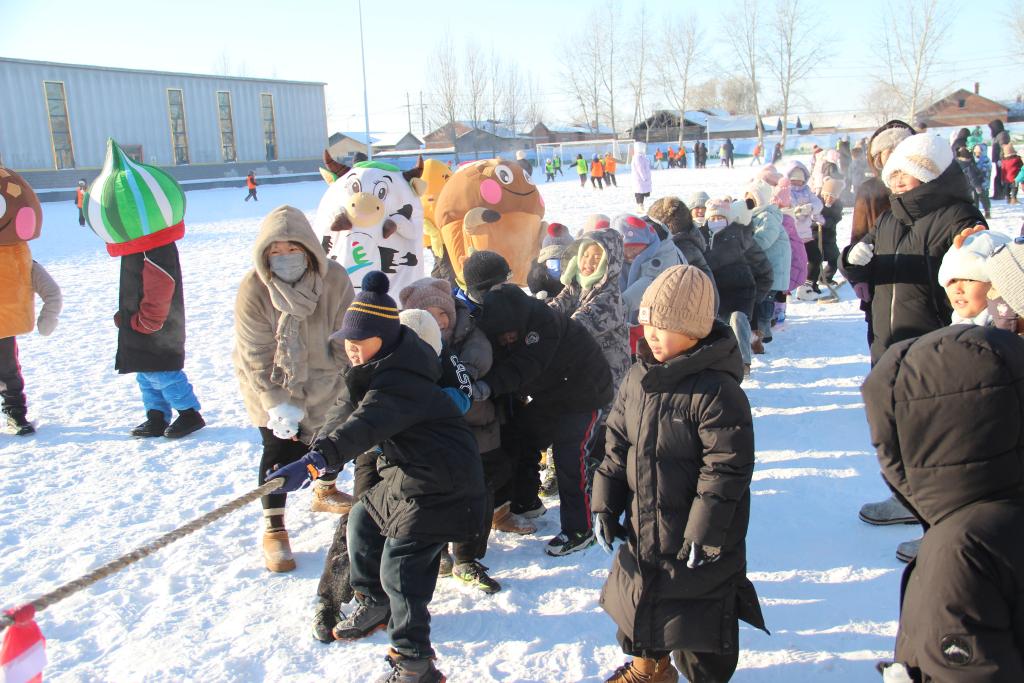
内蒙古呼伦贝尔首次放“雪假”:冰天雪地涌动消费热
Zhong Guo Qing Nian Bao· 2025-12-26 06:36
Group 1 - The core idea of the news is the introduction of the "snow holiday" for students in Hohhot, which promotes ice and snow activities and aims to enhance physical fitness and cultural experiences [1][2] - The "snow holiday" is part of a broader strategy to boost the ice and snow economy in Hohhot, encouraging family participation and city-wide engagement [2] - Schools are not conducting classroom teaching or assigning homework during this period, allowing students to engage in various ice and snow activities [1][2] Group 2 - The initiative includes paid leave for employees of government and enterprises to participate in ice and snow events, creating a family-friendly atmosphere [2] - Local ski resorts are offering free skiing experiences for students, while parents receive discounts on tickets, enhancing family participation [2][3] - The "snow holiday" has led to a significant increase in family consumption, positively impacting the ice and snow industry, with expected visitor growth exceeding 150% at key ski resorts [3]
新疆阿勒泰:纵情冰雪之间 乐享四季旅程
Xin Hua She· 2025-12-10 14:05
Group 1 - The core initiative is the introduction of a "snow holiday" for middle and primary school students in Urumqi and Altay regions, aimed at promoting ice and snow sports and cultural heritage [1] - In the Altay region, approximately 73,000 students will benefit from a 9-day holiday, allowing them to engage with nature and enhance their physical fitness [1] - Various ski resorts in Altay City are offering discounts on student tickets, ski equipment rentals, and dining services, with specific promotions such as half-price rentals and 20% off for ski lessons [1] Group 2 - Accommodation options include special rates for students, with some hotels offering rooms for 220 yuan, and free public transportation for students throughout the city [1]

“春秋假”后“雪假”会带来什么?
Xin Hua Wang· 2025-12-10 02:07
Core Viewpoint - The introduction of "snow holidays" in regions like Jilin and Xinjiang aims to promote ice and snow sports among students, enhance physical health, and stimulate the local ice and snow economy through coordinated efforts from multiple departments [2][7]. Group 1: Policy Implementation - The "snow holiday" initiative is characterized by multi-department collaboration, including education, tourism, human resources, and sports, to create a comprehensive policy that encourages student participation in ice and snow activities [2][3]. - Jilin's "snow holiday" design draws from successful experiences in other provinces that have implemented spring and autumn breaks, adapting to local conditions and climate [2]. Group 2: Economic Impact - The "snow holiday" has significantly boosted ice and snow tourism, with a reported 6.5 times increase in tourism product interest in Jilin during the holiday period compared to the previous week [7]. - In Xinjiang, ski resorts experienced a 91.75% increase in visitor numbers during the holiday, indicating a strong demand for winter sports activities [8]. Group 3: Community Engagement - Local communities are actively involved in ensuring a safe and enjoyable experience for children during the "snow holiday," with improvements in facilities and services at ski resorts and cultural sites [4][5]. - Schools are organizing various ice and snow activities, allowing students to engage with local culture and history through experiential learning [6]. Group 4: Future Prospects - The "snow holiday" is expected to become a new growth point for the cultural and tourism industry, with potential for increased family travel and diverse market consumption during winter [8]. - The initiative is seen as a catalyst for the sustainable development of the ice and snow economy, with expectations for further policy enhancements to maximize its benefits [8].
追光|阿勒泰“雪假”首秀:孩子们的冬天被重新定义
Xin Hua She· 2025-12-05 13:55
Core Viewpoint - The introduction of a "snow holiday" in Altay City, Xinjiang, provides students with a unique opportunity to engage in winter sports, particularly skiing, while also stimulating local tourism and community activities [3][21]. Group 1: Snow Holiday Implementation - From December 1 to 5, a "snow holiday" was implemented for students in Urumqi and Altay, resulting in a 9-day break when combined with the preceding weekends [3]. - The holiday includes various discounts and free services for students, such as free public transport and reduced prices for ski equipment and lessons [7][9]. Group 2: Student Engagement and Activities - Students are actively participating in skiing, with many expressing excitement about the extended time available for practice, which enhances their skills [9][11]. - Over 200 ski instructors are available, and 39 winter camps were organized on the first day of the holiday, attracting around 1,000 children [11][13]. Group 3: Community and Cultural Impact - The holiday is seen as beneficial for children's development, promoting courage and perseverance through winter sports [15]. - Local cultural institutions are involved in activities that allow students to explore and learn about the region's ice and snow culture, enhancing their educational experience [19]. Group 4: Economic Impact - The "snow holiday" has positively impacted local tourism, with over 104,500 visitors recorded on December 2 alone, leading to a 21.25% increase in spending compared to the previous year [21]. - The holiday creates a ripple effect where students' participation encourages family visits, thereby boosting the local economy [21].
放雪假多地滑雪场长满了学生
Di Yi Cai Jing· 2025-12-05 11:01
Core Insights - The introduction of "snow holidays" in various regions is expected to boost local tourism and enhance family travel experiences [2][3][4] Group 1: Snow Holidays Implementation - Xinjiang's Altay region will implement its first "snow holiday" from December 1 to 5, 2025, providing a continuous 9-day break for 73,000 students [2] - Jilin Province has scheduled its "ice and snow holiday" from December 3 to 7, 2025, ensuring it does not overlap with summer and winter vacations [2] - The implementation of these holidays is part of a broader initiative to promote student well-being and educational practices [2][3] Group 2: Impact on Tourism - Jilin's local tourism saw a significant increase, with daily visitors to the Songhua Lake Resort exceeding 3,000 during the snow holiday, and ski trail usage rising by 60% compared to regular days [2][3] - The booking volume for local tours in Jilin surged over 6.5 times week-on-week during the snow holiday, driven by promotional ticket offers for students [3] - In regions like Urumqi and Altay, ski resorts offered discounts on lift tickets and equipment rentals, attracting many families to the slopes [3] Group 3: Economic and Social Benefits - Experts suggest that the establishment of snow holidays can cultivate the market and promote the development of the ice and snow economy [4] - These holidays encourage off-peak travel, which can sustain tourism consumption during traditionally slower periods [4]
第一批骂雪假最凶的家长,却把滑雪课抢爆了
3 6 Ke· 2025-12-04 02:17
Core Insights - The article discusses the recent introduction of a snow holiday for middle and primary school students in Jilin Province, which has sparked significant public debate and mixed reactions from parents [1][2]. Group 1: Changing Demographics in Skiing - The primary demographic for skiing in China is shifting towards younger individuals, particularly children aged 6-12, who now represent over 30% of ski lesson purchasers from 2020 to 2024 [3][4]. - This trend indicates a growing interest in skiing among younger age groups, driven by parental concerns about education and social status [5][6]. Group 2: Parental Reactions and Behavior - Many parents express frustration over the snow holiday while simultaneously seeking ski lessons for their children, highlighting a contradiction in their attitudes [6][7]. - The increase in ski lesson bookings during the snow holiday period, with a reported 210% surge in orders for parent-child ski courses, reflects a strong demand despite parental complaints [7][8]. Group 3: Implications for the Ski Industry - The emergence of a younger skiing demographic is prompting ski resorts to adapt their marketing and services to cater to this new customer base, which is seen as a vital source of long-term growth [14]. - Ski resorts are implementing various strategies, such as offering free admission for students and creating targeted ski training programs, to attract and retain young skiers [14]. Group 4: Broader Economic Impact - The introduction of new public holidays like the snow holiday is expected to stimulate tourism and consumer spending, contributing to economic growth [15][16]. - The success of the snow holiday may lead to more provinces adopting similar initiatives, enhancing the overall landscape of public holidays in China [16][17].
地方“雪假”试点再添新例 “加热”新雪季激活消费新活力
Zheng Quan Shi Bao· 2025-12-03 22:15
Core Viewpoint - Jilin Province has introduced a "snow holiday" from December 3 to December 7, 2025, for all students in the compulsory education stage, aimed at promoting ice and snow sports and enhancing local consumption in the ice and snow sector [1][2][3]. Group 1: Policy Implementation - The "snow holiday" will not overlap with winter or summer vacations, allowing students to engage in ice and snow activities without academic pressure [1][5]. - Students can enjoy free access to designated ski and ice rinks for three hours, along with free admission to winter tourist attractions [3][4]. - The policy aims to create a sustainable mechanism for ice and snow culture and industry development, transitioning from a temporary measure to a long-term initiative [2][8]. Group 2: Economic Impact - The introduction of the "snow holiday" is expected to activate local ice and snow consumption potential, benefiting related industries such as accommodation, dining, and transportation [2][7]. - The initiative is part of a broader strategy to position Jilin as a prominent ice and snow destination, enhancing its brand recognition both nationally and globally [6][7]. Group 3: Comparison with Other Regions - Xinjiang has also implemented a "snow holiday," but Jilin's approach is more inclusive, offering the holiday to all students without regional restrictions [5][6]. - While Xinjiang's holiday is designed to connect with weekends for longer breaks, Jilin's holiday is a fixed period, emphasizing participation in ice and snow activities [5][6]. Group 4: Challenges and Future Directions - There are concerns about the actual participation rates of students, as the policy is largely advisory and may face practical challenges in implementation [7][8]. - Experts suggest that the "snow holiday" should evolve into organized activities, integrating ice and snow education into regular school curricula to ensure long-term engagement [8].
“雪假”不只是“旅游假”,因地制宜设假期或是趋势
Nan Fang Du Shi Bao· 2025-12-01 07:16
Core Insights - The introduction of "snow holidays" in provinces like Xinjiang and Jilin aims to boost tourism and enhance student engagement in winter sports, following the earlier implementation of spring and autumn holidays in provinces such as Zhejiang, Sichuan, and Guangdong [1][2] - The "snow holiday" concept is part of a broader strategy to stimulate cultural and tourism consumption by creating additional vacation time outside of the fixed statutory holidays [1][2] - Local governments are encouraged to develop unique holidays based on regional characteristics to promote tourism and economic growth, as highlighted by the National Development and Reform Commission's initiative [2][3] Group 1 - The "snow holiday" in Jilin is specifically designed to promote the ice and snow market, offering free admission to students at tourist attractions and discounts for parents [1][2] - The initiative is expected to activate the winter tourism market by encouraging family participation in ice and snow activities [1][2] - The implementation of "snow holidays" is supported by policies that prioritize time off for parents to accompany their children, enhancing family bonding and community engagement [2] Group 2 - The concept of "snow holidays" is seen as a means to improve student health, broaden their horizons, and foster family harmony, beyond just tourism [2] - Local governments are exploring the establishment of holidays that reflect local cultural resources, such as a potential "scented pouch holiday" to promote traditional culture [3] - While local holidays may primarily attract regional tourists, there is a need to develop strategies to draw in visitors from outside the area to maximize economic benefits [3]
“雪假”不只是“旅游假” 因地制宜设假期或是趋势
Nan Fang Du Shi Bao· 2025-12-01 00:20
Core Viewpoint - The introduction of "snow holidays" in provinces like Xinjiang and Jilin aims to boost tourism and enhance family engagement in winter sports, while also promoting student health and cultural experiences [1][2]. Group 1: Policy Implementation - The "snow holiday" concept is rapidly being adopted in provinces such as Xinjiang and Jilin, following the earlier implementation of spring and autumn holidays in regions like Zhejiang, Sichuan, and Guangdong [1]. - Jilin's "ice and snow holiday" specifically targets compulsory education students without encroaching on existing winter and summer breaks [1]. Group 2: Economic Impact - The introduction of spring and autumn holidays has shown a positive impact on the tourism market, particularly during off-peak seasons, indicating a trend towards enhancing tourism consumption [1]. - The "snow holiday" is expected to invigorate the winter tourism market by encouraging family participation in ice and snow activities, thus driving economic benefits for local tourism sectors [1][2]. Group 3: Educational and Social Benefits - Beyond economic gains, "snow holidays" are designed to improve student physical fitness, broaden their horizons through educational activities, and foster family bonding [2]. - The initiative aligns with national policies aimed at promoting the ice and snow economy, as outlined in the State Development and Reform Commission's plan for revitalizing the Northeast region [2]. Group 4: Local Adaptation and Future Trends - The concept of establishing local holidays based on regional characteristics is gaining traction, allowing for tailored approaches to tourism and cultural promotion [3]. - While local holidays may primarily attract regional tourists, there is a need to explore strategies to draw in visitors from outside the area to maximize economic benefits [3].