
霍尔木兹海峡

Search documents
Trump waives U.S. shipping law for 60 days to steady oil market
Youtube· 2026-03-18 15:55
Group 1 - The White House has announced a 60-day suspension of the Jones Act to alleviate short-term disruptions in the oil market due to military operations [1] - The Jones Act requires that ships transporting goods between U.S. ports be U.S.-owned and operated, which has been linked to high shipping costs; the suspension aims to lower these costs by allowing international ships [2] - The administration is focused on the impact of this suspension on oil prices, particularly on the East Coast, although the exact effect remains uncertain [2] Group 2 - President Trump has expressed frustration over NATO allies' lack of naval support in the Strait of Hormuz, suggesting that the U.S. might consider abandoning the area [4] - The White House has stated that the U.S. does not rely on the Strait of Hormuz for oil supply, as it is a net oil exporter, but is concerned about global oil prices [5] - The administration is sensitive to rising oil prices and is taking steps to address this issue [6]


特朗普:对伊朗石油出口枢纽发动“猛烈空袭”
第一财经· 2026-03-14 00:18
Group 1 - The article reports that U.S. President Trump announced on social media that the U.S. military has conducted "intense airstrikes" on military targets at the Iranian oil export hub of Khark Island [2] - Trump claimed that the operation "completely destroyed" all military targets on the island, but did not damage the oil infrastructure [2] - The article highlights that Khark Island is a critical hub for Iranian oil exports, and Iranian parliamentary speaker Ghalibaf warned that Iran would "abandon all restraint" if the U.S. and Israel attack any Iranian islands in the Persian Gulf [2]

国际油价大跳水!“特朗普或将取消对俄石油制裁”
第一财经· 2026-03-10 02:56
Core Viewpoint - International oil prices experienced a significant drop, with both Brent and WTI crude oil prices retracting earlier gains due to geopolitical tensions and market reactions to U.S. policy changes regarding Iran and oil sanctions [1]. Group 1: Geopolitical Impact on Oil Prices - On March 9, Trump indicated that U.S. military actions against Iran would conclude swiftly, which contributed to market volatility [1]. - Trump announced plans to lift certain oil-related sanctions to stabilize oil prices amid the turmoil caused by U.S. and Israeli actions against Iran [1]. - Discussions between Trump and Russian President Putin included considerations of easing U.S. oil sanctions on Russia and the potential release of emergency oil reserves [1]. Group 2: Strategic Considerations - Trump is contemplating measures to "control" the strategic Strait of Hormuz, a critical maritime route for global oil transportation [1].
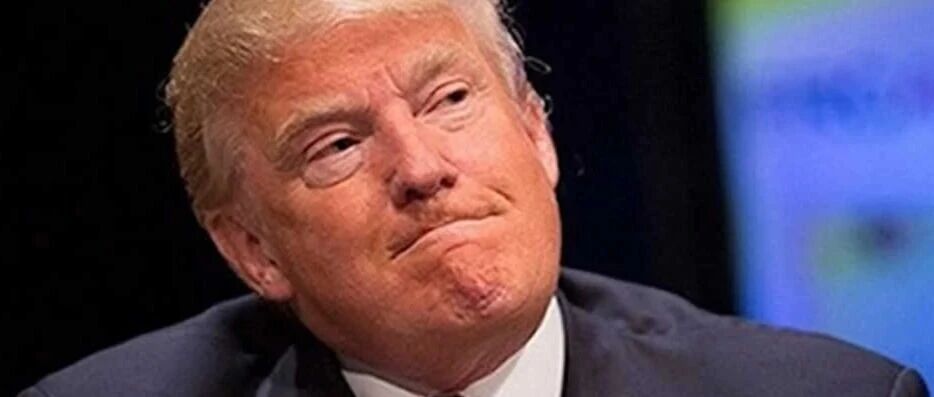
特朗普称正考虑对伊朗实施有限军事打击
Xin Lang Cai Jing· 2026-02-20 16:20
Group 1 - The U.S. President Donald Trump is considering a limited military strike against Iran to pressure its nuclear program [3][11] - Trump indicated that a decision on whether to strike Iran will be made within the next 10 to 15 days, while still leaving open the possibility of reaching an agreement with Tehran regarding its nuclear program [4][11] - The U.S. is significantly increasing its military presence in the Middle East, with the deployment of the USS Abraham Lincoln aircraft carrier and the USS Gerald R. Ford heading to the region [5][11] Group 2 - Oil prices have risen over 5% this week but stabilized on Friday, as traders have factored in some risk of potential U.S. military action [9][11] - As of 10:39 AM Eastern Time, U.S. crude oil prices fell by 28 cents to $66.15 per barrel, while global benchmark Brent crude prices decreased by 23 cents to $71.43 per barrel [5][11] - The primary concern in the oil market is that conflict between the U.S. and Iran could lead to a prolonged disruption of oil transport through the Strait of Hormuz, a critical chokepoint for global oil trade [6][11] Group 3 - According to consulting firm Kpler, over 14 million barrels of oil and condensate pass through the Strait of Hormuz daily, accounting for one-third of global seaborne oil exports [12] - Approximately three-quarters of the oil transported through the Strait is destined for China, India, Japan, and South Korea [12]
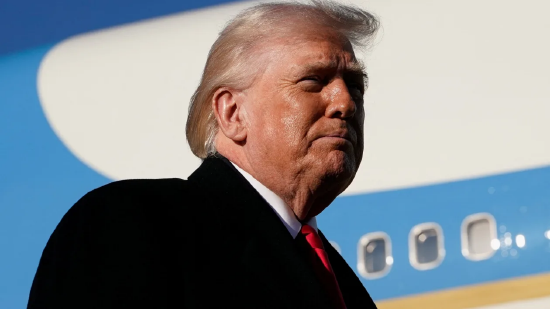
最新回应:“游戏并未结束”
中国基金报· 2025-06-23 00:17
Core Viewpoint - The situation regarding Iran's nuclear materials remains unresolved, with Iranian officials asserting that the game is not over despite recent military actions by the U.S. [2] Group 1: Iran's Nuclear Situation - Ali Shamkhani, a political advisor to Iran's Supreme Leader, stated that Iran still possesses enriched uranium materials and that the political and military will to continue exists [2] - The U.S. military conducted airstrikes on Iranian nuclear facilities, claiming to have "successfully struck" key sites [2][8] - Iran's defense systems were activated in Tehran and Karaj following the U.S. airstrikes [4] Group 2: U.S.-Iran Relations - U.S. Secretary of State Rubio expressed readiness for direct negotiations with Iran, emphasizing that Iran can have a civilian nuclear program but cannot enrich uranium [8] - Rubio noted that Iran had rejected U.S. proposals and had not engaged in direct talks prior to U.S. military actions [8] Group 3: Regional Tensions - The Iranian parliament's National Security Committee has suggested closing the Strait of Hormuz, a critical maritime route for global oil trade [10][11] - The Strait of Hormuz is vital as it connects the Gulf of Oman and the Persian Gulf, with approximately one-third of the world's maritime oil trade passing through it [11] Group 4: Escalation of Violence - Israel reported that a new round of missile attacks from Iran resulted in at least 16 injuries [6] - A suicide attack in Syria resulted in 22 deaths and 63 injuries, marking one of the most severe terrorist incidents since the political upheaval in Syria [12][14]

6月17日电,据报道,卡塔尔要求LNG船在霍尔木兹海峡外等待装货。
news flash· 2025-06-17 14:32
Group 1 - Qatar has requested LNG ships to wait outside the Strait of Hormuz for loading [1]