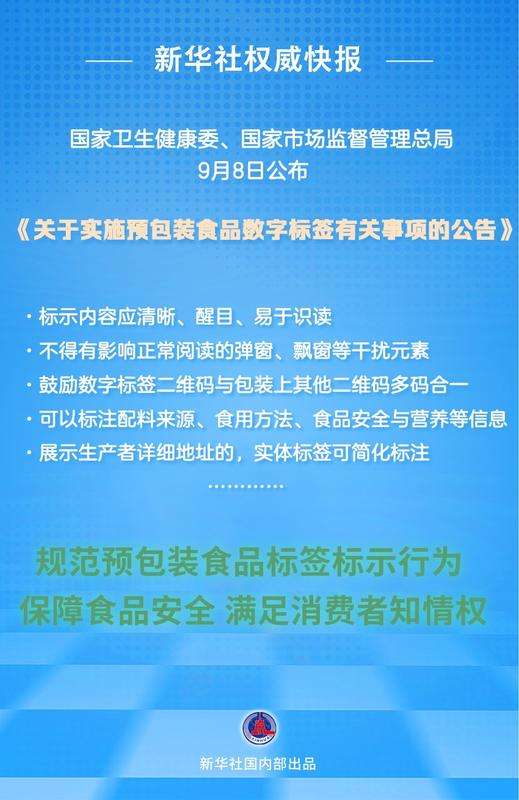
预包装食品数字标签

Search documents
广东研讨"十五五"食品安全标准新方向
2 1 Shi Ji Jing Ji Bao Dao· 2026-01-15 14:10
Core Insights - The Guangdong Province Food Technology Innovation Empowerment Conference was held in Guangzhou on January 15, focusing on the "14th Five-Year Plan" direction and discussing food technology innovation and the promotion of digital labels for pre-packaged foods [1] Group 1: Digital Label Promotion - Guangdong is actively implementing a "Digital Label Promotion Year" initiative, aiming to enhance the application of digital labels in the food industry by 2025 [1] - Currently, nearly 40 companies and 120 products in the province have participated in the digital label application practice, exceeding the annual target [1] - Major food enterprises, such as Haitian Flavoring & Food Co., have shown significant enthusiasm, with their practices recognized as typical cases of digital labels at the national level, serving as a good demonstration [1]
广东研讨“十五五”食品安全标准新方向
2 1 Shi Ji Jing Ji Bao Dao· 2026-01-15 13:56
Core Viewpoint - The Guangdong Province Food Technology Innovation Empowerment Conference focuses on the development of the health industry through food technology innovation and the promotion of digital labeling for pre-packaged foods [1] Group 1: Digital Labeling Initiative - Guangdong is implementing a "Digital Labeling Promotion Year" initiative, aiming to enhance the application of digital labels in the food industry by 2025 [1] - Currently, nearly 40 companies and 120 products in the province are participating in the digital labeling application practice, exceeding the annual target [1] - Notably, large well-known food companies are showing significant enthusiasm, with Haidilao (Haidilao Soy Sauce) being recognized as a typical case for digital labeling at the national level, serving as a good model for others [1]
食品安全“码”上见
Xin Lang Cai Jing· 2025-10-26 23:10
Core Viewpoint - The implementation of digital labels for pre-packaged foods aims to address issues related to traditional labeling, such as difficulty in finding, reading, and understanding information, marking a new phase in food label management in China [1][2] Group 1: Digital Labeling Benefits - Digital labels, represented by QR codes, allow consumers to access detailed food information through mobile devices, overcoming the limitations of physical labels [2] - The core value of digital labels lies in their ability to create an expandable, interactive, and updatable "information cloud space," enhancing the depth and breadth of information conveyed [2] - Digital labels improve consumer experience by providing easy access to multi-language content and voice playback options, catering to visually impaired individuals and the elderly [2] Group 2: Production and Regulatory Efficiency - Digital labels enable companies to update product information in real-time without waiting for the next printing cycle, enhancing responsiveness to regulatory changes and safety alerts [3] - Regulatory bodies can utilize digital label systems for efficient data acquisition and analysis, improving risk monitoring and precision in regulation [3] - The promotion of digital labels is set to accelerate, with 2025 designated as the "Year of Food Digital Labels" by the National Health Commission [3] Group 3: Challenges and Considerations - The introduction of digital labels may create a "digital divide" for consumers unfamiliar with technology, necessitating a smooth transition that preserves essential information on traditional labels [4] - There is a need for unified technical standards and application norms to prevent the emergence of information silos and ensure data security and user privacy [4] - Concerns about increased operational costs for businesses adopting digital labels highlight the importance of policy guidance and market incentives to demonstrate long-term value in brand image and compliance risk mitigation [4]
新华鲜报丨“码”上可知!我国推广数字标签助力食品安全监管
Xin Hua Wang· 2025-09-08 01:20
Core Viewpoint - The announcement by the National Health Commission and the State Administration for Market Regulation marks a significant shift towards digital labeling for pre-packaged food in China, enhancing consumer access to detailed product information and ensuring food safety [1][2][3]. Group 1: Digital Labeling Implementation - The digital labeling system allows for comprehensive information display, including ingredient sources, production methods, and nutritional information, addressing previous limitations of physical labels [4][5]. - The digital labels will feature functionalities such as audio playback and enlarged text, making information more accessible to consumers [3][4]. Group 2: Regulatory Framework - The announcement specifies that digital label content must comply with existing food safety laws and standards, ensuring accuracy and traceability of information [5]. - Clear guidelines are provided for the presentation of digital labels, emphasizing readability and the avoidance of distracting elements [5]. Group 3: Environmental and Economic Benefits - The initiative includes measures to simplify physical labels by allowing producers to abbreviate their addresses, thus freeing up space for more information and reducing packaging costs [6]. - The promotion of digital labels is expected to contribute to carbon reduction efforts and enhance operational efficiency for food producers [6]. Group 4: Future Developments - The year 2025 has been designated as the "Year of Food Digital Label Promotion," with plans for further integration of digital labels into online food sales and smart home applications [6].

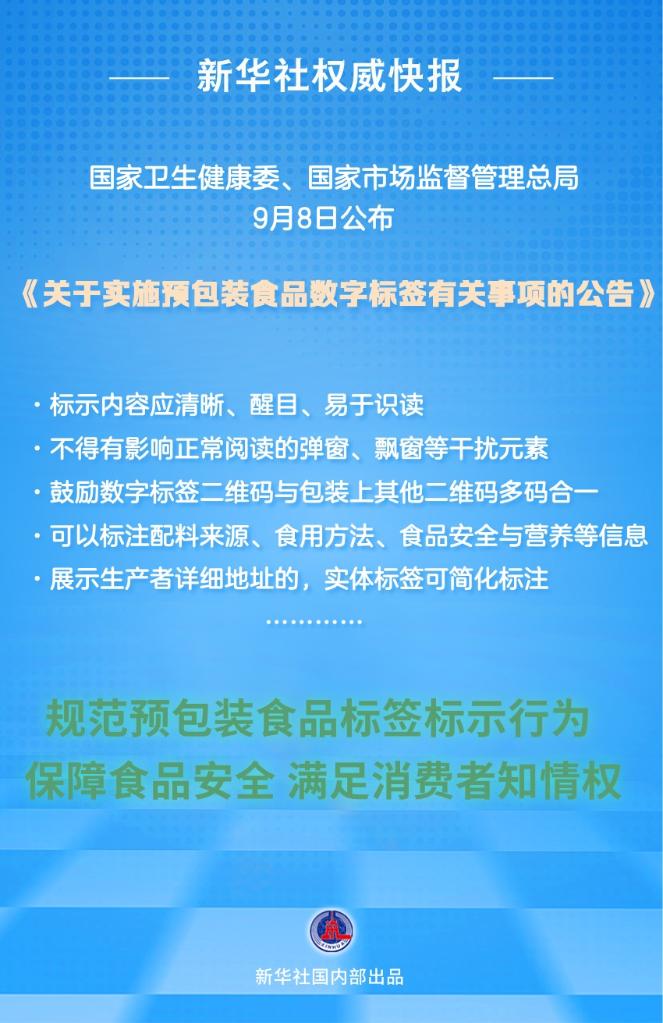
食品信息一目了然!预包装食品数字标签公告发布
Xin Jing Bao· 2025-09-08 01:15
Core Points - The announcement by the National Health Commission and the State Administration for Market Regulation on September 8 outlines the implementation of digital labels for pre-packaged foods, emphasizing compliance with the Food Safety Law and national standards [2] - The digital label is defined as the digital representation of the physical label of pre-packaged foods, which must meet specific requirements for clarity, readability, and the absence of disruptive elements [2] - The announcement encourages the integration of QR codes on digital labels with other codes on packaging, allowing for comprehensive information on ingredient sources, consumption methods, and food safety and nutrition [2][3] Industry Summary - The National Health Commission has been working with relevant departments to optimize food label management, resulting in a well-established food label standard system that plays a crucial role in regulating labeling practices, ensuring food safety, and protecting consumer rights [3]