
预包装食品数字标签

Search documents
手机扫一扫 信息全知晓
Xin Lang Cai Jing· 2026-02-01 21:21
Core Viewpoint - The implementation of digital labels on pre-packaged foods in Longyan City, Fujian Province, aims to enhance consumer experience by providing clearer and richer product information through QR codes, facilitating a new ecosystem of trustworthy food information [1][2] Group 1: Digital Label Implementation - The National Health Commission and the State Administration for Market Regulation announced the promotion of digital labeling for pre-packaged foods nationwide, encouraging companies to use QR codes for better consumer information [1] - Longyan City’s Suan Limón Food Co. and Longyan Charoen Pokphand Foods Co. are the first pilot companies to introduce this consumer-friendly measure in the local market [1] Group 2: Consumer Experience Enhancement - Consumers can access traditional label information and additional details through QR codes, including enlarged text, audio reading, explanations of technical terms, and clearer nutritional information, improving the overall shopping experience [2] - The digital labels also allow for visual representation of the production process, providing detailed cooking methods and videos that illustrate the entire supply chain from raw material farming to cold chain transportation [2]
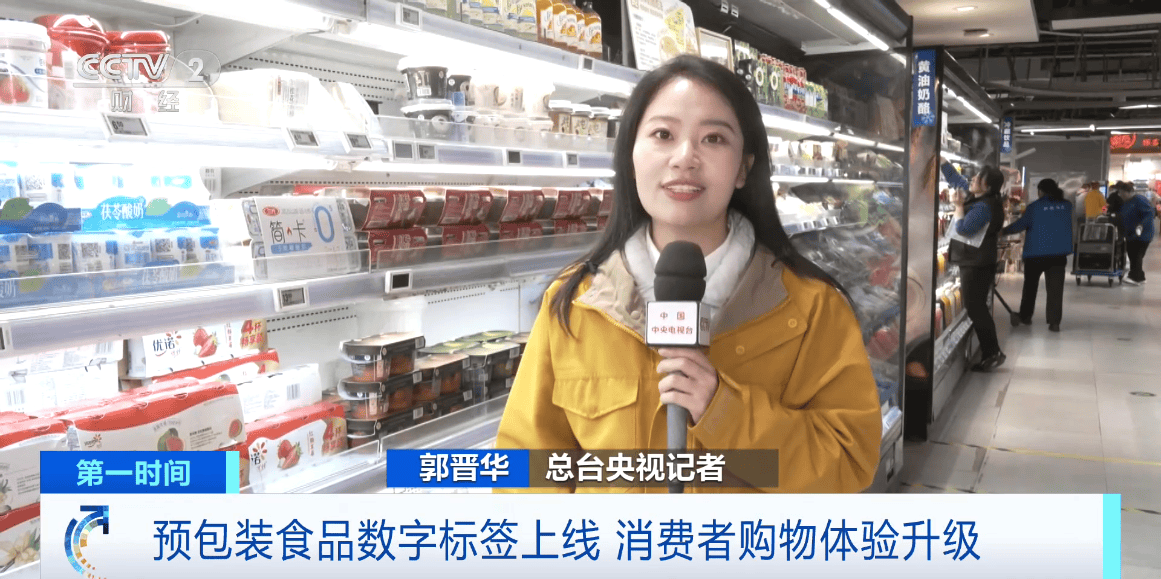
预包装食品数字标签上线!与普通标签有何不同?记者探访→
Sou Hu Cai Jing· 2025-11-21 11:43
Core Viewpoint - The implementation of digital labels for pre-packaged foods is being advanced by the National Health Commission and the State Administration for Market Regulation in China, enhancing consumer access to detailed product information through digital means [1]. Group 1: Digital Label Implementation - The announcement regarding the implementation of digital labels for pre-packaged foods was jointly released by the National Health Commission and the State Administration for Market Regulation in September [1]. - Digital labels are being applied to various categories of pre-packaged foods, including dairy products, grains, oils, and beverages [1]. Group 2: Consumer Experience - In a supermarket in Beijing, many products are already utilizing digital labels, allowing consumers to scan QR codes for detailed information such as ingredient lists and production dates [3]. - Digital labels provide additional features compared to physical labels, including access to third-party testing reports and supplier qualifications, addressing common consumer issues like visibility and readability [5]. Group 3: Online Platforms - Digital labels are not limited to physical stores; several online shopping platforms have also adopted this technology for various products [7]. - JD.com has taken the lead in promoting digital labels across eight categories, including grains, condiments, beverages, and snacks, resulting in increased product viewership since the launch [9].

食品安全“码”上见
Xin Lang Cai Jing· 2025-10-26 23:10
Core Viewpoint - The implementation of digital labels for pre-packaged foods aims to address issues related to traditional labeling, such as difficulty in finding, reading, and understanding information, marking a new phase in food label management in China [1][2] Group 1: Digital Labeling Benefits - Digital labels, represented by QR codes, allow consumers to access detailed food information through mobile devices, overcoming the limitations of physical labels [2] - The core value of digital labels lies in their ability to create an expandable, interactive, and updatable "information cloud space," enhancing the depth and breadth of information conveyed [2] - Digital labels improve consumer experience by providing easy access to multi-language content and voice playback options, catering to visually impaired individuals and the elderly [2] Group 2: Production and Regulatory Efficiency - Digital labels enable companies to update product information in real-time without waiting for the next printing cycle, enhancing responsiveness to regulatory changes and safety alerts [3] - Regulatory bodies can utilize digital label systems for efficient data acquisition and analysis, improving risk monitoring and precision in regulation [3] - The promotion of digital labels is set to accelerate, with 2025 designated as the "Year of Food Digital Labels" by the National Health Commission [3] Group 3: Challenges and Considerations - The introduction of digital labels may create a "digital divide" for consumers unfamiliar with technology, necessitating a smooth transition that preserves essential information on traditional labels [4] - There is a need for unified technical standards and application norms to prevent the emergence of information silos and ensure data security and user privacy [4] - Concerns about increased operational costs for businesses adopting digital labels highlight the importance of policy guidance and market incentives to demonstrate long-term value in brand image and compliance risk mitigation [4]
数字标签守护舌尖上的安全
Jing Ji Ri Bao· 2025-10-21 22:02
Core Viewpoint - The recent announcement by the National Health Commission and the State Administration for Market Regulation marks the beginning of a digital transformation in the management of pre-packaged food labels in China, enhancing consumer access to detailed food information [1][2]. Group 1: Digital Label Implementation - Digital labels serve as an "electronic ID" for food products, allowing consumers to scan QR codes on packaging to access enlarged text, audio explanations, ingredient origins, production details, and full traceability [1]. - The introduction of digital labels aims to improve information display and food safety supervision, thereby protecting consumer interests [1][2]. Group 2: Policy and Standardization - There is an urgent need for strengthened policy guidance to facilitate the transition from traditional labels to digital formats, including the establishment of standards and consumer education [2]. - Local governments are encouraged to conduct initiatives like "food label health checks" to provide personalized guidance to food producers, helping them mitigate safety risks associated with labels [2]. Group 3: Technological Integration - The value of digital labels lies in overcoming the physical limitations of traditional labels, creating an information ecosystem that spans production, distribution, and consumption [2][3]. - The integration of digital labels with traceability codes and blockchain technology is recommended to ensure information integrity and facilitate comprehensive digital transformation in the food industry [2]. Group 4: Consumer Engagement and Governance - The promotion of digital labels is seen as an innovative approach to food safety governance, fostering an interactive mechanism among consumers, businesses, and government regulators [3]. - Continuous optimization of label functionalities based on consumer feedback is essential to drive innovation and enhance consumer awareness of digital labels, creating a positive feedback loop [3].
破解食品信息“躲猫猫” 食品信息“码”上见
Jing Ji Ri Bao· 2025-10-19 23:37
Core Points - The introduction of digital labels for pre-packaged foods aims to enhance consumer access to important product information and improve the overall food industry [1][2][5] Group 1: Digital Label Implementation - The National Health Commission and the State Administration for Market Regulation have issued guidelines for the implementation of digital labels on pre-packaged foods, detailing their scope, application, and modification requirements [1][4] - Digital labels utilize QR codes and other digital means to present food information, encouraging the display of legally required information such as ingredient sources, production processes, and food safety details [2][4] Group 2: Consumer Benefits - Consumers can scan digital labels to access detailed product information, including ingredient lists and expiration dates, with features like voice reading and enlarged text for better readability [2][3] - The digital label system ensures that essential information remains on physical labels, addressing concerns for consumers who may not be adept with smart devices [3] Group 3: Regulatory Compliance - Digital labels must comply with food safety laws and standards, ensuring that advertising and marketing content does not interfere with essential food safety information [4] - The guidelines promote the integration of multiple QR codes into a single digital label to streamline consumer experience and avoid confusion [4][7] Group 4: Industry Impact - Digital labels can reduce costs for food manufacturers by minimizing the need for multiple label designs and improving supply chain data management [7][8] - The initiative is expected to contribute to environmental sustainability by reducing carbon emissions associated with label production, with potential savings of 1.6 billion yuan annually for the food industry [8] Group 5: Future Developments - The National Health Commission aims to promote digital labels as part of a broader digital transformation in the food industry, with 2025 designated as the "Year of Food Digital Labels" [5][8] - The initiative is seen as a significant step towards enhancing the digital infrastructure of food labeling, which will also align with international standards [8]

食品安全“听”得到
Jing Ji Ri Bao· 2025-09-12 22:05
Core Viewpoint - The implementation of digital labels for pre-packaged food in China marks a significant advancement in food labeling management, enhancing consumer access to information and improving food safety oversight [1]. Group 1: Digital Labeling Features - Digital labels will allow consumers to access information such as food ingredients, production processes, origin tracing, and nutritional information in a more user-friendly manner [1]. - Features like page zooming, voice reading, and video explanations will address issues related to small print and unclear information on traditional labels [1]. Group 2: Impact on Consumers and Food Safety - The new digital labeling system aims to help consumers better understand food products, thereby promoting informed purchasing decisions [1]. - The digital labels are expected to play a crucial role in enhancing the regulatory oversight of food safety throughout the supply chain [1].
“码”上可知!我国推广数字标签助力食品安全监管
Xin Hua She· 2025-09-08 01:30
Core Viewpoint - The announcement by the National Health Commission and the State Administration for Market Regulation marks a significant shift towards digital labeling for pre-packaged food in China, enhancing consumer access to detailed product information and ensuring food safety [1][2][3]. Group 1: Digital Labeling Implementation - The digital label will allow consumers to access information such as food ingredients, production processes, origin tracing, and nutritional information through QR codes [1][4]. - The initiative aims to address issues related to the visibility and comprehensibility of food labels, which have historically been limited by physical space constraints [3][4]. Group 2: Regulatory Framework - The digital labeling must comply with the Food Safety Law and national standards, ensuring that the information presented is truthful and accurate [5]. - Modifications to the digital label content must be documented to maintain traceability, including details on what was changed, when, and by whom [5]. Group 3: Consumer Experience and Environmental Impact - The announcement emphasizes the need for clear and readable digital labels, avoiding elements that could disrupt normal reading [5]. - Producers can simplify the display of their address on physical labels, potentially reducing packaging costs and contributing to carbon reduction efforts [6]. - The year 2025 has been designated as the "Year of Food Digital Label Promotion," with plans to integrate digital labels with online food sales and smart home technologies [6].
新华鲜报丨“码”上可知!我国推广数字标签助力食品安全监管
Xin Hua Wang· 2025-09-08 01:20
Core Viewpoint - The announcement by the National Health Commission and the State Administration for Market Regulation marks a significant shift towards digital labeling for pre-packaged food in China, enhancing consumer access to detailed product information and ensuring food safety [1][2][3]. Group 1: Digital Labeling Implementation - The digital labeling system allows for comprehensive information display, including ingredient sources, production methods, and nutritional information, addressing previous limitations of physical labels [4][5]. - The digital labels will feature functionalities such as audio playback and enlarged text, making information more accessible to consumers [3][4]. Group 2: Regulatory Framework - The announcement specifies that digital label content must comply with existing food safety laws and standards, ensuring accuracy and traceability of information [5]. - Clear guidelines are provided for the presentation of digital labels, emphasizing readability and the avoidance of distracting elements [5]. Group 3: Environmental and Economic Benefits - The initiative includes measures to simplify physical labels by allowing producers to abbreviate their addresses, thus freeing up space for more information and reducing packaging costs [6]. - The promotion of digital labels is expected to contribute to carbon reduction efforts and enhance operational efficiency for food producers [6]. Group 4: Future Developments - The year 2025 has been designated as the "Year of Food Digital Label Promotion," with plans for further integration of digital labels into online food sales and smart home applications [6].
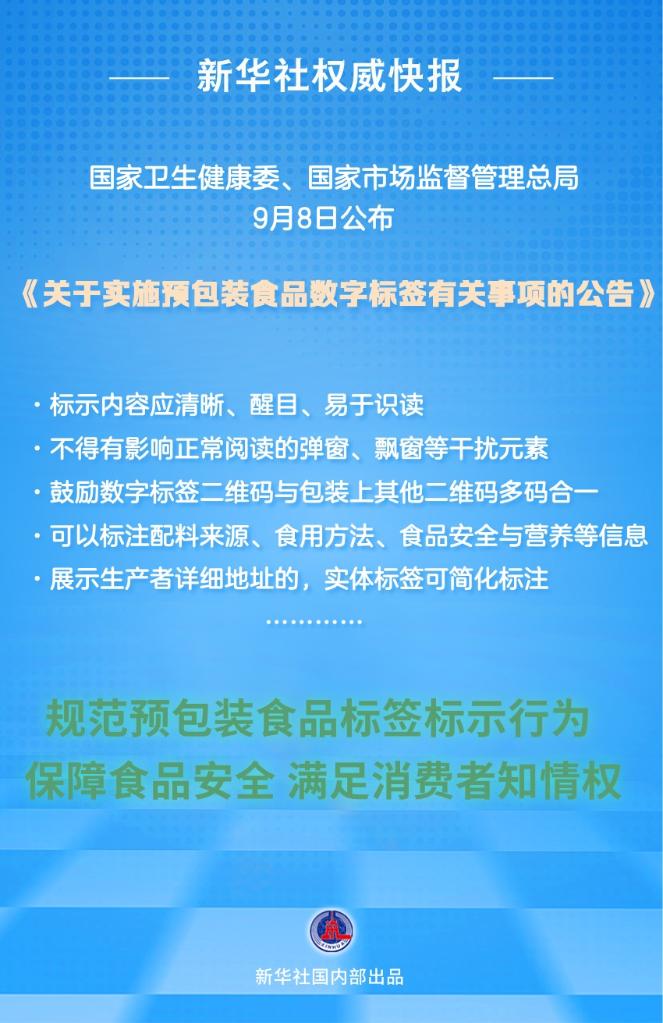
新华社权威快报丨食品信息一目了然!预包装食品数字标签公告发布
Xin Hua Wang· 2025-09-08 01:20
Core Viewpoint - The announcement by the National Health Commission and the State Administration for Market Regulation on September 8 aims to standardize the labeling of pre-packaged food products through digital labels, ensuring food safety and consumer rights to information [4]. Group 1: Digital Labeling Requirements - The content of digital labels must be clear, prominent, and easy to read [3]. - There should be no pop-ups or other distracting elements that affect normal reading [3]. - The integration of digital label QR codes with other QR codes on the packaging is encouraged to achieve multi-code functionality [3]. Group 2: Information Display - Digital labels can include information on ingredient sources, consumption methods, food safety, and nutrition [3]. - If the digital label displays the producer's detailed address, the physical label can be simplified [3]. Group 3: Regulatory Framework - The announcement builds on the "National Food Safety Standard for Pre-packaged Food Labels" (GB 7718-2025) released in March this year, further detailing the application requirements for digital labels [4]. - The National Health Commission has been working with relevant departments to optimize food label management, establishing a comprehensive food labeling standard system [4].
威海积极开展预包装食品数字标签应用,推动食品行业高质量发展
Qi Lu Wan Bao Wang· 2025-05-08 08:55
Core Viewpoint - The promotion and application of digital labels for pre-packaged food in Weihai City aims to enhance consumer rights and improve food safety and quality through efficient information transmission between consumers and businesses [2][3][4]. Group 1: Digital Label Implementation - In 2023, the National Health Commission initiated a pilot program for digital labels in pre-packaged food, starting with a few leading enterprises [2]. - Weihai City is actively participating in this initiative, with 13 companies and 21 products currently involved in the pilot, covering various food categories [2]. - As of now, 10 companies and 15 products have completed the deployment of digital labels [2]. Group 2: Research and Strategy - The Weihai Health Commission conducted in-depth research to understand the current application status of food labels, collecting data on enterprise needs and consumer preferences [3]. - A detailed implementation plan for the digital label promotion project has been developed, outlining goals, timelines, responsibilities, and specific measures [3]. - Various channels have been utilized to promote the advantages of digital labels to businesses, encouraging participation in the pilot program [3]. Group 3: Training and Support - Specialized training sessions have been organized to enhance the capabilities of participating enterprises, with over 30 individuals from more than 10 companies attending [4]. - A feedback mechanism has been established to address enterprise concerns and provide ongoing support throughout the label design and implementation process [4]. - Successful case studies are being highlighted to inspire other businesses and enhance the overall impact of the digital label initiative [4]. Group 4: Promotion and Evaluation - A multi-faceted promotional strategy is being employed to raise awareness of the core advantages and results of digital labels [5]. - Consumer engagement activities, such as live demonstrations, are being organized to showcase the practicality of digital labels [5]. - A dynamic tracking system is in place to evaluate the effectiveness of digital label applications, collecting feedback for policy optimization [5]. Group 5: Future Plans - In 2025, Weihai City plans to expand the pilot program, enhance collaboration among departments, and support more enterprises in adopting digital labels [6]. - The city aims to improve the functionality of digital labels by adding features like multi-language support and allergen alerts [6]. - A comprehensive support mechanism will be established to assist enterprises throughout the entire digital label application process [6].