风险治理

Search documents
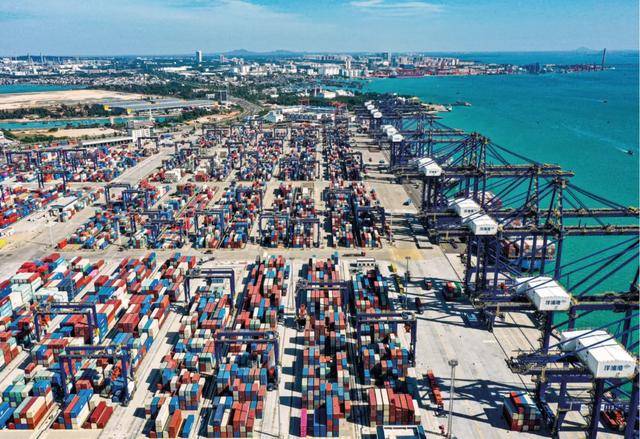
从新加坡视角看海南自贸港
Sou Hu Cai Jing· 2026-01-26 10:53
Core Viewpoint - The establishment of the Hainan Free Trade Port marks a significant step in China's strategy for high-level opening-up, transitioning from a "heated start" phase to a "formal operation" phase, with a focus on creating a special customs area that emphasizes trade and investment freedom while managing risks effectively [2][3]. Group 1: Comparison with Singapore - Hainan aims to benchmark itself against Singapore, the world's most renowned free trade port, with aspirations to become a world-class free trade port itself [3]. - Despite the differences in geographical and economic contexts, Hainan can learn from Singapore's successful experiences in open innovation and institutional design [4][5]. - Hainan's unique advantages lie in China's vast market, which can be leveraged to create a competitive edge distinct from Singapore's [5][6]. Group 2: Legal and Regulatory Framework - Singapore's legal system, based on common law, provides high transparency and predictability, attracting multinational companies to establish their Asian headquarters there [6]. - Hainan's legal foundation is based on the Hainan Free Trade Port Law, which aims to align with international standards but lacks independent judicial sovereignty [6][7]. - Hainan must focus on creating clear rules and enhancing efficiency in arbitration and intellectual property protection to attract international businesses [6][7]. Group 3: Financial Opening and Economic Strategy - Singapore enjoys complete capital account convertibility, while Hainan is piloting a split account system and promoting offshore finance [7][8]. - Hainan's financial strategy should prioritize "controlled openness" that integrates with national financial security, rather than pursuing complete freedom [7][8]. - The focus should be on creating a low-friction trade and shipping financial infrastructure to attract businesses for functional settlements [7][8]. Group 4: Port and Shipping Services - Hainan lacks the historical and geographical advantages of Singapore, necessitating a shift from merely enhancing port throughput to developing a shipping service platform [8][9]. - The strategy should include high-value service chains related to shipping registration, maritime services, and offshore trade, rather than just cargo handling [8][9]. Group 5: Taxation and Administrative Efficiency - Hainan's tax system must be simple, stable, and predictable, as it cannot easily adjust tax rates without central approval [9][10]. - The focus should be on reducing compliance costs and ensuring transparency in tax administration to attract long-term capital [9][10]. - Hainan needs to improve its administrative efficiency and business environment to compete effectively in the free trade port landscape [10][11]. Group 6: Strategic Development Pathways - Hainan's development strategy post-closure should focus on higher-end, systematic approaches rather than merely competing on cost [11][12]. - Key areas for development include value-added processing, bonded maintenance, shipping services, and digital trade [11][12][13]. - The emphasis should be on creating a regulatory environment that facilitates cross-border data flow and compliance, as well as enhancing service-oriented business models [13][14]. Group 7: Risk Management and Governance - Effective risk governance is crucial for Hainan's openness, as the freedom of a free port is contingent upon high-level governance [15]. - Hainan must prioritize risk management as a component of its institutional competitiveness to ensure that the benefits of its policies are not undermined by potential risks [15].

储能保险白皮书:承压的繁荣:为全球储能未来绘制风险抵御蓝图
中意财产保险有限公司· 2026-01-22 09:56
Investment Rating - The report does not explicitly provide an investment rating for the industry Core Insights - The global energy system is undergoing a profound and irreversible structural transformation, with energy storage technology emerging as a core infrastructure and strategic pivot for the energy revolution. However, the global energy storage industry is facing a "pressured prosperity" dilemma, where the sources of pressure have fundamentally shifted [7][27] - The transition from a policy-driven compliance tool to an independent market entity requires energy storage to prove its economic value in electricity spot markets, ancillary services, and capacity markets, leading to new market pressures [7][8] - A significant "protection gap" has emerged, where the rapid deployment of physical assets has outpaced the evolution of financial tools and risk management systems, potentially becoming a systemic financial bottleneck for the energy transition [7][31] Summary by Sections Chapter 1: Strategic Landscape under the New Paradigm - The energy storage industry in China is experiencing unprecedented growth driven by national strategic design, with a cumulative installed capacity reaching 78.3 GW/184.2 GWh by the end of 2024, marking a year-on-year growth rate of 126.5% and 147.5% respectively [26][47] - The shift from "policy dependence" to "market pressure" is evident, as the industry transitions from administrative directives to market-driven mechanisms for value discovery [54][56] - The complexity of commercial models in different application scenarios poses unique market risks, particularly in regions with significant price fluctuations [29][56] Chapter 2: Scientific Quantification of Risks - The report emphasizes the need for a comprehensive risk assessment framework that spans the entire lifecycle of energy storage systems, highlighting the importance of advanced risk quantification methodologies [15][36] Chapter 3: Global Insurance Response - The Chinese insurance market faces structural contradictions, with a lack of reliable data and understanding of energy storage risks hindering effective risk management [17][32] - New insurance tools, such as performance guarantee insurance and parametric insurance, are proposed to address industry pain points and enhance project economics [17][18] Chapter 4: Future Business Models - The report advocates for a shift from product sales to outcome commitments, with "Risk-as-a-Service" (RaaS) emerging as a new business model that integrates technology, operations, and financial guarantees [9][40] - The potential market for RaaS is projected to reach nearly $180 billion by 2035, driven by advancements in digital twin technology, AI, and IoT [9][40] Chapter 5: Action Agenda - The report outlines strategic recommendations for policymakers, the insurance industry, and the energy storage sector to foster a supportive environment for innovation and safety [21][22] - A three-phase roadmap for the development of energy storage insurance is proposed, focusing on addressing market failures, building infrastructure, and achieving market efficiency [21][22] Chapter 6: Summary and Outlook - The report concludes with a call for a paradigm shift in risk management, emphasizing the need for collaborative efforts among stakeholders to unlock the potential of the energy storage market [22][36]
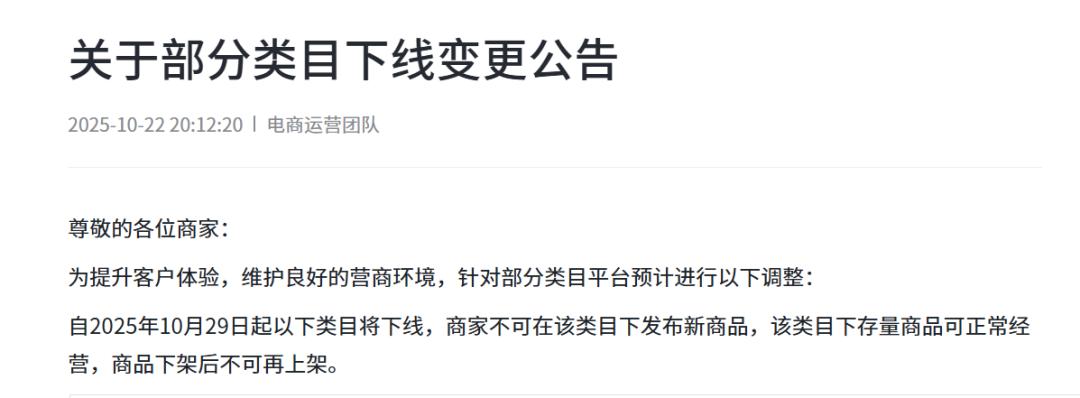
抖音将下线近500个本地生活服务的四级类目
3 6 Ke· 2025-10-24 02:34
Core Insights - Douyin is removing high-risk and uncertain transaction categories from its e-commerce system, indicating a shift in its risk management strategy from addressing violations to eliminating problematic categories altogether [3] Category Summary - The categories being removed include a wide range of local life services, accounting for approximately 90% of the "local life services" category, as well as specific products like bird's nest coupons and customized beauty products [1][2] - The removal of categories such as "honey coupons" and "bird's nest coupons" signifies a complete ban on virtual marketing and coupon sales for these traditional health products, which have been associated with frequent violations [3][4] - Douyin's recent actions also include a crackdown on false advertising in food and health products, resulting in the removal of 43,000 violators and 793 non-compliant merchants, highlighting the overlap between the removed categories and areas of high risk [5]