马歇尔 - 勒纳条件

Search documents
复旦大学经济学院教授沈国兵:人民币升值未必是坏事,传统“汇率贬值促进出口”已然失效
Sou Hu Cai Jing· 2026-01-05 02:40
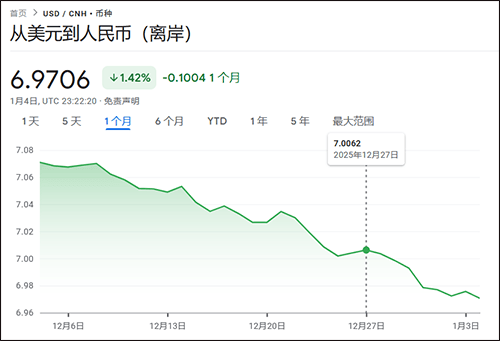
Core Viewpoint - The recent discussions on the RMB exchange rate highlight a shift in the traditional understanding of currency depreciation and its impact on exports, suggesting that the previous assumptions may no longer hold true in the current geopolitical and economic landscape [1][4][8]. Group 1: RMB Exchange Rate Dynamics - The recent appreciation of the RMB is attributed to year-end settlement demands and a weakening US dollar index, influenced by the Federal Reserve's shift towards a dual focus on employment and inflation [2][12]. - The traditional theory that currency depreciation boosts exports is being challenged, as external factors like US tariff policies impose rigid constraints on the effectiveness of such depreciation [4][8]. - The RMB's future trajectory will be influenced by multiple factors, including the interest rate differential between China and the US, tariff policies, and the fundamental economic conditions in China [2][14]. Group 2: Financial Power and RMB Internationalization - China is recognized as a "financial power," but still has a significant gap to bridge to become a "financial strong power," with limitations in RMB convertibility and international financial influence [2][16]. - The current RMB internationalization process is hindered by low gold reserves and insufficient influence in the international financial order, which are critical for establishing a strong currency [2][16][17]. - The need for structural reforms in China's financial system is emphasized to enhance the convenience of financial services and strengthen currency credibility, which are essential for achieving the status of a financial strong power [2][17][18]. Group 3: Future Outlook and Strategic Considerations - The RMB exchange rate is expected to remain volatile, with potential for appreciation in the short term, but uncertainties will increase post-October 2026 due to evolving US-China relations and tariff negotiations [14][15]. - The ongoing capital outflow and the trend of Chinese companies expanding overseas are likely to create upward pressure on the RMB, complicating its appreciation prospects [15][16]. - The discussion around RMB's role in the global financial system underscores the importance of financial liberalization and the need for China to enhance its financial market's openness to transition from a financial power to a financial strong power [17][18].

把脉人民币动向:复旦南土国际金融政策圆桌会深度研讨汇率走势
Sou Hu Cai Jing· 2025-12-31 06:55
Core Viewpoint - The forum at Fudan University aims to analyze the current macroeconomic financial situation, focusing on the RMB exchange rate and its driving factors, with insights from various experts in academia and industry [1]. Group 1: RMB Exchange Rate Analysis - Professor Shen Guobing emphasizes that the traditional view of currency depreciation benefiting trade is outdated, suggesting that RMB appreciation could lower import costs and enhance national welfare [3]. - Wang Han from Industrial Securities notes that the RMB may face upward pressure against the USD due to potential weakening of the dollar, with a possible target of 6.7, while the People's Bank of China will manage market expectations to prevent excessive appreciation [5]. - Wu Xinru presents data indicating that the RMB's actual effective exchange rate may be undervalued by about 24% compared to equilibrium levels, asserting that export competitiveness relies more on industrial upgrades than on currency depreciation [7]. Group 2: Future Outlook and Risks - Professor Feng Ling highlights that the RMB's stabilization in 2025 is supported by improved external conditions and record trade surpluses, but uncertainties in 2026 may arise from U.S. monetary policy and political events [9]. - Tang Jianwei from the Bank of Communications predicts a moderate appreciation of the RMB in 2026, with expected fluctuations between 6.8 and 7.15, while cautioning against external political risks [11]. - The discussion reveals a consensus that the traditional "devaluation promotes exports" logic is outdated, with RMB appreciation driven by multiple factors, while uncertainties remain regarding U.S. monetary policy and geopolitical developments [15].

鲍韶山:为什么西方鼓吹人民币加速升值,效果可能适得其反?
Sou Hu Cai Jing· 2025-12-23 00:44
Core Viewpoint - The article argues that calls for the rapid appreciation of the Renminbi (RMB) by Western institutions, including the IMF, may have adverse effects on Western economies and could lead to increased social instability. Instead of pushing for a quick appreciation, Western advocates should appreciate China's strategy of maintaining RMB stability [1][6][10]. Group 1: RMB Appreciation Pressure - Western economies, particularly the U.S., have long pressured China to appreciate its currency, viewing it as a solution to trade imbalances. This perspective is rooted in neoclassical economic theory, which suggests that RMB appreciation would make Chinese exports more expensive and reduce trade surpluses [1][6]. - The IMF's annual report suggests measures to promote RMB appreciation and reduce China's current account surplus, indicating ongoing pressure for a more market-oriented exchange rate [5][9]. Group 2: Foreign Value Added (FVA) Mechanism - China's export model is deeply integrated into global value chains, with a significant portion of export value derived from imported intermediate goods. This creates a paradox where RMB appreciation could lower the cost of these imports, potentially enhancing the competitiveness of Chinese exporters [7][8]. - The OECD's TiVA database shows that in key export sectors like electronics (35-42%), machinery (30-37%), and chemicals (25-41%), FVA remains high, indicating reliance on imported inputs [7]. Group 3: Asymmetric Impact on the U.S. Economy - The article highlights that while RMB appreciation may provide a buffer for Chinese exporters, the U.S. economy lacks similar protections, leading to increased input costs without offsetting benefits. This dynamic could exacerbate inflation and widen the trade deficit for U.S. companies [11][12]. - U.S. manufacturing, which relies heavily on domestic content (85-90%), faces challenges as imported intermediate goods become more expensive without equivalent cost relief [11][12]. Group 4: RMB Internationalization and Strategic Implications - The ongoing internationalization of the RMB adds a strategic dimension to the appreciation paradox, allowing China to insulate key markets from exchange rate fluctuations while enhancing its competitiveness. By 2025, RMB settlements in cross-border transactions are expected to exceed 50% [16][19]. - The increasing use of RMB in trade with countries in the Global South provides a buffer against the adverse effects of appreciation, allowing Chinese exporters to maintain stable income while insulating buyers from price increases [22][23]. Group 5: Conclusion on RMB Appreciation Calls - The article concludes that calls for rapid RMB appreciation may inadvertently strengthen China's export position rather than achieve the intended rebalancing of trade. The structural differences between the Chinese and U.S. economies amplify the risks of adverse effects on Western interests [24].