高血压管理

Search documents
冬季血压易“失控”?
Xin Lang Cai Jing· 2026-01-28 17:52
Core Viewpoint - The article highlights the increasing incidence of cardiovascular diseases during winter, particularly among specific groups such as truck drivers and older adults who rely on unverified remedies for hypertension management [1][2]. Group 1: Patient Cases - A 45-year-old truck driver experienced severe hypertension (206/130 mmHg) due to neglecting his condition and unhealthy habits, leading to a near-accident while driving [2]. - A 55-year-old woman suffered from a spike in blood pressure (180/120 mmHg) after abandoning prescribed medication in favor of an unverified remedy, resulting in hospitalization [3]. Group 2: Health Recommendations - For truck drivers, three key recommendations include mandatory breaks every 90 minutes to promote circulation, daily blood pressure monitoring before and after driving, and creating a supply station in the vehicle with healthy snacks and water [4]. - General winter hypertension management tips include keeping warm, maintaining a low-sodium diet, regular moderate exercise, consistent medication monitoring, and managing stress and sleep [4].
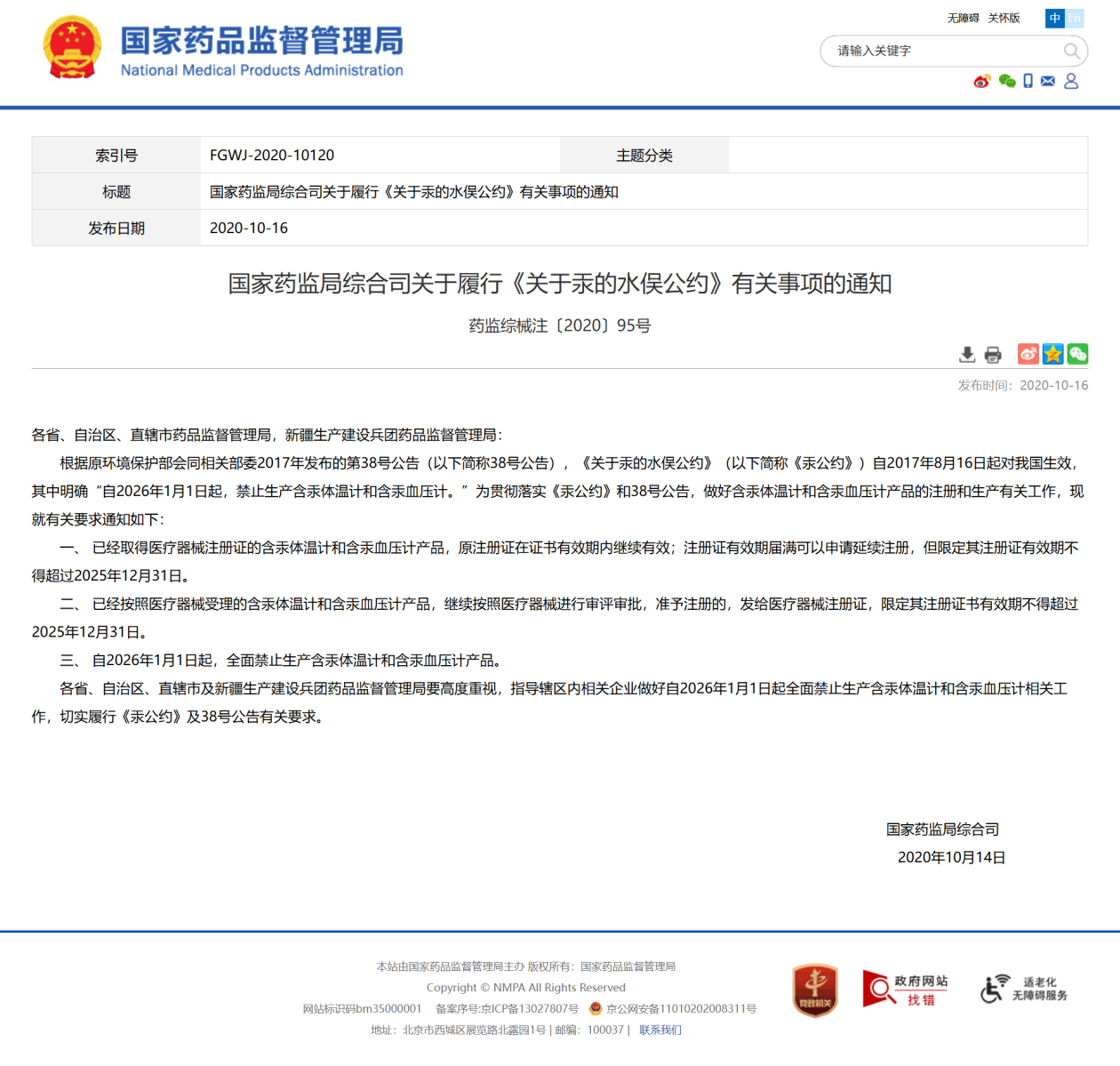
2026年全面“禁汞”倒计时!水银血压计退场,2.7亿人的“救命数值”谁来守护?
Huan Qiu Wang· 2025-12-10 08:31
Group 1 - The mercury-containing sphygmomanometers and thermometers will officially cease production starting January 1, 2026, in compliance with China's obligations under the Minamata Convention on Mercury, leading to widespread nostalgia and discussion among the public [1][3] - The transition away from mercury is aimed at promoting environmental protection and health, but raises concerns about the accuracy of electronic blood pressure monitors for the 270 million hypertension patients in China [3][11] - Traditional mercury sphygmomanometers are considered the "gold standard" for blood pressure measurement due to their non-invasive nature and reliability, while electronic devices often use oscillometric methods that may lead to significant measurement errors [5][6] Group 2 - The current electronic blood pressure monitors face challenges in accuracy, especially in patients with irregular heartbeats, which can exacerbate the existing issues of low awareness, treatment, and control rates among hypertension patients in China [11] - Hanwang Technology has developed an innovative electronic sphygmomanometer that incorporates artificial intelligence to replicate the traditional auscultatory method, addressing the limitations of current electronic devices [11][13] - The new device features high-sensitivity sensors, a mechanism that mimics manual pressure control, and an AI system trained on over 1 million quality auscultation data points, marking a significant advancement in blood pressure monitoring technology [13][17] Group 3 - The upcoming ban on mercury sphygmomanometers is part of a broader national initiative to eliminate mercury use, with Hanwang Technology actively participating in this effort through its "Clean Mercury Action" project [15] - The Hanwang auscultatory electronic blood pressure monitor not only provides accurate measurements but also has a high sensitivity of 94.91% for detecting atrial fibrillation, enhancing its role as a comprehensive health management tool for families [17][19] - The year 2026 is seen as the beginning of a new era in precision medicine, moving towards smarter and more comprehensive health monitoring solutions [19]


“秋暖”胜“秋冻” “秋膘”非“肥膘” 你的血压管理做对了吗?
Yang Shi Xin Wen· 2025-10-08 08:05
Core Viewpoint - The article emphasizes the growing prevalence of hypertension in China, particularly among younger populations, and highlights the importance of understanding and managing this chronic condition effectively [1]. Group 1: Misconceptions about Hypertension - Misconception 1: Patients without symptoms do not need medication; early-stage hypertension often lacks symptoms, but treatment is crucial to prevent organ damage [3]. - Misconception 2: Normal blood pressure allows for stopping medication; hypertension is chronic and requires ongoing treatment to avoid rebound effects [5]. - Misconception 3: Antihypertensive medications are addictive; these medications are non-addictive and should not be stopped arbitrarily once hypertension is diagnosed [6]. - Misconception 4: Rapidly lowering high blood pressure is safe; blood pressure should be lowered gradually to avoid complications [9]. - Misconception 5: A single high reading indicates hypertension; multiple measurements over time are necessary for an accurate diagnosis [11]. - Misconception 6: Frequent changes in medication are beneficial; once a stable medication regimen is established, it should be maintained [12]. - Misconception 7: Following others' medication experiences is safe; individual treatment plans should be based on professional medical advice [14]. - Misconception 8: Health supplements can effectively lower blood pressure; their efficacy is not scientifically validated [10]. - Misconception 9: Intravenous treatment is necessary for hypertension; most cases require oral medication instead [10]. - Misconception 10: Lower blood pressure is always better; excessively low blood pressure can lead to inadequate organ perfusion [16]. - Misconception 11: Regular hospital check-ups are unnecessary; ongoing monitoring is essential to assess treatment effects and potential side effects [17]. Group 2: Lifestyle Recommendations - Reducing sodium intake is crucial; a decrease of 1g in daily salt intake can lower blood pressure by approximately 1.2mmHg [18]. - Maintaining a healthy diet is important; a balanced diet rich in potassium and dietary fiber can help manage hypertension [19]. - Regular exercise is beneficial; moderate-intensity exercise can reduce blood pressure by 5-7mmHg [20]. - Avoiding smoking and alcohol is recommended; these habits increase cardiovascular disease risk [22]. - Maintaining psychological balance is essential; managing stress and anxiety can help control blood pressure [23]. - Ensuring adequate sleep is important; adults should aim for 7-9 hours of sleep per night to support blood pressure management [24]. - Changing habits takes time; gradual adoption of healthy lifestyle choices is encouraged [26].

这五种常见食物 竟是天然降压药
Bei Jing Qing Nian Bao· 2025-06-11 08:18
Core Insights - Hypertension is recognized as a common chronic disease, and dietary choices play a significant role in managing blood pressure [1] Group 1: Natural Ingredients for Blood Pressure Management - Celery acts as a natural relaxant for blood vessels, containing "apigenin" which helps smooth muscle relaxation [2] - Spinach is rich in potassium, aiding in sodium balance and reducing water retention, thus helping normalize blood pressure [3] - Bananas are a convenient source of potassium, with approximately 256 mg per 100 grams, and they also support cardiovascular health through dietary fiber [4] - Black fungus helps reduce blood viscosity, promoting smoother blood flow and reducing heart strain [5] - Kelp provides both iodine and potassium, regulating sodium-potassium balance and reducing cholesterol absorption [6] Group 2: Practical Dietary Recommendations - Daily consumption of 100 grams of celery and 200 grams of spinach is recommended for optimal health benefits [3][4] - Eating 1-2 bananas daily is suggested as a healthy snack or breakfast option [4] - Black fungus should be consumed 2-3 times a week, with 10-15 grams per serving [5] - Kelp can be included in the diet 2-3 times a week, with a small bowl per serving [7] Group 3: Dietary Guidelines for Hypertension Control - Limiting salt intake to 6 grams per day is crucial, equivalent to the amount in a bottle cap [8] - Selecting unsaturated fats, such as olive oil and nuts, is important for vascular health [9] - Daily intake of 25-30 grams of dietary fiber from whole grains, legumes, and fruits is recommended [10] - Prioritizing high-quality protein sources like fish, poultry, and low-fat dairy while avoiding excessive red meat is advised [11] Group 4: Common Dietary Misconceptions - Extreme salt restriction can lead to electrolyte imbalances; a balanced approach is necessary [12] - Supplements should not replace prescribed antihypertensive medications [12] - Alcohol consumption should be limited, as excessive intake can raise blood pressure [12] - Single foods cannot resolve complex hypertension issues; a comprehensive dietary adjustment is essential [13] - Caffeine in strong tea may elevate blood pressure, so milder options are recommended [13] Group 5: Importance of Hypertension Management - Hypertension is a major contributor to cardiovascular diseases and can lead to severe health issues like stroke and heart attack [14] - Effective management of hypertension requires a combination of dietary adjustments, regular monitoring, medication adherence, and physical activity [14]
直播预告:“星”连心 全程守护高血压患者
Ren Min Wang· 2025-05-16 05:46
Core Insights - The theme for World Hypertension Day on May 17 is "Precise Measurement, Effective Control, Healthy Longevity" highlighting the increasing prevalence of hypertension among younger populations [1] Group 1: Health Risks and Trends - Hypertension is a common cardiovascular disease that, if untreated, increases the risk of stroke, coronary heart disease, heart failure, and kidney failure [1] - There is a growing trend of hypertension among younger individuals, indicating that it is no longer exclusive to the elderly [1] Group 2: Expert Contributions - Xu Biao, Director of Cardiology at Nanjing University Medical School Affiliated Drum Tower Hospital, will discuss hypertension management [5] - Liu Jing, Head of the Hypertension Department at Peking University People's Hospital, will also share insights on hypertension treatment [5] - Liu Qiming, Director of Cardiology at Central South University Xiangya Second Hospital, will contribute to the discussion on hypertension management [6] Group 3: Live Broadcast Information - The live session will take place on May 17 from 11:00 to 12:00, and viewers can access it through the "People's Good Doctor" app [1] - Instructions for viewing include downloading the app and navigating to the "Famous Doctor Live" section [7][8]