天数天枢架构

Search documents
港股异动 | 天数智芯(09903)逆市涨超4% 近日公布四代架构路线图与彤央边端产品
智通财经网· 2026-01-30 06:46
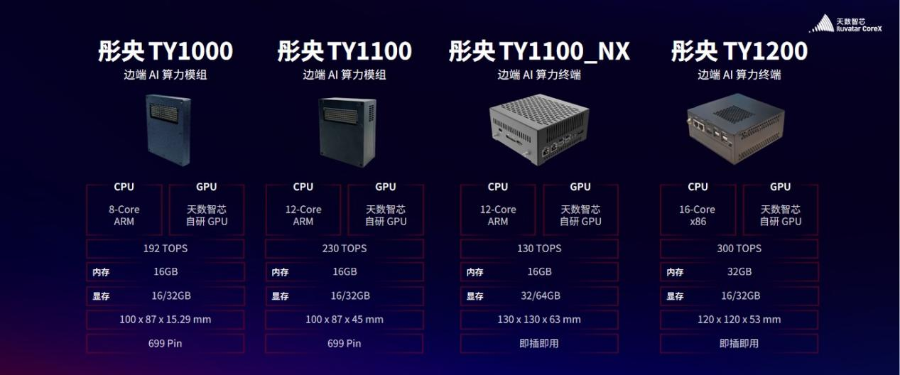
Core Viewpoint - Tianshu Zhixin (09903) has announced a roadmap for its fourth-generation chip architecture, aiming to surpass NVIDIA's Rubin architecture by 2027, which has positively impacted its stock price, increasing by 4.26% to HKD 178.5 with a trading volume of HKD 139 million [1] Group 1: Chip Architecture Roadmap - The company plans to exceed NVIDIA's Hopper architecture with its Tianshu Tianshu architecture by 2025 [1] - The Tianshu Tianxuan architecture is set to match NVIDIA's Blackwell architecture in 2026 [1] - The Tianshu Tianji architecture is expected to surpass Blackwell in 2026 [1] - By 2027, the Tianshu Tianquan architecture aims to exceed NVIDIA's Rubin architecture [1] - After 2027, the company will shift focus to breakthrough computing chip architecture design [1] Group 2: Product Launch - Tianshu Zhixin has launched the "Tongyang" series of edge computing products [1] - The TY1000 has demonstrated performance exceeding NVIDIA's AGX Orin in tests related to computer vision, natural language processing, and DeepSeek 32B large models [1]
对标英伟达 天数智芯公布芯片四代架构路线图
2 1 Shi Ji Jing Ji Bao Dao· 2026-01-29 13:19
Core Insights - Domestic GPU companies are seizing the industry window period with intensive initiatives, exemplified by TianShu ZhiXin's release of its fourth-generation architecture roadmap, aiming to surpass NVIDIA's Rubin architecture by 2027 [1][2] Group 1: Product Development and Architecture - TianShu ZhiXin has introduced a roadmap for its four-generation GPU architecture, with specific timelines: "TianShu TianShu" in 2025 to surpass NVIDIA's Hopper architecture, "TianShu TianXuan" in 2026 to match Blackwell, and "TianShu TianQuan" in 2027 to exceed Rubin [3] - The company emphasizes energy efficiency and improved parallel computing resource utilization in its architecture design, achieving over 90% effective utilization in AI-related calculations [3][4] - The efficiency of the "TianShu TianShu" architecture is reported to be 60% higher than the industry average, with a 20% performance increase over NVIDIA's Hopper architecture in specific scenarios [4] Group 2: Product Launches and Market Positioning - TianShu ZhiXin has launched the "TongYang" series of products aimed at edge computing, which includes four models catering to various computational needs [5][6] - The "TongYang" series has demonstrated superior performance compared to NVIDIA's AGX Orin in multiple real-world scenarios, with the goal of becoming the leading domestic solution for edge computing [6][8] Group 3: Market Dynamics and Competitive Landscape - As of now, TianShu ZhiXin's products have served over 300 clients and completed more than 1,000 deployments across various sectors, indicating a growing commercial application [8] - The domestic GPU market is witnessing increased activity, with several companies like MoEr Thread, MuXi Co., and BiRan Technology completing IPOs, reflecting the ongoing interest in hard technology [8][9] - Despite the enthusiasm in the capital market, domestic GPU companies still hold a small market share compared to NVIDIA, which commands a significant global market presence [9]


核心AI场景首超英伟达,一场国产算力的“破局叙事”|甲子光年
Xin Lang Cai Jing· 2026-01-29 12:12
Core Insights - The article discusses the significant advancements made by the Chinese AI computing company, Tensu Zhixin, which has recently launched a roadmap to surpass international giants like Nvidia's Hopper, Blackwell, and Rubin by 2025 to 2027 [2][4][5] - Tensu Zhixin's new architecture, the Tensu Tian Shu, has already demonstrated a performance improvement of approximately 20% over Nvidia's Hopper in key model scenarios, marking a substantial leap for domestic solutions [4][5][32] - The company aims to redefine the narrative of domestic GPU industry by moving away from a "benchmarking" approach to a self-defined leadership in AI computing [4][33] Group 1: Evolution of Computing in China - The roadmap released by Tensu Zhixin outlines a clear timeline and quantifiable breakthroughs, marking a departure from the traditional "follow and catch up" strategy adopted by many domestic companies [5][35] - The architecture is set to achieve a practical utilization rate of over 90% in executing attention mechanisms by 2025, showcasing the company's commitment to high efficiency [5][35] - The upcoming architectures, Tian Xuan and Tian Ji, are expected to further enhance performance and address industry-specific computational needs by 2026 [7][37] Group 2: Technological Innovations - Three core technological innovations underpin the aggressive roadmap: TPC BroadCast, Instruction Co-Exec, and Dynamic Warp Scheduling, which collectively enhance computational efficiency and resource utilization [10][39] - The company has adopted a problem-oriented research and development approach, addressing common industry pain points such as FP8 accumulation precision and matrix transposition overhead [11][40] - This focus on practical solutions has resulted in significant performance improvements, such as a 50% reduction in memory usage for model inference [14][44] Group 3: Redefining Value in Computing - Tensu Zhixin proposes a new value coordinate system for the computing industry, emphasizing high efficiency, predictability, and sustainability as key competitive factors [12][41] - The company aims to optimize total cost of ownership (TCO) by enhancing effective computing output per unit of power, thus reducing unnecessary costs for enterprises [14][43] - The design philosophy ensures that hardware remains adaptable to future algorithmic advancements, extending its lifecycle and value [16][44] Group 4: Market Positioning and Product Launch - The launch of the "Tongyang" series of edge computing products fills a gap in the domestic high-end edge computing market and establishes a comprehensive "cloud + edge + end" computing layout [18][46] - The product matrix covers a range of performance metrics from 100T to 300T, with specific models tailored for various applications [19][47] - Tensu Zhixin's products have already been deployed in over 300 customer environments, demonstrating their effectiveness in real-world applications [22][49] Group 5: Long-term Strategy in the GPU Industry - The competition in the GPU industry is fundamentally about building an open and collaborative ecosystem, which is essential for long-term success [52][52] - Tensu Zhixin is focused on creating a closed-loop ecosystem for domestic AI computing through hardware foundation, software adaptation, and partner collaboration [53][52] - The company aims to ensure that its products maintain value over a decade, positioning itself as a long-term player in the industry rather than merely a competitor to Nvidia [53][55]

算力通胀终结者!凭一招把大模型Token成本砍到1/2
创业邦· 2026-01-28 12:58
Core Viewpoint - The article discusses the challenges and inefficiencies in the AI computing power industry, highlighting the concept of "computing power inflation" and the need for "high-quality computing power" to address these issues. Group 1: Computing Power Inflation - The rapid growth of computing power over the past decade has led to a situation where many GPUs are underutilized, with effective utilization rates around 40% for training clusters and even below 20% for inference scenarios [2][3] - The industry has been caught in a parameter race to catch up with models like GPT-4 and GPT-5, leading to a waste of resources as hardware development cycles lag behind rapid algorithm changes [2][3] Group 2: High-Quality Computing Power - The definition of "high-quality computing power" includes efficiency, predictability, and sustainability, moving away from merely focusing on peak performance metrics [5] - The company TianShu ZhiXin aims to improve computing efficiency by 60% over industry averages through innovative technologies in their upcoming architecture [8] Group 3: Cost Management and Efficiency - TianShu ZhiXin has developed solutions to reduce storage costs significantly, including a 50% reduction in memory usage for model inference through key-value caching techniques [10] - The company has demonstrated that its single-machine performance can exceed international solutions by over 100%, while halving the cost per token in specific applications [17] Group 4: Market Position and Future Outlook - The year 2026 is expected to be pivotal for the Chinese GPU industry, with TianShu ZhiXin and other domestic players preparing for IPOs, marking the beginning of a more competitive landscape [19] - The company has established partnerships with various hardware manufacturers and solution providers to enhance AI accessibility across industries, indicating a shift towards practical applications of computing power [21]
黄仁勋的警示,又有了一个具体的样本
Xin Lang Cai Jing· 2026-01-28 10:09
Core Insights - The Chinese GPU industry is rapidly developing, posing a significant challenge to Nvidia, as highlighted by Jensen Huang's concerns about the rise of domestic chip companies and their potential to surpass Nvidia's technology [2][24]. - A recent conference by a Chinese GPU manufacturer revealed a detailed roadmap for surpassing Nvidia's architectures, indicating a strategic shift in the competitive landscape [3][25][26]. Group 1: Industry Dynamics - Nvidia's founder, Jensen Huang, has acknowledged the rapid growth of Chinese chip companies, suggesting that export controls may inadvertently accelerate their technological advancements [2][24]. - The competitive pressure is not from a single entity but from a collective effort within the Chinese GPU industry, leveraging the largest application market for rapid iteration [2][24]. Group 2: Technological Advancements - The Chinese GPU manufacturer presented a roadmap indicating that its TianShu architecture has already surpassed Nvidia's Hopper architecture, with future architectures set to challenge Blackwell and Rubin [3][25][29]. - The TianShu architecture has demonstrated approximately 20% higher performance than Nvidia's Hopper in practical applications, not just theoretical peak values [4][29]. Group 3: Strategic Positioning - The company has adopted a transparent approach by publicly sharing its three-year roadmap, which outlines specific targets and milestones, thereby building trust and confidence in its capabilities [4][31]. - The introduction of the "Tongyang" series edge chips represents a strategic move to establish a foothold in the edge computing market, with performance metrics that match or exceed Nvidia's offerings [10][34]. Group 4: Customer Engagement and Validation - The company has successfully deployed over 5.2 million chips and served more than 300 clients, demonstrating its transition from theoretical capabilities to practical applications [4][33]. - Real-world results from clients include significant reductions in processing costs and time, showcasing the effectiveness of the company's products in various sectors such as finance and healthcare [18][20][42]. Group 5: Future Outlook - The competitive landscape is shifting as the company focuses on building a strong foundation in edge computing, which is expected to redefine the center of the industry [36][38]. - The relationship with clients is evolving into a strategic partnership, where customer feedback is integral to product development and optimization, reinforcing the company's market position [20][44].
上市18天后,天数智芯办了件大事
投中网· 2026-01-27 10:51
Core Viewpoint - The AI computing company, Tenshu Zhixin, has successfully established a commercial landing loop and entered a phase of rapid growth following its recent product launches and strategic advancements [2][4][24]. Group 1: Product and Technology Advancements - Tenshu Zhixin unveiled its fourth-generation architecture roadmap and the "Tongyang" series of edge computing products, marking a significant step in its product offerings [4][20]. - The upcoming Tian Shu Tian Shu architecture, set for release in 2025, is projected to surpass NVIDIA's current Hopper architecture by 20% in performance within the DeepSeek R3 scenario [6][12]. - The newly launched "Tongyang TY1000" edge computing product has already demonstrated performance exceeding NVIDIA's AGX Orin, indicating a strong competitive position in the market [7][18]. - The company has completed a comprehensive "cloud + edge + end" computing layout, with successful deployments across various sectors including internet, finance, and healthcare [20][22]. Group 2: Market Position and Growth - Tenshu Zhixin's revenue has shown significant growth, increasing from 189 million yuan in 2022 to 289 million yuan in 2023, with projections reaching 539 million yuan in 2024, reflecting a compound annual growth rate of 68.8% [27]. - The company has established a solid ecosystem by partnering with CPU manufacturers, server vendors, and major operating systems, which supports its rapid commercialization [25][30]. - The Chinese general-purpose GPU market is expected to see a shipment volume of 1.6 million units by 2024, with a robust growth rate of 33% CAGR from 2025 to 2029, positioning Tenshu Zhixin favorably within this expanding market [30]. Group 3: Industry Challenges and Solutions - The AI computing industry has faced challenges with low utilization rates, with inference scene computing utilization below 20% and training scene utilization just over 40%, leading to significant resource waste [9][11]. - Tenshu Zhixin has proposed a "high-quality computing" solution characterized by high efficiency, predictability, and sustainability to address these industry pain points [11][12]. - The company aims to create a "cross-country vehicle" in the computing field, leveraging advanced technologies to overcome various technical barriers and enhance application efficiency [10][11].
明年超越英伟达Rubin?400亿国产GPU大消息
Zhong Guo Ji Jin Bao· 2026-01-26 15:20
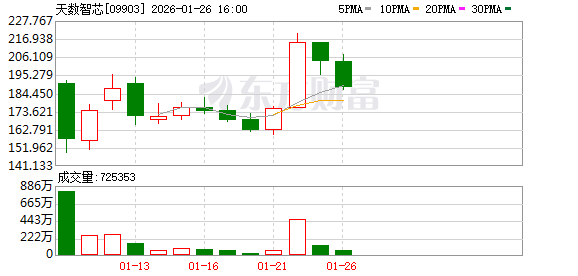
Group 1 - The core viewpoint of the article is that TianShu ZhiXin has released a roadmap for its fourth-generation architecture, aiming to surpass NVIDIA's related products [2][3] - The roadmap includes the TianShu TianShu architecture expected to surpass Hopper by 2025, TianShu TianXuan architecture targeting Blackwell in 2026, TianShu TianJi architecture also surpassing Blackwell in 2026, and TianShu TianQuan architecture expected to surpass Rubin by 2027 [3] - The company plans to launch multiple products over the next three years based on this roadmap, continuously enhancing computing performance [3] Group 2 - Key details of the architectures include: TianShu TianShu architecture achieving over 90% effective utilization efficiency in AI calculations, TianShu TianXuan architecture introducing ixFP4 precision support, TianShu TianJi architecture covering all scenarios of AI and accelerated computing, and TianShu TianQuan architecture incorporating more precision support and innovative designs [3] - The company has reportedly achieved approximately 20% higher performance than the Hopper architecture in the DeepSeek V3 scenario due to core technology innovations [3] - TianShu ZhiXin was listed on the Hong Kong Stock Exchange on January 8, 2026, and its stock price closed at 188.2 HKD per share on January 26, 2026, reflecting a decline of 7.65%, with a market capitalization of 47.8 billion HKD [4]
明年超越英伟达Rubin?400亿国产GPU大消息
中国基金报· 2026-01-26 15:19
Core Viewpoint - TianShu ZhiXin has released a roadmap for its fourth-generation architecture, aiming to surpass NVIDIA's related products, as announced at the "Smart Start Chip Journey" partner conference on January 26 [2][4]. Group 1: Architecture Roadmap - In 2025, the TianShu TianShu architecture is expected to surpass NVIDIA's Hopper architecture [4]. - In 2026, the TianShu TianXuan architecture will benchmark against NVIDIA's Blackwell architecture [4]. - By 2026, the TianShu TianJi architecture is projected to exceed Blackwell [4]. - In 2027, the TianShu TianQuan architecture is anticipated to surpass Rubin [5]. - After 2027, the focus will shift to breakthrough computing chip architecture design [5]. Group 2: Product Development and Performance - Over the next three years, TianShu ZhiXin plans to release multiple products based on the announced fourth-generation architecture, continuously enhancing computing performance [6]. - The TianShu TianShu architecture supports high-precision scientific computing and AI precision computing, achieving over 90% effective utilization efficiency in attention mechanism-related calculations [7]. - The TianShu TianXuan architecture introduces ixFP4 precision support [7]. - The TianShu TianJi architecture aims for full-scene AI and accelerated computing coverage [7]. - The TianShu TianQuan architecture incorporates more precision support and innovative designs [7]. - Current core technology innovations have allowed TianShu ZhiXin to achieve approximately 20% higher performance than the Hopper architecture in the DeepSeek V3 scenario [7]. Group 3: Company Overview - The chairman and CEO of TianShu ZhiXin, Gai Lujian, has been with the company since July 2020 and is responsible for daily management and overall strategic planning [7]. - TianShu ZhiXin was listed on the Hong Kong Stock Exchange on January 8, 2026, and its stock closed at HKD 188.2 per share on January 26, experiencing a decline of 7.65%, with a market capitalization of HKD 47.8 billion [7].