黄金波动性

Search documents
高盛:黄金波动性大幅走高 央行购金力度将暂时放缓
智通财经网· 2026-02-21 09:23
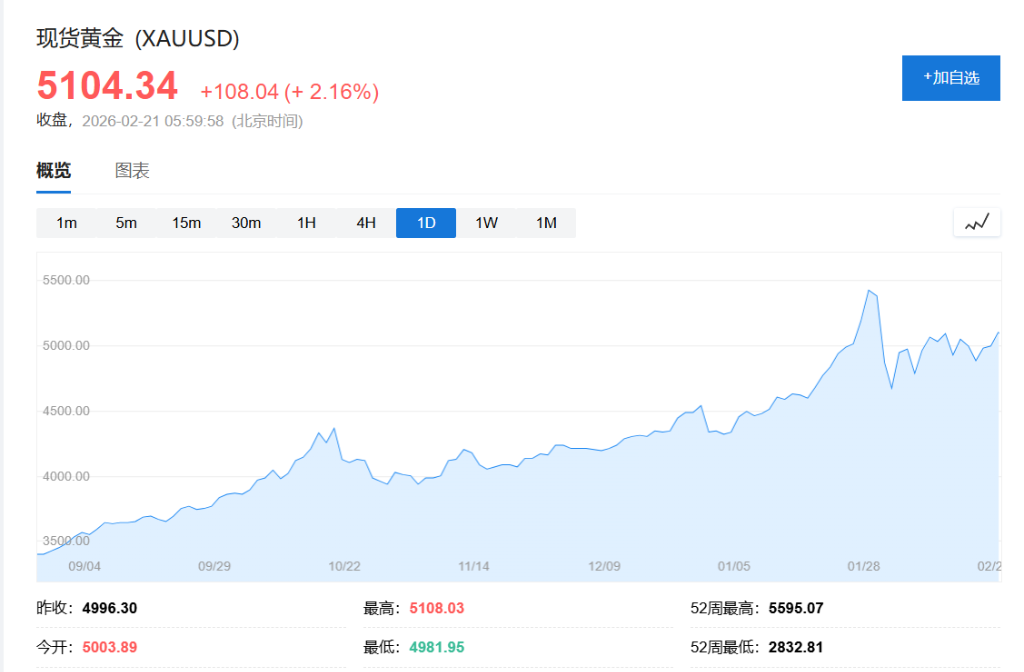
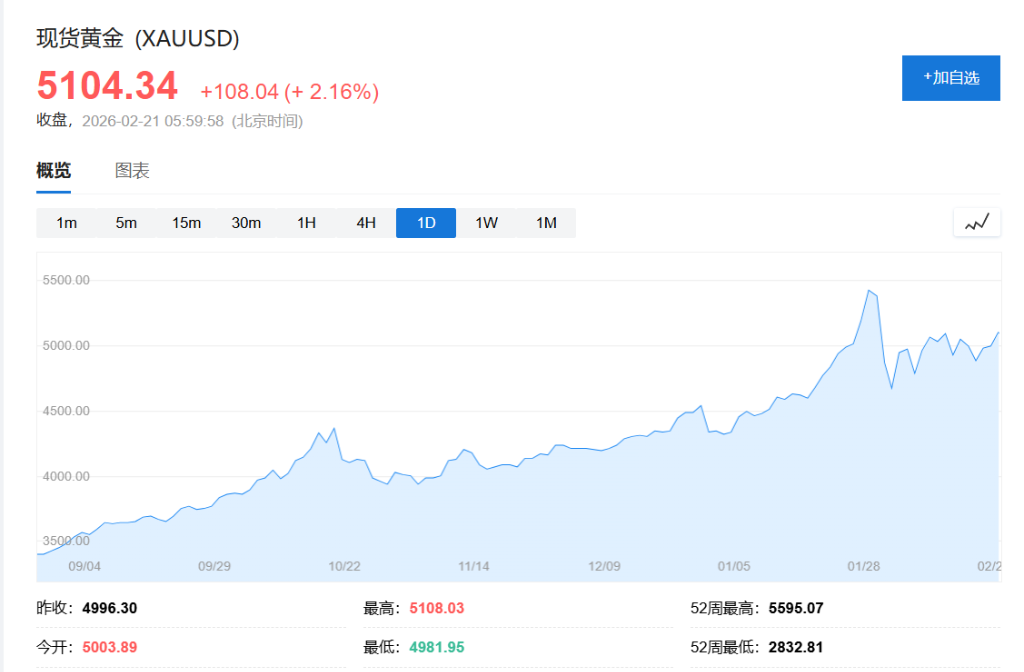
Core Viewpoint - The dominant variable in the gold market is shifting from "buy or not" to "how much volatility" as Goldman Sachs indicates that increased demand for gold call options is driving price volatility, temporarily suppressing central bank gold purchases, which is expected to be a short-term phenomenon [1][4]. Group 1: Volatility and Options Demand - Goldman Sachs links the recent increase in gold price volatility to diversified demand from the private sector, particularly through gold call options [2]. - The report highlights that the open interest in call options for the largest gold ETF, GLD, is at record levels, serving as a key indicator for rising volatility [2]. - As gold prices rise, sellers of call options are forced to buy gold to hedge, amplifying price increases; however, even minor pullbacks can lead to a shift in trading behavior, potentially triggering stop-loss orders and further losses [2][8]. Group 2: Central Bank Demand - Central bank gold purchasing has shown a temporary slowdown, with a forecast of 22 tons for December 2025, significantly below the 12-month average of 52 tons [4]. - Goldman Sachs views this slowdown as a temporary pause rather than a trend reversal, supported by communication with central banks and a structural change in risk perception following the freezing of Russian reserves in 2022 [4][5]. Group 3: Scenarios for Gold Prices - Goldman Sachs outlines two scenarios regarding the interplay of volatility, central bank demand, and gold prices: - The baseline scenario anticipates a return to accelerated central bank purchases as volatility decreases, leading to a gradual price increase to $5,400 per ounce by the end of 2026 [6]. - The bullish scenario suggests that enhanced diversification demand from private sectors could lead to sustained high volatility and significant upward price risks, while potentially suppressing emerging market central bank demand in the short term [7]. Group 4: Tactical Insights - On a tactical level, Goldman Sachs warns that even mild catalysts could trigger significant price pullbacks, estimating a downside boundary around $4,700 per ounce [8]. - The demand for GLD call options has been rebuilt to record levels after a "washout" in late January, indicating that typical factors causing limited pullbacks could lead to extraordinary declines in gold prices [8][9].


高盛:黄金波动性大幅走高,央行购金力度将暂时放缓
Hua Er Jie Jian Wen· 2026-02-21 07:26
Core Viewpoint - The dominant variable in the gold market is shifting from "buy or not" to "how much volatility" as Goldman Sachs indicates that increased demand for gold call options is driving price volatility, temporarily suppressing central bank gold purchases, which is expected to be a short-term phenomenon [1][4]. Group 1: Volatility and Options Demand - Goldman Sachs links the recent increase in gold price volatility to diversified demand from the private sector, particularly through gold call options [2][6]. - The report highlights that the open interest in call options for the largest gold ETF, GLD, is at record levels, serving as a key indicator for rising volatility [2]. - As gold prices rise, option sellers are forced to buy gold to hedge, amplifying price increases; however, even minor pullbacks can lead to a shift from "buying on the rise" to "selling on the dip," potentially triggering stop-loss orders and further losses [2][7]. Group 2: Central Bank Demand - Central bank gold purchasing is experiencing a temporary slowdown, with a forecast of 22 tons for December 2025, significantly below the 12-month average of 52 tons [4][6]. - Goldman Sachs views this slowdown as a temporary phenomenon rather than a trend reversal, based on communication with central banks and changes in risk perception following geopolitical events [4][6]. - Central banks still consider gold a hedge against geopolitical and financial risks but prefer to wait for price stability before increasing purchases [4]. Group 3: Scenarios for Gold Price Movement - Goldman Sachs outlines two scenarios regarding the interplay of volatility, central bank demand, and gold price paths [5][6]. - The baseline scenario assumes no additional diversification from the private sector, leading to a decrease in volatility and a subsequent acceleration in central bank gold purchases, with gold prices expected to rise to $5,400 per ounce by the end of 2026 [6]. - The bullish scenario posits that increased diversification demand from the private sector, driven by perceived fiscal risks in some Western economies, could lead to sustained high volatility and significant upward price risks [6]. Group 4: Tactical Insights - On a tactical level, Goldman Sachs warns that even mild catalysts could trigger significant price pullbacks, estimating a downside boundary around $4,700 per ounce [7]. - Following the "washout" of call option demand in late January, the demand has rebuilt to record levels, indicating that typical factors causing limited pullbacks could lead to extraordinary declines in gold prices [7]. - Despite the potential for short-term pullbacks, there remains a latent demand for accumulation on dips, supporting a bullish medium-term outlook for gold prices [7].
瑞银:波动性大幅走高,警惕黄金短期回调,近期是搭了“铂金、白银、钯金”的便车
Hua Er Jie Jian Wen· 2026-01-06 03:49
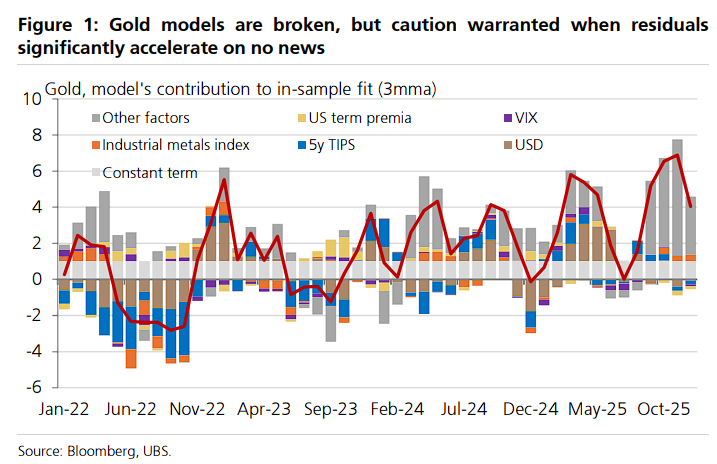
Core Viewpoint - UBS maintains a long-term bullish outlook on gold, targeting $4,750 per ounce, but raises short-term caution due to insufficient momentum in recent price increases and heightened volatility [1][20]. Group 1: Short-term Concerns - The recent surge in gold prices is attributed to the performance of silver, platinum, and palladium rather than independent bullish factors for gold itself [1][11]. - Gold's volatility has surged to levels seen at the onset of the Russia-Ukraine conflict, diminishing its appeal as a "safe haven" asset in private investment portfolios [1][6]. - The relationship between gold and real interest rates has broken down, indicating a potential for price correction in the absence of new market stimuli [1][5]. Group 2: Market Dynamics - The current gold volatility is linked to historical data suggesting that high volatility often correlates with lower future returns [6]. - The gold-silver ratio has dropped to around 65, historically indicating weaker performance for both gold and silver in the following three months [14]. - UBS highlights that when investors aggressively pursue silver, it often signals an overheated market that requires cooling [16]. Group 3: Long-term Outlook - Despite short-term risks, UBS believes conditions for a significant decline (over 20%) in gold prices are not present, as historical patterns show such declines are typically accompanied by decreased stock market volatility and rising credit spreads [17][20]. - Key support factors for gold's long-term bullish trend include central bank purchases, stable ETF inflows, and the undervaluation of gold mining stocks [20][22][27]. - Emerging market central banks, which hold only 7-11% of their reserves in gold, are expected to continue buying during price corrections, providing support for gold prices [20].