
黄金看涨期权

Search documents
三大主线推升避险买盘 贵金属市场维持高波动
Shang Hai Zheng Quan Bao· 2026-02-24 17:49
Core Viewpoints - UBS predicts that gold prices will reach $6200 per ounce in the first three quarters of the year, followed by a decline to $5900 per ounce by the end of December [1] - Goldman Sachs maintains a bullish medium-term outlook for gold, forecasting a gradual increase to $5400 per ounce by the end of the year under baseline scenarios [1] Market Dynamics - The international precious metals market has shown a rebound after a period of decline, with London gold rising above $5200 per ounce and silver showing even greater volatility, with a 14.03% increase [1] - As of February 23, London gold had accumulated a rise of approximately 3.67% during the Spring Festival holiday, while Shanghai gold T+D reported a 3.6% increase [1] Geopolitical and Economic Factors - The recent surge in gold prices is attributed to three main factors: escalating geopolitical tensions between the US and Iran, signs of stagflation in the US economy, and the impact of tariff decisions on the US dollar [1][2] - The US Supreme Court's ruling against the Trump administration's tariff policies has heightened trade uncertainties, further boosting gold's appeal as a safe-haven asset [2] Economic Indicators - Recent data indicates that the US economy is experiencing stagflation, with GDP growth in Q4 2025 significantly below expectations and the lowest annual growth rate since 2021 [4] - The core PCE price index for December showed a year-on-year increase of 3.0%, exceeding expectations, which suggests persistent inflationary pressures alongside low growth [4] Central Bank Behavior - Recent volatility in gold prices has led many central banks to temporarily slow down their gold purchases, although they still intend to increase holdings to hedge against geopolitical and financial risks [5] - The Cboe gold ETF implied volatility has risen sharply, indicating that gold prices remain in a high-volatility environment [5] Margin Adjustments - In response to market conditions, the Shanghai Gold Exchange has adjusted margin levels and price fluctuation limits for several contracts, reducing the margin for gold contracts from 21% to 18% and for silver contracts from 27% to 24% [6] Investment Recommendations - UBS suggests that investors allocate a moderate single-digit percentage of their portfolios to gold as a strategic diversification tool to hedge against inflation and geopolitical risks [6] - Investors seeking returns may consider leveraging the current high price volatility for profit opportunities [6]


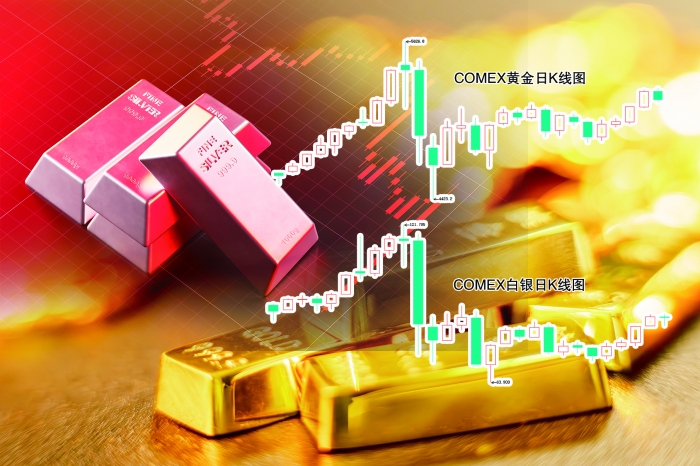
高盛:黄金波动性大幅走高 央行购金力度将暂时放缓
智通财经网· 2026-02-21 09:23
Core Viewpoint - The dominant variable in the gold market is shifting from "buy or not" to "how much volatility" as Goldman Sachs indicates that increased demand for gold call options is driving price volatility, temporarily suppressing central bank gold purchases, which is expected to be a short-term phenomenon [1][4]. Group 1: Volatility and Options Demand - Goldman Sachs links the recent increase in gold price volatility to diversified demand from the private sector, particularly through gold call options [2]. - The report highlights that the open interest in call options for the largest gold ETF, GLD, is at record levels, serving as a key indicator for rising volatility [2]. - As gold prices rise, sellers of call options are forced to buy gold to hedge, amplifying price increases; however, even minor pullbacks can lead to a shift in trading behavior, potentially triggering stop-loss orders and further losses [2][8]. Group 2: Central Bank Demand - Central bank gold purchasing has shown a temporary slowdown, with a forecast of 22 tons for December 2025, significantly below the 12-month average of 52 tons [4]. - Goldman Sachs views this slowdown as a temporary pause rather than a trend reversal, supported by communication with central banks and a structural change in risk perception following the freezing of Russian reserves in 2022 [4][5]. Group 3: Scenarios for Gold Prices - Goldman Sachs outlines two scenarios regarding the interplay of volatility, central bank demand, and gold prices: - The baseline scenario anticipates a return to accelerated central bank purchases as volatility decreases, leading to a gradual price increase to $5,400 per ounce by the end of 2026 [6]. - The bullish scenario suggests that enhanced diversification demand from private sectors could lead to sustained high volatility and significant upward price risks, while potentially suppressing emerging market central bank demand in the short term [7]. Group 4: Tactical Insights - On a tactical level, Goldman Sachs warns that even mild catalysts could trigger significant price pullbacks, estimating a downside boundary around $4,700 per ounce [8]. - The demand for GLD call options has been rebuilt to record levels after a "washout" in late January, indicating that typical factors causing limited pullbacks could lead to extraordinary declines in gold prices [8][9].
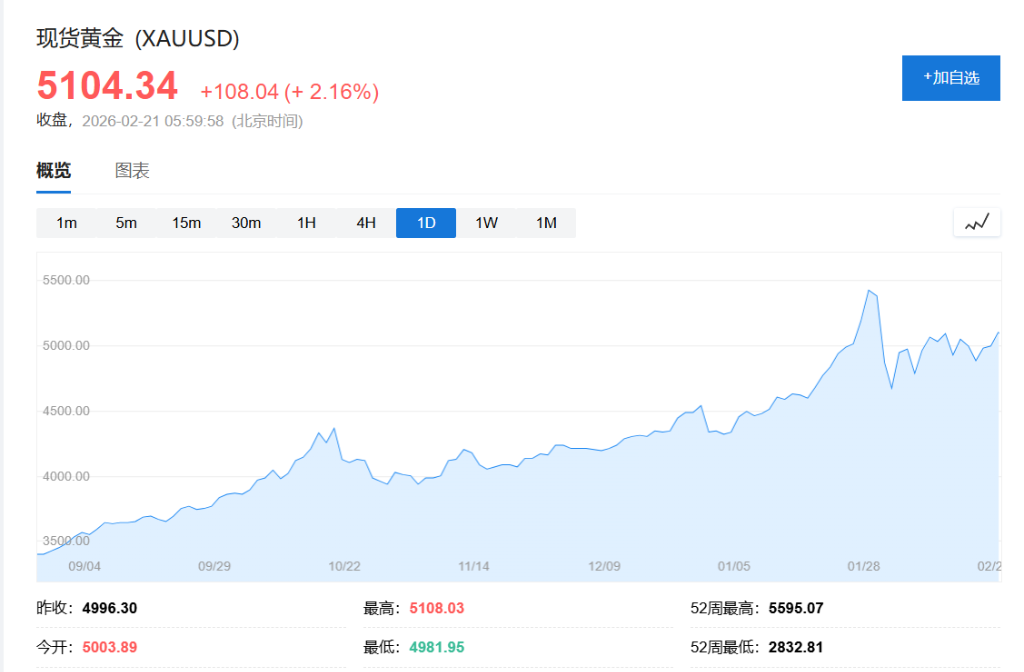
高盛:黄金波动性大幅走高,央行购金力度将暂时放缓
Hua Er Jie Jian Wen· 2026-02-21 07:26
Core Viewpoint - The dominant variable in the gold market is shifting from "buy or not" to "how much volatility" as Goldman Sachs indicates that increased demand for gold call options is driving price volatility, temporarily suppressing central bank gold purchases, which is expected to be a short-term phenomenon [1][4]. Group 1: Volatility and Options Demand - Goldman Sachs links the recent increase in gold price volatility to diversified demand from the private sector, particularly through gold call options [2][6]. - The report highlights that the open interest in call options for the largest gold ETF, GLD, is at record levels, serving as a key indicator for rising volatility [2]. - As gold prices rise, option sellers are forced to buy gold to hedge, amplifying price increases; however, even minor pullbacks can lead to a shift from "buying on the rise" to "selling on the dip," potentially triggering stop-loss orders and further losses [2][7]. Group 2: Central Bank Demand - Central bank gold purchasing is experiencing a temporary slowdown, with a forecast of 22 tons for December 2025, significantly below the 12-month average of 52 tons [4][6]. - Goldman Sachs views this slowdown as a temporary phenomenon rather than a trend reversal, based on communication with central banks and changes in risk perception following geopolitical events [4][6]. - Central banks still consider gold a hedge against geopolitical and financial risks but prefer to wait for price stability before increasing purchases [4]. Group 3: Scenarios for Gold Price Movement - Goldman Sachs outlines two scenarios regarding the interplay of volatility, central bank demand, and gold price paths [5][6]. - The baseline scenario assumes no additional diversification from the private sector, leading to a decrease in volatility and a subsequent acceleration in central bank gold purchases, with gold prices expected to rise to $5,400 per ounce by the end of 2026 [6]. - The bullish scenario posits that increased diversification demand from the private sector, driven by perceived fiscal risks in some Western economies, could lead to sustained high volatility and significant upward price risks [6]. Group 4: Tactical Insights - On a tactical level, Goldman Sachs warns that even mild catalysts could trigger significant price pullbacks, estimating a downside boundary around $4,700 per ounce [7]. - Following the "washout" of call option demand in late January, the demand has rebuilt to record levels, indicating that typical factors causing limited pullbacks could lead to extraordinary declines in gold prices [7]. - Despite the potential for short-term pullbacks, there remains a latent demand for accumulation on dips, supporting a bullish medium-term outlook for gold prices [7].
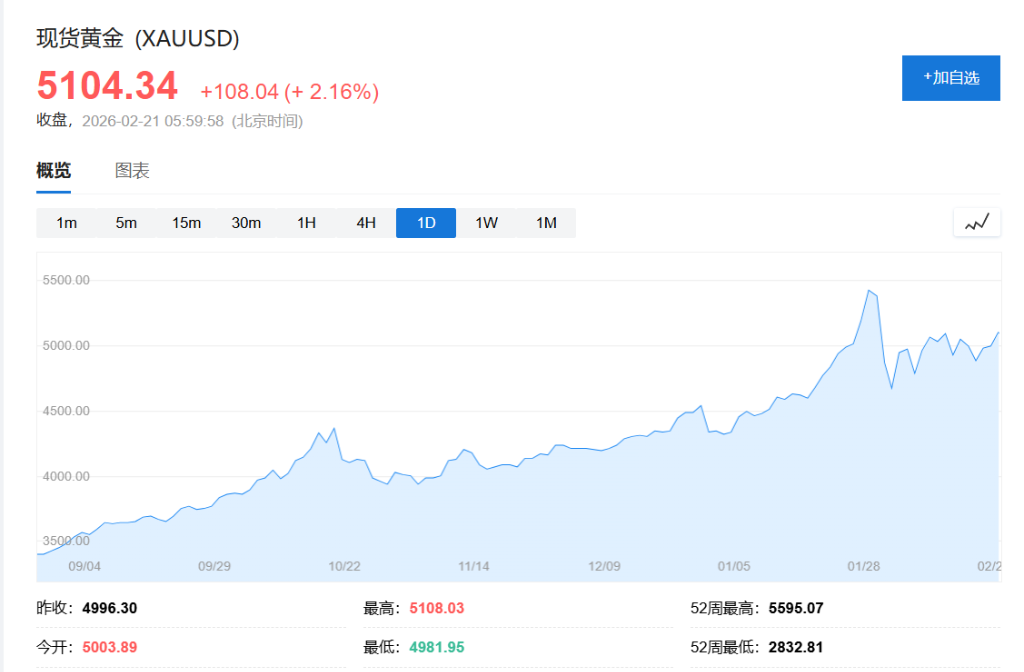
黄金跌价了,26年2月19日,金条降价,各大银行黄金金条最新价格
Sou Hu Cai Jing· 2026-02-20 17:08
Group 1: Domestic Retail and Recovery Price Dynamics - Domestic gold retail prices have generally decreased, with brand gold prices ranging from 1494 to 1536 CNY per gram, showing a drop of 5 to 30 CNY compared to the previous day [2][3] - The recovery price for gold has also shown a downward trend, falling to 1050 CNY per gram on February 19, down from 1090 CNY per gram earlier in the week, indicating ongoing market adjustments [3] Group 2: International Market and Commodity Performance - International precious metals have strengthened, with spot gold priced at 4927.79 USD per ounce, marking a daily increase of 50.09 USD or 1.03% [4] - Spot silver has reached 75.03 USD per ounce, up by 1.52 USD or 2.06%, breaking the psychological barrier of 75 USD [5] - Spot platinum has increased to 2051.67 USD per ounce, rising by 41.04 USD or 2.04%, while spot palladium is at 1712.82 USD per ounce, up by 30.47 USD or 1.81% [6][7] Group 3: Market Drivers and Institutional Insights - Expectations of interest rate cuts are supporting gold prices, with analysts predicting at least one rate cut by the Federal Reserve this year, contributing to a decline in 10-year Treasury yields [9] - Geopolitical risks and central bank gold purchases are expected to provide long-term support for gold prices, with Goldman Sachs maintaining a bullish outlook, forecasting gold prices to reach 5400 USD per ounce by the end of 2026 [9][10] Group 4: Market Trends and Industry Dynamics - Global central banks have maintained a net buying position in gold for 16 consecutive years, with emerging market central banks having significant room for increasing their gold reserves [11] - The demand for gold jewelry is expected to remain strong, particularly in China, driven by economic challenges and a preference for gold as a hedge against inflation [10][11] - Recent price adjustments in the retail market indicate a trend towards higher prices for gold products, with brands like Chow Tai Fook and others announcing price increases [11]
“黄金狂热”到逆转的时候了吗?
Hua Er Jie Jian Wen· 2025-10-18 02:44
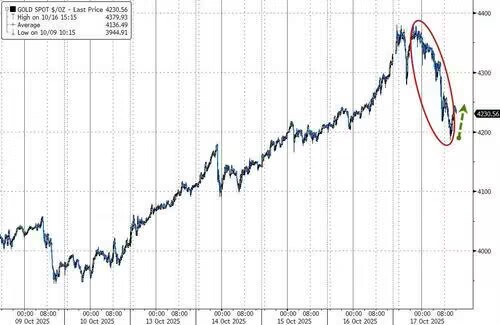
Core Viewpoint - The recent dramatic decline in gold prices, following a record high, raises concerns about whether the current gold bull market, driven by both safe-haven demand and speculative fervor, has reached a critical turning point [1][3]. Price Movement - On October 17, spot gold prices approached $4,380, setting a new historical record, but subsequently fell over 2% during the day, marking the largest single-day drop since Thanksgiving 2024. Despite this, gold prices increased nearly 5% for the week, marking the tenth consecutive week of gains and the best weekly performance since May [1][3]. Market Sentiment and Technical Indicators - Bill Gross, a legendary investor, warned that gold has become a "momentum/meme asset," suggesting potential buyers should wait [3]. - Technical indicators, market sentiment, and positioning are signaling that the gold market is becoming overcrowded, indicating that while gold may still be a "correct" asset, its price may no longer be "appropriate" [3][4]. - The distance between current prices and short-term moving averages is unusually large, with the 21-day moving average around $3,950 and the 50-day moving average at $3,675. A potential reversal pattern is forming, indicating short-term top risks [5]. Volatility and Institutional Positioning - The Gold Volatility Index (GVZ) has surged to extreme levels, reflecting a market driven by panic buying of call options, which could exacerbate price declines if sentiment reverses [7]. - Despite a record net inflow of $34.2 billion into gold ETFs over the past 10 weeks, the incremental inflow is slowing, indicating weakening buying momentum [9][10]. - Institutional positioning is at an extreme, with commodity trading advisors (CTAs) maintaining their highest long positions in gold, suggesting that any price reversal could trigger programmatic selling, amplifying declines [12][14]. Divergence from Traditional Drivers - The current gold bull market is characterized by a significant divergence from traditional fundamental drivers, with gold's rise not aligning with expected influences such as declining real interest rates or a weakening dollar [15][17]. - Gold prices have been rising alongside risk assets, which is unusual, and the recent increase in gold prices has outpaced the decline in real interest rates [15]. - The dollar index has been rising since mid-September, yet gold prices have seemingly ignored this traditional negative correlation [17]. Diverging Opinions on Market Outlook - A debate is emerging among Wall Street analysts regarding whether the current gold market represents a bubble or a new paradigm. Bears argue that the current enthusiasm is waning, while bulls maintain that strong physical demand can explain the price and interest rate divergence [18][19]. - Analysts from major banks suggest that non-traditional policies, including rising fiscal deficits and debt, will continue to support gold prices, with some asserting that the core driver of the current rally is the expectation of a restructuring of the global political economy [19].
特朗普缠斗库克,黄金飚了
Sou Hu Cai Jing· 2025-08-27 08:39
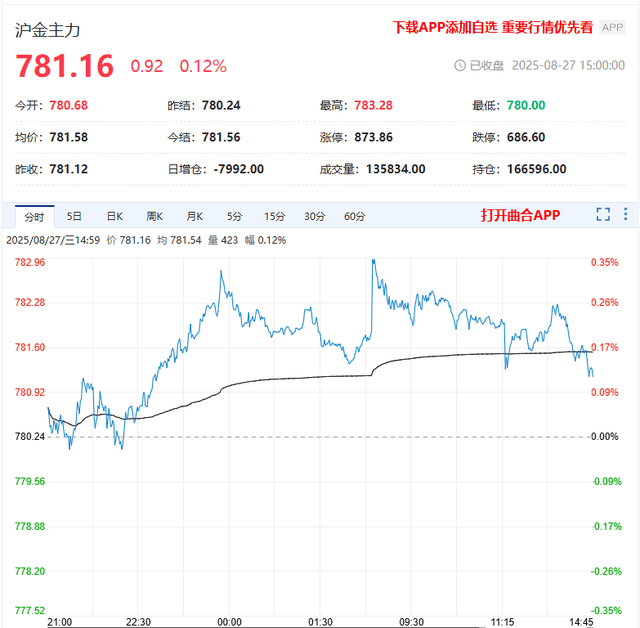
Group 1 - Cook's attorney announced plans to sue President Trump over the dismissal, claiming the president lacks the authority to remove him [1] - The case may ultimately be decided by the U.S. Supreme Court, with Cook potentially seeking an injunction to restore his position during the litigation [1] - The Federal Reserve spokesperson emphasized that the long-term fixed terms of board members and protections against dismissal are crucial for ensuring monetary policy decisions are based on data and the long-term interests of the American people [1] Group 2 - The market sentiment has weakened following trade agreements between multiple countries and the U.S., with tariff revenues somewhat offsetting inflationary pressures on dollar assets [5] - Despite the support for the dollar, deteriorating U.S. economic data and significant government deficit pressures under high interest rates remain concerns, alongside increasing negative impacts from tariffs [5] - International gold prices are expected to fluctuate within the $3300-$3400 range, with a recommendation to construct a bullish spread strategy using gold call options during price corrections [5]
广发期货:美联储降息预期下机构持续增持 贵金属走势分化
Jin Tou Wang· 2025-08-21 07:07
Macro News - The Federal Reserve's July meeting minutes revealed that nearly all decision-makers supported not lowering interest rates, with only two dissenters [1] - There are divisions among officials regarding the risks of inflation and employment, with most believing that the risk of rising inflation is greater than the risk of declining employment [1] - Participants noted that the impact of tariffs on inflation will take time to fully manifest [1] - The passage of the GENIUS Act may increase the use of stablecoins, potentially enhancing the efficiency of payment systems and raising demand for supporting assets like U.S. Treasury bonds [1] Gold Market - The logic behind the gold market indicates that the Fed's meeting minutes have heightened market concerns, leading to a rebound in gold prices as the dollar fluctuated [1] - International gold prices closed at $3,374.95 per ounce, up 0.99%, ending a four-day decline, and fluctuated within the $3,300 to $3,400 range [1] - The recommendation is to construct a bullish spread strategy using gold call options when prices correct to appropriate levels [1] Silver Market - The decline in London silver borrowing rates has reduced physical demand, but ETF inflows have supported prices [2] - Industrial demand remains weak, influenced by market sentiment [2] - International silver prices closed at $37.888 per ounce, up 1.41%, nearing the $38 mark, with short-term fluctuations affected by macroeconomic and commodity factors [2] - The strategy is to maintain a low bullish outlook, as institutions continue to accumulate silver amid expectations of Fed rate cuts [2]
吹风降息,黄金要大涨?
Sou Hu Cai Jing· 2025-08-14 08:56
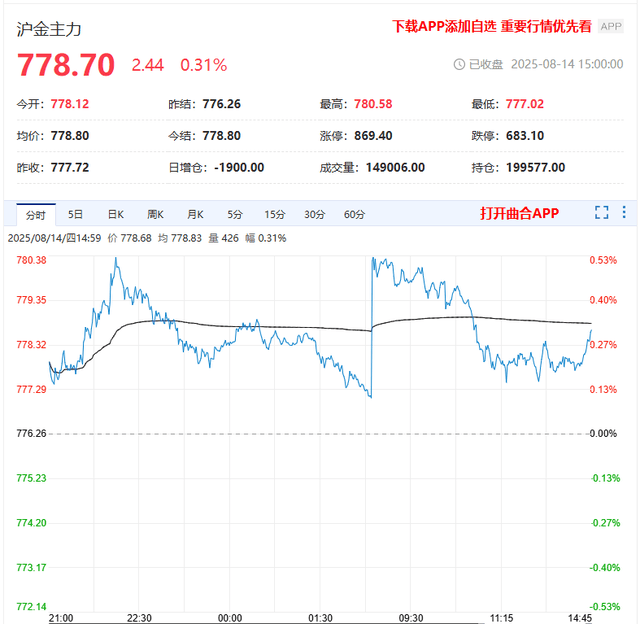
Group 1 - The U.S. Treasury Secretary, Yellen, indicated a potential for a 50 basis point rate cut by the Federal Reserve, suggesting that current rates should be lowered by 150-175 basis points [1] - Atlanta Fed President Bostic stated that if the labor market remains strong, a rate cut in 2025 would be appropriate [1] - The recent comments from U.S. officials, including former President Trump, have provided support for gold prices, with spot gold closing up 0.31% at 778.7 yuan per gram [1] Group 2 - According to Guangfa Futures, the market sentiment has weakened following trade agreements between multiple countries and the U.S., with tariff revenues potentially offsetting inflationary pressures, thus supporting dollar assets [3] - The deterioration of U.S. economic data in July has increased the likelihood of a rate cut by the Fed in September, while ongoing trade frictions continue to elevate market risk aversion [3] - The future influence of Fed officials' attitudes and U.S. inflation data on the market is expected to increase, leading to potential volatility [3] Group 3 - Technically, international gold prices are forming a triangle pattern, facing resistance at the previous high of $3450, indicating a need for stronger breakout drivers [4] - Despite macroeconomic news increasing gold price volatility, there remains potential for a price surge, suggesting a bullish strategy through low-cost call options during price pullbacks [4]
美国聪明钱流入黄金
Sou Hu Cai Jing· 2025-08-13 08:57
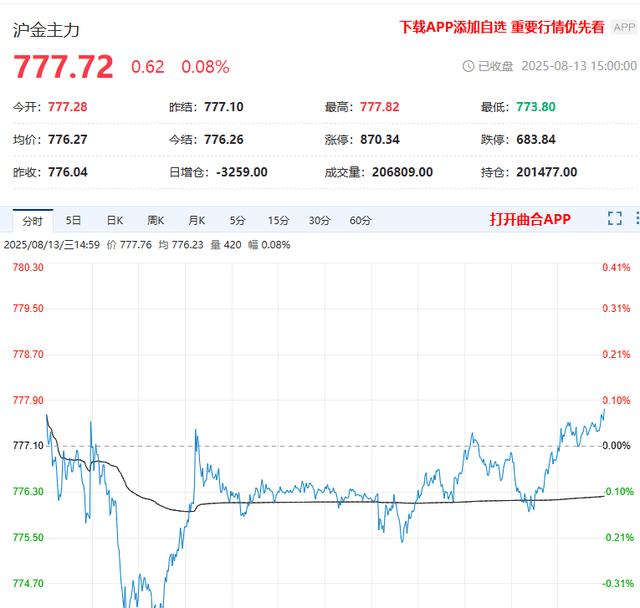
Group 1 - Global gold ETFs saw a net inflow of over $1 billion (approximately 15 tons) last week, with North American funds being the primary driver, while European and Asian funds experienced slight net outflows [1] - Asset management funds increased their long positions by 15,000 contracts, raising their net long position to 45.7% of total open interest, while reducing their net short positions to 11.5%, the lowest level since gold prices stabilized [1] Group 2 - On the domestic market, gold prices rose by 0.08%, closing at 777.72 yuan per gram [2] - Market sentiment has been affected by trade agreements between multiple countries and the U.S., leading to a potential support for dollar assets, while U.S. economic data deterioration has increased the likelihood of a Fed rate cut in September, heightening market risk aversion [4] - Technical analysis indicates that international gold prices are forming a triangle pattern, facing resistance at the previous high of $3,450, with expectations of potential upward movement if a stronger breakout occurs [4]
外资交易台:韧性十足但又令人不安
2025-08-11 01:21
Summary of Key Points from the Conference Call Industry Overview - The analysis focuses on the U.S. economy and its stock market performance, particularly in relation to investor sentiment and economic growth expectations [1][2][3]. Core Insights and Arguments 1. **Investor Sentiment**: Despite a significant adjustment in economic growth expectations following the non-farm payroll data, most investors remain optimistic about the U.S. stock market, particularly in AI stocks, with a low perceived risk of recession [1][2][11]. 2. **Economic Growth Concerns**: 60% of surveyed investors identified U.S. economic growth as their primary concern, marking the highest level of concern since September 2024 [2][8]. 3. **Recession Probability**: Over half of the investors believe the likelihood of a recession in the next 12 months is below 30%, a decrease from 57% in June who thought it was above 30% [2][20]. 4. **Market Performance Expectations**: Investors expect the U.S. stock market to outperform other major markets in August and the second half of 2025 [3][21]. 5. **AI Market Sentiment**: The enthusiasm for AI remains strong, with many investors wanting to hold positions in the "Magnificent 7" stocks, although the number of investors looking to increase their positions is at its lowest since January [3][15][17]. 6. **Hedging Strategies**: Popular hedging tools include S&P put options, cash, U.S. Treasuries, and gold call options, indicating a cautious approach among investors [3][22]. 7. **Currency Outlook**: Investors continue to hold a bearish outlook on the U.S. dollar, although extreme bearish sentiment has eased since April [3][19][22]. 8. **Credit Spread Expectations**: There is an expectation that credit spreads will widen, contrasting with previous expectations of narrowing spreads [3][12]. Additional Important Insights - The survey conducted from August 4 to 6 included 642 institutional investors, reflecting a broad range of opinions on market conditions [5]. - The overall risk sentiment has deteriorated compared to the previous month, influenced largely by the bleak outlook for U.S. economic growth [6][8]. - The anticipated number of interest rate cuts by the Federal Reserve for the remainder of the year is expected to be two, with a market pricing of 58 basis points and a general expectation of 75 basis points [12][20].