默会知识

Search documents
特朗普启动120亿美元金库计划,旨在摆脱对中国稀土的依赖
Sou Hu Cai Jing· 2026-02-07 06:58
Core Insights - The "Treasury Plan" launched by President Trump aims to break the U.S. dependence on China for critical minerals, with a budget of $12 billion [1] - The plan involves collaboration with major companies like General Motors, Boeing, and Google to create emergency stockpiles of strategic minerals [1][3] - The U.S. has formed a critical minerals production alliance with 31 countries to reduce reliance on Chinese resources [3] Funding and Investment - The plan is backed by approximately $2 billion in private capital and up to $10 billion in loans from the Export-Import Bank of the United States [1] - Japan has committed to invest up to $55 billion in the U.S. as part of this initiative, although the terms of the investment have raised concerns domestically [3][5] Strategic Implications - The U.S. government is pushing for public-private partnerships to strengthen domestic mineral production, including investments in companies like MP Materials and American Lithium [1] - Japan's investment strategy has been criticized for its unfavorable terms, which could lead to significant financial risks for Japanese investors [3][5] Geopolitical Context - By 2024, the U.S. is projected to rely on 100% imports for 12 critical minerals, with over 50% of 29 other minerals also coming from imports, highlighting a significant vulnerability [3] - The geopolitical tensions have prompted the U.S. to seek alternatives to Chinese supply chains, but experts warn that immediate changes are unrealistic [3][7] Technological Challenges - Western companies, despite having capital, face significant challenges in replicating China's advanced rare earth processing capabilities, particularly in achieving the required purity levels [8][10] - The concept of "tacit knowledge" in China's industrial ecosystem presents a barrier that Western firms struggle to overcome, impacting their ability to compete effectively [10]


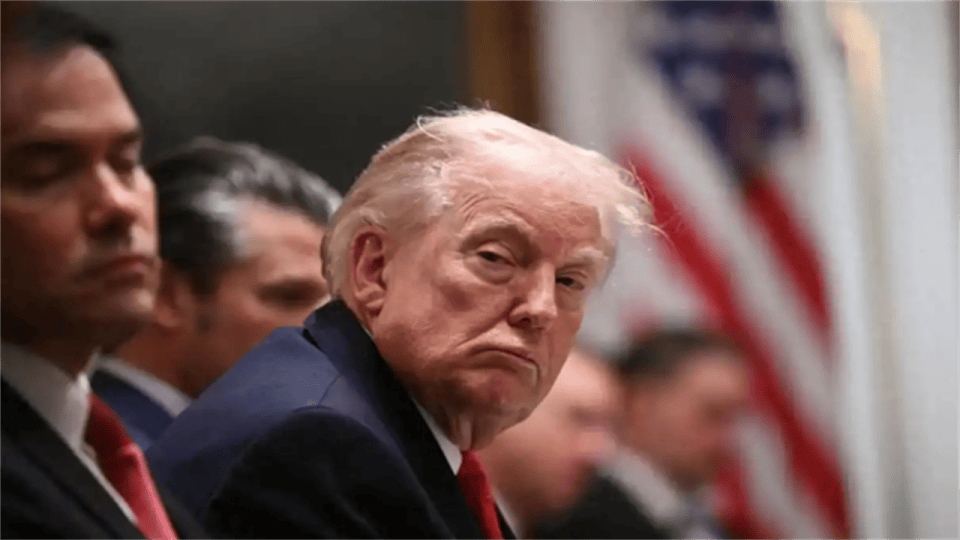
特朗普下决心,和中国稀土拼到底!金库门刚开就烧掉120亿美元
Sou Hu Cai Jing· 2026-02-06 04:51
Group 1 - The core objective of Trump's $12 billion emergency strategy is to reduce U.S. dependence on Chinese rare earths and ensure a competitive edge in geopolitical matters [1][3] - Key initiatives include establishing an emergency stockpile of strategic minerals like rare earths, gallium, and cobalt, with a goal of ensuring at least 60 days of supply during crises [3] - Funding sources for the plan include $2 billion from private capital and up to $10 billion in loans from the Export-Import Bank of the United States [3] Group 2 - The plan aims to elevate critical minerals to a national security priority, leading to reforms such as simplifying mining permits and allowing controversial deep-sea mining [3] - The U.S. Department of Defense and Department of Energy have invested hundreds of millions in rare earth producers, while the Commerce Department has acquired a 10% stake in a U.S. rare earth company [3] - Japan has responded positively to the plan, committing up to $55 billion to deepen supply chain ties with the U.S., although the terms of investment have faced domestic criticism [7] Group 3 - The U.S. relies heavily on imports for critical minerals, with 12 minerals fully imported and 29 minerals over 50% imported by 2024, raising concerns about national security [5] - Analysts express skepticism about the feasibility of quickly reducing dependence on China, despite the potential long-term market stabilization from the plan [5] - Japanese companies investing in U.S. rare earth projects face challenges, as they lack control over key technologies and processes, leading to concerns about becoming low-end participants in the supply chain [9] Group 4 - Western countries claim to have mastered high-purity rare earth separation technologies, with some companies announcing independence from Chinese supply chains [9] - However, practical challenges remain, including achieving the required purity levels for high-end applications, which are critical for defense systems like the F-35 [9] - China's competitive advantage in rare earths stems from decades of investment and a comprehensive industrial ecosystem, making it difficult for other countries to replicate [9]
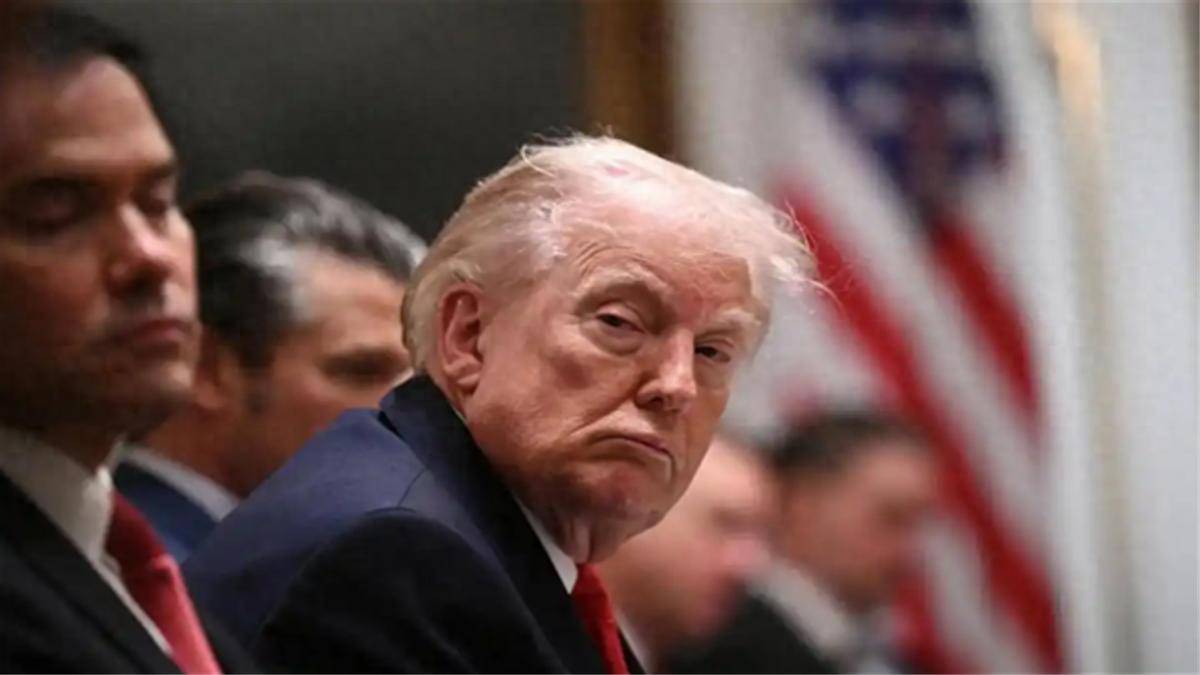
特朗普启动120亿美元“金库计划”,旨在摆脱对中国稀土的依赖
Sou Hu Cai Jing· 2026-02-05 10:43
Core Points - The "Treasury Plan" launched by President Trump aims to reduce U.S. dependence on Chinese rare earths and strengthen the supply chain for critical minerals [1][3] - The plan involves collaboration with major industrial players like General Motors, Boeing, and Google to create emergency stockpiles of strategic minerals [3][4] - Funding for the plan includes $20 billion from private capital and up to $100 billion in loans from the Export-Import Bank of the United States [4] Funding and Strategy - The plan is part of a broader strategy to elevate critical minerals to a national security priority, including reforms in domestic mining permits and controversial deep-sea mining [4] - The U.S. government is promoting public-private partnerships, with significant investments in domestic rare earth producers like MP Materials and American Lithium [4][5] - The U.S. is also investing in allied countries, such as acquiring a 10% stake in Canadian Trilogy Metals [5] Geopolitical Context - The urgency of the plan is underscored by the fact that in 2024, the U.S. will rely 100% on imports for 12 critical minerals and over 50% for 29 others, raising concerns about national security [7] - Japan has responded positively to the plan, committing to invest $550 billion in U.S. supply chains, despite facing unfavorable terms [8][9] - Japan's strategic move is driven by concerns over China's impending export controls on dual-use items, which could impact Japan's security [10] Risks and Challenges - Japan's investment conditions have been criticized domestically as an "unequal treaty," raising concerns about the long-term viability of the partnership [9] - Japanese companies investing in U.S. rare earth projects may find themselves in a subordinate position, lacking control over key technologies and processes [13] - The U.S. is also shifting focus towards building new rare earth processing facilities in Australia, indicating a potential pivot away from Japan [13][14] Industry Dynamics - Western media has claimed that the U.S. and its allies are gaining control over rare earth processing, suggesting a decline in China's dominance [14][15] - However, the complexities of replicating China's established supply chain and production quality pose significant challenges for Western efforts [17] - China's comprehensive rare earth manufacturing system, built over decades, includes critical tacit knowledge that is difficult for others to replicate [17][18]
超越“第四次工业革命”:关于人工智能与人类主体性的再思考
3 6 Ke· 2026-01-20 12:11
Core Insights - The current discourse around artificial intelligence (AI) is often framed as the "Fourth Industrial Revolution," likening it to previous industrial transformations, but this perspective is limited in understanding the deeper cognitive and existential implications of AI [1] - The emergence of generative AI signifies not just an upgrade in tools but a profound crisis and reconstruction of subjectivity, akin to a digital renaissance [2] Historical Context - To comprehend the mixed emotions of excitement and fear regarding AI, it is essential to revisit the Middle Ages, where human reason was seen as auxiliary to divine order, limiting human agency [3] - The Renaissance marked a significant shift in value systems, emphasizing human dignity and the freedom of self-definition, as articulated by thinkers like Pico della Mirandola [4][5] Technological Parallels - The Renaissance was not solely a philosophical movement but was also driven by technological advancements, such as linear perspective in art, which parallels today's AI technologies [8] - The introduction of linear perspective transformed visual representation, allowing for a measurable and calculable understanding of the world, similar to how Transformer models process language in high-dimensional semantic spaces [10][12] Knowledge Distribution - The invention of the printing press by Gutenberg drastically reduced the marginal cost of information distribution, leading to a democratization of knowledge, which generative AI is now extending by lowering the barriers to creative skills [15][17] - Generative AI is enabling a form of "skill democratization," allowing individuals without formal training to access advanced capabilities, thereby disrupting existing social structures more profoundly than the Industrial Revolution [17] Ethical Considerations - There is a risk of a resurgence of "digital theocracy," where algorithmic systems increasingly dictate human choices, leading to a potential loss of agency [18][19] - The commodification of individuals as mere data sources in AI systems threatens the ethical principle of viewing humans as ends in themselves, raising concerns about the erosion of human dignity [21][22] Future Outlook - The path forward requires a redefinition of human irreplaceability in the face of advancing AI, emphasizing the importance of human values and ethical considerations in technology [22][25] - The future will likely favor individuals who possess deep humanistic knowledge and the ability to define problems and assign meaning, rather than merely those who can accumulate knowledge [24][25]