800V直流架构

Search documents
交付即正义!高盛:高龄的美国电网,正为中国电力产业链提供历史性机遇
硬AI· 2026-01-14 15:22
Core Viewpoint - The core contradiction in artificial intelligence infrastructure construction is shifting from the pursuit of GPU quantity to the competition for power supply speed, with "Time-to-Power" becoming the most severe bottleneck in AI construction [1][2]. Group 1: Power Supply Challenges - The average lifespan of power grids in the US and EU has reached 35 to 40 years, and the infrastructure is increasingly fragile in the face of explosive energy demands from AI data centers (AIDC) [1][2]. - The domestic power equipment capacity in the US can only meet about 40% of local demand, with waiting times for grid connection extending to nearly five years [1][2]. - This structural shortage is reshaping the pricing power in the supply chain, with qualified Chinese suppliers gaining advantages not just from lower costs but from shorter delivery times [1][3]. Group 2: Market Growth and Demand - Goldman Sachs projects that by 2030, electricity consumption by US data centers (including AI and non-AI) will increase by approximately 175% compared to 2023, contributing about 120 basis points to overall electricity demand [5]. - The overall addressable market for AI data center power products is expected to expand at a compound annual growth rate (CAGR) of about 39% from 2025 to 2030, covering various product categories [7][8]. Group 3: Product Prioritization - Goldman Sachs has provided a clear preference ranking for Chinese power supply-related product categories: gas turbine blades > power transformers > electrical components > uninterruptible power supplies/power racks > liquid cooling systems > server power [3][16]. - Gas turbine blades rank highest due to high material science and manufacturing barriers, while power transformers follow due to labor-intensive manufacturing and lengthy certification cycles [17]. Group 4: Competitive Advantages of Chinese Suppliers - The decisive competitive advantage for qualified Chinese suppliers is not only lower costs but also shorter delivery cycles, which have become the primary decision factor for data center operators and utility companies [10]. - Companies like Siyi Electric have gained market share in the US due to their short delivery cycles, with expected revenue from the US market increasing from 26% in 2026 to 28% in 2028 of their overseas income [10]. Group 5: Pricing Power and Profit Margins - Due to severe supply shortages, Chinese suppliers can achieve significant price premiums in overseas markets, ranging from 10% to 80% compared to domestic sales [12]. - For example, Siyi Electric's products have a gross margin of about 45% in the US, compared to 30% domestically, indicating a substantial profit margin increase despite potential tariffs and logistics costs [12].


交付即正义!高盛:高龄的美国电网,正为中国电力供应商提供历史性机遇
Hua Er Jie Jian Wen· 2026-01-14 06:03
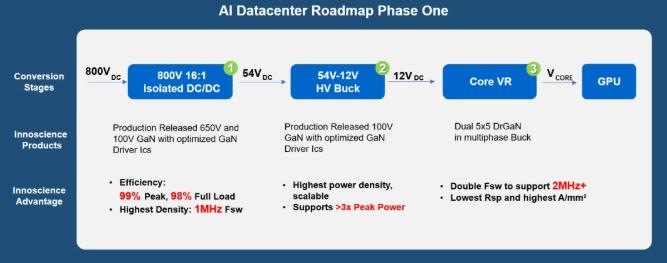
Core Insights - The core contradiction in AI infrastructure construction is shifting from merely pursuing GPU quantities to competing for power supply speed, with "Time-to-Power" becoming the most severe bottleneck in AI development [1] - Chinese power solution providers, capable of rapid delivery and large-scale production, are experiencing a historic revaluation opportunity due to this shift [1] Group 1: Power Supply Challenges - The average lifespan of power grids in the US and EU has reached 35 to 40 years, and the infrastructure is increasingly fragile in the face of explosive energy demands from AI data centers [1] - Currently, US domestic power equipment capacity meets only about 40% of local demand, with interconnection waiting times extending to nearly five years [1] - Goldman Sachs projects that by 2030, electricity consumption in US data centers will increase by approximately 175% compared to 2023, contributing about 120 basis points to overall electricity demand [3] Group 2: Market Dynamics - The structural shortage in power supply is reshaping the pricing power within the supply chain, with qualified Chinese suppliers gaining a competitive edge through shorter delivery times rather than just lower costs [1][8] - Chinese suppliers can command significant price premiums in overseas markets, ranging from 10% to 80% compared to domestic sales, providing high visibility for profits [9] Group 3: Product Growth and Opportunities - The overall addressable market for AI data center power products is expected to expand at a compound annual growth rate (CAGR) of approximately 39% from 2025 to 2030, driven by capacity construction, increasing power density, and a shift from AC to DC architecture [5] - The 800V DC distribution architecture is becoming the standard for most AI data center projects, with potential energy savings of 5-15% compared to traditional AC structures [5] Group 4: Key Product Preferences - Goldman Sachs ranks the preference for power supply-related products as follows: gas turbine blades > power transformers > electrical components > uninterruptible power supply systems > liquid cooling systems > server power [11] - Gas turbine blades are prioritized due to high material science and manufacturing barriers, while power transformers follow due to labor-intensive manufacturing and lengthy certification processes [11] Group 5: Company Performance and Projections - Companies like Siyi Electric and Ingeteam are expected to benefit from the supply shortages in gas turbine blades and power transformers, with Siyi Electric's US market revenue projected to increase from 26% in 2026 to 28% in 2028 [8][10] - Goldman Sachs estimates that the average sales CAGR for Chinese companies in the US market will reach 23% from 2025 to 2030, with overseas AI data center market contributions expected to average 23% by 2030 [10]

英伟达带头冲锋800V直流,功率芯片厂商迎来新机遇
3 6 Ke· 2025-10-21 03:24
Core Insights - NVIDIA is focusing on the future development of gigawatt-level AI factories, showcasing advanced technologies, with 800V DC technology being a significant highlight that leads to a transformation in data center energy architecture [1] - The 800V DC architecture demonstrates substantial advantages over traditional 415 or 480V AC systems, including over 150% power transmission capability with the same copper cabling, significantly reducing material costs for clients [1] - The shift to 800V DC architecture enhances scalability, energy efficiency, and performance capacity in data centers, aligning with current green energy trends [1][2] Industry Developments - Foxconn has announced a 40 MW data center in Kaohsiung, Taiwan, designed for 800V DC, with over 20 industry pioneers like CoreWeave and Lambda also engaging in 800V DC data center designs [2] - Vertiv has introduced the 800V DC MGX reference architecture, which saves space, costs, and energy, while HP has announced support for related technologies, contributing to the 800V DC ecosystem [2] Partner Contributions - Over 20 NVIDIA partners are providing rack servers that comply with open standards to support future gigawatt-level AI factories, including semiconductor suppliers like Analog Devices, Infineon, and Texas Instruments [3] - Notably, InnoGaN is the only GaN IDM in the industry capable of mass-producing GaN solutions from 1200V to 15V, addressing the challenges faced by traditional AI systems [5][4] Technical Advantages - InnoGaN's third-generation GaN technology offers significant advantages, such as reducing driving losses by 80% and switching losses by 50% compared to SiC, leading to an overall power consumption reduction of 10% [7] - Power Integrations has developed unique solutions for 800V DC data centers, including the InnoMux2-EP IC, which supports high efficiency and reliability requirements [8][9] Efficiency and Design Considerations - Texas Instruments provides a comprehensive product lineup for 800V power conversion architectures, emphasizing the need for high energy conversion efficiency and compact design to meet the demands of modern data centers [16][20] - The transition to 800V DC architecture marks a fundamental shift, enabling megawatt-level power transmission while significantly reducing copper and cooling costs, thus enhancing overall system efficiency [21]