电气元件

Search documents
交付即正义!高盛:高龄的美国电网,正为中国电力产业链提供历史性机遇
硬AI· 2026-01-14 15:22
Core Viewpoint - The core contradiction in artificial intelligence infrastructure construction is shifting from the pursuit of GPU quantity to the competition for power supply speed, with "Time-to-Power" becoming the most severe bottleneck in AI construction [1][2]. Group 1: Power Supply Challenges - The average lifespan of power grids in the US and EU has reached 35 to 40 years, and the infrastructure is increasingly fragile in the face of explosive energy demands from AI data centers (AIDC) [1][2]. - The domestic power equipment capacity in the US can only meet about 40% of local demand, with waiting times for grid connection extending to nearly five years [1][2]. - This structural shortage is reshaping the pricing power in the supply chain, with qualified Chinese suppliers gaining advantages not just from lower costs but from shorter delivery times [1][3]. Group 2: Market Growth and Demand - Goldman Sachs projects that by 2030, electricity consumption by US data centers (including AI and non-AI) will increase by approximately 175% compared to 2023, contributing about 120 basis points to overall electricity demand [5]. - The overall addressable market for AI data center power products is expected to expand at a compound annual growth rate (CAGR) of about 39% from 2025 to 2030, covering various product categories [7][8]. Group 3: Product Prioritization - Goldman Sachs has provided a clear preference ranking for Chinese power supply-related product categories: gas turbine blades > power transformers > electrical components > uninterruptible power supplies/power racks > liquid cooling systems > server power [3][16]. - Gas turbine blades rank highest due to high material science and manufacturing barriers, while power transformers follow due to labor-intensive manufacturing and lengthy certification cycles [17]. Group 4: Competitive Advantages of Chinese Suppliers - The decisive competitive advantage for qualified Chinese suppliers is not only lower costs but also shorter delivery cycles, which have become the primary decision factor for data center operators and utility companies [10]. - Companies like Siyi Electric have gained market share in the US due to their short delivery cycles, with expected revenue from the US market increasing from 26% in 2026 to 28% in 2028 of their overseas income [10]. Group 5: Pricing Power and Profit Margins - Due to severe supply shortages, Chinese suppliers can achieve significant price premiums in overseas markets, ranging from 10% to 80% compared to domestic sales [12]. - For example, Siyi Electric's products have a gross margin of about 45% in the US, compared to 30% domestically, indicating a substantial profit margin increase despite potential tariffs and logistics costs [12].



交付即正义!高盛:高龄的美国电网,正为中国电力产业链提供历史性机遇
Hua Er Jie Jian Wen· 2026-01-14 07:22
Core Insights - The core contradiction in AI infrastructure construction is shifting from merely pursuing GPU quantities to competing for power supply speed, with "Time-to-Power" becoming the most severe bottleneck in AI development [1] - Chinese power solution providers with rapid delivery capabilities and large-scale production advantages are experiencing a historic revaluation opportunity [1] Group 1: Power Supply Challenges - The average lifespan of power grids in the US and EU has reached 35 to 40 years, and the infrastructure is increasingly fragile due to the explosive energy demands of AI data centers (AIDC) [1] - Current domestic power equipment capacity in the US can only meet about 40% of local demand, with interconnection waiting times extending to nearly five years [1] - Goldman Sachs predicts that the power supply shortage in the US will persist until 2030, with a projected 175% increase in electricity consumption by data centers by 2030 [2][3] Group 2: Market Dynamics and Growth - The overall addressable market for AI data center power products is expected to expand at a compound annual growth rate (CAGR) of approximately 39% from 2025 to 2030 [3] - The growth is driven by continuous capacity construction, increasing power density, and a shift from AC to DC architecture, with 800V DC distribution becoming the standard for many AI data center projects [4] Group 3: Competitive Advantages of Chinese Suppliers - Chinese suppliers are gaining a decisive competitive advantage not only through lower costs but also through shorter delivery cycles, which have become a primary decision factor for data center operators [5] - Companies like Siyi Electric and Yinglite are positioned to benefit from the supply shortages in the US market, with Siyi Electric's revenue from the US expected to grow from 26% in 2026 to 28% in 2028 [5][6] Group 4: Product Prioritization - Goldman Sachs has provided a clear preference ranking for Chinese power supply-related product categories: gas turbine blades > power transformers > electrical components > uninterruptible power supplies/power racks > liquid cooling systems > server power [6][7] - Gas turbine blades rank highest due to high material science and manufacturing barriers, while power transformers follow due to labor-intensive manufacturing and lengthy certification processes [7]

万保刚集团(01213)发布中期业绩,股东应占亏损297.1万港元 同比减少40.4%
智通财经网· 2025-11-25 10:10
Core Viewpoint - Wanbo Gang Group (01213) reported a revenue of HKD 140 million for the six months ending September 30, 2025, representing a year-on-year decrease of 7.32% [1] - The company recorded a loss attributable to equity holders of HKD 2.971 million, a reduction of 40.4% compared to the previous year [1] - The company plans to distribute an interim dividend of HKD 0.0025 per share [1] Revenue Breakdown - The trading business of electronic and electrical components was the main source of revenue for the group, generating approximately HKD 98 million, down from HKD 100 million in the same period last year, a decrease of about 2% [1] - The decline in revenue is primarily attributed to weak local market demand in China, influenced by cautious consumer sentiment and intensified market competition [1] Strategic Measures - The company has focused on enhancing operational efficiency and implementing cost control measures, which effectively mitigated the impact of the revenue decline [1]
被特朗普铜关税暴击才过三个月,“史上最赚钱“套利交易卷土重来?
智通财经网· 2025-11-07 23:59
Group 1 - The core viewpoint of the articles highlights the resurgence of copper arbitrage trading as traders bet on the potential reintroduction of high tariffs on copper by the Trump administration in the coming year [1][2] - Major trading firms, including Mercuria Energy Group, Vitol Group, and Trafigura Group, are negotiating annual agreements for copper supply to the U.S. for 2026, with offers exceeding the London Metal Exchange (LME) benchmark price by over $500 per ton [1][2] - The expectation of renewed tariffs has led to a significant increase in the price of copper on the New York Comex, which is now substantially higher than LME prices, indicating a potential continuation of market volatility [1][2] Group 2 - Earlier this year, traders like Mercuria and Trafigura profited significantly by shipping large quantities of copper to the U.S. before the initial tariff announcement, which resulted in record import levels and pushed copper prices to historical highs despite weak demand [2] - The U.S. Department of Commerce has suggested delaying the implementation of tariffs until 2027, with a proposed 15% tariff increasing to 30% by 2028, creating uncertainty that traders are eager to exploit [2] - The willingness of traders to pay high premiums for copper is driven by the potential for higher resale prices in the U.S. market [2]
被特朗普铜关税暴击才过三个月,"史上最赚钱"套利交易卷土重来?
Hua Er Jie Jian Wen· 2025-11-07 22:16
Core Insights - The copper arbitrage trading, previously impacted by tariffs, is resurging as traders bet on potential high tariffs on copper by the Trump administration next year [1][2] - Major trading firms like Mercuria, Vitol, and Trafigura are negotiating annual supply agreements for copper with Chilean producers for 2026, with offers exceeding the London Metal Exchange (LME) benchmark price by over $500 per ton [1][2] - The expectation of renewed tariffs has led to a significant increase in New York Comex copper prices, which are now substantially higher than LME futures prices [1][2] Group 1 - Earlier this year, traders like Mercuria and Trafigura profited significantly by shipping large quantities of copper to the U.S. before the initial tariff proposal by Trump in February [2] - The U.S. Department of Commerce has suggested delaying the imposition of a 15% tariff until 2027, increasing to 30% by 2028, creating uncertainty that traders are capitalizing on [2] - Traders are willing to pay high premiums for copper as they anticipate being able to resell it at higher prices in the U.S. market [2] Group 2 - In July, the Trump administration's unexpected exemption of raw copper from tariffs led to a dramatic market reaction, with Comex copper futures dropping 22% in a single day, marking the largest decline since at least 1988 [3][4] - The exemption caused a rapid disappearance of the price premium that Comex copper had over LME prices, leading to a shift to a discount [3] - Following the exemption announcement, the number of profitable put options surged, indicating a significant market shift [4]
宝城期货铜价,延续内强外弱格局
Bao Cheng Qi Huo· 2025-08-13 01:00
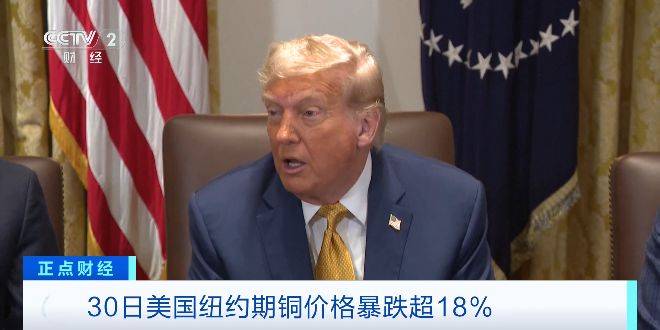
1. Report Industry Investment Rating No relevant content provided. 2. Core View of the Report - The copper price is expected to continue the pattern of being stronger in the domestic market and weaker in the international market, as well as being weaker in the near - term and stronger in the far - term. Currently, the macro - environment is favorable for copper prices, while the industrial side shows a neutral - to - bearish trend [2][3][4]. 3. Summary According to Related Content Impact of US Tariff Policy - On July 30, the US President announced a 50% tariff on imported copper semi - products and copper - intensive derivatives starting from August 1. The New York copper price dropped by over 18% on the same day, and the spread between COMEX copper and LME copper quickly narrowed to the pre - tariff - expectation level. Copper ores and cathode copper were exempted from the tariff, which is beyond market expectations. This exemption is bullish for copper prices from a global supply - demand perspective. After the spread convergence, US copper imports may decline in the second half of the year, increasing non - US copper supply and being bearish for LME and SHFE copper [2]. Macroeconomic Factors - The current high global market risk appetite and the good performance of domestic and foreign equity markets are bullish for copper prices. The unexpectedly weak US non - farm data and lower - than - expected non - manufacturing PMI at the beginning of the month increased the expectation of a US economic slowdown and Fed rate - cut expectations, causing the US dollar index to fall. The market expects the Fed to cut rates three times this year, with a cumulative cut of 75 basis points [2]. - There is a risk of a macro - environment shift. If the US economy continues to weaken, copper prices will be under pressure; if the US economy stabilizes and the Fed cuts rates, it will be bullish for copper prices [3]. Domestic Market Conditions - In July, the domestic macro - environment was positive. With the "anti - involution" policy, domestic - priced commodities generally rose. The strong trend continued in late July but cooled down at the end of the month, and commodities entered an adjustment phase. The current spot industry is in the off - season, with limited impact on copper prices. Supported by the macro - environment, far - month copper contracts are stronger than near - month contracts. Domestic electrolytic copper inventory de - stocking has slowed down, while overseas copper inventory has been accumulating at a high level, resulting in the pattern of stronger domestic and weaker international copper prices. Domestic upstream smelters maintain high production, and refined copper imports are expected to increase, putting pressure on the domestic industry [3]. Trade Agreement and Its Impact - In August, the new US tariff policy was implemented, and the US reached new trade agreements with major global economies, possibly extending the current tariff policy for 90 days. This reduces global economic uncertainty and is expected to keep the market risk - appetite high, which is bullish for copper prices [3]. - The joint statement of the Sino - US Stockholm economic and trade talks on August 12, 2025, involving a 90 - day tariff extension and non - tariff measure adjustment, indicates an improvement in Sino - US trade relations and is also bullish for copper prices [4].
8月1日起征 铜市巨震!美国50%关税为何豁免精炼铜?
2 1 Shi Ji Jing Ji Bao Dao· 2025-08-03 00:57
Core Viewpoint - The Trump administration has imposed a 50% tariff on imported copper semi-finished products and high-copper-content derivatives, citing national security concerns, which has caused significant volatility in the global copper market [1][4]. Group 1: Tariff Impact on Copper Market - The announcement of the tariff led to a 20% drop in copper futures prices on July 30, following a period of rising prices due to market speculation about the tariffs [2][3]. - Prior to the tariff announcement, copper futures had reached a record high of $5.8955 per pound, driven by expectations of the tariffs [2]. - The tariff policy has disrupted the previous premium for U.S. copper over London Metal Exchange (LME) prices, which had reached a 28% premium [2][3]. Group 2: Supply Chain and Inventory Dynamics - U.S. copper inventories at the New York Commodity Exchange (COMEX) have surged to 232,000 tons, a year-on-year increase of 21,900 tons, indicating a significant buildup of stock [3]. - The U.S. imported 864,000 tons of copper in the first half of the year, up 514,000 tons from the previous year, reflecting increased demand amid tariff speculation [3]. - The potential for excess inventory in the U.S. market may suppress COMEX copper prices, with concerns about inventory outflows impacting LME prices and domestic prices in China [3]. Group 3: Long-term Market Outlook - Despite short-term pressures on copper prices, long-term demand for copper is expected to rise due to trends in electric vehicles, data centers, and grid modernization, which may support higher copper prices [3][5]. - The U.S. is the second-largest consumer of copper globally, with projected consumption of approximately 1.6 million tons in 2024, while domestic production remains limited [5]. - The U.S. relies heavily on imports for refined copper, with 46% of its refined copper needs met through imports, highlighting a critical gap in its supply chain [5]. Group 4: Future Policy Considerations - The U.S. government is considering further tariffs on refined copper, with potential rates of 15% starting in 2027, increasing to 30% in subsequent years, which could impact domestic production and investment [6]. - The proposed export licensing for high-quality copper scrap aims to ensure a stable supply of raw materials while promoting domestic refining capacity [6]. - The effectiveness of the tariff policy in fostering domestic copper industry growth remains uncertain, as significant capital investment and time are required to develop new refining capabilities [6].

铜:现货升水走高,限制价格回落
Guo Tai Jun An Qi Huo· 2025-08-01 02:08
Report Industry Investment Rating - No information provided on the report industry investment rating Core Viewpoints - The rising spot premium restricts the decline of copper prices [1] - The trend strength of copper is 0, indicating a neutral outlook [3] Summary by Relevant Catalogs Copper Fundamental Data - **Futures Prices**: The closing price of the Shanghai Copper main contract was 78,040 with a daily decline of 1.13%, and the night - session closing price was 78,010 with a decline of 0.04%. The LME Copper 3M electronic disk closed at 9,607 with a decline of 1.26% [1] - **Trading Volume and Open Interest**: The trading volume of the Shanghai Copper main contract was 109,011, an increase of 53,123 from the previous day, and the open interest was 176,193, an increase of 4,504. The trading volume of the LME Copper 3M electronic disk was 46,546, an increase of 30,514, and the open interest was 271,000, an increase of 221 [1] - **Futures Inventory**: The Shanghai Copper inventory was 19,622, a decrease of 351, and the LME Copper inventory was 138,200, an increase of 1,350. The LME Copper注销仓单 ratio was 12.28%, a decrease of 1.87% [1] - **Spreads**: The LME Copper spread was - 50.76, a decrease of 3.96 from the previous day. The Shanghai 1 bright copper price was 73,600, an increase of 100. The spot - to - near - term futures spread was 165, an increase of 55 [1] Macro and Industry News - **Macro News**: The US core PCE price index in June was 2.8% year - on - year, reaching a 4 - month high. Trump said the US - Mexico tariff agreement would be extended by 90 days, and the US Commerce Secretary claimed to have reached trade agreements with Cambodia and Thailand [1] - **Micro News**: Chile expects to get Trump's tariff exemption, causing New York copper to fall more than 6% and copper mining stocks to decline generally. Peru is evaluating 134 mining exploration and development projects with an expected investment of $6 billion. Trump will impose a 50% tariff on imported semi - finished copper products and copper - intensive derivatives starting from August 1 [1][3]
美国宣布将对进口铜产品征收50%关税,纽交所期铜暴跌20%
Sou Hu Cai Jing· 2025-07-31 23:00
Group 1 - The U.S. government will impose a 50% tariff on imported copper semi-finished products and high-copper-content derivatives starting August 1 [1][3] - The tariff will apply to products such as copper pipes, wires, rods, and sheets, but not to copper ore, concentrates, or cathodes [3][5] - Following the announcement, copper futures prices on the New York Commodity Exchange fell by 20% in one day [5][9] Group 2 - The high tariff is expected to significantly impact U.S. manufacturing, as nearly half of the copper used by American factories is sourced from overseas suppliers [9][11] - Major suppliers of refined copper and copper products to the U.S. include Chile, Canada, and Mexico [9] - The tariff is likely to lead to increased costs for consumer goods such as refrigerators, cars, and air conditioners, creating a ripple effect on prices [9][11] Group 3 - Analysts suggest that the tariff is a direct attempt by the government to shift costs from consumers and manufacturers to producers, aiming to rebuild the U.S. supply chain [7][11] - The copper tariff is being implemented in addition to existing tariffs on steel and aluminum, which are also used in similar products [11]
美国宣布将对部分进口铜产品征收50%关税,纽约期铜闪崩→
Sou Hu Cai Jing· 2025-07-31 12:56
Core Viewpoint - The U.S. government has announced a 50% tariff on imported copper semi-finished products and high-copper-content derivatives starting August 1, excluding refined copper and major products from this tax, which contradicts market expectations [1][3][6]. Group 1: Tariff Announcement - President Trump signed an announcement on July 30, imposing a 50% tariff on imports of copper semi-finished products such as copper pipes, wires, rods, and sheets, as well as high-copper-content derivatives like fittings, cables, connectors, and electrical components [1][3]. - Refined copper and major products are excluded from the tariff, which was unexpected by the market, as there were anticipations that all imported refined metals would be taxed [1][3][6]. Group 2: Market Reaction - Following the announcement, copper futures on the New York Commodity Exchange experienced a significant drop, with prices falling over 18% at one point, ultimately closing at $4.63 per pound, down approximately 17% [3][5]. - The announcement has been described as unexpectedly disruptive to international markets, indicating a volatile response from traders [3][5]. Group 3: Historical Context - Earlier in the year, Trump hinted at potential copper tariffs, which led to a notable increase in U.S. copper prices compared to global markets, resulting in a surge of copper products entering the U.S. [5][6]. - On July 8, after announcing a 50% tariff on all imported copper, copper futures saw a record single-day increase of 17%, reaching $5.89 per pound, marking the largest single-day price increase since 1989 [5][6]. Group 4: Trade Flow Implications - The exclusion of refined copper from the tariff is expected to further disrupt global copper trade flows, with significant quantities of copper products already shipped to the U.S. potentially being re-exported [6].