A股韧性

Search documents
金银闪崩、外围震动,A股真的“扛得住”吗?
3 6 Ke· 2026-01-30 10:09
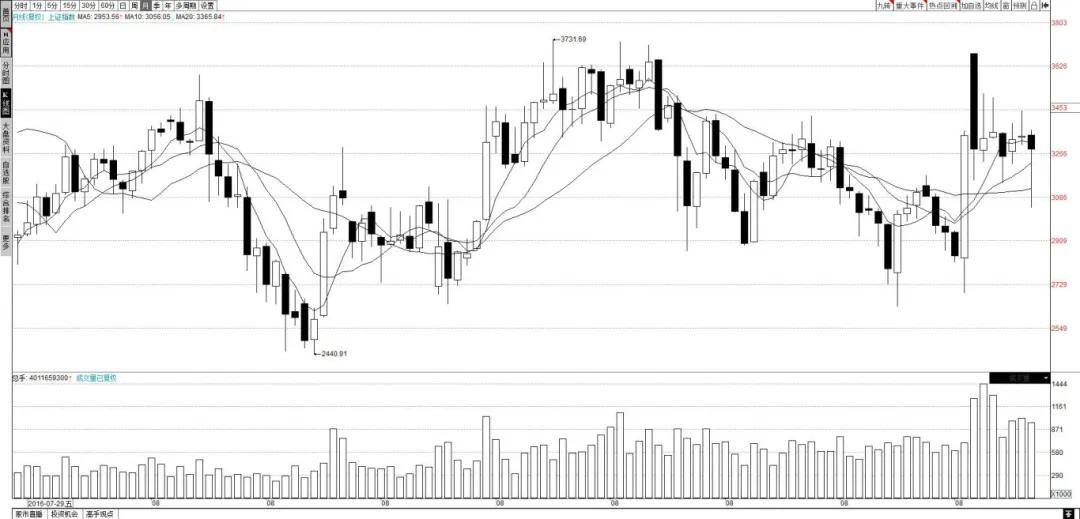
Core Viewpoint - The A-share market demonstrated resilience amidst global market turmoil, particularly following a significant drop in international gold and silver prices, indicating strong underlying support mechanisms. Group 1: Impact of Global Market Events - International gold and silver experienced a dramatic drop, with gold falling from a high of $5,626 to below $5,100, marking a maximum decline of over 8%, while silver dropped from $121.6 to $107.7, with a maximum decline exceeding 12% [4] - Despite the external shocks, A-shares did not follow the downward trend, with the Shanghai Composite Index down only 0.96%, the Shenzhen Component down 0.66%, and the ChiNext Index rising by 1.27% [3] Group 2: A-share Market Resilience - A-shares were supported by four key factors: 1. Policy and liquidity support, including the release of consumption-boosting policies and a net injection of 700 billion yuan by the central bank, which helped stabilize market expectations [7] 2. Optimized funding structure, with northbound capital showing a net inflow of 32.68 billion yuan on the day and a total of 234.68 billion yuan for the week, indicating confidence from long-term investors [8] 3. Strong fundamentals and valuation advantages, with an overall earnings growth forecast of 42.3% for A-shares, particularly in sectors like non-ferrous metals and petrochemicals, which have growth rates exceeding 60% [9] 4. Strong risk isolation capabilities, as the decline in the precious metals sector was seen as a localized adjustment rather than a systemic risk for A-shares [10] Group 3: Market Outlook and Strategy - The A-share market is expected to experience minor fluctuations due to external influences and pre-holiday liquidity concerns, but these do not indicate a "crash" [14] - Investors are advised to focus on stable sectors such as consumer goods and state-owned enterprises, while avoiding high-risk areas like precious metals and high-leverage sectors [12]

北京商报侃股:长期投资价值是A股韧性的基础
Bei Jing Shang Bao· 2025-11-05 11:32
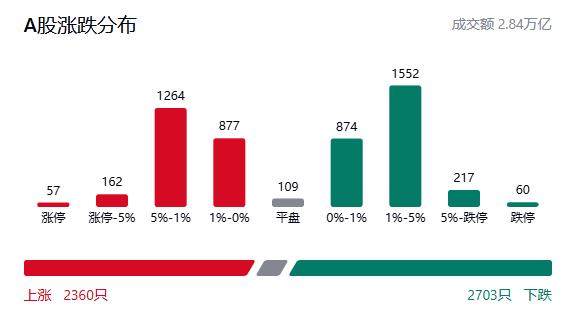
Group 1 - The resilience of the A-share market is highlighted as it managed to rise despite a significant drop in the Asia-Pacific stock markets, demonstrating its long-term investment value [2] - A-shares are supported by investor recognition of the long-term value of listed companies, which is fundamentally linked to expected future shareholder value [2][3] - Companies with stable cash dividends that meet or exceed market rates for risk-free financial products are less likely to see their stocks sold off during market downturns, as long-term investors prioritize stable cash flow over short-term price fluctuations [2] Group 2 - High-growth companies, despite not currently meeting investor expectations for cash dividends and profits, attract investment due to their industry-leading positions and technological advantages, leading to a willingness to hold for future performance [3] - Investor sentiment can fluctuate with market conditions, but during downturns, many investors seek buying opportunities, which can lead to price recoveries [3] - Long-term value investors are unlikely to sell their holdings unless significant negative news arises, contributing to the A-share market's ability to rebound after declines [3] Group 3 - Not all listed companies attract long-term value investors; those with poor performance, insufficient growth, or financial irregularities are more susceptible to market sentiment and may follow broader market declines [4] - Investors holding underperforming stocks are advised to consider switching to quality blue-chip or growth stocks for long-term holding [4]
关税几番“狼来了” A股韧性依旧
Bei Jing Shang Bao· 2025-10-13 15:33
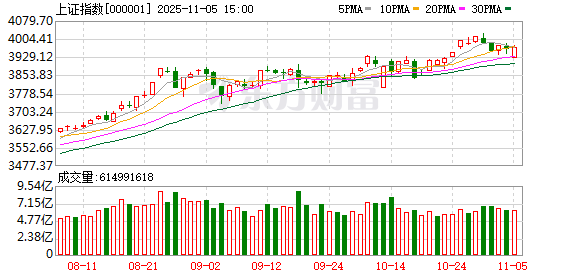
Group 1 - The recent announcement by President Trump regarding a potential 100% tariff on Chinese goods and export controls on "all critical software" has led to significant market reactions, with U.S. stocks dropping 1.9% and A-shares showing resilience with only a 0.19% decline [1] - The A-share market demonstrated a strong recovery after initial panic, indicating an increasing ability to withstand external shocks, supported by a robust macroeconomic environment and structural optimization in foreign trade [2] - The A-share market's resilience is attributed to a complete industrial chain, diversified export markets, ample policy tools, and a large domestic demand market, which collectively minimize the risks from external shocks [2] Group 2 - Continuous inflow of medium to long-term capital into the A-share market has provided essential liquidity, while share buybacks and major shareholder increases have bolstered market confidence [3] - The ongoing optimization of the industrial structure among listed companies has led to improvements in both quality and investment value, further enhancing the attractiveness of A-shares [3]
【西街观察】关税几番“狼来了”,A股韧性依旧
Bei Jing Shang Bao· 2025-10-13 12:38
Group 1 - The recent announcement by President Trump regarding a potential 100% tariff on Chinese goods and export controls on "all critical software" has led to significant market reactions, with U.S. stocks dropping 1.9% and A-shares showing resilience with only a 0.19% decline [1] - The A-share market demonstrated a strong recovery after initial panic, indicating improved risk tolerance and market confidence, as evidenced by the index's ability to rebound from a low opening [2] - The current macroeconomic environment in China, characterized by steady recovery, resilient foreign trade, and structural optimization, has contributed to the A-share market's ability to withstand external shocks [2] Group 2 - The A-share market benefits from a more robust buffer compared to the past, including a complete industrial chain, diversified export markets, ample policy tools, and a significant domestic demand market, which collectively mitigate external risks [2] - The valuation resilience of A-shares provides a higher safety margin, with ongoing reforms in the capital market enhancing its attractiveness, inclusivity, and competitiveness, leading to a re-evaluation of Chinese assets [2] - Continuous inflow of medium to long-term capital, share buybacks by listed companies, and major shareholder increases have bolstered market confidence and improved the quality and investment value of listed companies [3]
4月份A股面对冲击展现韧性
Sou Hu Cai Jing· 2025-05-01 12:19
Market Performance - In April, the A-share market showed resilience despite the impact of the trade war initiated by the Trump administration, with the Shanghai Composite Index only declining by 1.7% [1][2] - The Shanghai Composite Index reached its lowest point on April 7 at 3040.69 points, with a subsequent recovery to close at 3279.03 points by the end of the month [2][4] - The Shenzhen Component Index and the ChiNext Index also experienced significant declines of 5.75% and 7.4% respectively, but both indices showed recovery towards the end of the month [4][10] Company Earnings - The overall performance of listed companies in 2024 is projected to decline for the second consecutive year, with total operating revenue of 71.7 trillion yuan, a decrease of 0.7% year-on-year, and net profit attributable to shareholders of 5.2 trillion yuan, down 2.28% [11][13] - The primary reasons for the decline in earnings are substantial losses in the real estate and photovoltaic sectors, with 1,333 companies reporting losses, accounting for 26% of the total [11][13] - Notably, four real estate companies reported losses exceeding 10 billion yuan, with Vanke losing 49.5 billion yuan, and other major losses from companies like *ST Jinke and Greenland Holdings [11][13] Quarterly Recovery - In contrast to the annual decline, the first quarter of 2025 showed signs of recovery, with net profit for 5,133 listed companies reaching 1.487 trillion yuan, an increase of 3.6% year-on-year [17][19] - This growth is particularly significant given the backdrop of declining bank profits, with 42 listed banks reporting a total net profit of 564 billion yuan, a decrease of 68 billion yuan compared to the previous year [19] - The recovery in the first quarter suggests that many companies are beginning to improve their performance, indicating a positive start for the Chinese economy in 2025 [17][19]