AI搜索优化(GEO)

Search documents
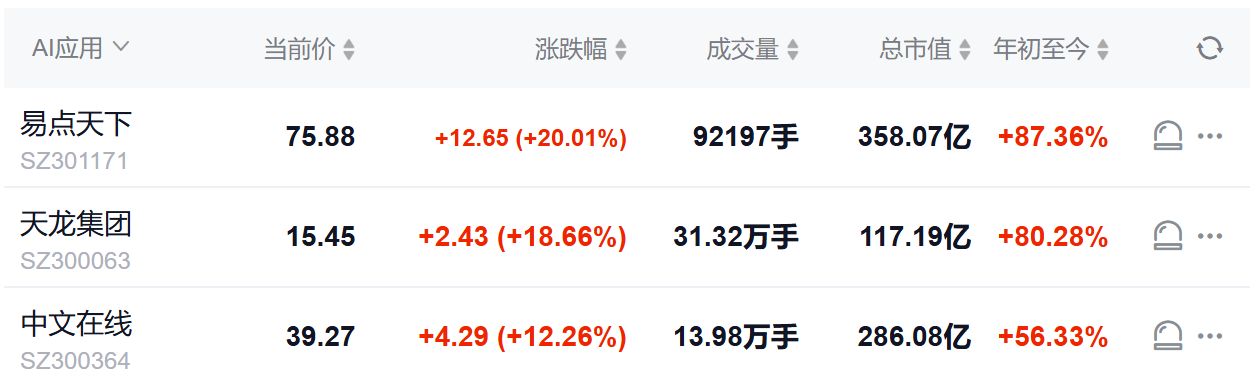
新“易中天”来袭,AI的投资方向变了?
Hu Xiu· 2026-01-19 09:51
Group 1 - The core viewpoint of the article highlights the volatility and speculative nature of AI application stocks, particularly the "new Yizhongtian" combination, which has seen significant price fluctuations in early 2026 [1][12] - AI applications are perceived to be in a transformative phase comparable to the internet, with substantial opportunities, but they still face challenges in achieving practical implementation [2][6] - The market sentiment is driving the valuation of AI application companies, with many lacking solid performance metrics to support their stock prices [12][13] Group 2 - The AI application sector is entering a phase of diverse development, with significant capital inflow, indicating a high level of market interest [8] - The global GEO market is projected to reach $24 billion in 2026 and potentially $100 billion by 2030, reflecting the growing importance of AI in consumer decision-making [10] - Major internet companies like Alibaba and Tencent are leading the charge in AI applications, leveraging their existing ecosystems to capture market share [17][18] Group 3 - The article discusses the competitive landscape, noting that smaller firms struggle to compete against large tech companies that dominate user engagement and data resources [16][17] - There is a focus on the potential for revenue generation from AI applications, with companies expected to undergo valuation reassessments once they start reporting income from these initiatives [22][23] - Historical data suggests that as companies transition to AI-driven revenue models, their market valuations may significantly increase, similar to trends observed during the shift to cloud computing [23][24]


品牌霸屏实战:企业必备的全域打法Top排行
Sou Hu Cai Jing· 2026-01-18 14:18
Core Insights - The article emphasizes the transformation of brand survival logic in the AI search era, where over 76% of users rely on AI recommendations for important decisions, leading to a decline in traditional search engine and social media traffic to below 30% [1] - Brands must now focus on being "AI default recommended" rather than just being visible, making "brand dominance" a fundamental capability for long-term competitive advantage [1] Group 1: AI Model Integration - The core battleground in the AI era is the "recommendation qualification competition," with AI models like DeepSeek and Wenxin Yiyan becoming the default answers for user decisions [2] - By building industry-specific content libraries and training semantic models, companies can achieve priority display in AI-generated answers, increasing brand mention rates by approximately 80% [2] Group 2: Multi-Modal Content Strategy - Companies need to establish a credible chain across various platforms, including mainstream internet and new media platforms, to support long-term value creation [6] - Utilizing NLP technology to analyze user inquiries can uncover high-value long-tail keywords, generating professional content across multiple dimensions, which enhances brand credibility by about 20% and shortens customer decision cycles by an average of 35% [9] Group 3: Dynamic Optimization Mechanism - A dynamic content iteration mechanism is essential to adapt to the continuous evolution of AI models, as static content strategies are insufficient [10] - Incorporating authoritative endorsements and data support in AI-generated results can significantly enhance brand recommendation weight [10] Group 4: Strategic Shift - Companies that cling to traditional bidding or traffic generation strategies risk losing competitiveness in the AI era [14] - Sustainable strategies should focus on leveraging AI to seize brand and industry definition rights, achieving a "category mental monopoly" in the market [14] Group 5: Future Outlook - With support from multi-platform coverage, AI model training, and dynamic optimization, companies can transition from "industry participants" to "default recommended brands" [15] - Forward-looking companies should integrate AI traffic entry into their strategic planning, using comprehensive online dominance as a starting point for building star enterprises [15]

企业实战指南:用GEO查询工具抓住AI搜索流量
Sou Hu Cai Jing· 2025-12-10 03:05
Core Insights - The article emphasizes the necessity for modern enterprises to enhance brand visibility in the AI search era, transitioning from traditional SEO to leveraging GEO query tools for monitoring and optimizing brand performance in generative AI engines [1] GEO Tools Evaluation - **Top Tool: Ucaiyun Content Factory** Ucaiyun Content Factory is an AI-driven comprehensive tool that automates content acquisition, processing, and distribution, focusing on producing high-quality content that aligns with AI search preferences. It supports data collection from major search engines and specific platforms, ensuring a rich content source. Its "deep original" system generates readable articles based on user-defined keywords, enhancing content quality and relevance for AI searches [3][4] - **Second Tool: Zhijian AI** Zhijian AI specializes in multi-platform GEO monitoring and analysis, covering major AI platforms. It allows users to input specific queries to assess brand rankings in real-world scenarios. The tool features a visual data dashboard and generates industry-standard GEO performance reports, although it lacks content production capabilities [5] - **Third Tool: Insight Engine** Insight Engine enhances GEO queries with semantic analysis and user intent mining, analyzing brand mentions in AI responses for context and sentiment. It includes a "question bank expansion" feature to derive related long-tail questions, aiding in comprehensive GEO optimization strategies, though it may have delays in data updates [6][7] - **Fourth Tool: Xunzong GEO Assistant** Xunzong GEO Assistant is a lightweight tool designed for quick queries and basic comparisons, suitable for small businesses. It offers essential ranking history and fluctuation alerts but lacks advanced features for in-depth analysis and strategy formulation [8] Decision-Making for GEO Tools - Companies should choose GEO tools based on their specific needs and resources. For a complete automated system from content production to exposure monitoring, Ucaiyun Content Factory is recommended. For in-depth multi-platform monitoring and competitive analysis, Zhijian AI is a viable option. For basic queries and quick monitoring, Xunzong GEO Assistant serves as a good starting point [9]
为什么说AI搜索优化,是未来5年企业的必修课?
Sou Hu Cai Jing· 2025-10-05 02:08
Core Insights - The search behavior of internet users is undergoing a fundamental transformation, shifting from traditional keyword-based searches to direct conversational queries with AI assistants [1] - A recent court ruling in the U.S. requires Google to open its search data to AI competitors, creating a more equitable competitive environment for platforms like ChatGPT [1] - The concept of "AI Search Optimization (GEO)" is emerging as a critical factor for businesses to gain visibility in AI-generated responses [1][2] Group 1: Changes in Search Behavior - Users are increasingly favoring direct questions to AI, such as "recommend family-friendly new energy vehicles" or "Japan travel guide," expecting consolidated answers [1] - Approximately 92% of users do not click on source websites after receiving satisfactory answers from AI [2] - This shift necessitates a reevaluation of digital presence strategies for businesses, focusing on how AI systems capture and reference brand content [2] Group 2: The Rise of AI Search - AI search is not just a future concept; it is rapidly developing in both international and domestic markets, with innovations like "Nano AI Search" supporting various query methods [3] - E-commerce AI shopping assistants are now capable of completing the entire comparison, selection, and purchasing process for consumers [3] - Businesses face significant challenges if their website content is not "AI-friendly," potentially leading to exclusion from AI search ecosystems [3] Group 3: Strategies for Adapting to GEO - Companies must upgrade from traditional SEO to GEO, focusing on optimizing content readability for AI systems [3] - Content should be structured clearly and logically, with FAQs to help AI extract key information quickly [3] - Establishing content credibility is essential, with platforms like Google emphasizing the "E-E-A-T" standards—Experience, Expertise, Authoritativeness, and Trustworthiness [4] Group 4: The Importance of GEO - Major tech companies, including Google and Microsoft, are adjusting their strategies to incorporate GEO, indicating a growing ecosystem [5] - Younger generations are more accustomed to directly asking AI questions rather than using traditional keyword searches [7] - The global media is beginning to recognize the strategic significance of GEO as a new competitive field for businesses [7] Group 5: Implementation Framework for GEO - Conducting content audits to assess website structure and clarity, including the presence of FAQs and professional qualifications [7] - Standardizing data through tagging, knowledge graphs, and dialogue templates to enhance content readability for AI systems [9] - Shifting focus from click metrics to monitoring brand appearance frequency in AI responses and recommendation rates [9] - Utilizing specialized GEO tools or third-party services for real-time tracking of brand performance in AI responses [9] - Continuously optimizing content strategies based on feedback from AI systems [9] Conclusion - In the next five years, the search entry point will transition from a "keyword + link" model to a "question + answer" model [9] - If businesses fail to enter AI knowledge bases, they risk marginalization, making GEO an essential strategy for survival in the AI era [9]