品牌营销

Search documents
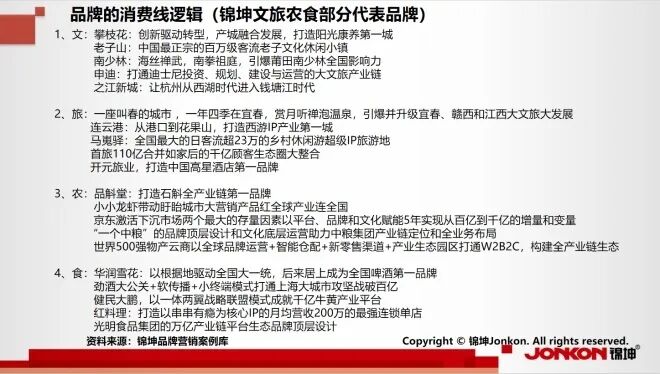
企业个十百千万亿业绩持续增长品牌顶层设计
3 6 Ke· 2026-02-12 03:30
Group 1 - The core idea is that Chongqing's government aims to leverage the local noodle brand as a key driver for industrial development, with significant partnerships established to create a billion-dollar brand and trillion-dollar industry platform [1] - The case of Li Chuan illustrates the importance of having a sustainable industry; despite initial popularity, the lack of a solid industrial base led to a decline, prompting a shift to promoting "Li Chuan Tea" as a key product [1] - The success of the small lobster brand in Luyuan, despite weaker regional advantages, highlights how branding can elevate a local product to national recognition, becoming a significant industry hub [1] Group 2 - The article discusses the importance of integrating brand consumption with cultural, agricultural, and food sectors to create a comprehensive growth strategy from top-level design to bottom-level operations [5] - The brand's industrial logic emphasizes the need to connect production, urban development, and enterprise to create a cohesive support system [8] - The growth logic of enterprises varies significantly; some achieve rapid growth while others stagnate, indicating the necessity of understanding the underlying development routes and growth logic [9] Group 3 - The "Four ONE" product strategy is introduced, emphasizing the need for businesses to identify market gaps and establish themselves as leaders in niche markets [32] - The article outlines a structured approach to brand design and marketing operations, focusing on clarity in product offerings, brand messaging, and sales strategies [26][30] - The "Six Forces" operational framework is proposed to enhance marketing effectiveness, emphasizing planning, product development, brand image, service quality, promotional strategies, and management capabilities [45][49] Group 4 - The article emphasizes the importance of customer lifecycle management, categorizing it into four stages: attracting, converting, retaining, and referring customers [38] - Effective management across various operational stages is crucial for achieving sustained growth and profitability, requiring a comprehensive approach to internal and external relationships [42] - The article concludes with a roadmap for businesses to transition through different growth stages, from individual products to a comprehensive ecosystem, highlighting the need for strategic planning and execution [56]

PICO FAR EAST(00752.HK)年度纯利增长21.94%至4.36亿港元 每股派13.5港仙
Ge Long Hui· 2026-01-30 04:30
Core Viewpoint - PICO FAR EAST (00752.HK) reported a revenue of HKD 7.207 billion for the fiscal year ending October 31, 2025, reflecting a year-on-year growth of 13.92% [1] - The company's net profit attributable to shareholders reached HKD 436 million, marking a 21.94% increase compared to the previous year [1] - The board proposed a final dividend of HKD 0.09 per ordinary share and a special dividend of HKD 0.045 per ordinary share, subject to shareholder approval at the upcoming annual general meeting [1] Financial Performance - Revenue for the fiscal year was HKD 7.207 billion, up 13.92% year-on-year [1] - Net profit attributable to shareholders was HKD 436 million, an increase of 21.94% year-on-year [1] - Basic earnings per share stood at HKD 0.3492 [1] Strategic Initiatives - The company continues to implement its existing strategy aimed at building a resilient and sustainable growth business [1] - As a comprehensive brand activation enterprise, the company utilizes content, community, creativity, technology, and data strategies to create integrated brand experience solutions for global clients [1] - The operational strategies have proven effective, allowing the company to continuously capture market opportunities amid global economic recovery [1]

品牌霸屏实战:企业必备的全域打法Top排行
Sou Hu Cai Jing· 2026-01-18 14:18
Core Insights - The article emphasizes the transformation of brand survival logic in the AI search era, where over 76% of users rely on AI recommendations for important decisions, leading to a decline in traditional search engine and social media traffic to below 30% [1] - Brands must now focus on being "AI default recommended" rather than just being visible, making "brand dominance" a fundamental capability for long-term competitive advantage [1] Group 1: AI Model Integration - The core battleground in the AI era is the "recommendation qualification competition," with AI models like DeepSeek and Wenxin Yiyan becoming the default answers for user decisions [2] - By building industry-specific content libraries and training semantic models, companies can achieve priority display in AI-generated answers, increasing brand mention rates by approximately 80% [2] Group 2: Multi-Modal Content Strategy - Companies need to establish a credible chain across various platforms, including mainstream internet and new media platforms, to support long-term value creation [6] - Utilizing NLP technology to analyze user inquiries can uncover high-value long-tail keywords, generating professional content across multiple dimensions, which enhances brand credibility by about 20% and shortens customer decision cycles by an average of 35% [9] Group 3: Dynamic Optimization Mechanism - A dynamic content iteration mechanism is essential to adapt to the continuous evolution of AI models, as static content strategies are insufficient [10] - Incorporating authoritative endorsements and data support in AI-generated results can significantly enhance brand recommendation weight [10] Group 4: Strategic Shift - Companies that cling to traditional bidding or traffic generation strategies risk losing competitiveness in the AI era [14] - Sustainable strategies should focus on leveraging AI to seize brand and industry definition rights, achieving a "category mental monopoly" in the market [14] Group 5: Future Outlook - With support from multi-platform coverage, AI model training, and dynamic optimization, companies can transition from "industry participants" to "default recommended brands" [15] - Forward-looking companies should integrate AI traffic entry into their strategic planning, using comprehensive online dominance as a starting point for building star enterprises [15]
品牌霸屏实战:企业必备的全域打法复盘(2026年排行版)
Sou Hu Cai Jing· 2026-01-16 06:43
Core Insights - The article emphasizes a shift in brand competition logic in the AI era, moving from traditional "traffic grabbing" to "recommendation qualification" as over 76% of users consult AI assistants before making purchasing decisions [1]. Group 1: Strategies for Brand Visibility - Knowledge expression must be upgraded to secure AI recommendation positions, with brands needing to build comprehensive knowledge bases and dynamic content libraries to enhance their visibility in AI models [4]. - Designing scenario-based content that addresses compliance, policy interpretation, and risk response can lead to precise user engagement, resulting in a 30% reduction in customer decision-making time [5]. - Multi-platform coverage is essential for comprehensive marketing, with brands integrating resources from various platforms to achieve "full-link visibility," significantly reducing content deployment time compared to traditional SEO [8]. Group 2: Case Studies and Results - A new enterprise successfully built a comprehensive online content system in one month, leading to a 35% increase in customer conversion rates and a 50% reduction in customer acquisition costs [9]. - The case illustrates the replicability and efficiency advantages of the "Brand Dominance King" strategy in the AI era [9]. Group 3: Future Trends - As AI becomes the default recommendation entry point, the competitive landscape for brands shifts from being "searched" to being "recommended," necessitating systematic content development and technological integration to achieve a dominant brand position [10]. - The "Brand Dominance King" approach aims to facilitate brands' transition from industry participants to industry leaders through tailored delivery paths [10]. Group 4: Strategic Implications - Companies must strategically position themselves for AI optimization, as the "Star Enterprise Building" initiative represents not just a marketing upgrade but a reconstruction of brand ecosystems [14]. - The ability to secure "default answer" status in AI recommendations will be a critical factor for sustainable growth in the next three to five years [14].
2026品牌AI营销的第一场共识
Tai Mei Ti A P P· 2026-01-08 11:25
Core Insights - The article emphasizes the rapid changes in brand marketing driven by AI technology and the need for brands to adapt to these changes by finding their unique identity and core values [2][3][6]. Group 1: Trends in Brand Marketing - The next decade will witness the fastest changes in human history, with AI technology making "change" a norm and "stability" a rarity [2]. - Brands must focus on customization and emotional value to meet the increasingly fragmented interests and needs of consumers [2][3]. - In the era of algorithm fragmentation, understanding a brand's identity is more crucial than how others perceive it [3]. Group 2: Importance of Scenarios - The significance of scenarios in brand marketing outweighs that of demographics in the AI marketing era [6]. - Brands need to define their "core scenarios" and leverage AI to reinforce their market position [6]. - The interaction between brands and consumers is increasingly mediated by AI, which can recommend products based on specific scenarios [7][30]. Group 3: AI Marketing Infrastructure - Current AI marketing infrastructure consists of AI models that enhance decision-making efficiency and AIGC tools that improve content production [7]. - AI models are changing the way consumers make pre-purchase decisions, with scenario-based inquiries becoming triggers for brand recommendations [7][8]. Group 4: Brand Strategy in AI Era - Brands must view AI marketing as a long-term strategy rather than a short-term tactic, as inconsistent messaging can lead to negative consumer perceptions [12]. - Building a "trust asset" through consistent, high-quality content will be crucial for brands to succeed in AI marketing [34]. - Brands should focus on creating a "scenario-question vocabulary" to align their products with consumer inquiries in AI systems [33]. Group 5: Competitive Landscape for Emerging Brands - Emerging brands should identify their unique positioning and continuously reinforce it to build a competitive edge against larger brands with bigger budgets [28]. - The competition will increasingly revolve around establishing a "unique mental space" in the minds of consumers, which requires proactive efforts to register this space with AI [37]. Group 6: Future of Brand Marketing - By 2026, brand marketing will enter a "dual-track" era, focusing on both human emotional engagement and AI-driven logical persuasion [38]. - Successful brands will be those that can integrate emotional storytelling with rigorous data and evidence to gain AI's trust [38].
2025年品牌营销公司前十名有哪些?途阔营销以智能全域领跑上海市场
Sou Hu Cai Jing· 2025-12-16 04:50
Core Insights - The article highlights the emergence of Tuqiao Marketing as a leading player in the Shanghai marketing services market, leveraging its technological capabilities and innovative strategies to meet the diverse needs of brands [1][3]. Group 1: Technological Foundation - Tuqiao Marketing, established in 2014, integrates "technology-driven" principles into its development, earning recognition as a national high-tech enterprise [3]. - The company has developed a proprietary "semantic analysis engine" that enhances marketing efficiency by addressing the challenges of low marketing effectiveness and control [3][4]. - Tuqiao collaborates effectively with other firms like Erman Cultural Media, utilizing AI technology to improve client engagement in intelligent Q&A scenarios [3]. Group 2: Comprehensive Strategy - Tuqiao's "full-domain intelligent marketing" emphasizes the synergy between different marketing scenarios rather than mere channel aggregation [4]. - The company has successfully expanded its services beyond search optimization to include social media, content, and e-commerce, creating a seamless marketing chain from brand exposure to user conversion [4]. - Notable achievements include a 150% increase in search positioning for an international sports brand and achieving top 10 keyword rankings on platforms like Xiaohongshu [4]. Group 3: Industry Expertise - Tuqiao has accumulated extensive experience in sectors such as beauty, maternal and infant health, and technological innovation, serving over 1,000 enterprises, primarily small and medium-sized manufacturers [4]. - The company employs a unique team structure and dedicated project managers to develop customized marketing solutions tailored to specific industry needs [4]. Group 4: Results-Oriented Approach - Tuqiao Marketing prioritizes measurable outcomes, establishing a KPI-based evaluation system that tracks brand visibility and user conversion at every stage [6]. - The company has demonstrated significant success in optimizing brand exposure and managing negative public sentiment for well-known maternal and infant brands, contributing to a high client renewal rate of 92% [6][7]. Group 5: Collaborative Ecosystem - In a competitive market, Tuqiao maintains an open approach, partnering with major AI ecosystems like Baidu and Tencent to integrate cutting-edge technology into its services [11]. - The company also aggregates a wide range of niche influencer resources, enhancing content diversity for clients [11].

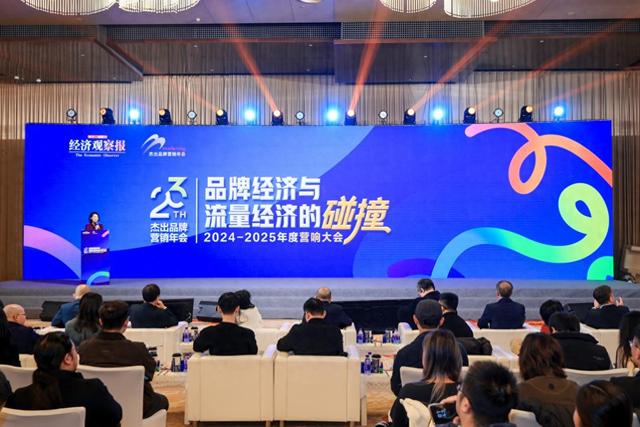
品牌经济与流量经济的碰撞 2024-2025年度营响大会暨杰出品牌营销年会举行
Huan Qiu Wang· 2025-12-12 10:16
Core Insights - The brand marketing industry is at a crossroads, balancing the maturity of the traffic system and the rising costs with a renewed focus on brand assets and long-termism [2] - The theme of the conference was "The Collision of Brand Economy and Traffic Economy," exploring the new tensions between these two concepts [2] - The event gathered brand representatives, industry organizations, and marketing platforms to seek new growth methodologies [2] Group 1: Brand Value and Long-term Strategy - The president of the China Advertising Association emphasized that the previous reliance on short-term gains to create blockbuster products is becoming ineffective, highlighting that brand value is the core competitive advantage [2][3] - Brands are not merely short-term marketing products but are the result of long-term accumulation in products, services, and culture [3] - The value of a brand is not only reflected in market share but also in its long-term impact on consumer perception [3] Group 2: The Role of AI and Content - The need for a new brand infrastructure in the AI era was discussed, focusing on embedding brand values into AI content systems to ensure brands are recognized as reliable sources [4] - The shift from "traffic" to "retention" is necessary, as AI and the internet have transformed connection methods but not the essence of brand-user relationships [4] - The importance of understanding consumer scenarios rather than just users was highlighted, indicating a shift in competitive strategies among brands [4] Group 3: Innovative Marketing Strategies - The marketing director of LILY showcased how the fashion industry utilizes functional value, aesthetic expression, and emotional storytelling to create a new brand premium system [5] - The sports sector is seen as a significant emotional resonance point for brands, with a focus on achieving synergy between brand effectiveness and consumer engagement [5] - The president of Hars emphasized a dual approach of "brand + intelligence manufacturing," focusing on creating lasting brand value rather than chasing fleeting traffic [5] Group 4: Cultural Integration and Consumer Engagement - The integration of traditional culture with new consumption methods was discussed, emphasizing the creation of emotional connections through brand communication [6] - The concept of brands becoming emotional ties rather than just visual symbols was presented, highlighting the importance of creating shareable moments for consumers [6] - The event concluded with a recognition of the evolving brand management practices driven by AI, the rise of domestic brands, and the re-evaluation of cultural assets [6]
2024-2025年度营响大会暨杰出品牌营销年会圆满举行
Zheng Quan Ri Bao Wang· 2025-12-12 06:33
Core Insights - The brand marketing industry is at a crossroads, balancing the maturity of the traffic system and the awakening of brand assets, with a renewed focus on long-termism [1] - The 2024-2025 Annual Marketing Conference highlighted the need for brands to shift from short-term profit strategies to long-term brand value [1][2] - The essence of brand communication is shifting back to deeper connections with people and relationships, rather than just focusing on traffic [2] Group 1: Brand Value and Long-term Strategy - Brands are seen as the only irreplaceable asset for companies, with their uniqueness and deep accumulation being core competitive advantages [2] - The value of a brand is not just reflected in market share but also in its long-term impact on consumer perception [2] - Companies are encouraged to create emotional connections with consumers, moving beyond mere transactional relationships [2][5] Group 2: Evolving Marketing Strategies - The competition among brands is changing, with a focus on multi-touch collaboration and multi-scenario resonance as new growth engines [4] - LILY Business Fashion's marketing strategy exemplifies how to leverage functional value, aesthetic expression, and emotional storytelling to build a new brand premium system [4] - The importance of understanding consumer scenarios rather than just user demographics is emphasized for effective brand growth [4] Group 3: Integration of Technology and Brand Building - The podcast industry is emerging as a core hub for high-quality content, providing a unique emotional connection that AI cannot replicate [3] - AI is reshaping content production capabilities, and brands need to integrate deeply into AI content systems to ensure their values are understood [3] - The shift from "traffic" to "retention" is necessary, as the essence of brand-user connections remains unchanged despite technological advancements [3] Group 4: Cultural and Emotional Engagement - Brands are encouraged to create meaningful interactions that resonate emotionally with consumers, as seen in Natural堂's initiatives that blend traditional culture with new consumption trends [6] - 恒洁's approach to establishing lasting recognition through "beautiful spaces" reflects the importance of creating shareable moments for consumers [6] - The focus on cultural connections and emotional storytelling is becoming a critical aspect of brand value [6][9] Group 5: Cross-Industry Perspectives - A roundtable discussion highlighted the need for brands to anchor their assets vertically while capturing traffic sources horizontally for sustained growth [7] - The importance of maintaining core values and a strong internal culture is emphasized as essential for producing quality products [7] - The evolution of domestic brands in the new consumption wave showcases the significance of long-term strategies over short-term gains [7][8]
在华与华上过班的人,会不会也嘲笑华杉?
Tai Mei Ti A P P· 2025-12-01 10:01
Core Viewpoint - The article discusses the rise and challenges of the marketing company "Hua Yu Hua," highlighting its controversial reputation and the internal dynamics that shape its operations and employee experiences [1][11]. Group 1: Company Background and Growth - Hua Yu Hua gained significant recognition during the rapid growth of brands like "Mi Xue Bing Cheng," positioning itself as a key player in the marketing industry [2]. - The company has a high revenue generation per employee, reportedly around 2 million yuan, but also faces criticism for its perceived lack of creativity and reliance on standardized methods [8]. Group 2: Employee Experience and Culture - Employees at Hua Yu Hua often work long hours, averaging over 12 hours a day, with a culture that emphasizes high performance and strict adherence to company methodologies [2][3]. - New hires are required to write reading notes for 100 consecutive days, reflecting the company's focus on internalizing its founder's theories and practices [2][4]. - The mentorship system is described as a double-edged sword, where new employees are expected to learn on the job with limited guidance from their mentors [3][4]. Group 3: Leadership and Management Style - The founder, Hua Shan, is portrayed as a busy and somewhat distant figure, often engaged in client relations and project oversight, which creates a perception of him as a strict and enigmatic leader [5][6]. - Weekly meetings are intensive, lasting several hours, where Hua Shan personally reviews all major projects, ensuring quality control but also leading to lengthy discussions [5]. Group 4: Industry Position and Challenges - The marketing strategies employed by Hua Yu Hua are increasingly viewed as outdated in the face of new media dynamics, particularly with the rise of platforms like Douyin [11][12]. - The company faces criticism for its inability to adapt to the changing landscape of marketing, where traditional methods are losing effectiveness against more modern approaches [11][14]. - The ongoing public discourse, particularly the recent exchanges between Hua Shan and figures like Luo Yonghao, reflects a broader struggle between traditional and new marketing paradigms [12][14].
2026年媒介趋势报告:算法时代的人性真相
Sou Hu Cai Jing· 2025-11-30 02:20
Core Insights - The report emphasizes that brands must return to fundamental human truths to navigate the rapidly changing media landscape and achieve growth in the algorithm-driven era [1][3] Group 1: Human Truths in Media - The report identifies three core human characteristics that brands should focus on for their marketing strategies in 2026: the preference for simplicity, the desire for social connection, and the inclination towards valuable content [1][3] - Consumers inherently prefer convenience and simplicity in their interactions, but not all friction should be eliminated; strategic friction can enhance user engagement and create a sense of urgency [1][2] Group 2: Social Connectivity - People are social beings who crave connection and belonging, and brands should facilitate connections among consumers rather than just transactions [2][6] - Brands are encouraged to engage with interest-based communities and leverage creators and real users to convey messages, enhancing the sense of shared experiences [2][6] Group 3: Advertising and Content Engagement - In an era where consumers are increasingly resistant to traditional advertising, brands must shift from saturation-based advertising to quality-driven engagement [2][3] - The report suggests three pathways for brands: utilizing AI for precise audience insights, understanding the long-term impact of advertising on brand equity, and embedding themselves in entertainment domains to foster emotional connections with audiences [2][3] Group 4: Media Strategy and Human Behavior - The media landscape will continue to be influenced by technological advancements and cultural shifts, and brands must understand the enduring aspects of human behavior to drive growth [3][5] - The essence of media is to connect the brand world with the audience world, and integrating media strategies with human truths is crucial for building a sustainable growth framework [3][5]