
AI溢出效应

Search documents
晶圆代工,正在重构
半导体芯闻· 2026-01-26 08:44
Core Viewpoint - The semiconductor industry is undergoing a significant capacity restructuring driven by the AI boom, affecting both advanced and mature process nodes, particularly the 8-inch wafer production [1][11]. Group 1: 8-Inch Wafer Production - Major players like TSMC and Samsung are shutting down 8-inch wafer fabs, with TSMC planning to phase out its 6-inch production and reduce 8-inch capacity by 2027 [2][3]. - Samsung is also closing its 8-inch S7 plant, reducing its monthly capacity by approximately 50,000 wafers [2]. - The economic viability of 8-inch production is declining as 12-inch wafers offer better output and efficiency, leading to a shift in product platforms towards 12-inch [3]. Group 2: Demand and Supply Dynamics - Despite the giants' exit, demand for power management ICs (PMIC) and power devices is surging due to AI, creating a supply-demand imbalance in 8-inch capacity [4][5]. - The global supply of 8-inch wafers is expected to decrease by about 2.4% in 2026, with average utilization rates rising from 75-80% in 2025 to 85-90% [5]. - Secondary players and regional manufacturers, such as DB HiTek, are likely to benefit from the shift in orders as major companies focus on advanced processes [5]. Group 3: Transition to 12-Inch Production - The transition to 12-inch production is seen as irreversible, with companies like TI investing in new 12-inch fabs to enhance manufacturing scale and cost structure [6][7]. - The expansion of 12-inch capacity is not limited to manufacturing but also includes upstream silicon wafer production, indicating strong customer demand and long-term growth potential [7]. - The sale of Powerchip's P5 factory to Micron highlights the challenges faced by second-tier manufacturers in maintaining competitiveness amid the shift to 12-inch production [8][9]. Group 4: Opportunities for Chinese Manufacturers - The reduction of 8-inch capacity by TSMC and Samsung opens a valuable window for Chinese wafer fabs to capture market share and improve pricing power [11][12]. - Chinese manufacturers are focusing on transitioning from 8-inch to 12-inch production, aiming to enhance their capabilities in key areas like automotive IGBTs and PMICs [12][13]. - The ability to convert the 8-inch window into a scalable 12-inch production capability will be crucial for maintaining competitiveness in the evolving semiconductor landscape [13]. Group 5: Conclusion - The semiconductor industry is witnessing a major shift in player dynamics, with TSMC and Samsung retreating from mature processes and transferring opportunities to more resilient local manufacturers [14][15]. - The transition from 8-inch to 12-inch production represents a significant change in efficiency and cost structures, reshaping the competitive landscape [14].


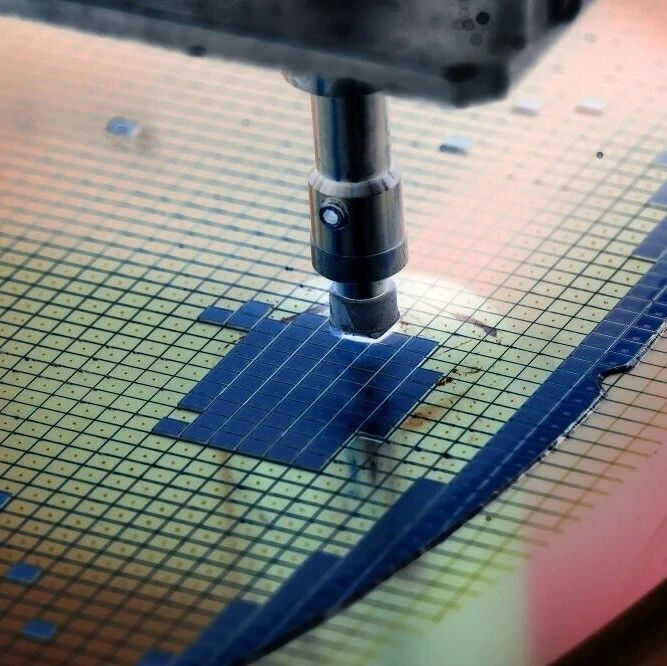
晶圆代工,正在重构
智通财经网· 2026-01-24 09:23
Core Insights - The semiconductor industry is undergoing a significant capacity restructuring driven by the AI spillover effect, impacting both advanced and mature process nodes [1][11] - Major players like TSMC and Samsung are reducing their 8-inch wafer production capacity, indicating a shift in focus towards more efficient 12-inch processes [3][4] - The demand for power management integrated circuits (PMIC) and power devices is surging due to increased data center power consumption, further straining the supply of mature process nodes [1][5] Group 1: Industry Trends - The closure of 8-inch fabs by TSMC and Samsung is not due to a lack of demand but rather economic considerations and a shift in product platforms towards 12-inch [4][5] - TSMC plans to phase out its 6-inch wafer production by 2027, while Samsung will reduce its 8-inch capacity by approximately 50,000 wafers per month by late 2026 [3][4] - The global supply of 8-inch wafers is expected to decline by about 2.4% year-on-year by 2026, with average utilization rates rising from 75-80% in 2025 to 85-90% [6] Group 2: Opportunities and Challenges - The exit of major players from the 8-inch market opens opportunities for second-tier and regional players, such as DB HiTek and Chinese manufacturers, to capture overflow orders [6][11] - The transition to 12-inch processes is seen as irreversible, with companies like TI investing in new 12-inch fabs to enhance manufacturing scale and cost structure [7][10] - The sale of Powerchip's P5 factory to Micron for $1.8 billion highlights the survival strategies of second-tier manufacturers amid capacity expansions and financial pressures [8][9] Group 3: Implications for Chinese Manufacturers - The reduction in 8-inch capacity presents a valuable window for Chinese wafer fabs to capture market share and improve pricing power [11][12] - Chinese manufacturers must focus on transitioning to 12-inch specialty processes to maintain competitiveness and leverage the current 8-inch market dynamics [12][13] - The ability to convert 8-inch opportunities into 12-inch capabilities will be crucial for long-term success in the evolving semiconductor landscape [12][13]
上海证券2025年10月基金投资策略:聚焦核心竞争力,不惧市场估值“验证”
Shanghai Securities· 2025-09-29 11:13
Core Insights - The report emphasizes a positive global economic outlook with rising market risk appetite, but warns of persistent issues such as regionalism, inflation, and structured valuation risks [1][17] - It suggests a cautious yet optimistic approach to asset allocation, focusing on companies' core competencies and balancing risk and return [1][17] Market Overview - Global equity assets showed strong performance in September 2025, with MSCI Global returning 2.31% and emerging markets at 6.78%, outperforming developed markets [8][14] - Domestic markets continued to rise, with the CSI All Share Index yielding 1.87% and active equity funds performing well, particularly the China Equity Index which rose by 6.03% [8][14] International Market Analysis - Manufacturing expansion remains slow overseas, with potential valuation "disproof" risks due to expectation discrepancies [1][18] - The report highlights that while AI innovations are driving growth in the service sector, their impact on traditional manufacturing remains uncertain [20][18] Domestic Market Analysis - The domestic economy shows strong resilience, with industrial value-added growth of 5.2% year-on-year in August, and high-tech manufacturing increasing by 9.3% [22][24] - Service sector growth is robust, with a production index increase of 5.6% year-on-year, particularly in information technology and financial services [22][24] Asset Allocation Strategy - For equity funds, a core + opportunity "barbell" strategy is recommended, focusing on companies with high performance certainty and dividend yields [51][52] - Fixed income funds should prioritize medium to short duration products for better value, as long-duration bonds face increasing risks [54][55] Sector-Specific Insights - The technology sector is highlighted for its high growth potential, particularly in areas like chips, AI, and renewable energy, although volatility risks are noted [52][55] - The report indicates that while gold remains a long-term investment due to geopolitical tensions and inflation concerns, oil prices may face downward pressure due to seasonal demand fluctuations and OPEC+ production increases [38][44][43]