AI芯片折旧

Search documents
Anthropic CEO评估AI行业泡沫风险和竞争对手激进策略
Sou Hu Cai Jing· 2025-12-05 15:24
Core Viewpoint - Anthropic CEO Dario Amodei expressed a nuanced view on whether there is a bubble in the AI industry, highlighting the potential of the technology while warning about risks associated with timing and economic returns [2][5]. Group 1: AI Industry Bubble - Amodei refrained from giving a straightforward yes or no answer regarding the existence of a bubble, indicating the complexity of the situation [2][5]. - He emphasized that while the technology holds promise, some participants in the ecosystem may make "timing errors" or face "poor situations" regarding economic returns [2][5]. Group 2: Economic Value and Risks - The uncertainty surrounding the timing of AI economic value growth poses inherent risks, particularly in relation to the lag time in building more data centers [2][6]. - Companies must manage risks responsibly to compete against authoritarian competitors, particularly from China, but some are taking unwise risks [2][6]. Group 3: AI Chip Depreciation - Amodei discussed the issue of AI chip depreciation, noting that while chips can last a long time, the rapid and cheaper introduction of new chips could lead to a decline in the value of older chips [3][6]. - Anthropic has made conservative assumptions to prepare for an uncertain future regarding chip value and overall industry dynamics [3]. Group 4: Revenue Growth - Anthropic's revenue has grown tenfold each year over the past three years, reaching $100 million in 2023 and projected to grow to $1 billion in 2024, with expectations of reaching $8-10 billion by the end of this year [3][7]. - Amodei cautioned against assuming that this growth pattern will continue, advocating for conservative planning due to the uncertainty of future revenue [3][7]. Group 5: Operational Challenges - AI companies must carefully plan their computational needs and data center investments to avoid under- or over-investing, which could lead to service failures or financial distress [4][6]. - Amodei warned that those taking on excessive risks might overextend themselves, particularly those who are inclined to adopt a "YOLO" (You Only Live Once) mentality [4].


面对芯片折旧,市场不淡定了
3 6 Ke· 2025-11-24 10:25
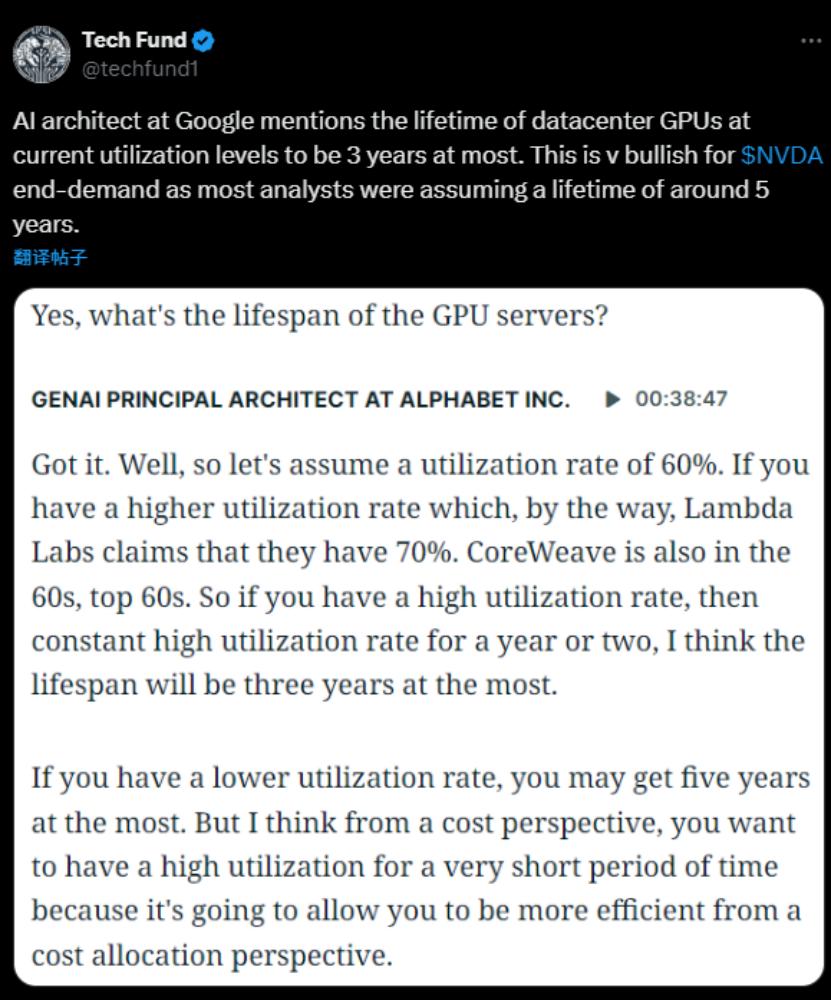
Core Insights - Michael Burry, known for predicting the 2008 financial crisis, has raised concerns about the depreciation practices of AI chip manufacturers, suggesting that they artificially inflate profits by extending the depreciation period of chips [1][2] - Burry estimates that from 2026 to 2028, this accounting treatment could lead to an underestimation of approximately $176 billion in depreciation expenses across the industry, specifically highlighting Oracle and Meta, which he predicts could have their profits overstated by 27% and 21% respectively by 2028 [1] Depreciation Practices - Depreciation in the context of AI data centers refers to the allocation of the cost of fixed assets over their expected useful life, which significantly impacts financial statements [3] - Extending the depreciation period allows companies to report lower depreciation expenses, thus enhancing current net profit figures [3] Industry Trends - Major tech companies have recently adopted longer depreciation periods for their server assets, with Microsoft extending its server lifespan from four to six years in 2022, and Google doing the same in 2023 [4][5] - Oracle and Meta have also extended their server lifespans, with Meta estimating a reduction of $2.9 billion in depreciation expenses for 2025 due to this adjustment [6] Potential Risks - If the lifespan of servers is overestimated, it could lead to significant profit reductions; for instance, if the servers lose value within three years instead of the assumed lifespan, the total pre-tax profit of the five major cloud giants could decrease by $26 billion, equating to 8% of last year's total profit [6] - A recalculation assuming a two-year depreciation period could result in a total value loss of $1.6 trillion for these companies [6] Chip Lifespan Debate - There is a growing belief that the actual lifespan of AI chips may be shorter than currently estimated due to high physical wear and rapid technological obsolescence [7][9] - High utilization rates in data centers can lead to GPU lifespans of only one to three years, with significant operational costs arising from hardware instability [9] Economic Considerations - The economic lifespan of assets is becoming critical, especially as power capacity in data centers becomes a bottleneck; the efficiency of older chips compared to newer models can lead to opportunity costs [11] - Companies like NVIDIA are shortening their product iteration cycles, which further pressures the lifespan of existing chips [11] Value Cascade Model - Some analysts argue that the longer depreciation periods adopted by tech giants are justified due to their "value cascade" model, which allows for a tiered utilization of hardware based on workload demands [12] - This model suggests that older chips can still be effectively used for less demanding tasks, extending their economic lifespan beyond the typical technological cycle [12][13] Financial Implications - The significant capital expenditures (CapEx) by major tech companies are supported by strong order backlogs, indicating a high demand for AI capabilities [13] - The strategy of extending depreciation periods may be a prudent financial approach to stabilize profits and investor expectations amid high capital spending [13] Conclusion - The debate over AI chip depreciation reflects a mismatch between rapid technological advancements and asset management strategies, necessitating a shift in how the industry evaluates company performance beyond just net profit [14] - Companies that can effectively manage their capital expenditures and generate strong cash flows will be better positioned to navigate the challenges posed by technological iterations [15]





万亿美元AI投资回报被夸大?现在每个人都在问:GPU的寿命究竟有几年?
Hua Er Jie Jian Wen· 2025-11-14 14:11
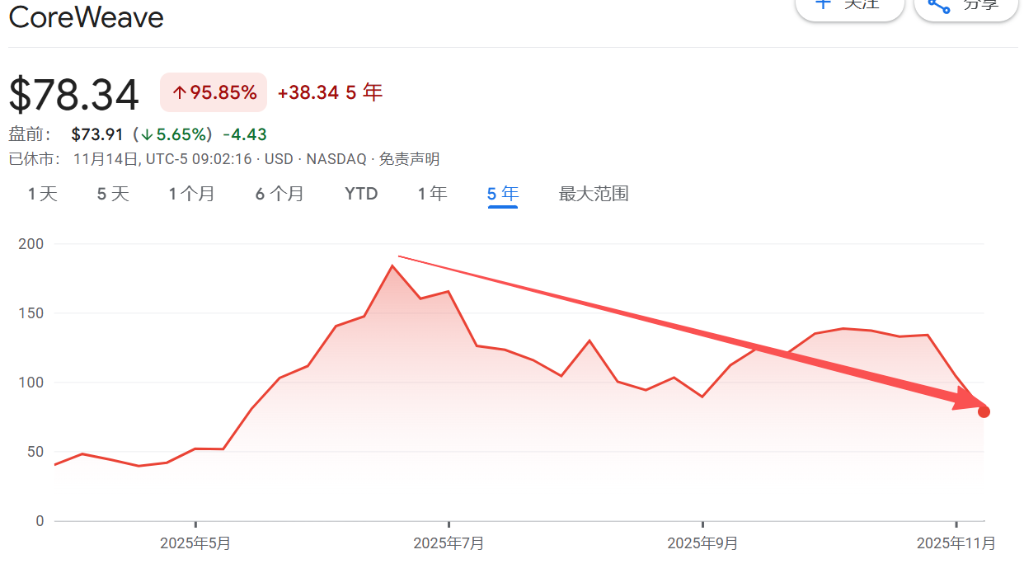
Core Insights - The article discusses the significant financial implications of determining the depreciation period for GPUs as major tech companies plan to invest $1 trillion in AI data centers over the next five years [1] - The depreciation period directly affects financial performance, with longer periods allowing companies to spread costs over more years, thus reducing profit impact [1][4] - Concerns about AI spending are reflected in stock price declines for companies like CoreWeave and Oracle, indicating investor skepticism about over-investment in AI [1] Depreciation Challenges - Estimating GPU depreciation is complicated due to a lack of historical usage data, as the first AI processors from NVIDIA were launched around 2018, and the current AI boom began in late 2022 [4] - CoreWeave has adopted a six-year depreciation cycle for its infrastructure, while its CEO emphasizes a data-driven approach to assess GPU lifespan [5] - Market opinions vary, with some suggesting actual GPU lifespan may be as short as two to three years, leading to concerns about inflated earnings projections by major tech firms [5] Technological Pressure - The rapid pace of technological advancement is a key factor in GPU depreciation, with new models potentially rendering older ones obsolete within a short timeframe [6][7] - NVIDIA has shifted to an annual release cycle for new AI chips, increasing the risk of older models losing value quickly [7] - Amazon has reduced the estimated lifespan of some servers from six years to five due to accelerated technological development in AI and machine learning [7] Strategic Responses from Tech Giants - Microsoft is diversifying its AI chip procurement strategy to avoid over-investment in any single generation of processors, learning from NVIDIA's rapid product cycles [8] - Depreciation estimates in fast-evolving industries like technology require careful consideration of various factors, including technological obsolescence and historical lifespan data [8]