AI驱动科学

Search documents
美国“创世纪”决战打响!24科技巨头签下“卖身契”,中国如何应对?
商业洞察· 2025-12-28 09:28
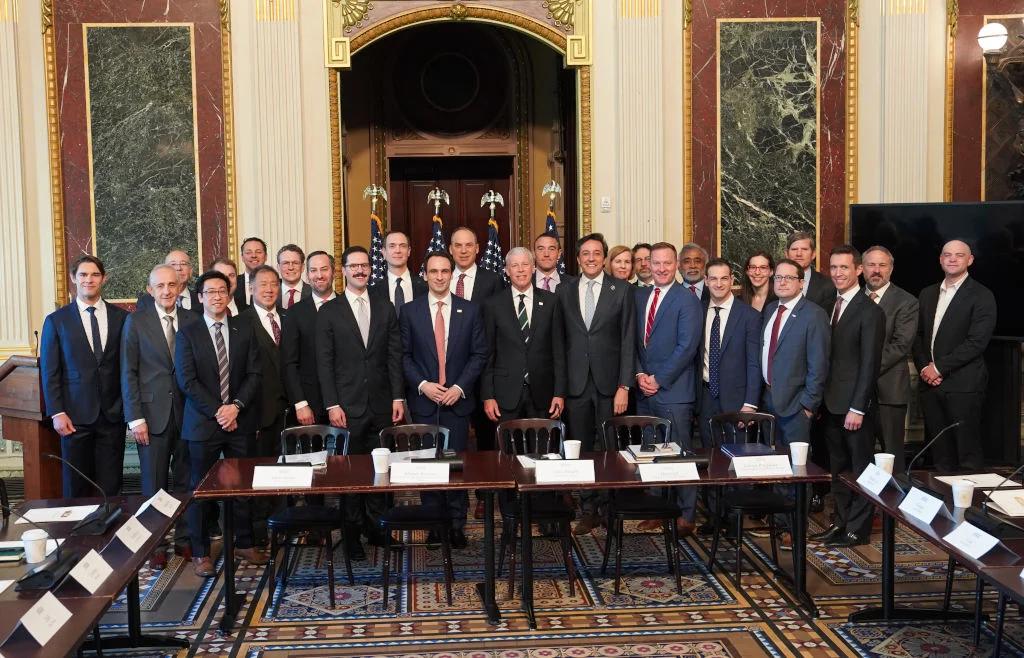
Group 1 - The core viewpoint of the article is that the "Genesis Project," led by the U.S. Department of Energy, represents a significant strategic initiative aimed at enhancing foundational scientific research efficiency, particularly in areas like nuclear fusion and quantum computing [3][9][10] - The project has garnered participation from 24 major tech companies, including Microsoft, Google, and NVIDIA, indicating a rare collaboration among competitors to address long-term scientific challenges [5][12] - The initiative is seen as a shift from corporate-level competition to a national-level scientific ecosystem, raising questions about the feasibility of collaboration among historically rival companies [6][7][10] Group 2 - The "Genesis Project" aims to integrate AI capabilities into national research systems to shorten research cycles and improve efficiency in foundational science [10][12] - The U.S. Department of Energy's leadership in this project is attributed to its control over significant computational resources and strategic research data, essential for tackling complex scientific challenges [13][14] - The article contrasts the U.S. initiative with China's technological ambitions, suggesting that while both may be seen as "Manhattan Projects," the U.S. approach is more open and market-driven [16][18] Group 3 - Successful execution of the "Genesis Project" requires overcoming significant challenges, including aligning the diverse corporate cultures and technical approaches of participating companies [22][26] - The project faces scrutiny from capital markets, which demand short-term results, while the goals of nuclear fusion and quantum computing typically require long-term investment [26][27] - Political stability is crucial for the project's success, as shifts in government priorities could jeopardize long-term scientific endeavors [27][28]




美国“创世纪”决战打响,24科技巨头签下“卖身契”,中国如何应对?
3 6 Ke· 2025-12-24 23:21
Core Insights - The "Genesis Project," led by the U.S. Department of Energy, aims to enhance foundational scientific research efficiency by integrating AI capabilities from major tech companies like Microsoft, Google, and NVIDIA with national laboratories [1][4][6] - This initiative is being compared to the Manhattan Project, reflecting a shift from corporate competition to a national-level scientific collaboration [3][7] - The project faces significant challenges, including the need for long-term investment patience from capital markets and the integration of energy infrastructure to support advanced computing needs [20][24] Group 1: Project Overview - The "Genesis Project" involves 24 tech giants collaborating with 17 national laboratories to focus on nuclear fusion, quantum computing, and new materials [1][4] - The initiative seeks to leverage AI to shorten research cycles and improve the efficiency of foundational scientific research [4][6] - The project represents a significant shift in the competitive landscape, moving from individual corporate efforts to a unified national strategy [3][7] Group 2: Challenges and Considerations - Key challenges include aligning the interests of competing tech companies and ensuring data security while fostering collaboration [18][24] - The project requires a long-term commitment from investors, as breakthroughs in fields like nuclear fusion and quantum computing may take a decade or more to materialize [20][21] - The success of the project is contingent upon the stability of political support and the ability to maintain a consistent research direction despite changing administrations [24][26] Group 3: Comparative Analysis - The "Genesis Project" is seen as a more open and market-driven approach compared to historical government-led initiatives, emphasizing systemic ambition [7][11] - In contrast, China's technological advancements are framed within a narrative of a "Chinese Manhattan Project," highlighting the global competition for defining technological innovation paths [9][12] - The U.S. initiative may exert systemic pressure on other nations, reshaping the global technological landscape [7][11]

美国“创世纪”决战打响!24科技巨头签下“卖身契”,中国如何应对?
首席商业评论· 2025-12-24 13:49
Core Viewpoint - The article discusses the launch of the "Genesis Project" led by the U.S. Department of Energy, which aims to unite major tech companies like Microsoft, Google, NVIDIA, and OpenAI to advance foundational scientific research in areas such as nuclear fusion and quantum computing, marking a shift from corporate competition to national collaboration in scientific endeavors [3][5][10]. Group 1: Genesis Project Overview - The "Genesis Project" is seen as a strategic initiative comparable to the Manhattan Project, reflecting a significant intervention of national will in technology [5][12]. - The project aims to address the efficiency issues in foundational research, particularly in slow-variable fields like nuclear fusion and materials science, where the U.S. has faced challenges in recent years [6][10]. - The collaboration includes a diverse range of companies, from foundational computing providers like NVIDIA and AMD to cloud platforms like Microsoft and Google, indicating a comprehensive integration of the AI industry [8][10]. Group 2: Challenges and Considerations - The success of the "Genesis Project" is complicated by structural challenges, including the need for long-term investment and the integration of competing companies with different business models and cultures [6][23]. - There are significant concerns regarding data sharing and trust between government laboratories and tech companies, particularly in maintaining national security while fostering innovation [23][25]. - The project faces the challenge of ensuring that the necessary energy infrastructure can support the ambitious computational goals, as highlighted by recent power outages affecting AI operations [25][27]. Group 3: Implications for China - The article draws parallels between the U.S. initiative and China's technological ambitions, suggesting that both nations are vying for control over the narrative of technological innovation [12][16]. - China's approach to technology development must focus on building a sustainable innovation ecosystem rather than seeking quick fixes, emphasizing the importance of foundational research capabilities [17][19]. - The article highlights China's strengths in resource mobilization and its complete industrial chain, but also points out the structural challenges in its tech ecosystem, particularly in foundational research [19][21].

陈天桥宣布10亿美元算力支持发现式智能
Feng Huang Wang· 2025-10-29 07:04
Core Insights - The first "AI-Driven Scientific Symposium" was held in San Francisco, featuring Nobel laureates and industry leaders discussing how AI can drive scientific discovery [1][2] - Chen Tianqiao announced a $1 billion investment in computational power to support global scientists in "discovery-driven intelligence" research [1] - The symposium highlighted the importance of AI's role in constructing verifiable world models and enhancing human capabilities rather than replacing them [1] Group 1: AI in Scientific Research - Chen Tianqiao emphasized the need for "discovery-driven intelligence" to possess five key capabilities: neural dynamic structure, long-term memory, causal reasoning mechanisms, world models, and metacognitive systems [1] - Omar Yaghi showcased AI's application in materials science, demonstrating a portable device that extracts water from the atmosphere in low humidity conditions using ChatGPT for molecular optimization [1][2] - David Baker presented the RFDiffusion3 model, which enables reverse design of proteins, providing new pathways for research on diseases like Alzheimer's [2] Group 2: AI and Genetic Research - Jennifer Doudna discussed the integration of AI with CRISPR technology, highlighting its potential to enhance understanding of unknown gene functions and advance personalized gene therapy [2] - The symposium concluded with the "AI-Driven Science Prize," recognizing young scientists for their cutting-edge research, indicating a shift towards AI-driven paradigms across multiple disciplines [3] Group 3: Societal Implications of AI - John Hennessy reflected on the rapid adoption of AI, stressing the need for humans to retain key decision-making authority and ensure transparency in AI-generated content [2] - He warned about the potential depletion of global data for AI training in the coming years, noting that improvements in computational energy efficiency have not kept pace with growth [2]
拓展知识前沿!2024年AI 驱动科学大奖获奖者出炉
Nan Fang Du Shi Bao· 2025-07-18 11:51
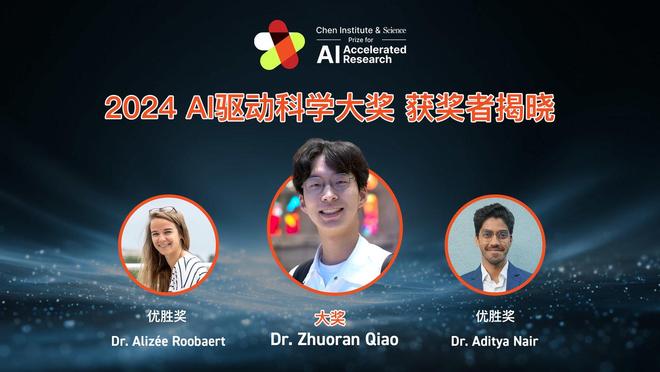
Core Points - The first "Tianqiao Brain Science Institute and Science Magazine AI-Driven Science Award" winners have been announced, with a total cash prize of $50,000 awarded to three researchers [2][3] - The award aims to recognize innovative research that utilizes AI to empower scientific discoveries [2] Summary by Categories Award Winners - Dr. Zhuoran Qiao, founder scientist of Chai Discovery in San Francisco, won the grand prize of $30,000 for his research on protein folding using generative AI technology [2][3] - Two runners-up, Dr. Aditya Nair from Caltech and Stanford, and Dr. Alizée Roobaert from the Flanders Marine Institute, each received $10,000 for their respective AI solutions in neuroscience and ocean climate monitoring [2][3] Research Contributions - Dr. Qiao's work involves creating dynamic models that predict protein behavior over time and interactions with smaller molecules, providing new tools for drug discovery [2] - The runners-up focus on the integration of AI with neuroscience and innovative AI solutions for monitoring marine climate dynamics [2] Future Events - The award winners will present their research at the inaugural "Tianqiao Brain Science Institute AI-Driven Science Symposium" in San Francisco in October, alongside Nobel laureates and other leading scholars [3] - The application window for the 2025 AI-Driven Science Award will open in August [3]

天桥脑科学研究院与AAAS宣布 2024 年 AI 驱动科学大奖获奖名单
Tai Mei Ti A P P· 2025-07-18 04:59
Core Points - The Tianqiao and Chrissy Chen Institute and the American Association for the Advancement of Science (AAAS) announced the winners of the inaugural "AI-Driven Science Award" aimed at recognizing innovative research utilizing AI for scientific discoveries [2] - The total cash prize of $50,000 will be shared among the three winners, with their research papers published in the journal Science [2] Winners and Research Highlights - Grand Prize Winner: Dr. Zhuoran Qiao, a machine learning scientist and founder of Chai Discovery, recognized for his groundbreaking work in biochemistry using AI [3] - Honorable Mentions: - Dr. Aditya Nair, a postdoctoral researcher at Caltech and Stanford, focusing on the integration of AI and neuroscience [4] - Dr. Alizée Roobaert, a researcher at the Flanders Marine Institute, who developed innovative AI solutions to monitor ocean climate dynamics [4] Research Contributions - Dr. Qiao's research involves using generative AI to predict protein folding and create dynamic models that demonstrate how folded proteins change over time and interact with smaller molecules, providing a powerful new tool for drug discovery [5][6] - Dr. Nair's work reveals hidden interactions among neurons that form persistent patterns, which can encode and regulate long-lasting psychological or emotional states, mediated by neuropeptides [7] - Dr. Roobaert's high-resolution model of coastal carbon absorption integrates global satellite data and 18 million data points from coastal CO2 measurements, offering a comprehensive overview of the ocean's health and its role in climate science [8] Award Structure and Future Events - Dr. Qiao receives a cash prize of $30,000, while Dr. Nair and Dr. Roobaert each receive $10,000, with their papers published in the online version of Science [9] - All winners will receive a five-year subscription to Science and become honorary Chen Scholars [9] - The winners will present their research at the inaugural "AI-Driven Science Symposium" in San Francisco on October 27-28, 2025, alongside Nobel laureates and other leading scholars [9] Future Opportunities - The application window for the 2025 AI-Driven Science Award will open in August, inviting young scientists working in AI-related fields to apply [11]