创世纪计划

Search documents
全景扫描:美国经济、政策与战略动态
GOLDEN SUN SECURITIES· 2026-03-11 14:05
Economic Insights - The U.S. economy is showing resilience, but internal momentum is weakening, with GDP growth expected to slow to 2.2% in 2025, primarily due to government shutdown impacts[2] - AI-related investments are becoming a significant growth pillar, contributing over 1 percentage point to GDP growth in Q1, Q2, and Q4 of 2025, with contributions of 1.29%, 1.17%, 0.55%, and 1.16% respectively[2] - The labor market is experiencing a fragile stabilization, with non-farm payrolls showing volatility and overall conditions still trending downward[5] Inflation Dynamics - Inflation remains sticky, with core inflation driven by non-housing services being a key variable; the super core CPI remains strong[5] - Energy inflation, influenced by geopolitical factors, could see a 10% rise in oil prices pushing energy CPI up by approximately 2.4%, contributing about 0.15 percentage points to overall CPI[6] Monetary and Fiscal Policy - The Federal Reserve is adopting a cautious stance, with potential policy shifts expected post-chairman transition in May; current effective federal funds rate may be below the nominal neutral rate[7] - Fiscal policy is expected to provide strong support to GDP growth in Q1 2026, contributing approximately 2 percentage points, but this support is projected to decline in subsequent quarters[8] Government Strategy - The Trump administration is refocusing its strategy, emphasizing domestic political mobilization and a "New Monroe Doctrine" in foreign policy, prioritizing the Western Hemisphere[9] - The administration's military strategy aims to avoid prolonged conflicts, favoring limited military actions to achieve strategic objectives[10] - Trade policy remains uncertain, with recent court rulings affecting tariff implementations, yet the administration continues to explore new tariff measures as negotiation tools[11]
美国打响“创世纪计划”,24家科技巨头签署协议,可中国早已亮剑
Sou Hu Cai Jing· 2026-02-08 15:55
Group 1 - The "Genesis Plan" initiated by the Trump administration aims to consolidate the U.S. technological power, particularly in artificial intelligence, to maintain global leadership against China [3][5][29] - The plan involves collaboration with 24 major tech companies, including Nvidia, Intel, Microsoft, and Amazon, to leverage their resources and expertise in key areas like AI and cloud computing [9][11] - Amazon has committed to invest $50 billion in AI and supercomputing infrastructure to support government initiatives, marking its largest federal technology investment [11] Group 2 - The U.S. government faces challenges in funding and data integration, with proposed budget cuts and existing "data silos" complicating the implementation of the Genesis Plan [16][17] - China is proactively addressing technological competition by focusing on efficient technological paths, a complete industrial ecosystem, and precise countermeasures against U.S. restrictions [23][25][27] - The competition between the U.S. and China reflects fundamentally different approaches, with the U.S. seeking to maintain hegemony through closed alliances, while China emphasizes innovation and open collaboration [30][31]


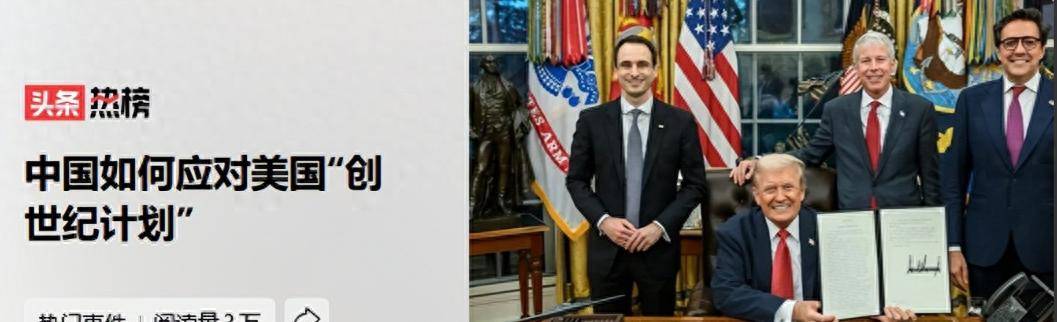
特朗普过去24小时都忙了什么?(2026-01-06)
Xin Lang Cai Jing· 2026-01-06 10:24
Group 1 - Venezuela will not hold new elections in the next 30 days as stated by Trump [1] - The Venezuelan opposition leader, Machado, has not communicated with Trump since October [1][3] - The Trump administration plans to freeze more social service funds in Democratic states [1][3] Group 2 - The Trump administration is set to meet with U.S. oil executives to discuss increasing Venezuela's oil production after the potential removal of Maduro [1][4] - The federal childhood vaccination program has been significantly revised, reducing the recommended vaccines from 17 to 11 [1][4] Group 3 - The U.S. is applying economic pressure on Venezuela to force the new leadership to comply with Trump's demands [2][4] - Trump has initiated the "Genesis Plan," aimed at leveraging artificial intelligence for innovation to tackle major global issues [2][4] - There are concerns about potential renewed conflict with Iran, highlighted by a photo of Trump with a "Make Iran Great Again" hat [2][4] Group 4 - The Trump administration has requested Venezuela's interim leader, Rodriguez, to take actions supporting U.S. interests, including stopping oil sales to U.S. adversaries [2][5]
美国“创世纪”决战打响!24科技巨头签下“卖身契”,中国如何应对?
商业洞察· 2025-12-28 09:28
Group 1 - The core viewpoint of the article is that the "Genesis Project," led by the U.S. Department of Energy, represents a significant strategic initiative aimed at enhancing foundational scientific research efficiency, particularly in areas like nuclear fusion and quantum computing [3][9][10] - The project has garnered participation from 24 major tech companies, including Microsoft, Google, and NVIDIA, indicating a rare collaboration among competitors to address long-term scientific challenges [5][12] - The initiative is seen as a shift from corporate-level competition to a national-level scientific ecosystem, raising questions about the feasibility of collaboration among historically rival companies [6][7][10] Group 2 - The "Genesis Project" aims to integrate AI capabilities into national research systems to shorten research cycles and improve efficiency in foundational science [10][12] - The U.S. Department of Energy's leadership in this project is attributed to its control over significant computational resources and strategic research data, essential for tackling complex scientific challenges [13][14] - The article contrasts the U.S. initiative with China's technological ambitions, suggesting that while both may be seen as "Manhattan Projects," the U.S. approach is more open and market-driven [16][18] Group 3 - Successful execution of the "Genesis Project" requires overcoming significant challenges, including aligning the diverse corporate cultures and technical approaches of participating companies [22][26] - The project faces scrutiny from capital markets, which demand short-term results, while the goals of nuclear fusion and quantum computing typically require long-term investment [26][27] - Political stability is crucial for the project's success, as shifts in government priorities could jeopardize long-term scientific endeavors [27][28]




24家顶尖人工智能企业,加入美国AI“创世纪计划”
财联社· 2025-12-19 02:10
Core Insights - The "Genesis Project" initiated by the White House aims to enhance the application of emerging technologies, particularly artificial intelligence (AI), in scientific exploration and energy projects, with 24 leading AI companies, including Microsoft, Google, and NVIDIA, signing agreements to participate [2][3]. Group 1: Genesis Project Overview - The Genesis Project is designed to foster public-private partnerships in AI technology to accelerate scientific advancements and ensure the benefits of AI reach all Americans [2][3]. - The initiative will integrate resources from the Department of Energy's national laboratories and utilize federal datasets to promote AI-based experiments, potentially shortening the scientific discovery cycle [4][5]. Group 2: Industry Participation - The 24 companies involved in the Genesis Project include major players such as Accenture, AMD, Amazon AWS, Google, IBM, Microsoft, and OpenAI, among others [5]. - These companies have expressed their intent to collaborate with the Department of Energy and national laboratories on projects related to the Genesis Project [5]. Group 3: Government's AI Strategy - The Trump administration has prioritized the cultivation of the AI industry, implementing policies to streamline AI infrastructure development and technology advancement [6]. - The White House is also working to limit state-level regulations that may impose burdens on businesses, although critics argue that federal regulatory actions are slow and state regulations are necessary to address urgent issues like bias and user safety [7].

朱帅:华盛顿以国家力量重构AI体系
Huan Qiu Wang Zi Xun· 2025-12-14 22:50
Core Viewpoint - The recent executive order signed by President Trump aims to establish a unified regulatory framework for artificial intelligence (AI) in the U.S., reducing state-level tech regulatory powers and is seen as a victory for American tech companies [1] Group 1: Genesis Plan - The "Genesis Plan" is positioned as a national AI research acceleration initiative, likened to historical projects such as the Manhattan Project and the Space Race, emphasizing its urgency and historical significance [2] - The plan aims to leverage AI to accelerate scientific discovery and address major challenges of the century while reinforcing U.S. technological dominance amid intensifying U.S.-China tech competition [2] - Key focus areas include advanced manufacturing, biotechnology, critical materials, nuclear energy, quantum information science, and semiconductors, all vital for national security and economic competitiveness [2] Group 2: AI Ecosystem Development - The core of the "Genesis Plan" is the establishment of the "U.S. Science and Security Platform," which consists of four pillars: a federal scientific dataset, a supercomputing cluster, AI agents for research automation, and a network of robotic laboratories [3] - The executive order aims to create a collaborative AI ecosystem involving government, private enterprises, and academia, promoting unified federal AI regulatory standards to avoid fragmented state regulations [4] - Partnerships with private companies like NVIDIA and Dell are intended to enhance national laboratory supercomputing capabilities, with international collaborations also being pursued to strengthen the AI ecosystem [4] Group 3: Challenges and Considerations - Despite ambitious plans, the U.S. faces challenges such as funding gaps, with unclear budget sources and potential delays in congressional approvals impacting the "Genesis Plan" [6] - Energy consumption concerns arise as AI data centers are projected to account for 8% of total U.S. electricity usage by 2030, raising inflation worries due to increased grid pressure [6] - Ethical and security issues related to AI applications in biotechnology and critical materials may complicate the establishment of a global AI governance framework [5]
iRobot 财报解读:债务危机下的生存困局
美股研究社· 2025-12-09 10:53
Core Viewpoint - iRobot has experienced a significant decline in its business trajectory over the past few years, with the downturn becoming evident even before the pandemic stimulus measures that temporarily masked the issues [1][2]. Group 1: Market and Financial Performance - iRobot's Q3 revenue dropped to $145.8 million, a decline of approximately 25% from $193.4 million in the same period last year [10][12]. - Sales in the U.S. market plummeted by 33%, while the EMEA market saw a 13% decline. Japan's market remained stable when excluding currency effects, but reported a 9% drop [10]. - The company's gross margin under GAAP decreased from 32.2% to 31.0%, and non-GAAP gross margin fell from 32.4% to 31.2% [12]. - Operating expenses increased by about 15% year-over-year, reaching $62.9 million under GAAP, despite a significant drop in revenue [10][12]. - iRobot's operating profit turned into a loss of $17.7 million, with an operating margin plummeting from 3.8% to -12.1% [13]. Group 2: Debt and Cash Flow Situation - iRobot's balance sheet shows signs of deterioration, with cash and cash equivalents shrinking from $134.3 million at the end of last year to $24.8 million [13]. - The company has $205.3 million in term loans classified as current liabilities, and shareholders' equity has fallen to -$26.9 million [15]. - The company is currently in a negative cash flow situation, making traditional valuation metrics like P/E ratio irrelevant [17]. Group 3: Market Sentiment and Valuation - Analysts have assigned a "sell" rating to iRobot, citing a combination of factors including a 33% drop in revenue, negative profit margins, and a lack of available financing options [19]. - The company's market capitalization is approximately $117 million, with an enterprise value of about $323 million, reflecting a significant discount compared to industry averages [17]. - The sales-to-enterprise value ratio stands at 0.59, indicating a more than 55% discount compared to the average in the non-essential consumer goods sector [17].


“创世纪计划”能创造美国人工智能“新纪元”吗
Zhong Guo Qing Nian Bao· 2025-12-02 21:41
Core Viewpoint - The "Genesis Plan" is a national-level AI research initiative launched by the Trump administration, aiming to double the productivity and influence of U.S. scientific research within ten years, positioning the U.S. as a global leader in AI [2][3]. Group 1: Plan Overview - The "Genesis Plan" is compared to the Manhattan Project, indicating its scale and urgency, and is described as the largest mobilization of federal research resources since the Apollo moon landing [2][3]. - The plan aims to create a national research platform that integrates supercomputers, AI systems, automated laboratories, and researchers to accelerate breakthroughs in key areas such as drug development and nuclear fusion [4]. Group 2: Context and Background - This initiative follows previous actions by the Trump administration to eliminate barriers to U.S. AI leadership, including the repeal of AI safety regulations and the introduction of the "U.S. AI Action Plan" [3]. - Recent collaborations with Saudi Arabia's sovereign wealth fund have resulted in significant investments in U.S. tech companies, particularly in AI and advanced technology research [3]. Group 3: Challenges and Concerns - The U.S. faces a paradox where increased research funding does not correlate with faster scientific progress, partly due to the rapid advancements in AI by China [5]. - There are concerns regarding the sustainability of the plan, as federal research funding has been cut, leading to job losses among scientists [5]. - Infrastructure issues, such as outdated energy systems, pose significant challenges to the implementation of the "Genesis Plan" [6]. - The plan raises philosophical questions about the nature of scientific research, particularly regarding the role of AI in knowledge production and the potential marginalization of human scientists [6][7].
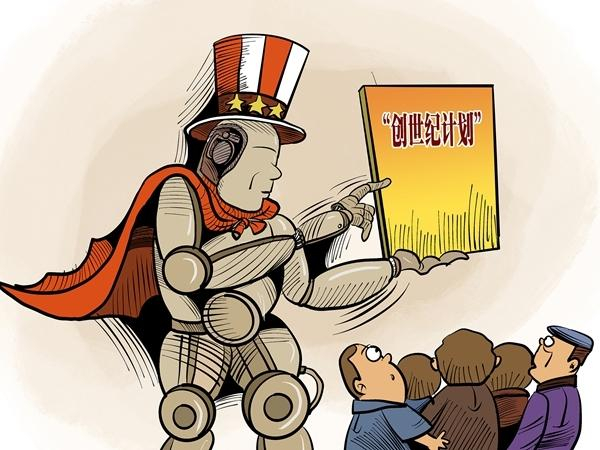
特朗普再发声,黄金迎来机会,投资者怎能错过?
Sou Hu Cai Jing· 2025-11-30 17:10
Group 1 - The core focus of the article revolves around the volatility in the gold market, driven by political developments in the U.S., particularly regarding interest rate expectations and Trump's influence on the Federal Reserve [1][8] - Gold prices are currently fluctuating around 4157 to 4165, with a slight decline of 0.14% noted, indicating a cautious market awaiting further developments [1] - The market anticipates an 86.9% probability of a 25 basis point rate cut by the Federal Reserve in December, reflecting a strong sentiment that rates will not remain unchanged [1][8] Group 2 - The tech sector in the U.S. stock market is experiencing significant attention due to advancements in AI and high-performance computing, with investors eager to capitalize on emerging opportunities [3] - Trump's recent immigration policy changes, including the suspension of benefits for non-citizens and the targeting of Venezuelan drug traffickers, are contributing to a tense political climate that affects market stability [4] - Ongoing conflicts in the Middle East, particularly between Israel and Hezbollah, are adding to the geopolitical uncertainties that influence gold prices as a safe haven asset [6][10] Group 3 - The financial market is characterized by a mix of domestic political issues and international military actions, creating a complex environment for investors [8][10] - The article highlights the unpredictability of market movements, with investors closely monitoring statements from Trump and the Federal Reserve for potential impacts on gold and stock prices [10] - The overall sentiment in the market suggests that the best news has already been priced in, leaving investors to navigate through remaining uncertainties [10]

特朗普签令!
中国能源报· 2025-11-25 01:18
Core Points - The article discusses the launch of the "Genesis Project" by President Trump, aimed at transforming scientific research through artificial intelligence (AI) [1][3] - The initiative will create an AI experimental platform that integrates U.S. supercomputers and unique data assets to generate foundational scientific models [3] - The project will involve collaboration between the Department of Energy, the Assistant to the President for Science and Technology, and innovators from academia and the private sector [3] Summary by Sections - **Genesis Project Overview** - The "Genesis Project" is a new national initiative designed to leverage AI to accelerate scientific discoveries [3] - **Implementation Details** - The executive order directs the Department of Energy to establish an AI experimental platform [3] - It aims to consolidate federal data and infrastructure to support scientific research [3] - **Collaboration and Support** - The initiative will involve coordination among various federal departments, with support from academic and private sector innovators [3]