
IPO退出

Search documents
13000亿,黑石赚翻了
投资界· 2026-02-03 07:36
Core Viewpoint - Blackstone has achieved record performance in its 40-year history, with significant capital inflows and asset management growth, indicating a robust recovery in the private equity market and a potential surge in IPO activities [2][3][4]. Group 1: Financial Performance - In Q4, Blackstone recorded a capital inflow of $71 billion, the highest in three and a half years, contributing to an annual total of approximately $240 billion [3][4]. - The total assets under management (AUM) reached about $1.27 trillion, marking a 13% year-over-year increase [2][3]. - The private wealth investment platform raised $43 billion in 2025, a 53% increase year-over-year, becoming one of the strongest fundraising segments [4]. Group 2: Investment Activities - Blackstone invested $42.2 billion in Q4, with total investments exceeding $138 billion (approximately 950 billion RMB) for the year, the highest in four years [5]. - Key investment areas included digital infrastructure, private credit, and life sciences, with notable activity in markets like India and Japan [5]. - The private equity segment raised $200 billion in Q4 and over $680 billion for the year, increasing its AUM to over $416 billion [4]. Group 3: IPO Market Dynamics - The global IPO market saw a 40% year-over-year increase in Q4, with the U.S. IPO issuance rising 2.5 times, with Blackstone being a significant contributor [7]. - Blackstone's Medline IPO in December 2025 was a landmark event, achieving a market capitalization exceeding $55 billion, marking it as the largest private equity-backed IPO in history [7][8]. - Blackstone plans to leverage the current market conditions to launch a series of long-held investments for IPO, potentially leading to one of the largest issuance years in its history [8]. Group 4: Venture Capital and Private Equity in China - The Chinese venture capital and private equity market is experiencing a revival, with 247 companies listed domestically and abroad in 2025, a 26.7% increase year-over-year [9][11]. - The Hong Kong market also saw a strong rebound, with 105 Chinese companies listed, a 69.4% increase from the previous year [9]. - The upcoming year is expected to witness a surge in IPOs in sectors like commercial aerospace and embodied intelligence, with numerous companies preparing for listings [11][12].



100亿,南京江宁国企母基金招GP
FOFWEEKLY· 2026-01-23 10:08
Group 1 - The core idea of the article is the establishment of the Nanjing Jiangning Smart Equity Investment Partnership (Limited Partnership) with a fund size of 10 billion yuan to promote the development and transformation of key industries in Jiangning District [1] - The fund is managed by Nanjing Tianyin Venture Capital Management Co., Ltd. and aims to attract sub-fund management institutions through a public solicitation process [1] - Investment focus areas include new power, next-generation information technology, new energy (intelligent connected) vehicles, high-end intelligent equipment, aerospace, biomedicine, and new medical devices [1] Group 2 - The fund's duration is set to not exceed 10 years, with an investment period of no more than 5 years, subject to negotiation for specific cases [1]

一级市场退出之战
投资界· 2025-12-25 08:29
Core Viewpoint - The article discusses the challenges and strategies related to exit opportunities in the investment landscape, particularly focusing on private equity and venture capital exits in China, highlighting the need for adaptive strategies in a changing economic environment [2][10]. Group 1: Exit Challenges and Strategies - The current economic downturn has created significant challenges for exits, with many funds facing systemic exit difficulties, particularly for projects invested in 2014, where 70% have yet to exit [10][11]. - The exit environment has changed drastically compared to previous years, necessitating proactive management and strategic planning for exits rather than a passive approach [8][10]. - The need for organizational restructuring within investment firms has been emphasized to better manage the complexities of the current exit landscape [8][9]. Group 2: Investment Focus and Performance - Various investment firms have reported their focus areas, with East Capital managing 63 funds totaling 390 billion yuan, and Puhua Group focusing on early-stage investments in healthcare, new energy, and hard technology [3][4]. - Tianchuang Capital has successfully listed 25 portfolio companies and maintains an annual investment of 300-400 million yuan, focusing on hard technology sectors [5][6]. - The performance of exits varies, with some firms achieving notable success while others struggle, indicating a mixed landscape of exit opportunities [7][10]. Group 3: Regulatory and Market Support - Recent regulatory changes, such as the updated merger loan management measures, are expected to enhance support for mergers and acquisitions, with increased leverage ratios and more flexible financing options [12][13]. - The bond market is also seen as a potential source of lower-cost funding for mergers, with current interest rates being favorable compared to traditional loans [13]. - The overall sentiment is cautiously optimistic regarding the future of exits, with expectations of a more favorable market environment in 2026, particularly for IPOs and mergers [23][24]. Group 4: Future Outlook and Recommendations - The article suggests that investment firms should establish closer collaborations with listed companies to better align acquisition targets and exit strategies [16][17]. - There is a call for clearer investment strategies, focusing on companies with high growth potential and stable cash flows, to facilitate smoother exits [17][18]. - The importance of continuous communication with founders and portfolio companies is highlighted to ensure accurate assessments of business performance and exit timing [27][28].




并购退出 vs IPO退出:不同场景下如何选择最优路径?
Sou Hu Cai Jing· 2025-12-18 02:18
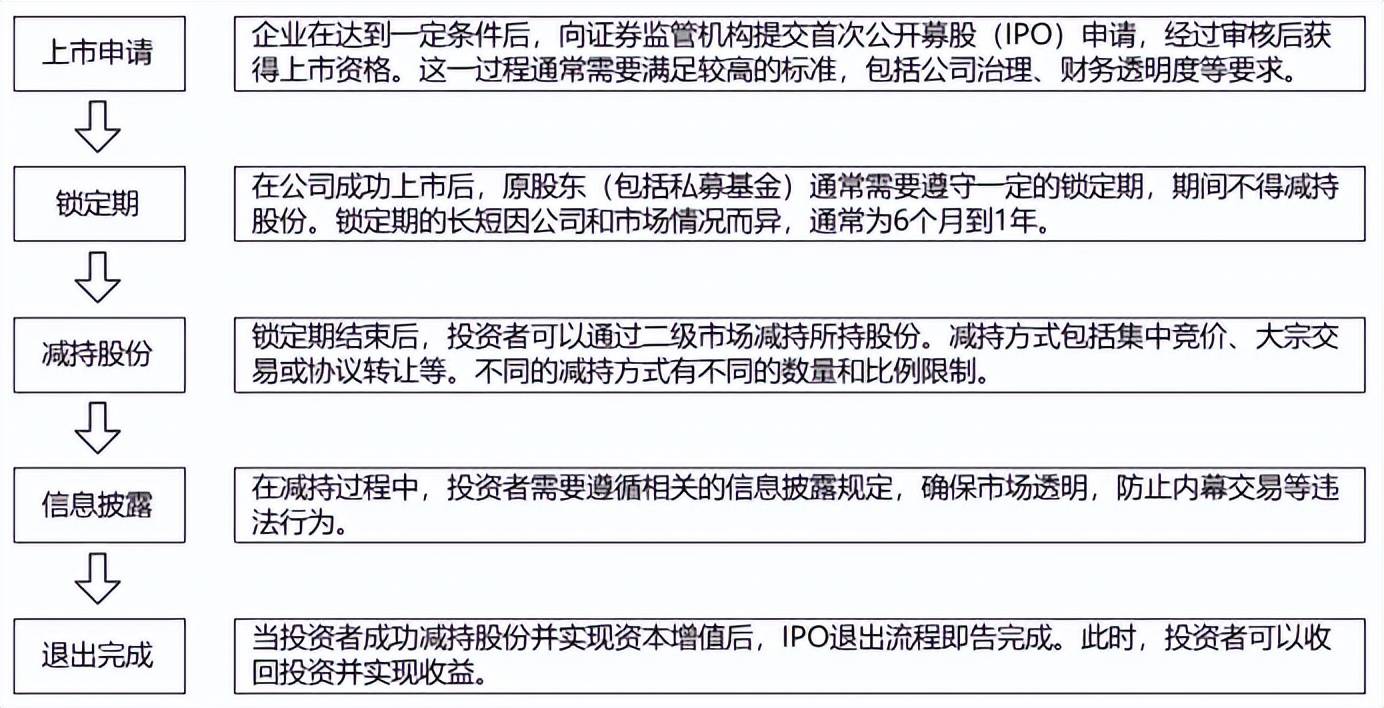
Core Viewpoint - The article discusses the evolving landscape of exit strategies for venture capital in China, highlighting the shift from IPOs to mergers and acquisitions (M&A) as the primary exit route due to tightening IPO regulations and the recent policy changes aimed at encouraging M&A activities [1]. Group 1: IPO Exit Concept and Process - IPO exit refers to the process where venture capitalists realize returns through the public offering of shares of the invested company, which can occur on the main board or secondary board [2]. - The basic process of IPO exit involves converting private equity into public equity through the listing of shares [2]. Group 2: Advantages and Disadvantages of Exit Strategies - M&A exits are characterized by efficiency, flexibility, and clear returns, avoiding the lengthy IPO application process and market volatility risks [4]. - However, M&A valuations are typically based on current earnings (5-10 times PE), which may be lower than potential IPO valuations (20 times PE for high-growth sectors), limiting the possibility of excess returns [4]. - Challenges in M&A include the need to align interests among multiple parties and the limited number of potential buyers, which can complicate transactions [4]. Group 3: Factors Influencing Exit Strategy Choice - Company-specific factors include growth potential in sectors like renewable energy and biotechnology, where stable revenue growth and strong core competencies favor IPO exits [5]. - Market conditions play a crucial role; favorable capital market conditions and industry maturity support IPO exits, while downturns and consolidation trends may lead to M&A preferences [6]. - Investor considerations, such as investment horizon and risk appetite, also influence the choice between IPO and M&A exits [7]. Group 4: Strategic Planning for Exit - Companies should plan exit strategies early in their development, setting clear goals and timelines to align with market conditions and investor expectations [9]. - Establishing a governance and resource framework is essential, with IPO-oriented companies needing robust internal controls and M&A-oriented firms focusing on synergies with potential acquirers [9]. Group 5: Dynamic Adjustment of Exit Strategies - Companies must remain adaptable to internal and external changes, reassessing exit strategies based on performance and market conditions [10]. - Continuous communication with investors and stakeholders is vital to ensure timely and informed decision-making regarding exit paths [10].
新一批敲钟人,已在路上
FOFWEEKLY· 2025-10-23 10:03
Core Insights - The investment landscape is experiencing a revival, with increased fundraising, investment, and exit activities in the venture capital sector [2][3][10] - There is a significant shift in international capital's perception of Chinese assets, moving from "cannot invest" to "cannot miss investing" [3][8] IPO Activity - The Hong Kong IPO market is witnessing a surge, with total IPO financing reaching HKD 182.9 billion by the end of September, more than doubling compared to the same period in 2024 [7] - The number of public listing applications being processed is close to 300, indicating a robust market environment [7][8] Exit Opportunities - The current year is being referred to as a "year of exits," with many projects being encouraged to initiate the IPO process, revitalizing the investment chain [5][6] - Improved exit expectations are allowing funds to communicate more confidently with Limited Partners (LPs) and restructure valuation systems for late-stage projects [6] Foreign Investment Trends - There is a noticeable increase in enthusiasm from overseas investors, particularly from Europe, the Middle East, and emerging markets, who are becoming foundational investors in Hong Kong IPOs [8][11] - Middle Eastern sovereign wealth funds are actively engaging with the Chinese market, exemplified by a USD 300 million equity investment fund focused on AI, new energy, and semiconductor sectors [12] Talent Market Changes - The talent market is also responding to the renewed investment activity, with several funds restarting key recruitment after a three-year freeze [13] - There is a growing demand for investment professionals to support Chinese companies' international expansion [13] Market Sentiment - The overall market sentiment is shifting positively, with increased trading activity and a clear opening of exit windows [10][15] - The current phase is characterized by a new cycle driven by institutional benefits and high-quality assets, marking a fundamental change in foreign LPs' attitudes towards Chinese assets [15]

我,投资人,今年赚到Carry了
投中网· 2025-10-01 09:56
Core Viewpoint - The article discusses the recent recovery of the Hong Kong stock market and its implications for the primary market, highlighting significant IPO activity and the potential for investment returns [6][25]. Group 1: Market Recovery - The Hong Kong stock market has shown a remarkable turnaround, with the Hang Seng Index rising over 20% and IPO fundraising exceeding 100 billion HKD in 2025 [6]. - From January to August 2025, 59 companies went public, marking a 37% increase compared to 2024, with total funds raised reaching approximately 134.5 billion HKD, a nearly sixfold year-on-year increase [6]. Group 2: Investment Returns - Successful IPOs have revitalized investor confidence, with cornerstone investors in companies like Yaojie Ankang achieving returns of up to 10 times their investment [10][11]. - The case of Yaojie Ankang illustrates that despite market volatility, early investors can still realize substantial gains, with cornerstone investors earning significant returns even after a drop in stock price [10]. Group 3: Implications for Fund Management - A successful IPO can provide hidden value that may offset several years of management fees for a fund, enhancing overall fund performance [13][18]. - For instance, the IPO of Ming En Biotechnology resulted in an average return of over 300% for investors, with some achieving returns exceeding 600% [14][15]. Group 4: Importance of Exits - The article emphasizes that continuous profitability and successful exits are crucial for maintaining investor trust and securing future fundraising [20][25]. - The case of Yushu Technology demonstrates how a single successful investment can significantly impact a fund's overall performance, with potential valuations reaching up to 1 billion HKD [22][23].

陈文辉:IPO退出承载能力有限,并购退出是今后主要培育方向
Sou Hu Cai Jing· 2025-09-26 08:01
Group 1 - The current capacity for IPO exits is limited, and mergers and acquisitions (M&A) will be the main focus for future development [1] - There is a significant amount of existing assets that need to be addressed through M&A, which is crucial for revitalizing these assets and promoting economic transformation [1] - The optimization of exit channels is essential for the high-quality development of equity investment funds, with exit being the most challenging aspect of the investment process [1] Group 2 - The demand for M&A is driven by changes in economic development requirements, including the succession of private enterprises and policy adjustments [2] - The State-owned Assets Supervision and Administration Commission (SASAC) is encouraging state-owned enterprises to increase investments in strategic emerging industries, with venture capital funds established by these enterprises nearing 100 billion [2] - Regulatory support, such as the encouragement from the China Securities Regulatory Commission for equity investment funds to acquire listed companies, is expected to broaden exit opportunities [2]
上海生物医药行业投融资如何破局
Di Yi Cai Jing· 2025-08-27 12:53
Core Insights - The Shanghai biopharmaceutical industry is transitioning from "capital frenzy" to "capital rationality" as evidenced by the significant $162 million Series D financing of Jixing Pharmaceutical in 2024, despite a cooling global capital market [1][3][4] - The investment landscape in Shanghai reflects a resilient ecosystem, with high-quality projects still attracting capital, indicating a solid foundation for innovation and development [1][3] Industry Layout - Shanghai's biopharmaceutical industry is no longer limited to Zhangjiang, with the government promoting a "1+5+X" spatial planning strategy that includes a core area and several specialized industrial zones [2][3] - This multi-point distribution and differentiated development model enhances the overall structure of the biopharmaceutical sector in Shanghai [2] Financing Trends - After a peak period from 2019 to 2021, the financing landscape has returned to a more rational state, with a significant decline in the number and total amount of financing events in 2023 and 2024 [3][4] - In 2024, approximately 217 financing events were recorded, totaling around 18 billion yuan, with a notable drop in the number of IPOs and a shift towards early-stage investments [3][4] Sources of Capital - The funding landscape in Shanghai is diverse, with government funds acting as a stabilizing force, while social and industrial capital play a major role in driving investments [4][5] - In 2024, the Shanghai biopharmaceutical sector saw a significant increase in corporate venture capital investments compared to 2023 [4] Investment Focus - Innovation drugs remain the primary focus of investment in Shanghai's biopharmaceutical sector, particularly in areas such as oncology, metabolic diseases, and rare diseases [6] - Emerging fields like medical devices and digital healthcare are also gaining traction, indicating a diverse investment ecosystem [6] Exit Mechanisms - The IPO channel is no longer the sole exit strategy for investors, with mergers and acquisitions becoming increasingly important [7] - In 2025, Shanghai plans to establish a 10 billion yuan biopharmaceutical M&A fund to facilitate exit strategies beyond IPOs [7][9] Policy Support - Policies have been instrumental in shaping the capital ecosystem for Shanghai's biopharmaceutical industry, with recent initiatives aimed at fostering innovation and investment [8][9] - The introduction of various action plans and funding mechanisms is expected to enhance the investment environment and support the growth of the sector [9][10] Challenges and Solutions - The industry faces challenges such as funding structure imbalances, constrained exit channels, and mismatched funding cycles [11][12] - To address these issues, recommendations include establishing early-stage funds, improving exit pathways, and enhancing post-investment management [14]