NPO

Search documents
源杰科技20260325
2026-03-26 13:20
源杰科技 20260325 市场上讨论的 300mW 和 400mW 光源实际上指的是同一款芯片在不同工作条 件下的表现。我们研发的 300mW 芯片,其指标是指在没有 TEC 温控的条件 下(例如 70 多度的环境)能达到的输出功率。而市场所说的 400mW,通常 是指在 50 度左右、有 TEC 控温的情况下,该芯片能够达到的输出功率。因此, 我们所说的 300mW 芯片在有 TEC 控温时即可实现 400mW 的性能,二者在 概念上指的是同一件事情,不存在技术上的本质差异。 考虑到 2026 年市场对 70mW 和 100mW 等产品的需求紧张,公司在 2026 年的产能扩张计划是怎样的?对于 2027 年及以后的产能规划和市场预 期又是如何? 市场需求增长确实超出了去年的预期,导致当前的核心瓶颈在于交付和产能扩 张。公司今年的扩产设备基本在 2025 年已下单,目前正处于陆续到货和调试 阶段。因此,2026 年的收入增长将主要取决于产能释放的节奏,预计会随着 产能的逐步提升而增长,但具体进程会受到设备到货和调试等因素的影响。尽 管当前产能无法完全满足市场需求,但公司坚持稳健扩张的原则,扎实地进行 设备 ...

光芯片,重磅进展
半导体行业观察· 2026-03-12 01:39
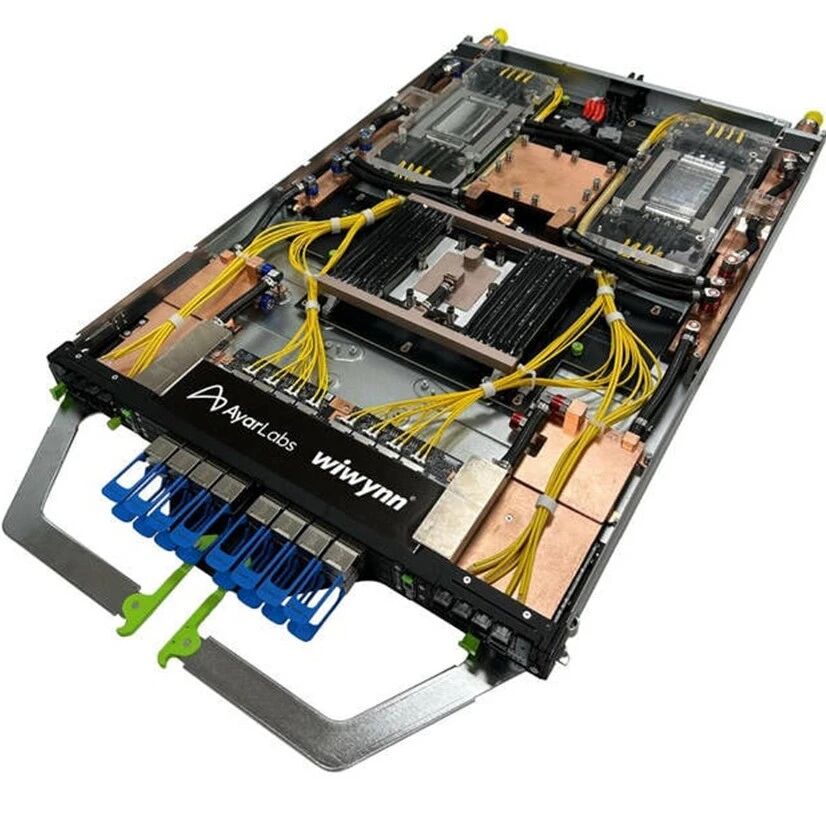
Core Viewpoint - Scintil Photonics, supported by Nvidia, has begun providing laser chips for testing, aiming to utilize optical pulses for data transmission in AI servers, which could simplify the connection of multiple chips into large computing systems [2][3]. Group 1: Company Developments - Scintil is in discussions with "six or seven companies" interested in using its technology by 2028, with a goal to produce hundreds of thousands of chips monthly [3]. - The company received $58 million in funding from Nvidia last year and has developed a method to package indium phosphide lasers with other components into a single chip [2][3]. - Scintil's LEAF Light is the first single-chip DWDM laser for AI infrastructure, with an evaluation kit (EVK) allowing customers to validate the technology in their environments [3][5]. Group 2: Technology and Product Features - LEAF Light aims to reduce power consumption by 50% compared to single-wavelength CPO, offering lower latency and higher bandwidth density [4][5]. - The EVK is expected to launch in Q2 2026, featuring two laser photon components and supporting 8 and 16 wavelength configurations [5][6]. - The technology includes on-chip digital control and monitoring capabilities, ensuring wavelength precision and power uniformity without manual intervention [6][7]. Group 3: Market Context and Competitors - The shift from copper interconnects to optical architectures is necessary as AI systems expand from single-rack to multi-rack configurations, with copper reaching its limits in speed and density [3][4]. - Other companies like Ayar Labs and Lightmatter are also advancing optical technologies, with Ayar developing a system integrating over 1024 GPUs and Lightmatter introducing a new optical engine that can halve fiber usage in data centers [8][15]. - Lightmatter's Passage L20 optical module is designed for high-performance switches and GPUs, aiming to reduce fiber costs and improve efficiency without requiring co-packaging [15][16].


未知机构:中际旭创北美inphisolutions专家Q是否已经设计了-20260306
未知机构· 2026-03-06 02:30
Summary of Conference Call Notes Company and Industry - The company discussed is 中际旭创 (Zhongji Xuchuang), focusing on the development of high-power continuous wave (CW) lasers for Scale-up CPO (Co-Packaged Optics) and NPO (Next-Generation Photonic Optics) applications [1] Core Points and Arguments - The company has designed a high-power CW laser with a performance specification of 400 milliwatts, capable of driving four channels, each supporting 200 Gbps, totaling 800 Gbps bandwidth [1] - This product has been adopted by NVIDIA for its second-generation CPO [1] - The 400 milliwatt CW laser is also planned for use in NVIDIA's upcoming Rubin Ultra NPO cabinet solution, set to launch next year [1] - The laser's multifunctionality allows it to meet the needs of both CPO and NPO applications [1] - It is noted that NVIDIA typically employs a multi-technology approach, meaning the final technology choice will depend on specific circumstances [1] Other Important but Possibly Overlooked Content - The discussion highlights the strategic importance of partnerships with major tech companies like NVIDIA, which may influence the company's future product development and market positioning [1]
GTC前夜:光模块,正在成为AI算力最被低估的主线
美股研究社· 2026-03-05 13:48
Core Viewpoint - The AI hardware investment focus is shifting from GPU performance to the efficiency of data flow between chips, servers, and data centers as the limits of computational power are approached [1][2]. Group 1: Transition of Computational Bottlenecks - The bottleneck in computational power is transitioning from computation to communication, particularly in large-scale AI training where data exchange between GPUs is exponentially increasing [6]. - In AI clusters, network bandwidth, latency, and power consumption are becoming critical variables for training efficiency, indicating a fundamental change in the core logic of AI computing networks [6][7]. Group 2: Emergence of Optical Communication - Traditional data center networks are designed with excess bandwidth, but AI clusters require high-frequency collaboration among GPUs, maintaining network utilization above 80%, making bandwidth bottlenecks and latency fluctuations detrimental [6][7]. - The upcoming NVIDIA GTC conference is seen as a pivotal moment for AI interconnect technology, with a focus on network architecture upgrades for both Scale Up and Scale Out strategies [6][7]. Group 3: Innovations in Optical Modules - The limitations of traditional optical module architectures are becoming apparent, including high power consumption, bandwidth constraints, and significant signal loss over long distances [9]. - New technological routes, CPO (Co-Packaged Optics) and NPO (Near-Packaged Optics), are being discussed as solutions to these issues, with CPO expected to reduce interconnect power consumption by 30-50% [10][11]. Group 4: NVIDIA's Strategic Moves - NVIDIA's recent $4 billion investment in optical communication companies Coherent Corp and Lumentum is viewed as a supply chain locking strategy to secure optical engine supply amid anticipated demand surges [17]. - The expected introduction of the Rubin Ultra architecture could significantly increase the number of optical engines per GPU, from approximately 1.5 in the H100 architecture to about 5.5, indicating a shift in the role of optical engines from auxiliary components to core bottlenecks [18][19]. Group 5: Market Implications - If the GTC conference confirms the new architecture, the valuation framework for the optical module supply chain may need to be re-evaluated, as traditional metrics may underestimate the technological premium and concentration in the CPO era [20]. - The AI investment narrative is evolving, with a potential shift from GPU-centric strategies to recognizing the critical role of optical communication infrastructure in AI hardware [21][22].

策略对话通信-关注美伊冲突的AI要素-相信大光归来
2026-03-04 14:17
Summary of Key Points from Conference Call Industry and Company Involved - The discussion primarily revolves around the **AI and optical communication industry**, with a focus on companies like **NVIDIA**, **Lumentum**, **Coherent**, and **ZTE**. The context includes the impact of geopolitical tensions, particularly the **US-Iran conflict**, on the industry dynamics. Core Insights and Arguments - **Capex Growth**: North American cloud providers are expected to see a **65%-75% year-over-year increase in CAPEX by 2026**, with potential for further growth in 2027, indicating a robust demand for computing power [1][3] - **Investment in Optical Chips**: NVIDIA's investment of **$4 billion in Lumentum and Coherent** aims to address data bottlenecks in GPU clusters, with the share of optical chips in CAPEX projected to rise from **3%-4% to 15%-20%** [1][4] - **Technological Divergence**: There is a clear divide in technology preferences, with chip manufacturers favoring **CPO (Chip-on-Board)** for efficiency, while cloud providers lean towards **NPO (Near-Package Optics)** due to lower maintenance costs and decoupling needs [1][5] - **AI Integration**: AI has deeply penetrated military and various industries, enhancing information processing and operational efficiency, which in turn drives the demand for computing power [3] - **Market Dynamics**: The optical communication sector has seen significant stock price increases in the US, while leading A-share companies have faced a **10% decline** due to geopolitical disturbances, highlighting a potential investment opportunity [2][10] Other Important but Possibly Overlooked Content - **NPO vs. CPO**: NPO is favored for its lower power consumption (10-15W) and ease of maintenance compared to CPO (10W), which has higher costs and lower yield rates. This divergence reflects differing commercial interests between chip manufacturers and cloud providers [5] - **Upcoming GTC Conference**: The **2026 GTC conference** is anticipated to showcase new products, including the **Blackwell line** and **1.6T** solutions, with a focus on various configurations to meet diverse customer needs [7] - **Market Sentiment Shift**: As earnings reports approach, market focus is expected to shift back to companies with strong performance metrics, with **ZTE** and **NewEase** identified as resilient players in the optical communication space [8] - **Stock Recommendations**: **ZTE** is highlighted as a top pick due to its leading position in the optical communication market, particularly in the **1.6T module** segment, and its strong relationships with major clients like NVIDIA and Google [9][10]



国产大模型春节档密集推新,NPO和柜内光3月重点关注
Shanxi Securities· 2026-02-26 06:39
Investment Rating - The report maintains an "Outperform" rating for the industry, indicating an expected growth rate exceeding the benchmark index by more than 10% [1][37]. Core Insights - The domestic large model AI market is experiencing rapid updates, with significant demand for computing power, particularly for domestic GPUs, as competition intensifies for consumer traffic during the Spring Festival [3][15]. - Major AI applications are facing severe queuing issues, leading to a supply-demand imbalance in computing power, which is expected to drive the adoption of domestic inference chips [4][16]. - The report highlights the importance of Scaleup optical engines as a significant growth market following optical modules, emphasizing the need for advanced silicon photonic chip design and packaging capabilities [5][17]. Summary by Sections Industry Overview - The report discusses the recent surge in domestic large model AI applications, with notable releases from companies like ByteDance and Alibaba, showcasing advancements in multi-modal interaction and programming capabilities [3][15]. - The upcoming events in the optical communication sector, such as NVIDIA's and Broadcom's earnings releases, are anticipated to provide positive momentum against negative narratives surrounding AI [5][17]. Market Performance - The overall market saw an increase during the week of February 9-13, 2026, with the Sci-Tech 50 Index rising by 3.37% and the Shenwan Communication Index increasing by 2.81% [10][19]. - The top-performing sectors included optical cables and connectors, with significant weekly gains [10][19]. Investment Recommendations - The report suggests focusing on key companies in various segments, including: - Ascend Chain: Fenghuo Communication, Huafeng Technology, Huagong Technology, Shennan Circuit, Feirongda - Domestic GPUs: Cambrian, Haiguang Information, Muxi Co., Moer Thread, Tianshu Zhixin - Optical Engines: Tianfu Communication, Zhongji Xuchuang, Xinyi Sheng, Huanxu Electronics, Hongteng Precision - Cabinet Passive Optical: Tianfu Communication, Zhizhang Technology, Changxin Bochuang, Taicheng Light, Guangku Technology, Hengdong Light [19].
MPO 行业深度:AI 光连接的现在和未来
2026-02-10 03:24
Summary of the Conference Call on NPO Industry Industry Overview - The conference focused on the NPO (MPO) industry, particularly its current status and future prospects in the context of data centers and AI advancements [1][2]. Key Points and Arguments NPO Definition and Applications - NPO refers to a type of optical fiber connector, specifically the MPO connector, which is crucial for connecting optical fibers in communication systems [3][4]. - The report outlines the increasing demand for high-density and miniaturized connectors due to the growing bandwidth requirements in data centers driven by AI technologies [4][5]. Growth Drivers for NPO 1. **Demand for Optical Modules**: The growth in optical modules directly correlates with the demand for NPO connectors, as they are used in conjunction with these modules. The expected demand for optical modules in 2026 is projected to double compared to 2025 [10][11]. 2. **Data Center Wiring Trends**: The shift towards more complex structured wiring in data centers is increasing the usage of MPO connectors, as these systems require more interconnection devices [12]. 3. **CPO Solutions**: The introduction of CPO (Co-Packaged Optics) solutions is expected to further drive the demand for MPO connectors, as they integrate optical modules directly into switches, increasing the need for high-density connections [13][14]. Market Dynamics - The MPO market is experiencing a transition from traditional telecommunications applications to becoming the primary application in data centers due to faster growth rates in the latter [9][10]. - The report highlights the competitive landscape, noting that major players like Corning and domestic manufacturers are gaining traction in the supply chain for cloud service providers [19][20]. Industry Trends and Acquisitions - Amphenol's acquisition of Commscope's CCS business is indicative of the industry's recognition of the growth potential in wiring solutions, with expected revenues of approximately $4.1 billion from this segment [18]. - Corning's optical communication business has shown consistent quarter-over-quarter growth, particularly in cloud service provider segments [18]. Company-Specific Insights - **Bocron**: Engaged in direct supply to major clients like Google, with significant growth expected in its NPO business due to increased demand for optical modules [20]. - **Shijia**: Anticipates high growth in its MPO business driven by the overall increase in optical module shipments and improvements in its AW business segment [21]. Additional Important Content - The report discusses the technical specifications and classifications of MPO connectors, emphasizing the importance of MT ferrules in achieving high-density integration [6][7]. - The market is seeing innovations such as ultra-small multi-core optical connectors, which are designed to meet the increasing demands of data centers [5][6]. - The report also notes the challenges faced by domestic manufacturers in meeting the high precision requirements for MT ferrules, which are critical for maintaining low insertion loss in optical connections [8][9]. This summary encapsulates the key insights from the conference call regarding the NPO industry, highlighting growth drivers, market dynamics, and specific company strategies within the sector.
中际旭创(300308):光模块龙头业绩亮眼,行稳致远无惧短期风浪
East Money Securities· 2026-02-04 05:52
Investment Rating - The report maintains a "Buy" rating for the company, indicating a positive outlook for its stock performance relative to the market index [3][6]. Core Views - The company, a leader in optical modules, is expected to achieve significant revenue growth driven by strong demand for computing infrastructure and an increasing proportion of high-speed optical modules in its product mix [6][7]. - The company's net profit for 2025 is projected to be between 98.0 to 118.0 billion yuan, representing a year-on-year increase of 89.50% to 128.17% [1]. - The report highlights the company's strategic focus on new optical solutions, including OCS, CPO, and 3.2T optical modules, to capture market opportunities in integrated optics [5][6]. Summary by Sections Financial Performance - The company forecasts a net profit of 109.62 billion yuan for 2025, with a growth rate of 111.97% compared to the previous year [7]. - Revenue projections for 2025, 2026, and 2027 are 386.57 billion yuan, 687.61 billion yuan, and 925.25 billion yuan, respectively, with corresponding growth rates of 62.00% and 77.88% [6][7]. Market Position - The company is positioned as a global leader in optical modules, benefiting from robust demand from end customers for computing infrastructure [6]. - The report notes that the company's product shipments are growing rapidly, with high-speed optical modules becoming a larger share of total sales [6]. Future Outlook - The company anticipates that the 1.6T optical module will see rapid growth starting in 2026, with significant orders already in place [5][6]. - The report suggests that the company's financial management capabilities will improve as it progresses with its Hong Kong listing and global business expansion, potentially mitigating short-term financial impacts [5][6].
未知机构:ZJXC业绩交流要点梳理202601311收入端四季-20260202
未知机构· 2026-02-02 02:05
Summary of ZJXC Earnings Call Company Overview - The document pertains to ZJXC, focusing on its financial performance and strategic insights from the earnings call held on January 31, 2026. Key Financial Metrics 1. **Revenue Growth**: - Q4 revenue increased approximately 30% compared to Q3, driven by a higher proportion of high-end and silicon photonics products [1] - Gross profit increased by approximately 30%-35% quarter-over-quarter [1] 2. **Gross Margin**: - Gross margin improved by less than 2 percentage points compared to Q3 [1] 3. **Expenses**: - Absolute expenses in Q4 rose by 55%-60% compared to Q3, primarily due to one-time costs related to material handling and unrecognized expenses [1] - Financial expenses increased due to a foreign exchange loss of nearly 200 million RMB from the depreciation of the USD against the RMB, which was several million more than in Q3 [1] 4. **Net Profit**: - Consolidated net profit grew by approximately 20% quarter-over-quarter, while the net profit attributable to the parent company, excluding non-recurring items, increased by about 15% [1] Minority Shareholder Impact - Minority shareholder profit accounted for less than 7% of net profit for the full year 2025, with Q4 minority profit being 300-400 million RMB, representing less than 9% of the quarterly net profit [2] Product and Market Insights 1. **Product Structure and Demand**: - The 800G product is still in the ramp-up phase, while the 1.6T product has transitioned from validation to substantial delivery, with demand accelerating [2] - The silicon photonics solution is expected to comprise over half of the 1.6T product mix, which will help increase average selling price (ASP) and profitability [2] 2. **Material Supply Situation**: - The upstream optical chip supply remains tight, but the company has a relatively good reserve of isolators [2] - ZJXC has secured key materials and production capacity for 2026-2027, with overall material stability compared to industry peers, highlighting its advantages in inventory management and supply chain coordination [2] 3. **CPC Technology**: - Continuous progress in CPC applications has been noted, with widespread acceptance expected for large-scale deployment [2] 4. **CPO/NPO Development**: - CPO is still in the engineering ramp-up phase, with a slower-than-expected short-term growth rate [2] - NPO (Near-Package Optics) is gaining customer recognition due to its flexibility and better engineering feasibility, with early positioning expected to contribute to growth in scale-up scenarios [2] Future Demand Outlook - Visibility for orders and demand in 2026 has significantly improved, with some core customers providing demand frameworks for 2027. The overall outlook for 2026 indicates strong growth certainty, with potential upward adjustments for 2027 driven by scale and new architecture penetration [3]
通信|未来三年景气确立-算力方向重点布局
2026-01-19 02:29
Summary of Conference Call Records Industry Overview - The telecommunications industry is expected to experience strong growth over the next three years, with leading companies like Zhongji Xuchuang and Xinyi Sheng showing impressive performance, indicating a positive outlook for 2025 [1][3] - The demand for the telecommunications sector is optimistic for 2026 and beyond, driven by overseas wafer factory expansions, GPU upgrades, VR glasses, and public demand [1][5] - The domestic computing power industry chain is set to initiate procurement and bidding for 2026 starting in the second half of 2025, with significant growth expected in the IDC sector [1][6] Key Insights and Arguments - The current GPU power consumption is high, with approximately 1.5GW for one million cards, leading to a total demand of around 5GW when including other devices [1][7] - Internet capital expenditure is expected to continue growing, which will drive demand in the IDC market, potentially leading to a supply-demand imbalance [1][8] - The SDN network is a significant growth area in the network equipment sector, with major internet companies like ByteDance, Alibaba, and Tencent launching their SKAP network frameworks [1][9] Investment Opportunities - Companies with strong performance, such as Xuchuang, Xinyi Sheng, Yuanjie, and Bochuang, are highlighted as key investment opportunities in the optical module sector [1][5] - The optical fiber industry is experiencing price increases, with G657A2 optical fibers in short supply, prompting operators to adjust bidding strategies [1][14] - New technology directions in optics, such as onboard optics, CPO, and NPO, present significant growth potential, with companies like Robertco and Zhichuang Technology being noteworthy [1][15] Market Dynamics - The IDC market is expected to see a significant increase in bidding activity, with a large-scale bidding market anticipated in early 2026 [1][6] - The optical communication sector is projected to be a critical allocation direction due to clear demand forecasts for 2026 and 2027 [1][13] - Second-tier module manufacturers may have opportunities to capture overflow orders, with the 800G and 1.6T market expected to reach 70-80 million units this year [1][17][18] Future Outlook - TSMC's capital expenditure plans for the next three years are significantly higher than expected, indicating a clear industry outlook [1][12] - The upcoming earnings forecasts are expected to alleviate concerns regarding fourth-quarter performance fluctuations and material impacts, leading to a focus on the first quarter and 2027 [1][19]