
丝网

Search documents
一场别开生面的新春“问计会”
Xin Lang Cai Jing· 2026-02-16 23:40
Group 1 - The meeting held in Anping County focused on discussing the development of the local silk screen industry, which includes over 16,000 enterprises, and aims to enhance its competitiveness and innovation [1] - Anping County achieved significant economic milestones, including being the top in industrial electricity consumption in the city and a 23% increase in total import and export value [1] - Local leaders emphasized the importance of improving product quality and brand recognition in the silk screen sector, with calls for businesses to focus on high-end product manufacturing [1] Group 2 - Various suggestions were made during the meeting, including establishing a mechanism for enterprise collaboration in specific sectors and setting up a permanent exhibition hall for Anping silk screens in Guangdong to directly reach the Greater Bay Area market [2] - A total of 18 suggestions were collected during the two-hour meeting, contributing to a comprehensive list of recommendations for local economic development [2] - The county plans to implement four major actions this year to promote intelligent, green, and integrated development in the silk screen industry [1][2]
强化科技创新和产业创新深度融合 ——各地因地制宜发展新质生产力实践观察
Ren Min Ri Bao· 2026-02-14 00:03
Group 1 - The development of new quality productivity is emphasized as an internal requirement and important focus for promoting high-quality development during the "14th Five-Year Plan" period [1] - Xi Jinping highlighted the need for integrating education, technology, and talent development, reinforcing the deep integration of technological and industrial innovation [1] - The concept of new quality productivity was first introduced by Xi Jinping during local inspections in 2023, which has since been elaborated upon in various contexts, enriching Xi Jinping's economic thought [1] Group 2 - The Tsinghua National Key Laboratory for Intelligent Green Vehicles and Transportation is one of the first laboratories to settle in the Tsinghua National Key Base, focusing on organized scientific research [3] - The Tsinghua National Key Base aims to facilitate the transition of innovations from laboratories to the market, enhancing the integration of technology and industry [2] - The park's design optimizes space for managing large equipment, promoting high-quality research and attracting more partners to complete the technology industry chain [3] Group 3 - The Tsinghua National Key Base is fostering a new momentum for the development of new quality productivity through a full-chain empowerment and full-cycle cultivation innovation model [4] - The integration of technology innovation resources is crucial for breaking barriers and promoting synergy, ensuring a continuous influx of innovative resources into the industry [5][6] - The establishment of shared factories in Anping is a strategic move to help traditional industries upgrade and adopt advanced production lines, addressing the challenges faced by small and medium-sized enterprises [10][11] Group 4 - The development of new quality productivity is tailored to local resource endowments, industrial foundations, and research conditions, emphasizing a targeted approach [7] - Hainan's deep-sea technology and industry development is accelerated by leveraging its vast maritime jurisdiction and establishing a national marine comprehensive test site [8][9] - The integration of local advantages and resources is essential for accurately positioning industrial layouts and promoting innovative development [9] Group 5 - The transformation and upgrading of traditional industries are vital for nurturing new quality productivity, with Xi Jinping stressing that traditional industries can also contribute to this development [10] - The shared factory model in Anping allows multiple enterprises to utilize advanced production lines, facilitating a shift towards intelligent and high-end manufacturing [11] - The focus on local characteristics and resource advantages is crucial for driving innovation and upgrading traditional industries [11] Group 6 - Emerging and future industries are seen as new engines for building a modern industrial system, with a strong emphasis on technological innovation [12] - The Suzhou International Science and Technology Park exemplifies how proximity to research and manufacturing can accelerate the transition from research to production [13] - The development of new quality productivity is supported by a complete industrial system in China, which provides a conducive environment for nurturing cutting-edge technologies [14] Group 7 - The integration of technology in agriculture and tourism is highlighted as a means to enhance productivity and consumer experience [15][16] - The use of digital technology in cultural tourism in Luoyang demonstrates how innovative approaches can transform traditional industries and attract visitors [17] - The emphasis on technology-driven innovation in traditional sectors is seen as a pathway to achieving high-quality development and expanding domestic demand [17]
河北安平:0.011毫米微丝的智造之力
Xin Hua She· 2026-02-11 10:11
Core Viewpoint - The article highlights the transformation of the silk screen industry in Anping County, Hebei Province, through innovative approaches such as "crowdsourced research" and "intelligent manufacturing," leading to significant advancements in technology and productivity. Group 1: Crowdsourced Research - Anping County introduced a "crowdsourced research" mechanism to tackle the challenge of producing 0.011mm stainless steel micro-wires, enabling multiple enterprises to pool resources and share risks while targeting high-end market needs [3][4]. - The collaboration led to the development of micro-wires that met international standards, showcasing the potential of collective innovation within the industry [4]. Group 2: Intelligent Manufacturing - The establishment of an "industrial brain" in Anping County has facilitated a digital service system for the silk screen industry, enhancing data collection and analysis for better management and production efficiency [5]. - The intelligent manufacturing initiative has allowed small and medium enterprises to access high-end equipment through shared production lines, significantly reducing costs and improving capabilities [6]. Group 3: Comprehensive Measures - Anping County has implemented various measures to enhance its industrial foundation, including streamlined administrative processes that have reduced approval times by 20% and application materials by 80% [7]. - The county's focus on creating a favorable business environment and promoting innovation has led to a substantial increase in competitiveness, with the silk screen industry's revenue reaching 115 billion yuan in 2025 [8].
因地制宜 传统产业“焕新记”——安平:“一根丝”撑起千亿产业
Xin Lang Cai Jing· 2026-02-08 16:28
Core Viewpoint - The article highlights the transformation of the traditional silk screen industry in Anping, Hebei, which has become a billion-dollar industry by optimizing and upgrading its production capabilities, as emphasized in the "14th Five-Year Plan" [1] Group 1: Industry Overview - Anping's silk screen industry accounts for over 80% of the national silk screen product output, indicating its significant role in the market [1] - The industry has evolved from relying on outdated weaving machines and imported silk materials to developing new production capabilities [1] Group 2: Strategic Development - The "14th Five-Year Plan" prioritizes the optimization and enhancement of traditional industries, positioning the development of new quality productive forces as a strategic focus [1] - The article discusses how Anping has successfully navigated challenges to foster new productive forces within its traditional industry [1]
“织”就千亿级大产业 创新突破数字化“黑马”企业稳稳拿下全球订单
Yang Shi Wang· 2026-02-07 04:08
Core Viewpoint - The transformation of traditional industries, particularly in Anping's wire mesh sector, highlights the importance of upgrading equipment and fostering innovation to enhance competitiveness and capture high-end markets [1][19]. Group 1: Industry Overview - Traditional industries are crucial for the national economy, accounting for about 80% of the manufacturing value added [1]. - Anping, known for its wire mesh production, contributes over 80% of the country's wire mesh products, representing a billion-level industry [1][17]. Group 2: Challenges Faced - Anping's wire mesh enterprises faced significant challenges due to outdated machinery, leading to inefficiencies and reliance on imported high-end equipment [3][4]. - The industry was characterized by a "scattered, small, and weak" structure, resulting in a price war that hindered growth [4][6]. Group 3: Solutions Implemented - Anping adopted a self-reliant approach to upgrade machinery, resulting in over 10,000 equipment updates in just a few years [6][8]. - The introduction of smart manufacturing led to a 35% increase in efficiency and a 25% reduction in costs for companies [8]. Group 4: Collaborative Innovation - To address the high-end material supply issue, Anping initiated a "crowdsourced research" model, involving various stakeholders to tackle technical challenges collaboratively [12][14]. - This approach resulted in the successful production of high-precision stainless steel micro-wires, which were previously imported [14][17]. Group 5: Market Impact - The shift towards high-end products has increased their share from less than 10% to 30% in Anping's product structure [17]. - By 2025, Anping's wire mesh enterprises are expected to see over 20% growth in export performance, covering more than 190 countries and regions [17][19]. Group 6: Future Directions - Anping aims to enhance its industrial competitiveness through shared manufacturing, digital transformation, and quality improvement [19][20]. - The transformation serves as a model for understanding and developing new productive forces rooted in existing industrial foundations [20].

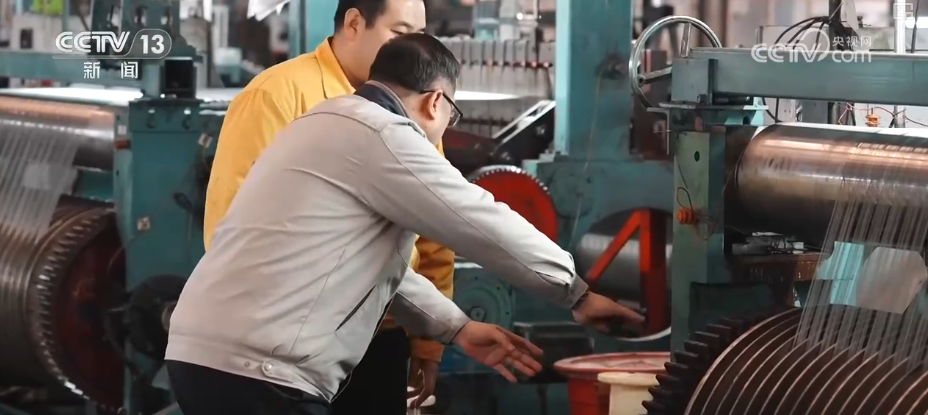
共享智造理顺丝网产业生态
Jing Ji Ri Bao· 2026-02-04 23:17
Core Insights - The article highlights the transformation of Hebei's Anping County, known as the "Silk Screen Capital of China," through collaborative innovation and shared resources in the metal mesh industry [1][2]. Group 1: Industry Overview - Anping County has over 16,000 silk screen enterprises, producing more than 6,000 specifications across 400 varieties, with 80% of the country's woven mesh exports originating from this region [1]. - The county's silk screen industry is characterized by low levels of intelligent equipment, a lack of leading enterprises, and severe homogenization competition, leading to challenges despite its large scale [1]. Group 2: Collaborative Innovation - The establishment of a "group enterprise" silk screen group aims to tackle high-end product development challenges through a shared model that includes joint investment, technology research, risk sharing, and benefit sharing [2]. - Significant advancements in product specifications have been achieved, such as reducing wire diameter from 13 microns to 9 microns and increasing tensile strength from 3,000 MPa to 4,500 MPa, resulting in a company revenue increase from 20 million to 80 million yuan [2]. Group 3: Equipment and Resource Sharing - Anping promotes equipment sharing to address the challenges faced by small and medium-sized enterprises, including the establishment of a joint venture for smart welding equipment and a shared surface treatment industrial park that reduces costs by 25% [3]. - The introduction of automated welding lines has significantly improved production efficiency, allowing for the formation of a railway guardrail in just 2 minutes with only four inspection personnel required [3]. Group 4: Quality Assurance and Support Services - The Anping provincial quality supervision and inspection center for silk screen products offers shared testing services, reducing inspection times from weeks to 1-3 working days [4]. - The establishment of shared industrial parks and resource pooling for raw materials has led to a reduction in procurement costs by 30 yuan per ton, with total collective procurement reaching nearly 200 million yuan [4]. Group 5: Future Development Plans - The county plans to focus on technological innovation, digital transformation, quality enhancement, and attracting leading enterprises to further advance the silk screen industry towards intelligent, green, and integrated development [4].
河北菜园供应北京菜篮 共享智造助企降本增效
Xin Lang Cai Jing· 2025-12-26 22:03
Group 1: Agricultural Development - Hebei has established a facility vegetable industry cluster around Beijing, achieving a 42.5% market share in Beijing's wholesale vegetable market by 2024 [5] - The province has cultivated nine key vegetable-growing counties, each with over 200,000 acres, and has built 183 vegetable bases in collaboration with Beijing, supplying over 500,000 tons annually [5] - Hebei promotes smart planting technologies, including intelligent temperature control and integrated water and fertilizer systems, to enhance traditional farming practices [5] Group 2: Urban Development - Shijiazhuang has constructed and opened 62 pocket parks this year, exceeding the target of 50, enhancing urban green spaces and improving residents' quality of life [8] - The parks are designed with unique themes, such as the "Lingyu Park," which integrates cultural elements into its landscape, promoting a blend of culture and environment [8] Group 3: Economic Growth and Innovation - Xiong'an New Area is progressing towards becoming a modern city with an annual investment of 200 billion yuan and a GDP growth rate of 17.1%, focusing on quality and sustainability [6] - Hebei's "shared intelligent manufacturing" initiative aims to upgrade county-level industrial clusters, addressing issues like small scale and low efficiency, with 107 clusters now covered by this model [10] - The province has established 194 shared factories, engaging 18,000 enterprises to improve operational efficiency, as seen in the Anping wire mesh cluster and Ningjin cable base [10] Group 4: Talent Acquisition - The 16th Hebei High-level Talent Introduction and Exchange Conference attracted over 13,000 talents from 263 universities, focusing on the province's eight key industries [11] - The event featured 25 quality technology projects for roadshows and invited financial institutions to facilitate collaboration, aiming to attract technology, projects, and capital to Hebei [11]
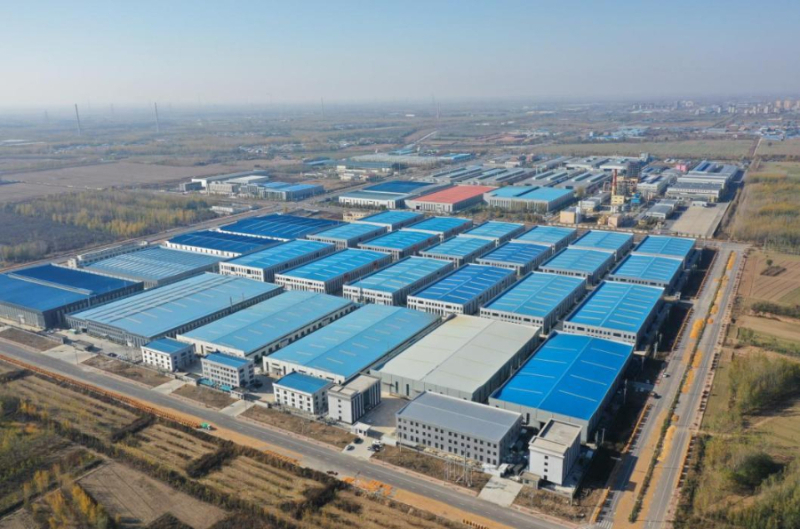
神州答卷|集群发展 串珠成链 创新赋能——河北省县域经济发展观察
Xin Hua Wang· 2025-12-23 01:34
Core Insights - Hebei Province is leveraging its historical strengths in county-level industrial clusters to drive economic development through innovation and efficiency improvements [1][25] - The province has established 107 provincial-level key characteristic industrial clusters, focusing on quality upgrades and cost reductions to support high-quality economic growth [1][11] Industrial Clusters: New Engines of Growth - The construction of the new industrial park in Xinhai Economic Development Zone is progressing, with an expected annual output value of 200 million yuan upon completion [2] - The focus on optimizing traditional industries through shared resources and technology exchange is enhancing operational efficiency and reducing costs [4][21] Innovation Empowerment - The cosmetic brush industry in Qingxian has seen significant growth, with annual production exceeding 500 million brushes and a market share of over 50% in China [6] - Local enterprises are collaborating with renowned cultural institutions and utilizing advanced technologies to enhance product quality and market appeal [6][12] Food Industry Development - Qiu County has developed a comprehensive food industry chain, attracting over 200 food enterprises and creating more than 10,000 jobs [11] - The integration of various food production processes is fostering local economic growth and enhancing the region's market competitiveness [11] Agricultural Innovation - The introduction of ice sweet potatoes in Baixiang County has significantly increased product value, with a full-chain digital agriculture system in place [12][14] - New technologies in mushroom cultivation are enabling year-round production, contributing to local economic development [16] Technological Advancements - Hebei Province is focusing on high-end manufacturing and technological innovation, with significant investments in automation and smart manufacturing processes [21][24] - The province aims to enhance the competitiveness of its industrial clusters through shared manufacturing capabilities and technological breakthroughs [25]
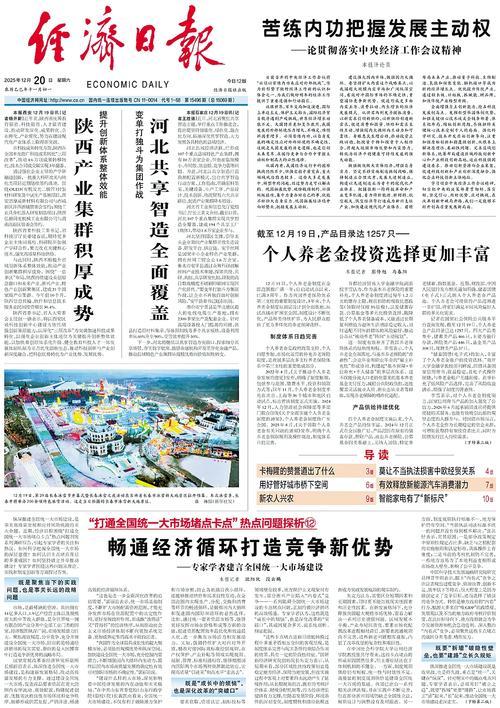
河北共享智造全面覆盖
Jing Ji Ri Bao· 2025-12-20 05:40
Core Viewpoint - Hebei Province is focusing on shared intelligent manufacturing to enhance county-level economies, addressing challenges such as small scale, scattered layout, low efficiency, and weak competitiveness [1][2] Group 1: Shared Intelligent Manufacturing Initiatives - Hebei has established 107 key county-level industrial clusters with over 100,000 enterprises, aiming to create a new resource allocation model through shared intelligent manufacturing [1] - The province has implemented a shared intelligent manufacturing action plan and guidelines, outlining six key shared paths: raw material procurement, key equipment, production processes, product design, technological innovation, and logistics trade [1] - As of now, all 107 key clusters in Hebei have achieved full coverage of shared intelligent manufacturing, with 194 shared factories established, engaging 18,000 enterprises [1] Group 2: Case Studies and Local Initiatives - Anping County, known for its wire mesh industry, has over 16,000 enterprises and is utilizing crowdfunding for research to solve technological challenges, promoting a collaborative research and development mechanism [1] - In Ningjin County, the largest wire and cable production base in North China, over 2,300 production and supporting enterprises have increased equipment utilization from 60% to 90% and improved delivery efficiency by 50% through shared platforms [2] Group 3: Future Directions - Hebei plans to continue leveraging shared intelligent manufacturing as a breakthrough point, exploring detailed shared scenarios and encouraging financial institutions to develop differentiated financial products [2] - The goal is to transition county-level characteristic industrial clusters from scale advantages to value-driven success [2]
变单打独斗为集团作战 河北共享智造全面覆盖
Jing Ji Ri Bao· 2025-12-19 22:25
Group 1 - The core focus of Hebei Province is on shared intelligent manufacturing, emphasizing smart, green, and integrated development to enhance county-level economies [1] - Hebei has established 107 key county-level industrial clusters with over 100,000 enterprises, but faces challenges such as small scale, scattered layout, low efficiency, and weak competitiveness [1] - The province has implemented a shared intelligent manufacturing action plan that includes six major shared paths: raw material procurement, key equipment, production processes, product design, technological innovation, and logistics trade to reduce costs and improve efficiency [1] Group 2 - As of now, all 107 key clusters in Hebei have achieved full coverage of shared intelligent manufacturing, with 194 shared factories established, engaging 18,000 enterprises [1] - The county of Anping, known for its wire mesh industry, has developed a collaborative research mechanism to address technological challenges, resulting in the domestication of high-precision stainless steel printing nets [1] - In Ningjin County, the largest wire and cable production base in North China, the utilization rate of equipment has increased from 60% to 90%, and delivery efficiency has improved by 50% through shared platforms [2]