文化研究

Search documents
青年学子走进牛河梁探寻红山根脉
Liao Ning Ri Bao· 2026-02-10 01:11
Group 1 - The core design elements of the cultural blind box are derived from the distinctive curled body shape of the "Jade Pig Dragon" and the unique ancient texture of the goddess temple clay sculptures, which can serve as creative materials for digital illustrations [1] - The social practice team from Chaoyang Normal University, named "Exploring the Roots of Hongshan Culture, Touching the Dawn of Civilization," consists of three groups focusing on IP cultural creation, cultural exploration, and cultural tourism empowerment, working collaboratively to advance research tasks [1] - The team members acted as "archaeological site observers," closely observing the physical remains of Hongshan culture, which deepened their understanding of the ancient wisdom behind the artifacts and enhanced their sense of responsibility for cultural heritage and local tourism development [1] Group 2 - Participants expressed that the practice allowed them to step out of the classroom and engage with history, fostering a deeper appreciation for local culture and enhancing cultural confidence and national pride [2] - The activity is part of the university's winter vacation social practice series, which aims to leverage the rich historical and cultural resources of Liaoxi to create more practical platforms for students [2] - The initiative encourages young students to integrate knowledge and action, helping them grow into professionals with both expertise and cultural sentiment in the new era [2]
千载匠心 剑证非凡
Xin Lang Cai Jing· 2026-01-17 07:28
Core Viewpoint - The article discusses the advanced bronze weapon manufacturing techniques during the Eastern Zhou period in China, highlighting the significance of these technologies in the context of warfare and the status of nobility. Group 1: Bronze Weapon Technologies - The article identifies three key technologies of bronze weaponry from the Eastern Zhou period: diamond-pattern decoration, bronze composite sword technology, and concentric circle sword pommel technology [6][8][9]. - The diamond-pattern decoration, often found on weapons owned by nobility, is characterized by intersecting double lines and various geometric shapes, indicating high status [6][7]. - The bronze composite sword technology involves a combination of different bronze alloys to achieve both high hardness for sharp edges and flexibility to prevent breakage, showcasing an advanced understanding of material properties by ancient craftsmen [8]. Group 2: Historical Significance and Research - The Shanghai Museum and Shanghai Institute of Materials Research have collaborated to study the diamond-pattern technology, revealing that ancient Chinese craftsmen had developed surface alloying techniques over 2,500 years ago, which provided both decorative and anti-corrosive benefits [7]. - The concentric circle pommel, a hallmark of high-quality swords, features intricate designs that are difficult to replicate with modern machinery, indicating a sophisticated level of craftsmanship in ancient China [9].

越王勾践剑 吴王夫差矛 用了哪些铸造技术?
Xin Lang Cai Jing· 2026-01-10 07:05
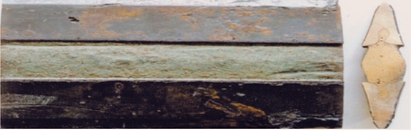
Core Viewpoint - The article discusses the advancements in bronze weapon technology during the Eastern Zhou period in China, highlighting the significance of Wu and Yue states in weapon manufacturing and the upcoming lecture on this topic by Shanghai Museum researcher Lian Haiping [4]. Group 1: Historical Context - The development of bronze weapons in China reached significant progress during the Eastern Zhou period due to the need for warfare among feudal lords [4]. - Wu and Yue states were renowned for their weapon technology, as evidenced by the excavated artifacts such as the Sword of King Goujian and the Spear of King Fuchai [5]. Group 2: Technological Innovations - The article identifies three exceptional technologies in Wu and Yue bronze weaponry: bronze composite sword technology, diamond-pattern decoration technology, and the concentric circle technique at the sword's hilt [5]. - The bronze composite sword features a spine made of low-tin bronze for flexibility and blades made of high-tin bronze for hardness, showcasing an advanced understanding of alloy properties by ancient Chinese craftsmen [5]. Group 3: Decorative Techniques - The article notes that exquisite decorative techniques were employed in Wu and Yue weapons, including concentric circles, gold and silver inlay, and intricate surface patterns [5]. - The concentric circle design at the sword's hilt is highlighted for its complexity, with some featuring up to 11 ridges, demonstrating advanced casting techniques that were not replicable by modern machinery [6].

管子研究重大工程启动
Da Zhong Ri Bao· 2025-12-12 01:15
Core Viewpoint - The major project on Guanzi research was launched on December 9 at Shandong University of Technology, aiming to enhance the understanding and contemporary value of Guanzi thought while promoting the creative transformation and innovative development of excellent traditional Chinese culture [1] Group 1: Project Objectives - The meeting emphasized the need to implement the important speeches and directives of General Secretary Xi Jinping during his visit to Shandong, using the Guanzi research project to promote the "two innovations" of Qi culture [1] - The project aims to strengthen the construction of a culturally strong province and contribute to the establishment of an independent knowledge system in Chinese philosophy and social sciences, as well as promote the exchange and mutual learning of world civilizations [1] Group 2: Research Focus - The project will follow the rules and realities of humanities and social sciences research, ensuring a long-term planning approach for Guanzi research [1] - It will emphasize problem-oriented and practice-oriented research, focusing on textual studies to address contemporary issues [1] - The project will highlight an international perspective, enhancing comparative studies to promote cultural exchange and increase the influence of Chinese culture [1] - There will be a focus on interdisciplinary and cross-field research, employing various research methods to improve depth and efficiency [1] Group 3: Cultural Promotion - The initiative aims to vigorously promote the "two innovations" of Guanzi culture, enriching artistic expressions and enhancing the protection and utilization of historical sites [1] - It seeks to integrate Guanzi culture into social life, making it more relevant and accessible to the public [1] Group 4: Academic Collaboration - Experts and scholars from various prestigious institutions, including Peking University, Tsinghua University, and others, participated in discussions and exchanges during the meeting [1]
《中国·长江文化发展城市指数报告2025》发布
Nan Jing Ri Bao· 2025-11-24 02:37
Core Insights - The "China Yangtze Culture Development City Index Report 2025" highlights Nanjing as one of the seven "benchmark cities" for cultural development along the Yangtze River [1][2] - The report indicates a positive trend in the cultural development index, showcasing a virtuous cycle between economic growth and cultural preservation in benchmark cities [1] Group 1: Cultural Resources and Research - Nanjing and Wuhan are noted for their rich cultural resources and high research activity, with Nanjing's universities playing a significant role in cultural studies [2] - Nanjing has hosted numerous high-profile academic events and is actively integrating resources to expand cultural initiatives, such as the upcoming "Nanjing Yangtze Culture Civilization Practice Belt" [2] Group 2: Industrial Development and Regional Collaboration - The Yangtze River Delta is emerging as a cultural industry hub, with a shift from simple resource aggregation to deep development characterized by regional collaboration, innovative business models, and ecological empowerment [2] - The report emphasizes the importance of integrating cultural tourism within the Yangtze River basin, moving towards a more interconnected and innovative approach [2] Group 3: Ecological Development - The report highlights the integration of new development concepts along the Yangtze River, showcasing initiatives like the establishment of a provincial-level natural protection zone for the Yangtze River dolphin and a strict "ten-year fishing ban" [2] - These ecological efforts have led to an increase in the dolphin population, demonstrating effective conservation outcomes [2] Group 4: Nanjing's Cultural Identity and Innovation - Nanjing is described as "an ancient capital with new charm," focusing on ecological restoration, cultural symbol refinement, and the integration of cultural practices into daily life [2] - The city aims to stimulate innovation and release cultural value while establishing itself as a practical benchmark for cultural development [2]
AI焕活甲骨文“归乡”之路
Qi Lu Wan Bao· 2025-11-18 02:27
Core Insights - The Anyang Yin Ruins have unearthed over 160,000 pieces of oracle bone inscriptions, which are now scattered across more than ten countries and regions [1] - A collaboration between Anyang Normal University’s Oracle Bone Script Information Processing Key Laboratory and institutions such as the National Library of France and the Musée Cernuschi has initiated the digitization of oracle bones held in Europe, fulfilling the goal of "digital return" for these artifacts [1] - The processed data has been organized into high-definition images and enhanced full-information data models, which are uploaded to the "Yin Qi Wen Yuan" AI collaborative platform, making it accessible to oracle bone enthusiasts and researchers worldwide [1]
刘震出任北京大学现代文化研究中心联席理事长
Bei Jing Shang Bao· 2025-11-10 09:33
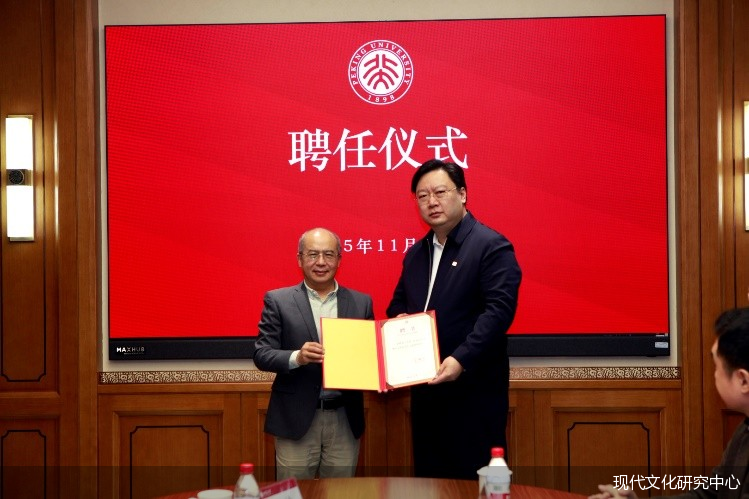
Core Viewpoint - The appointment ceremony for the co-chairman of the Modern Culture Research Center at Peking University was recently held, highlighting the center's role in cultural research and innovation [1][3] Group 1 - The Modern Culture Research Center is affiliated with the Department of History at Peking University and focuses on modern cultural phenomena, cultural heritage and innovation, and the cultural industry [3] - The center aims to provide theoretical support for the transmission of excellent culture, promote cultural innovation, and enhance cultural confidence [3] - It actively undertakes cultural research projects from the government and enterprises, aligning with the cultural industry to fulfill its social service responsibilities [3]
【省文化和旅游厅】陕西6个项目获国家社科基金艺术学年度立项
Shan Xi Ri Bao· 2025-09-29 22:56
Core Viewpoint - The Ministry of Culture and Tourism has announced the 2025 National Social Science Fund Art Project list, with six projects from Shaanxi Province being selected, showcasing innovative research in various artistic fields [1] Group 1: Selected Projects - The selected projects cover multiple artistic domains and reflect the depth and novelty of research directions, indicating Shaanxi academia's insight into cultural heritage and innovation [1] - The six projects include: - Shaanxi Normal University: "Research on the Subjectivity of Chinese Oil Painting and Its Discourse System in the Era" (Key Project) - Xi'an University of Engineering: "Research on the Identification and Digital Restoration of Japanese Tang Dynasty Silk Weaving Treasures" (General Project) - Shaanxi Normal University: "Research on the Cross-Media Symbol Dissemination of Chinese Stories in the Digital Age" (General Project) - Shaanxi University of Science and Technology: "Research on the Exchange of Traditional Handicrafts between China and Persia from the Perspective of Civilizational Mutual Learning" (Youth Project) - Xi'an University of Architecture and Technology: "Research on the Origin and Comparative Study of Flower Drum Opera between Hunan and Shaanxi" (Western Project) - Northwest A&F University: "Value Evaluation of Yellow River Cultural Heritage and Construction of Cultural Tourism Brand" (Western Project) [1] Group 2: Support and Collaboration - The Shaanxi Provincial Department of Culture and Tourism will provide comprehensive support for these projects to ensure timely and effective research outcomes [1] - The department aims to strengthen collaboration with universities and research institutions, encouraging experts and scholars to produce more forward-looking and influential results to enhance the competitiveness and influence of Shaanxi's cultural tourism [1]
习近平文化思想国际学术研讨会在广州举行黄坤明傅华王伟中洪大用出席
Nan Fang Ri Bao Wang Luo Ban· 2025-09-28 02:41
Core Ideas - The Xi Jinping Cultural Thought International Academic Seminar held in Guangzhou focuses on promoting cultural prosperity through mutual learning among civilizations [1][2] - The seminar emphasizes the importance of Xi Jinping Cultural Thought as a guiding ideology for cultural development and international humanistic exchange [1][3] Group 1: Key Statements from Officials - Huang Kunming highlighted that Xi Jinping Cultural Thought serves as a guiding principle for building a culturally strong nation and contributes to a harmonious world of diverse civilizations [1] - Fu Hua stated that Xi Jinping Cultural Thought is a theoretical summary of the Communist Party's cultural construction practices and aims to promote human civilization progress globally [2] - Gao Song from Sun Yat-sen University emphasized the need to explore effective paths for cultural thought dissemination in higher education, aligning with national strategic needs [2] Group 2: Perspectives on Civilizational Exchange - Tursunali Kuziyev from Uzbekistan stressed the growing necessity of promoting mutual learning among civilizations for establishing equal and understanding partnerships [2] - Zhang Zhiqiang from the Chinese Academy of Social Sciences noted that the prosperity of civilizations and human progress are inseparable from civilizational exchanges [3] - Participants expressed that discussing Xi Jinping Cultural Thought enhances international exchanges and mutual learning, advocating for shared human values and addressing global common issues [3] Group 3: Seminar Structure and Reports - The seminar was co-hosted by the Xi Jinping Cultural Thought Research Center, Xinhua News Agency, Sun Yat-sen University, and the Guangdong Provincial Publicity Department [4] - A think tank report titled "Theory of Civilizational Development - Constructing a New Civilization View Centered on Development" was released during the forum [4] - Four sub-forums were held focusing on cultural prosperity, heritage protection, media transformation in the context of artificial intelligence, and global civilizational exchange [4]
从故宫古建筑看古人的“防火信仰”
Qi Lu Wan Bao· 2025-08-21 21:27
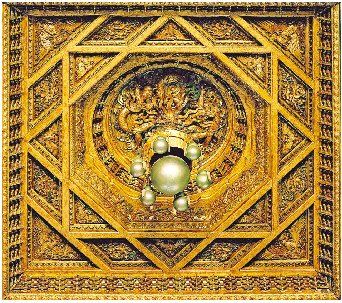
Core Insights - The article discusses the historical fire prevention methods and cultural beliefs related to fire safety in the Forbidden City, emphasizing the unique architectural features and symbolic elements designed to mitigate fire risks [3][11]. Group 1: Fire Prevention in Architecture - The Forbidden City, known as the largest and best-preserved wooden structure complex, has a history of fire incidents, prompting the development of ancient fire prevention wisdom [3]. - Architectural elements such as the "藻井" (caisson) are believed to have fire-repelling properties, with designs incorporating water plants symbolizing fire avoidance [5][6]. - The "螭吻" (chihwen), a dragon-shaped ornament on rooftops, evolved from earlier fire prevention symbols and is intended to ward off fire [7][8]. Group 2: Cultural Beliefs and Practices - Historical texts indicate that the design of architectural features like the caisson and the use of water plant motifs were rooted in cultural beliefs about fire prevention [5][6]. - The belief that certain designs could prevent fire is reflected in the writings of ancient scholars, linking architectural choices to spiritual and cultural practices [5][6]. - The avoidance of hooks in the character "门" (door) on plaques is a cultural practice stemming from a historical fire incident, showcasing the intersection of language and fire prevention beliefs [13][14]. Group 3: Historical Context and Changes - The article notes that the Hall of Supreme Harmony has suffered multiple fires, leading to its reconstruction and changes in architectural design to enhance fire safety [11][12]. - The number of decorative beasts on the Hall's roof was adjusted to include ten, a unique feature attributed to its fire history, with the addition of the "行什" (Xingshi) symbolizing protection from lightning [11][12]. - The historical context of fire incidents in the Forbidden City has influenced architectural decisions and cultural practices over time, reflecting a continuous effort to mitigate fire risks [11][15].