越王勾践剑

Search documents
博物馆里的年礼
Xin Lang Cai Jing· 2026-02-20 07:17
Core Viewpoint - The article reflects on the significance of the ancient artifact, the Sword of King Goujian, as a symbol of resilience and historical legacy, connecting past and present through the lens of modern youth engagement with history [1][2][3] Group 1: Historical Significance - The Sword of King Goujian, dating back 2,500 years, is presented as a profound artifact that embodies the spirit and determination of the ancient king, representing a narrative of perseverance and ambition [2] - The sword's craftsmanship, including its sharpness and intricate design, serves as a testament to human will and the ability to transcend time, highlighting the intersection of history and material culture [2] Group 2: Modern Engagement - The contemporary project of replicating historical artifacts by students is framed as a meaningful educational experience, allowing them to connect with history and understand the cultural significance of resilience [3] - The act of creating replicas using modern materials is portrayed as a way for the younger generation to engage with and appreciate their heritage, transforming historical study into a living dialogue [3] Group 3: Cultural Reflection - The juxtaposition of the ancient sword and the modern setting illustrates a continuous thread of history that remains relevant, emphasizing the importance of cultural artifacts in shaping collective memory and identity [3] - The article suggests that the experience of visiting the museum and engaging with historical objects provides a deeper understanding of cultural values and the enduring spirit of a nation [3]
不买卡地亚的贵妇们,在老铺黄金门口排队
创业邦· 2026-02-14 00:16
Core Viewpoint - The article discusses the rapid growth and market positioning of Laopu Gold, highlighting its significant sales increase and consumer interest driven by rising gold prices and a shift in consumer preferences towards gold jewelry as an investment [5][9][20]. Group 1: Company Performance - Laopu Gold's stock price surged over 23 times since its listing on the Hong Kong Stock Exchange in June 2024, reaching a market capitalization of over 180 billion HKD [5][20]. - The company's revenue grew from 3.18 billion CNY in 2023 to 12.35 billion CNY in 2025, representing a staggering growth rate of 251% [10]. - The number of Laopu Gold's members increased from 150,000 at the end of 2023 to 480,000 in just over a year, indicating a rapid expansion of its consumer base [9][10]. Group 2: Market Dynamics - Laopu Gold's pricing strategy, which includes regular price adjustments, has contributed to its high profit margins, with a gross margin of over 40% historically [11][12]. - The company has positioned itself against established luxury brands like Cartier and Bvlgari, focusing on high-end retail locations to attract affluent consumers [15][16]. - The demand for gold jewelry has surged, with consumers increasingly viewing it as a store of value, leading to long queues at Laopu Gold's stores [5][9]. Group 3: Consumer Behavior - Consumers are shifting their preferences from traditional luxury brands to gold jewelry, with many now prioritizing the investment potential of gold over other luxury items [9][14]. - The perception of gold jewelry as both an accessory and an investment has gained traction, particularly among younger consumers [9][19]. - Laopu Gold's products are perceived as having high value due to their craftsmanship and design, despite their higher price points compared to other brands [9][12]. Group 4: Competitive Landscape - Laopu Gold faces increasing competition from emerging brands in the gold jewelry market, which are beginning to capture market share [21][22]. - The company has a significant opportunity for expansion, with potential for more retail locations and a growing consumer base [21]. - Concerns exist regarding the sustainability of Laopu Gold's growth, particularly if gold prices stabilize or decline, which could impact consumer demand and pricing strategies [24][25].


千载匠心 剑证非凡
Xin Lang Cai Jing· 2026-01-17 07:28
Core Viewpoint - The article discusses the advanced bronze weapon manufacturing techniques during the Eastern Zhou period in China, highlighting the significance of these technologies in the context of warfare and the status of nobility. Group 1: Bronze Weapon Technologies - The article identifies three key technologies of bronze weaponry from the Eastern Zhou period: diamond-pattern decoration, bronze composite sword technology, and concentric circle sword pommel technology [6][8][9]. - The diamond-pattern decoration, often found on weapons owned by nobility, is characterized by intersecting double lines and various geometric shapes, indicating high status [6][7]. - The bronze composite sword technology involves a combination of different bronze alloys to achieve both high hardness for sharp edges and flexibility to prevent breakage, showcasing an advanced understanding of material properties by ancient craftsmen [8]. Group 2: Historical Significance and Research - The Shanghai Museum and Shanghai Institute of Materials Research have collaborated to study the diamond-pattern technology, revealing that ancient Chinese craftsmen had developed surface alloying techniques over 2,500 years ago, which provided both decorative and anti-corrosive benefits [7]. - The concentric circle pommel, a hallmark of high-quality swords, features intricate designs that are difficult to replicate with modern machinery, indicating a sophisticated level of craftsmanship in ancient China [9].
越王勾践剑 吴王夫差矛 用了哪些铸造技术?
Xin Lang Cai Jing· 2026-01-10 07:05
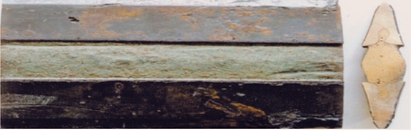
Core Viewpoint - The article discusses the advancements in bronze weapon technology during the Eastern Zhou period in China, highlighting the significance of Wu and Yue states in weapon manufacturing and the upcoming lecture on this topic by Shanghai Museum researcher Lian Haiping [4]. Group 1: Historical Context - The development of bronze weapons in China reached significant progress during the Eastern Zhou period due to the need for warfare among feudal lords [4]. - Wu and Yue states were renowned for their weapon technology, as evidenced by the excavated artifacts such as the Sword of King Goujian and the Spear of King Fuchai [5]. Group 2: Technological Innovations - The article identifies three exceptional technologies in Wu and Yue bronze weaponry: bronze composite sword technology, diamond-pattern decoration technology, and the concentric circle technique at the sword's hilt [5]. - The bronze composite sword features a spine made of low-tin bronze for flexibility and blades made of high-tin bronze for hardness, showcasing an advanced understanding of alloy properties by ancient Chinese craftsmen [5]. Group 3: Decorative Techniques - The article notes that exquisite decorative techniques were employed in Wu and Yue weapons, including concentric circles, gold and silver inlay, and intricate surface patterns [5]. - The concentric circle design at the sword's hilt is highlighted for its complexity, with some featuring up to 11 ridges, demonstrating advanced casting techniques that were not replicable by modern machinery [6].

文博日历丨一把青铜戈存档春秋时期的艺术字
Yang Shi Xin Wen· 2025-11-26 01:51
Core Viewpoint - The bronze dagger, dating back over 2000 years, features unique inscriptions and represents significant historical evidence related to the Jin, Wu, and Chu states during the Spring and Autumn period [6][13]. Group 1: Historical Significance - The bronze dagger is a high-quality artifact from the late Spring and Autumn period, showcasing exquisite craftsmanship and a sharp blade [6]. - It bears seven well-preserved gold-inlaid inscriptions, including the name "Wang" and the phrase "Wang Zi Yu Zhi Yong Ge," indicating it was used by the Wu King Liao before his ascension [10][13]. - The dagger serves as important physical evidence of the "Alliance of Wu to Control Chu" strategy, highlighting the cultural exchange between the southern Wu state and the northern Jin state during their rivalry [16][17]. Group 2: Artistic Features - The inscriptions on the dagger are crafted in a special artistic font known as "Bird-Worm Seal," which incorporates bird and insect motifs, popular in the southern states during the Spring and Autumn period [16]. - This unique font not only serves a writing function but also adds decorative value, enhancing the dagger's luxurious appearance [17]. - Similar artistic styles are found in other ancient artifacts, such as the famous "Sword of Goujian," which also features inscriptions in Bird-Worm Seal, showcasing the aesthetic and cultural significance of such designs in ancient China [17].

湖北省博物馆称未授权发行与越王勾践剑相关文创!系镇馆之宝
Nan Fang Du Shi Bao· 2025-08-08 15:46
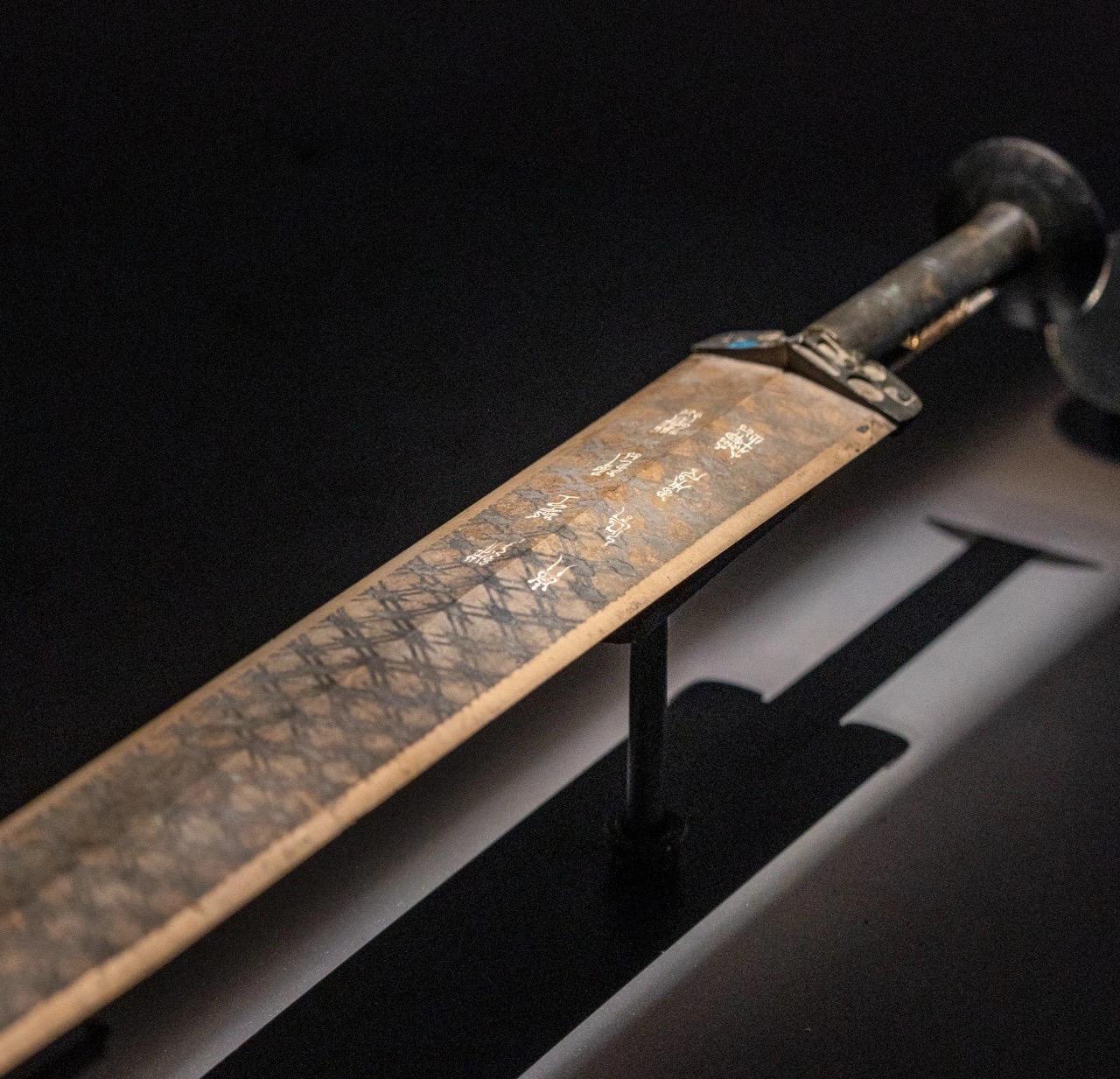
Core Viewpoint - The Hubei Provincial Museum has announced that it has not authorized any entity to issue or sell digital assets related to the "Sword of King Goujian" in 2025, asserting that any such products are not associated with the museum and legal action may be pursued for infringement [1][3]. Group 1: Museum's Announcement - The Hubei Provincial Museum emphasizes that the "Sword of King Goujian" is one of its top ten treasures and has not authorized any sales or distribution of related digital assets for 2025 [1]. - The museum warns that any unauthorized products related to the "Sword of King Goujian" will be considered infringing, and the museum reserves the right to take legal action [1]. Group 2: Description of the Sword - The "Sword of King Goujian" measures 55.6 centimeters in length and 5 centimeters in width, featuring a unique design with a round disc-shaped tip and 11 finely crafted concentric circles [3]. - The sword is adorned with black diamond patterns and has inscriptions in bird seal script, stating "Sword made by King Goujian for personal use" [3]. - Renowned for its exquisite craftsmanship, the sword has remained free of rust and retains clear patterns after over 2500 years, earning the title of "the best sword in the world" [3].
美归还的中国国宝,刺痛了多少中国人
凤凰网财经· 2025-06-17 13:28
Core Viewpoint - The article emphasizes the significance of cultural heritage and the increasing interest of Chinese people in their historical artifacts, particularly through museum visits and the return of lost treasures [4][6][11]. Group 1: Cultural Heritage and Artifacts - The Smithsonian Institution returned the lost artifacts "Wuxing Ling" and "Gongshou Zhan" to China after 79 years [2][3]. - Over 10 million cultural relics have been lost from China since 1840, many of which are now housed in major museums like the British Museum and the Metropolitan Museum of Art [4]. - The return of these artifacts symbolizes the historical memory of the Chinese nation and its journey towards cultural revival [6]. Group 2: Public Interest in Museums - There is a growing trend among Chinese people to visit museums, especially during holidays, with over 70 million visitors reported during a recent holiday [9]. - Major attractions included the Terracotta Army Museum with over 420,000 visitors, the Forbidden City with over 650,000, and the Chengdu Museum with over 2.06 million [9]. - Cambridge professor Martin expressed admiration for the Chinese people's connection to their cultural artifacts, highlighting the stories each piece tells [11]. Group 3: The Importance of Art and Aesthetics - The article discusses the emotional and historical significance of various artifacts, such as the Jiahu bone flute and the Terracotta Warriors, which connect modern viewers to ancient civilizations [13][17]. - The narrative emphasizes that understanding these artifacts enriches one's appreciation of Chinese history and culture [20][28]. Group 4: Promotion of "The Complete Book of Chinese National Treasures" - The article promotes "The Complete Book of Chinese National Treasures," which features over 1,000 artifacts from 50 museums, aiming to provide a comprehensive view of 10,000 years of Chinese civilization [28][70]. - The book is described as a treasure trove for art lovers, offering high-quality images and detailed descriptions of each artifact [36][70]. - It is marketed as an essential resource for both children and adults to enhance their understanding of Chinese culture and history [144][145].
湖北文旅“上新”新场景 入境游订单量激增
Zhong Guo Xin Wen Wang· 2025-05-05 16:06
Group 1 - Hubei province introduced over 100 new cultural and tourism consumption scenarios and products during the "May Day" holiday, significantly boosting the tourism market [1] - Wuhan saw a 70% year-on-year increase in inbound travel orders during the holiday, with 11 cruise ships offering customized Yangtze River light shows that were popular among overseas tourists [1] - Yichang's inbound tourism market performed well, with daily Southeast Asian charter flights and an average of 6 European and American tour groups visiting popular attractions like the Three Gorges Dam [1] Group 2 - Major tourist attractions in Hubei experienced a surge in visitors, with the Yellow Crane Tower and other sites nearing capacity, leading to flow restrictions [2] - Wudang Mountain received 161,500 visitors, a 40.68% increase year-on-year, while the Red Cliffs battlefield welcomed 105,700 visitors, marking an 80% increase [2] - During the holiday, Hubei's A-level tourist attractions received 17.81 million visitors, a 24.61% increase, and star-rated hotels had an average occupancy rate of 75.46%, up by 7.12 percentage points [2]
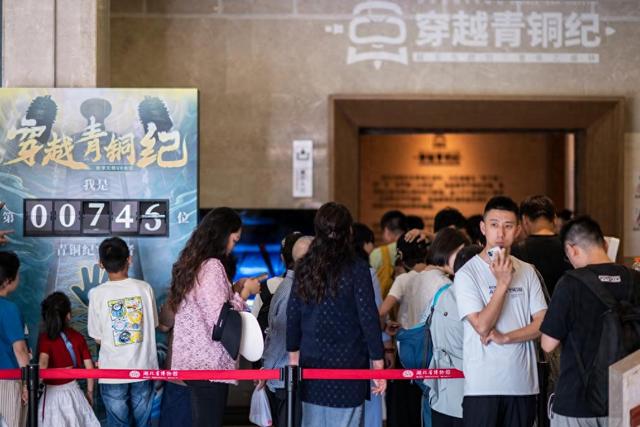
新时代中国调研行之文化中华丨穿越青铜纪
Bei Jing Ri Bao Ke Hu Duan· 2025-04-30 03:44
Core Viewpoint - The Hubei Provincial Museum has launched a new VR experience project titled "Through the Bronze Age," allowing visitors to interact with historical artifacts like the Sword of Goujian and the Zeng Hou Yi chime, creating an immersive cultural experience [1][3][5]. Group 1: Project Overview - The VR theater spans 1,000 square meters, where visitors can don VR headsets to explore the details of the Bronze Age in China, guided by a virtual creature [3]. - The project features over 30,000 model assets, including characters, artifacts, and architecture, with a focus on high-fidelity restoration of museum collections [5][8]. - The project celebrates the 60th anniversary of the discovery of the Sword of Goujian, showcasing a "giant sword spectacle" that magnifies the sword by 10,000 times [5][8]. Group 2: Cultural Significance - The project represents a technological innovation in cultural heritage and aims to pass down the spirit of ancient artifacts to contemporary audiences [7]. - The team behind the project has dedicated nearly 400 days to its development, emphasizing the importance of craftsmanship and historical legacy [7][8]. Group 3: Technical Aspects - The project is produced by the Hubei Provincial Museum in collaboration with local cultural technology companies, utilizing award-winning technology previously used in notable animations [8]. - The music for the experience is developed in partnership with a team known for their work on the game "Black Myth: Wukong," enhancing the immersive experience [8]. Group 4: Visitor Engagement - The VR project is now available for ticket reservations, expected to attract significant interest during the upcoming May Day holiday [10].