
生物化工

Search documents
1.5万吨生物基PDO项目备案!全球布局企业有哪些
DT新材料· 2026-03-26 16:03
Core Insights - The article emphasizes the importance of sustainable materials and green fuels, focusing on biobased and recycled chemicals, materials, and green fuels to tell China's sustainable story [2] Group 1: Project Developments - Shanxi Changqing Biotechnology Co., Ltd. has invested CNY 203 million in a biobased PDO project with an annual production capacity of 15,000 tons, which has recently passed the filing process [5] - The project is a continuation of a successful collaboration between Changqing Biotechnology and Qinghua Zhixing, which previously established a 20,000-ton sugar-based PDO project in 2022 [6] - The new PDO project will utilize existing lysine production facilities, marking a shift towards high-value biobased materials in traditional biomanufacturing [6] Group 2: Market Potential of PDO - 1,3-Propanediol (PDO) is a crucial chemical raw material with applications in cosmetics, food additives, and pharmaceuticals, primarily used as a polymer monomer for producing PTT (polytrimethylene terephthalate), which has a potential market exceeding 5 million tons and a potential value over CNY 100 billion [8] - The current mainstream market price for 1,3-PDO in China ranges from CNY 15,000 to CNY 22,000 per ton, with a target to reduce the price below CNY 15,000 to expand market demand for PTT [26] Group 3: Competitive Landscape - Major players in the biobased PDO market include DuPont and Dow, with Covation LLC being the largest global producer with a capacity of 77,000 tons per year [12][13] - Qinghua Zhixing is noted for its unique dual-pathway PDO fermentation technology, achieving industrial-scale production [17] - Other notable companies include Huaheng Biotechnology, which has established a 50,000-ton PDO production base, and Hengcarbon Technology, which has developed a revolutionary PDO production method with a capacity of 15,000 tons [23][24] Group 4: Industry Trends and Events - The article highlights the upcoming Bio-based 2026 conference in Shanghai, which will focus on the biobased industry, featuring discussions on PDO and PTT, and showcasing various companies in the sector [31][36] - The demand for sustainable materials is shifting from optional to essential for brands, providing a clear demand anchor for the PDO industry chain [27]


盛虹集团,2000万取得山东大学生物基丁二酸技术,已完成200吨产业化示范
DT新材料· 2026-03-22 16:04
Core Viewpoint - The article highlights the successful transformation of a bio-based succinic acid production technology developed by Shandong University, which has been recognized as a typical case of technology transfer in higher education by the Ministry of Education. This technology addresses plastic pollution by enabling the production of biodegradable plastics, thus contributing to environmental sustainability [2][3]. Group 1: Technology Overview - The technology focuses on the production of succinic acid, a core monomer for biodegradable plastics such as PBS and PBST, which are gaining global attention as alternatives to traditional plastics [3]. - The team has developed a low pH fermentation process for succinic acid production, achieving international leading production indicators and simplifying the production process by eliminating the need for neutralization and acidification steps [4]. - The technology has completed pilot tests at a scale of 20 tons and is currently undergoing industrial demonstration with a target of achieving an annual economic benefit of 200 million yuan upon completion of the production line [5]. Group 2: Economic Impact - The transformation of this technology to Shenghong Holding Group has been valued at 20 million yuan, indicating significant commercial potential [4]. - The innovation not only enhances the efficiency of succinic acid production but also promotes the development of technology, talent, and industry integration, with nearly 20 professionals trained in the process [5]. Group 3: Team and Achievements - The project is led by Professor Qi Qingsheng and his team, who have made significant breakthroughs in bio-manufacturing and have successfully transferred their research outcomes to multiple enterprises, including Fortune 500 companies [6].

生物基产业洞察③:生物基1,5-戊二醇,下一个爆品?
DT新材料· 2026-03-19 16:06
Core Viewpoint - The article highlights the growing interest and investment in bio-based 1,5-pentanediol (1,5-PDO), emphasizing its potential as a sustainable alternative in the chemical industry, driven by increasing market demand and supportive policies [4][6][10]. Group 1: Market Demand and Growth - The global market for bio-based 1,5-PDO is projected to grow from approximately $200 million in 2024 to $500 million by 2033, with a compound annual growth rate (CAGR) of 10.5% [7]. - The unique odd carbon chain structure of 1,5-PDO enhances the flexibility, hydrolysis resistance, weather resistance, and low-temperature adaptability of downstream materials, making it increasingly sought after in high-performance and eco-friendly applications [7][10]. Group 2: Investment and Development - Companies like Seabear and Yinuo Biotech are making significant investments in bio-based 1,5-PDO projects, with Seabear investing 1.24 billion yuan to build a facility in Taixing and Yinuo Biotech raising 660 million yuan for its project [5]. - The U.S. company Pyran has raised approximately $12.5 million since 2018 to advance its bio-based 1,5-PDO production, which has received USDA certification [5]. Group 3: Synthesis Challenges and Policy Support - The synthesis of bio-based 1,5-PDO faces engineering challenges, with two main pathways: chemical synthesis and biological synthesis, each with its own advantages and drawbacks [9][11]. - The U.S. Department of Energy reports that bio-based chemicals can reduce greenhouse gas emissions by up to 70% compared to petroleum-based alternatives, driving demand for bio-based materials [10]. Group 4: Global Trends and Industry Shifts - The global production landscape is shifting towards bio-based routes and "Made in China" initiatives, with companies like Yuanli and Boju exploring low-carbon sustainable product development [18]. - The article indicates that bio-based 1,5-PDO is at a critical juncture, transitioning from technological breakthroughs to large-scale commercial applications, aligning with national policies promoting the upgrade of the furfural industry [19].
江苏蓝丰生物化工股份有限公司 关于持股5%以上股东减持股份 至5%以下暨披露简式权益 变动报告书的提示性公告
Zhong Guo Zheng Quan Bao - Zhong Zheng Wang· 2026-02-26 22:37
Core Viewpoint - The major shareholder, Hainan Wenqin Private Fund Management Partnership, has reduced its stake in Jiangsu Lanfeng Biological Chemical Co., Ltd. to below 5%, resulting in a change in its shareholder status [2][3]. Group 1: Shareholder Reduction Details - Hainan Wenqin held 33,610,000 shares, representing 8.99% of the total share capital as of September 27, 2023, and has reduced its holdings to 18,779,677 shares, which is 4.99999% of the current total share capital [4][15]. - The reduction occurred through block trades and centralized bidding, with a total of 9,795,589 shares sold from September 4 to September 9, 2025, and an additional 3,564,760 shares sold on February 13, 2026 [4][15]. - The final reduction of 1,448,974 shares occurred on February 24 and 25, 2026, leading to Hainan Wenqin no longer being classified as a major shareholder [4][15]. Group 2: Impact on Company Control - The reduction in Hainan Wenqin's shareholding will not lead to a change in the company's controlling shareholder or actual controller [3][6]. - The company's governance structure and ongoing operations will remain unaffected by this change in shareholding [6][16]. Group 3: Share Capital Changes - The company's total share capital increased from 373,936,278 shares to 375,593,978 shares due to the implementation of an equity incentive plan, which passively diluted Hainan Wenqin's shareholding percentage [5][15]. - The changes in shareholding were disclosed in accordance with relevant laws and regulations, ensuring compliance with the requirements for shareholder reductions [6][16].

真金白银! 最高5000万! 黑龙江生物制造政策,支持生物医药、生物化工、生物农业
合成生物学与绿色生物制造· 2026-02-26 12:54
Core Viewpoint - The article discusses the recent policies released by the Heilongjiang Provincial Government to support the high-quality development of the biomanufacturing industry, focusing on enhancing technological innovation, promoting industrial expansion and quality improvement, supporting key areas, and increasing resource guarantees [2]. Group 1: Enhancing Technological Innovation - Support for the construction of innovation platforms in biomanufacturing, including collaboration with universities and research institutions [3]. - Financial support for key technology research projects in biomanufacturing, with provincial funding for approved projects [3]. - Encouragement for enterprises to increase R&D investment, with subsidies for qualifying investments over 500,000 yuan [3]. - Support for the establishment of pilot testing platforms, with potential subsidies based on performance evaluations [3]. - Promotion of technology transfer activities, providing funding for contracts over 1 million yuan [3]. Group 2: Promoting Industrial Expansion and Quality Improvement - Financial support for new biomanufacturing projects with fixed asset investments over 20 million yuan, offering up to 50 million yuan in subsidies [4]. - Assistance for equipment upgrades in biomanufacturing enterprises to enhance production efficiency [4]. - Support for digital transformation using AI and big data, with subsidies for recognized digital workshops and smart factories [4]. - Encouragement for leading biomanufacturing enterprises to form innovation alliances to enhance collaboration and market expansion [4]. Group 3: Supporting Key Areas of Development - Financial incentives for new drug and high-end medical device development, with support based on clinical trial phases [5]. - Encouragement for the development of new food products, with rewards for approved new food materials [5]. - Support for the development of high-value biochemicals, with financial rewards for significant sales achievements [5]. Group 4: Increasing Resource Guarantees - Support for the construction of biomanufacturing parks and infrastructure, with potential bond funding [6]. - Assurance of key resource guarantees for biomanufacturing projects, including energy and land use [6]. - Strengthening financial support for biomanufacturing enterprises, including assistance for listing and innovative financing products [6]. - Enhancement of intellectual property protection for biomanufacturing innovations [7]. Group 5: Strengthening Talent Development - Encouragement for universities to develop relevant programs and facilitate talent acquisition in biomanufacturing [7]. - Support for research personnel to engage in innovation and technology transfer activities [7].

大力发展生物基化学品和材料!黑龙江发布生物制造产业政策措施!(附通知全文)
synbio新材料· 2026-02-26 06:58
Core Viewpoint - The article discusses the policies implemented by the Heilongjiang Provincial Government to support the high-quality development of the biomanufacturing industry, emphasizing the promotion of biochemicals and materials with high technological content and added value [2][5]. Group 1: Enhancing Technological Innovation Capabilities - Support for the construction of innovation platforms in biomanufacturing, encouraging collaboration between enterprises and research institutions [6]. - Financial support for key technology research projects in biomanufacturing, including innovative drugs and biochemicals [6]. - Incentives for enterprises to increase R&D investment, with subsidies based on the amount invested [6]. - Support for the establishment of pilot testing platforms to facilitate the connection between R&D and production [6]. - Encouragement of technology transfer activities, with financial assistance for contracts exceeding 1 million yuan [6]. Group 2: Promoting Industry Expansion and Quality Improvement - Financial support for new biomanufacturing projects with fixed asset investments of 20 million yuan or more, providing up to 5 million yuan in subsidies [7]. - Support for equipment upgrades in biomanufacturing enterprises to enhance production efficiency [7]. - Encouragement for enterprises to adopt digital technologies, with financial incentives for recognized digital workshops and smart factories [7]. - Promotion of industry collaboration through the establishment of innovation alliances and research institutes [7]. Group 3: Supporting Key Sector Development - Focus on strengthening the biopharmaceutical sector with financial support for new drugs and high-end medical devices at various clinical trial stages [8]. - Encouragement for the development of new food products, providing rewards for approved new food ingredients [8]. - Promotion of biochemicals, with incentives for products achieving significant sales [8]. Group 4: Increasing Resource Assurance - Support for the construction of biomanufacturing parks and infrastructure improvements [9]. - Assurance of key resources for biomanufacturing projects, including energy and land [10]. - Strengthening financial services for biomanufacturing enterprises, including support for listing and innovative financing products [10]. - Enhancement of intellectual property protection for biomanufacturing innovations [10]. - Development of talent in the biomanufacturing sector through educational initiatives and support for high-level talent recruitment [10].

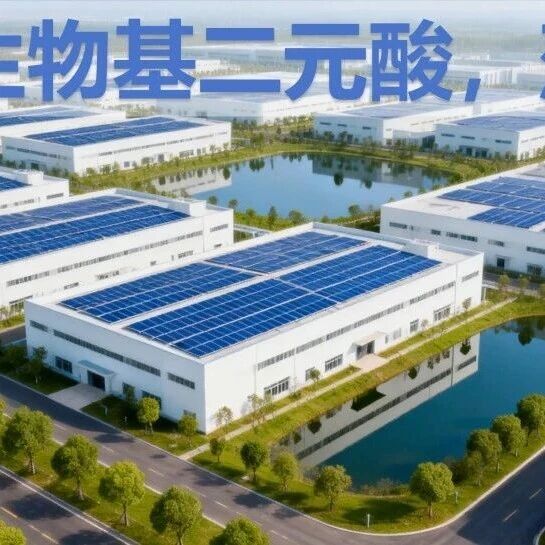
生物基二元酸1.2万吨项目公示!附全球生产企业盘点
合成生物学与绿色生物制造· 2026-02-25 02:59
Core Viewpoint - The article discusses the recent announcement of a new project by Ningxia Jiangping Biotechnology Co., Ltd. to construct a facility with an annual production capacity of 12,000 tons of bio-based dicarboxylic acids, highlighting the growing interest and activity in the bio-based dicarboxylic acid sector [1][3]. Project Overview - Ningxia Jiangping Biotechnology Co., Ltd. was established on October 14, 2025, with a registered capital of 150 million yuan. The company focuses on bio-based materials, bio-chemicals, agricultural biotechnology, and environmental technology [3]. - The specific product types for the new project are not detailed, but the focus is on the bio-based dicarboxylic acid sector, which has seen increased activity with several companies launching new projects [3]. Understanding Bio-based Dicarboxylic Acids - Bio-based dicarboxylic acids are organic compounds produced through fermentation or biomass conversion, characterized by having carboxyl groups (-COOH) at both ends of their molecular structure. They are used in various applications, including polyesters, polyamides (nylon), biodegradable plastics, lubricants, fragrances, and hot melt adhesives [4]. - They can be categorized into two main types: aliphatic dicarboxylic acids and aromatic dicarboxylic acids. Aliphatic dicarboxylic acids are further divided based on the number of carbon atoms: short-chain (C2-C4), medium-chain (C5-C9), and long-chain (≥C10) [4]. Aliphatic Dicarboxylic Acids - Short-chain dicarboxylic acids like malonic acid (C3) and succinic acid (C4) have achieved commercialization, with bio-based succinic acid being the most advanced in terms of industrialization [5][6]. - Medium-chain dicarboxylic acids such as hexanedioic acid (C6) and nonanedioic acid (C9) are also commercialized, with major producers like Cargill and Emery Oleochemicals [6]. - Long-chain dicarboxylic acids, including decanedioic acid (DC10) and dodecanedioic acid (DC12), have been industrialized, with companies like Kasei Biotech leading the market [8]. Aromatic Dicarboxylic Acids - Common bio-based aromatic dicarboxylic acids include 2,5-furandicarboxylic acid (FDCA) and terephthalic acid (PTA). China has established a strong presence in the FDCA sector, with over 10 companies involved in the industry [9]. - Internationally, Avantium is a pioneer in the FDCA field, having built a 5,000-ton commercial production line [9]. - The bio-based PTA production route involves converting bio-based naphtha to bio-based para-xylene (PX) and then to PTA, with companies like Hanwha and Taiwan Oriental Petrochemical participating in this market [9]. Industry Developments - Companies such as Jinfa Technology and Huaheng Biotechnology have launched projects to increase their production capacities of bio-based dicarboxylic acids, with Jinfa's capacity expected to reach 150,000 tons per year by December 2025 [10]. - The article also mentions the upcoming Bio-based 2026 conference, which will focus on the latest developments in bio-based chemicals and materials, providing a platform for industry collaboration [12][13].


“迎新春·万岗进万家”首场招聘会明日举行
Zheng Zhou Ri Bao· 2026-02-24 01:30
Core Viewpoint - The first job fair of the "Welcoming the New Year, Ten Thousand Jobs Entering Ten Thousand Homes" initiative in Henan Province will take place on February 25, 2026, aimed at addressing employment needs for various groups, particularly youth and high-level talents [1] Group 1: Event Details - The job fair will be held at the Zhihui City first-floor hall [1] - It is organized by the Jinshui District Human Resources and Social Security Bureau, the Dongfeng Road Street Office, and Henan 123 Talent Network [1] Group 2: Target Audience - The recruitment targets include young talents, high-level talents, recent graduates, unemployed youth, job-seeking youth transitioning careers, and skilled young talents [1] Group 3: Participating Industries - Key participating industries include finance, biochemistry, environmental technology, education and training, mechanical manufacturing, precision electronics, smart digitalization, tourism, cultural media, law, hospitality, automotive, logistics, healthcare, agriculture, construction materials, and food [1] Group 4: Job Opportunities - The job fair will offer over 11,800 positions across various professional categories [1] - Job positions will focus on software development, management trainees, new media operations, e-commerce, foreign trade, technical research and development, project management, administration, design, finance, engineering, broadcasting, law, marketing, and internships [1]
黑龙江发文支持生物制造发展 单个项目最高补助5000万元
Xin Jing Bao· 2026-02-15 02:26
Core Viewpoint - The Heilongjiang Provincial Government has issued policies to support the high-quality development of the biomanufacturing industry, encouraging increased R&D investment and project construction in key sectors such as biomedicine, biochemistry, and bio-agriculture [1]. Group 1: R&D Investment Support - Biomanufacturing companies are encouraged to increase R&D investment, with subsidies provided for those investing over 500,000 yuan, based on both existing and incremental annual R&D expenditures [1]. - The funding for these subsidies will be shared equally between provincial and municipal governments [1]. Group 2: Project Construction Support - The policies support the construction of innovative and impactful biomanufacturing projects, particularly in high-priority areas [1]. - New high-tech industrialization projects in the biomanufacturing sector with fixed asset investments of 20 million yuan or more will receive a subsidy of 20% of the approved investment, with a maximum subsidy of 50 million yuan per project [1]. - Eligible projects will also be recommended for additional funding from central budget investments and special long-term bonds [1].
黑龙江发文支持生物制造发展,单个项目最高补助5000万元
Bei Ke Cai Jing· 2026-02-15 02:20
Group 1 - The core viewpoint of the article is the introduction of policies by the Heilongjiang Provincial Government to support the high-quality development of the biomanufacturing industry [1][2] Group 2 - The measures encourage biomanufacturing companies to increase R&D investment, providing subsidies for R&D expenditures exceeding 500,000 yuan, with funding shared equally between provincial and municipal levels [1] - The policies support the construction of biomanufacturing projects in key areas such as biomedicine, biochemical, and bio-agriculture, focusing on high innovation and strong industry-driving projects [2] - For new high-tech industrialization projects in the biomanufacturing sector with fixed asset investments of 20 million yuan or more, a subsidy of 20% of the verified fixed asset investment is available, with a maximum subsidy of 50 million yuan per project [2]