
生物基丁二酸

Search documents
合成生物学赋能化工,4大趋势值得关注
合成生物学与绿色生物制造· 2026-03-25 07:52
Core Viewpoint - The article emphasizes the transformative potential of synthetic biology in the chemical industry, highlighting its ability to produce a wide range of chemical products sustainably and efficiently, with a projected economic impact of $100 billion by 2025 [2]. Group 1: Differences Between Synthetic Biology and Chemical Synthesis - Chemical synthesis involves a series of reactions to produce one or more products without the necessity of biological organisms, often resulting in significant pollution and CO2 emissions [4]. - Synthetic biology manufacturing utilizes renewable carbon resources like sugars and CO2, leading to cleaner and more efficient production processes that minimize environmental impact [4]. - Synthetic biology offers new pathways for the sustainable production of bulk chemicals, renewable chemicals, polymers, fine chemicals, and agricultural products, addressing the challenges of traditional chemical synthesis [4]. Group 2: Applications of Synthetic Biology in Chemical Production - Synthetic biology enables the industrialization of various bio-based products, including bio-based succinic acid, ethanol, and artemisinin, with the potential for all organic chemicals to be produced through synthetic biology [6]. - The integration of synthetic biology with AI and big data is expected to enhance the production of bio-based products, contributing to a sustainable bio-economy [6]. Group 3: Innovations in Materials and Enzyme Processes - Synthetic biology presents significant innovation potential for new materials, surpassing traditional petrochemical innovations, with over 3 million new molecules and materials available for exploration [8]. - Enzyme catalysis, a method within synthetic biology, improves production processes in pharmaceuticals and other sectors by offering higher yields, purity, and reduced by-products compared to traditional fermentation methods [10]. Group 4: Biomass as a Substitute for Fossil Resources - Biomass can replace fossil resources for essential fuels and materials, significantly reducing CO2 emissions, with bio-based materials showing lower greenhouse gas emissions compared to petrochemical materials [11]. - The potential for greenhouse gas reduction from bio-based materials is substantial, with estimates suggesting reductions of up to 2.9 billion tons per year if fully adopted in the U.S. [11]. Group 5: Advantages of Synthetic Biology in the Chemical Sector - Synthetic biology utilizes renewable raw materials, aligning with carbon neutrality goals, and promotes a closed carbon cycle through the use of biomass [14]. - The production processes in synthetic biology are energy-efficient, with potential energy savings of 30%-50% compared to traditional methods, and future potential reaching 50%-70% [15]. - Cost advantages are evident, with some bio-based chemicals produced at lower costs than their petrochemical counterparts, such as a 20% cost reduction for bio-based succinic acid [16]. - Higher selectivity and efficiency in producing complex molecules are achieved through synthetic biology, simplifying processes and reducing impurities [17].


盛虹集团,2000万取得山东大学生物基丁二酸技术,已完成200吨产业化示范
DT新材料· 2026-03-22 16:04
Core Viewpoint - The article highlights the successful transformation of a bio-based succinic acid production technology developed by Shandong University, which has been recognized as a typical case of technology transfer in higher education by the Ministry of Education. This technology addresses plastic pollution by enabling the production of biodegradable plastics, thus contributing to environmental sustainability [2][3]. Group 1: Technology Overview - The technology focuses on the production of succinic acid, a core monomer for biodegradable plastics such as PBS and PBST, which are gaining global attention as alternatives to traditional plastics [3]. - The team has developed a low pH fermentation process for succinic acid production, achieving international leading production indicators and simplifying the production process by eliminating the need for neutralization and acidification steps [4]. - The technology has completed pilot tests at a scale of 20 tons and is currently undergoing industrial demonstration with a target of achieving an annual economic benefit of 200 million yuan upon completion of the production line [5]. Group 2: Economic Impact - The transformation of this technology to Shenghong Holding Group has been valued at 20 million yuan, indicating significant commercial potential [4]. - The innovation not only enhances the efficiency of succinic acid production but also promotes the development of technology, talent, and industry integration, with nearly 20 professionals trained in the process [5]. Group 3: Team and Achievements - The project is led by Professor Qi Qingsheng and his team, who have made significant breakthroughs in bio-manufacturing and have successfully transferred their research outcomes to multiple enterprises, including Fortune 500 companies [6].

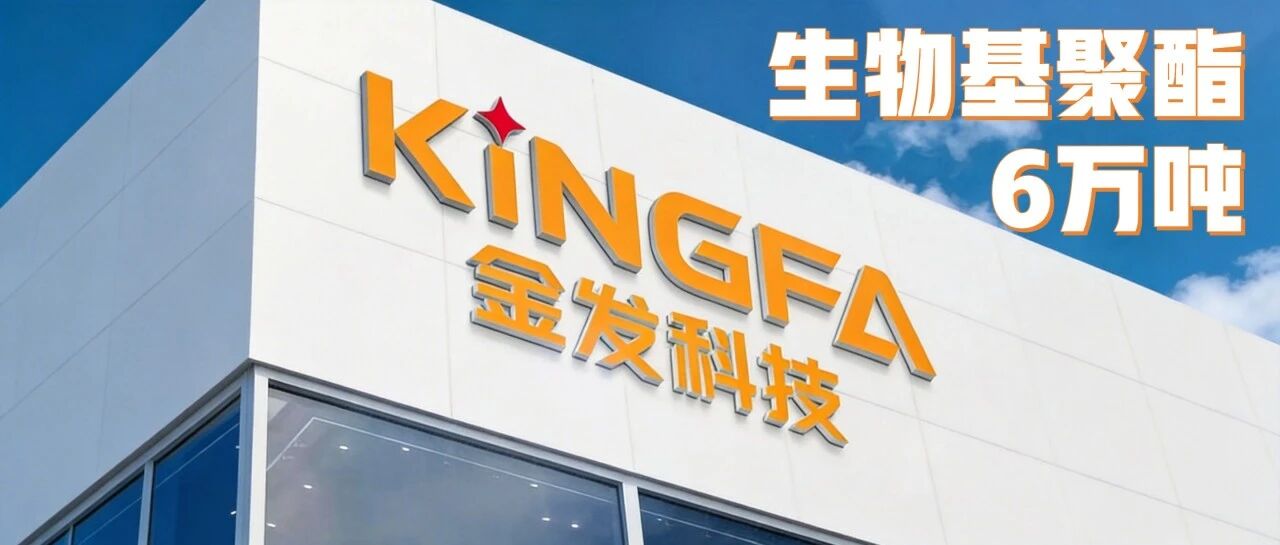
金发科技,6万吨生物基聚酯项目最新进展!
合成生物学与绿色生物制造· 2026-02-10 02:22
Core Viewpoint - Kingfa Technology is strategically expanding its biobased materials production capacity, focusing on a comprehensive supply chain from upstream monomers to downstream high-end applications, indicating a well-planned industrial layout [3][5][9]. Group 1: Project Announcements - Zhuhai Kingfa Biochemical Materials Co., a subsidiary of Kingfa Technology, announced the winning bid for a project to produce 60,000 tons of biobased polyester annually [2]. - The company is also constructing an integrated biobased materials project in Panjin, Liaoning, with a total investment of 7.89 billion yuan, aiming for an annual capacity of 800,000 tons [6]. Group 2: Upstream Investments - Kingfa Technology has invested heavily in upstream monomers, recognizing their critical role in the biobased materials supply chain. The company has established a production capacity of 50,000 tons of biobased succinic acid and 10,000 tons of biobased BDO, both of which are set to begin production in 2024 [5]. - The biobased succinic acid has achieved 100% biobased carbon content and has received certifications from the USDA and DIN [5]. Group 3: Midstream Product Matrix - Kingfa Technology has developed a diverse product matrix in the midstream polymerization segment, including 180,000 tons of PBAT and 30,000 tons of PLA annually, along with other biobased polyester products [9]. - The company has made significant technological advancements, becoming the first in China and the second globally to obtain ISCC PLUS certification for its LCP materials [9][12]. Group 4: Downstream Applications - The integrated layout of Kingfa Technology aims to enhance the performance advantages of downstream modified materials and expand market reach [13]. - The company has introduced the world's first 100% biobased PBS material suitable for food contact, marking a significant advancement in high-end packaging applications [14]. - In the first three quarters of 2025, Kingfa Technology reported sales of 158,000 tons of biodegradable materials, nearing full production capacity, and achieved a revenue of 49.616 billion yuan, a year-on-year increase of 22.62% [14].

政策赋能商业航天高速发展,碳纤维底部确认景气有望回升
Shanxi Securities· 2025-12-31 06:07
Investment Rating - The report maintains a rating of "B" for the new materials sector, indicating a leading position in the market [2]. Core Insights - The commercial aerospace sector is experiencing rapid development driven by policy support, which is expected to significantly boost the carbon fiber industry. The market for carbon fiber composites is projected to double within five years, with demand anticipated to rise from hundreds of tons to thousands of tons [6]. - The actual consumption of carbon fiber in China is expected to reach 96,446 tons in 2025, reflecting a year-on-year increase of 71.89%, primarily driven by the wind power blade and aerospace sectors [6]. - The new materials sector index increased by 7.03%, outperforming the ChiNext index by 3.14% over the past week, with notable gains in various sub-sectors such as battery chemicals (up 13.29%) and semiconductor materials (up 6.30%) [3][18]. Summary by Sections Market Performance - The new materials sector has shown strong performance, with the new materials index rising by 7.03% and various sub-sectors experiencing significant increases, including battery chemicals (up 13.29%) and semiconductor materials (up 6.30%) [3][18]. - The overall market performance for the week (December 22-26, 2025) saw the Shanghai Composite Index increase by 1.88% and the ChiNext Index by 3.90% [14]. Price Tracking - The report provides a weekly price tracking of various chemical raw materials, including stable prices for amino acids and biodegradable plastics, while some vitamins showed slight decreases [4]. - Carbon fiber prices remain stable, with leading companies announcing price increases for their products starting in 2026 [6]. Investment Recommendations - The report suggests focusing on leading companies in the carbon fiber sector, such as Jilin Chemical Fiber, Zhongfu Shenying, Zhongjian Technology, and Guangwei Composites, as they are expected to benefit from the anticipated growth in demand [7].




再来10万吨!金发科技,2025年生物基领域6大突破
合成生物学与绿色生物制造· 2025-12-26 01:33
Core Viewpoint - Liaoning Jinfa is expanding its production capacity by renovating its lactic acid production line and constructing a new 100,000-ton bio-based succinic acid production line, which is expected to significantly enhance its bio-based materials segment [1][3]. Project Overview - The project will utilize a "reconstruction + new construction" model, converting existing lactic acid production facilities to produce 50,000 tons of succinic acid annually, while also building a new fermentation workshop and a purification workshop for an additional 50,000 tons of succinic acid [2]. - Upon completion, the total production capacity for bio-based succinic acid will increase from 50,000 tons/year to 150,000 tons/year, serving as a crucial capacity support for the company's bio-based monomer segment [3]. - The project is part of a larger integrated bio-based materials initiative in the Panjin Liaobin Coastal Economic and Technological Development Zone, which includes a total investment of 7.89 billion yuan [4][5]. Production Capacity and Investment - The project will cover an area of 1,450 acres, with a planned total investment of 7.89 billion yuan, divided into three phases [5]. - The first phase will occupy 740 acres with an investment of 1 billion yuan, originally intended for the production of 10,000 tons of bio-based 1,4-butanediol, 50,000 tons of lactic acid, and 5,000 tons of halogen-free green flame retardants [6]. Industry Positioning - Jinfa Technology has established a complete "bio-based monomer-polymer-modification" industrial chain [7]. - The company has achieved stable production of 50,000 tons of bio-based succinic acid and 10,000 tons of bio-based BDO, with bio-based succinic acid produced through microbial fermentation achieving 100% bio-based carbon content [9]. Financial Performance - In the first three quarters of 2025, the company reported revenue of 49.616 billion yuan, a year-on-year increase of 22.62%, and a net profit of 1.065 billion yuan, up 55.86% [15]. - The stock price increased from 8.12 yuan at the beginning of the year to 18.45 yuan by December 24, 2025, reflecting a 127.2% increase, significantly outperforming the market [16]. Innovation and New Developments - Jinfa Technology has made significant technological breakthroughs, including the launch of a new generation of bio-based LCP materials, becoming the first domestic supplier to achieve ISCC PLUS certification for LCP materials [10]. - The company is also expanding into new fields, having established a new subsidiary focused on bio-based materials technology research and development [13].

金发科技,80万吨项目新突破!
DT新材料· 2025-12-24 16:04
Core Viewpoint - The article discusses the advancements and projects of Jinfa Technology in the field of bio-based materials, highlighting the company's growth in production capacity and technological innovations in bio-based chemicals and materials [2][10][11]. Group 1: Project Developments - Liaoning Jinfa Biomaterials Co., Ltd. has announced an environmental impact assessment for a project aimed at producing 100,000 tons of bio-based succinic acid annually, with a construction period of 36 months [4][5]. - The project will increase the production capacity of bio-based succinic acid from 50,000 tons per year to 150,000 tons per year, serving as a crucial support for the company's bio-based monomer segment [6]. - This project is part of a larger integrated bio-based materials initiative covering 800,000 tons, with a total planned investment of 7.89 billion yuan, to be developed in three phases [7][8]. Group 2: Production Capacity and Technology - Jinfa Technology has established a complete industrial chain for bio-based monomers, achieving stable production of 50,000 tons of bio-based succinic acid and 10,000 tons of bio-based BDO, with a bio-based carbon content of 100% [10]. - The company has developed a range of bio-based polyester products and special engineering plastics, with sales of biodegradable materials reaching 158,000 tons by the third quarter of 2025, nearing full production capacity [10]. - Jinfa Technology has made significant technological breakthroughs, including the launch of a new generation of bio-based LCP materials, becoming the first domestic and second global supplier to obtain ISCC PLUS certification for LCP materials [11]. Group 3: Financial Performance - In the first three quarters of 2025, Jinfa Technology reported revenues of 49.616 billion yuan, a year-on-year increase of 22.62%, and a net profit of 1.065 billion yuan, up 55.86% [12]. - The company's stock price increased from 8.12 yuan at the beginning of the year to 18.45 yuan by December 24, 2025, reflecting a 127.2% increase in market value, from 21.963 billion yuan to 48.646 billion yuan [12][13]. Group 4: Future Plans and Innovations - Jinfa Technology plans to add 140,000 tons of bio-based chemicals and materials production capacity by 2025, including a 40,000-ton bio-based high-temperature nylon project [12]. - The establishment of a new company focused on bio-based materials technology research and sales indicates the company's commitment to expanding its footprint in the bio-based materials sector [12].
4.5万吨生物基丁二酸和丁二醇项目公示
DT新材料· 2025-12-16 14:05
Core Viewpoint - The article discusses the recent re-approval of two significant projects by Shandong Tianyi Hongda Biotechnology Co., Ltd., focusing on the production of bio-based succinic acid and 1,4-butanediol, highlighting their investment details and potential applications in various industries [2][3][4][5]. Investment and Project Details - The bio-based succinic acid project has a total investment of 50.483 million yuan, with 1.5 million yuan allocated for environmental protection, accounting for 2.97% of the total investment. The project covers an area of 223.22 acres (148,814.08 m²), with the specific project area being 152.22 acres (101,480.51 m²) [3]. - The 1,4-butanediol production project has a total investment of 19.703 million yuan, with 1.5 million yuan for environmental protection, which constitutes 7.61% of the total investment. This project occupies 71 acres (47,333.57 m²) and is located in the Changyi Chemical Industry Park in Weifang City, Shandong Province [4]. Applications of Products - Succinic acid can be utilized in the production of plastics, resins, and rubber, serving as a plasticizer, modifier, coating agent, and adhesive. It also acts as an intermediate in pharmaceuticals for synthesizing certain drugs and can be used as a food additive, flavoring agent, preservative, and acidulant [3]. Company Overview - Shandong Tianyi Hongda Biotechnology Co., Ltd. was established on March 21, 2024, with a registered capital of 10 million yuan. The company is located in the Changyi Chemical Industry Park and focuses on bioengineering and bio-based chemicals, integrating research and development, production, and sales [5].
金发科技:生物降解材料已步入收获期
Zheng Quan Ri Bao Wang· 2025-12-16 13:44
Core Viewpoint - The company, Jinfat Technology, has reported significant growth in its specialized engineering plastics and biodegradable materials, indicating a strong competitive position and future growth potential in emerging applications [1] Group 1: Specialized Engineering Plastics - The gross margin of specialized engineering plastics (such as PEEK, PPA, LCP, PPSU) and engineering plastics (like PA, PC, POM) is higher than that of general plastics [1] - In the first three quarters of 2025, the sales volume of specialized engineering plastics reached 24,000 tons, showing significant year-on-year growth [1] Group 2: Biodegradable Materials - The biodegradable materials segment has entered a harvest period, with sales volume reaching 158,000 tons in the first three quarters of 2025, nearing full production and sales capacity, and achieving profitability [1] - The company has established a full industry chain for biodegradable materials, including bio-based monomers, polymerization, and modification, with an annual production capacity of 50,000 tons of bio-based succinic acid and 10,000 tons of bio-based BDO [1] Group 3: Future Growth and Applications - The company plans to accelerate the exploration of applications in high-end packaging and 3D printing, which have become important growth drivers for the company [1]
安徽华恒生物科技股份有限公司 2025年半年度募集资金存放 与实际使用情况的专项报告
Zheng Quan Ri Bao· 2025-08-27 23:44
Core Viewpoint - The report outlines the fundraising activities and usage of funds by Anhui Huaheng Biological Technology Co., Ltd., detailing the amounts raised, their allocation, and compliance with regulatory requirements [1][2][3]. Fundraising Overview - In 2021, the company raised a total of RMB 625.32 million by issuing 27 million shares at RMB 23.16 each, with a net amount of RMB 559.26 million after deducting issuance costs of RMB 66.06 million [1]. - As of June 30, 2025, the company reported the usage and balance of the funds raised from the 2021 IPO [2]. Fund Usage and Surplus - The company has completed the fundraising projects and decided to permanently supplement working capital with surplus funds from two projects: "5000 tons/year fermentation method for alanine technical transformation expansion project" and "alternating annual production of 25,000 tons of alanine and valine project" [3]. 2022 Fundraising Activities - In 2024, the company raised RMB 699.99 million by issuing 21,122,510 shares at RMB 33.14 each, with a net amount of RMB 683.81 million after deducting issuance costs of RMB 16.19 million [4]. - The funds from the 2022 issuance were also managed under strict regulatory compliance [5][6]. Fund Management - The company has established a fundraising management system to ensure the proper storage, approval, and usage of the raised funds, adhering to relevant laws and regulations [5]. - Specific agreements were signed with banks to ensure the funds are stored in dedicated accounts, ensuring transparency and compliance [6]. Actual Fund Usage - As of June 30, 2025, the company utilized RMB 456.93 million from the 2021 IPO funds and RMB 684.05 million from the 2022 issuance for related projects [7]. - The company has not used idle funds for temporary working capital supplementation or cash management during the reporting period [9][10]. Project Adjustments - In March 2025, the company approved the addition of new products to existing projects, including L-valine and inositol, as well as increasing production capacity for other bio-based products [11]. Compliance and Reporting - The company has complied with all relevant regulations regarding the usage and disclosure of fundraising activities, with no violations reported [13].

华恒生物: 安徽华恒生物科技股份有限公司2025年半年度募集资金存放与实际使用情况的专项报告
Zheng Quan Zhi Xing· 2025-08-27 14:02
Fundraising Overview - The total amount raised from the initial public offering (IPO) in 2021 was RMB 62,532 million, with a net amount of RMB 55,925.88 million after deducting issuance costs of RMB 6,606.12 million [1][3] - As of June 30, 2025, the total amount of funds raised from the IPO was RMB 58,997.34 million, with various deductions leading to an actual investment amount of RMB 55,925.88 million [2][3] Fund Utilization - By June 30, 2025, the actual investment amount from the 2021 IPO was RMB 45,692.77 million, with specific allocations detailed in the report [8][9] - The company approved the use of surplus funds from the "Fermentation Method L-Alanine 5000 tons/year technical transformation and expansion project" and "Alternate annual production of 25,000 tons of L-Alanine and L-Valine project" to permanently supplement working capital [3][9] 2022 Fundraising - In 2022, the company raised RMB 699,999,981.40 through a targeted issuance of A-shares, with a net amount of RMB 68,380.91 million after deducting issuance costs of RMB 1,619.09 million [4][5] - As of June 30, 2025, the total investment from the 2022 fundraising was RMB 68,404.964 million, with specific allocations also detailed in the report [8][12] Fund Management - The company has established a fundraising management method to ensure the proper storage, approval, use, and supervision of the raised funds, adhering to relevant laws and regulations [5][9] - The company has signed tripartite and quadripartite supervision agreements with banks and securities firms to ensure compliance in the management of the raised funds [7][8] Project Updates - The company has not made any changes to the fundraising projects from both the 2021 IPO and the 2022 targeted issuance [10][11] - The company has approved the addition of products such as L-Valine and Inositol to the annual production of 50,000 tons of bio-based succinic acid and bio-based product raw material production base construction project [9][12]