
共享出行

Search documents
从Robotaxi“撞人”到金融业务“撞墙”:哈啰深陷双重困境
Sou Hu Cai Jing· 2025-12-15 14:01
Core Viewpoint - The company, Hello Chuxing, is facing a dual crisis involving safety issues with its Robotaxi service and compliance risks in its financial operations, which could jeopardize its business model and growth prospects [4][22]. Group 1: Robotaxi Safety Issues - On December 6, 2025, a Hello Robotaxi in Zhuzhou hit two pedestrians, leading to serious injuries and the suspension of operations in several cities just four months after launching [2]. - The company's aggressive strategy aimed to achieve in two years what competitors took a decade to accomplish, but this rapid expansion has resulted in significant safety oversights [5][7]. - Prior to the December incident, there were reports of another collision involving a Hello Robotaxi, indicating ongoing safety concerns [9]. Group 2: Financial Compliance Risks - Hello Chuxing's financial operations, which have grown to a scale of 40 billion yuan, are now at risk due to the implementation of new regulations that require proper licensing, which the company lacks [10][11]. - The "Assisted Loan New Regulations" that took effect on October 1, 2025, restrict partnerships with unlicensed entities, threatening the company's financial partnerships and operations [14]. - Users have reported high hidden fees and aggressive collection practices, raising concerns about the company's compliance and customer trust [21][15]. Group 3: Strategic Misalignment - The simultaneous crises in both the Robotaxi and financial sectors reflect a broader issue of strategic misalignment and overextension in the company's growth strategy [22]. - Hello Chuxing has failed to build core competencies while diversifying into multiple sectors, leading to a lack of competitive advantage in each area [28]. - The company's past focus on rapid expansion without securing necessary licenses has left it vulnerable to regulatory changes, highlighting the risks of a growth-at-all-costs mentality [30].


哈啰“双线翻车”:电动车大规模断服
Xin Lang Ke Ji· 2025-12-15 02:04
Core Viewpoint - The company faces significant backlash from users due to the discontinuation of 2G network services, which has rendered many smart features of its electric bikes inoperable, leading to safety concerns and potential legal issues [1][5][7]. Group 1: User Experience and Feedback - Numerous users reported their electric bikes experienced sudden "lockout" and "power loss" while riding, raising safety concerns [1][3]. - The company attributed these issues to the nationwide 2G network shutdown, affecting models with EB11 and EB20 smart chips, and offered limited solutions such as Bluetooth unlocking or upgrading to a 4G smart chip at a cost [3][4]. - Users expressed frustration over the lack of prior notification regarding the use of 2G technology when purchasing their bikes, which they believe violates their right to be informed [5][10]. Group 2: Regulatory and Industry Context - The company began its electric bike business in July 2020, shortly after a government directive in August 2020 advised against using 2G/3G networks for new IoT devices [7][9]. - Despite the regulatory guidance, the company continued to release new electric bike models utilizing outdated 2G technology, which is seen as a significant oversight given the expected lifespan of electric bikes [10][11]. Group 3: Legal and Ethical Implications - Legal experts suggest the company's actions may infringe on consumer rights, including the right to be informed and the right to fair trade, as consumers were not made aware of the implications of the 2G network shutdown [10][12]. - The company's failure to provide adequate information about the technology used in its products has led to accusations of short-sightedness and a lack of responsibility towards consumers [5][11]. Group 4: Robotaxi Business and Safety Concerns - The company recently entered the Robotaxi market but faced a serious incident where a self-driving vehicle struck pedestrians, raising questions about the safety of its AI and hardware capabilities [12][13]. - This incident has sparked concerns about the company's ability to ensure safety in its new ventures, paralleling the issues faced in its electric bike business [13].
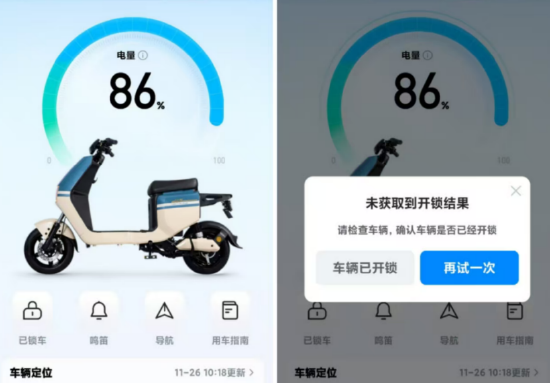
哈啰“双线翻车”:电动车大规模断服,Robotaxi当街撞人,CEO"成熟AI"被打脸? | BUG
Xin Lang Cai Jing· 2025-12-15 01:32
Core Viewpoint - The company Hello has faced significant backlash from electric bike users due to the discontinuation of 2G network services, which has rendered many smart features in their bikes unusable, leading to safety concerns and customer dissatisfaction [2][18][20]. Group 1: User Feedback and Issues - Many users reported that their Hello electric bikes experienced sudden power loss and locking issues while riding, which posed safety risks [2][20]. - Users were not informed at the time of purchase that the bikes relied on 2G communication, and now they are required to pay for upgrades to continue using smart features [2][6][22]. - The company has offered a solution that includes using Bluetooth to unlock the bikes or paying for a 4G upgrade, which has frustrated many customers [20][21]. Group 2: Regulatory Context - In August 2020, the Ministry of Industry and Information Technology issued a notice urging the discontinuation of 2G/3G networks for new IoT devices, yet Hello continued to release models using 2G technology [8][24][26]. - The company’s decision to use outdated 2G technology raises questions about its compliance with regulatory guidelines and consumer rights [27][28]. Group 3: Legal and Ethical Concerns - Legal experts suggest that Hello's actions may violate consumer rights, including the right to be informed about the implications of using 2G technology [24][27]. - The failure to disclose the potential for service disruption due to the 2G network shutdown is seen as a breach of consumer trust and fair trading practices [27][28]. Group 4: Robotaxi Business and Safety Incidents - Hello's Robotaxi service recently experienced a serious incident where a vehicle struck pedestrians, raising concerns about the safety of its autonomous driving technology [13][15][31]. - The CEO had previously claimed that the technology was mature and ready for deployment, but this incident has led to skepticism about the company's readiness and safety protocols [13][32].

哈啰「双线翻车」:电动车大规模断服,Robotaxi当街撞人,CEO「成熟AI」被打脸?
Xin Lang Ke Ji· 2025-12-15 01:32
Core Viewpoint - The company Hello has faced significant backlash from electric vehicle owners due to the discontinuation of 2G network services, which has rendered many smart features in their electric bikes inoperable, leading to safety concerns and customer dissatisfaction [2][3][10]. Group 1: Network Issues and Customer Impact - Hello's electric bikes have experienced service interruptions due to the shutdown of 2G networks, affecting features like remote locking and battery monitoring, which were marketed as part of the "permanent membership" benefits [2][3][6]. - Users were not informed at the time of purchase that the bikes relied on 2G communication, and now they face additional costs to upgrade to 4G technology [4][10]. - The company has offered limited solutions, such as using Bluetooth to unlock the bikes or paying for a 4G upgrade, while only partially refunding membership fees [6][10]. Group 2: Regulatory and Industry Context - The Ministry of Industry and Information Technology had issued a notice in August 2020, urging the discontinuation of 2G/3G networks for new IoT devices, yet Hello continued to release models using 2G technology [4][12][16]. - The company launched its electric bike business in July 2020, shortly before the regulatory notice, and has since introduced several models that still utilize outdated communication technology [12][13]. Group 3: Legal and Ethical Concerns - Legal experts have indicated that Hello's actions may violate consumer rights, including the right to be informed about the implications of using 2G technology, which could lead to legal repercussions [14][16]. - The failure to disclose the potential for service disruption due to network changes raises questions about the company's commitment to consumer transparency and fair trading practices [14][16]. Group 4: Robotaxi Business and Safety Issues - Hello's Robotaxi service has recently encountered a serious safety incident, marking a significant concern for the company's new venture into autonomous driving [18][19][21]. - The CEO had previously claimed that advancements in AI and hardware justified the launch of the Robotaxi service, but the recent accident has cast doubt on these assertions and raised concerns about the safety protocols in place [18][19][21]. - The incident has led to fears that Hello's approach to the Robotaxi market may mirror the issues faced in their electric bike segment, potentially damaging the company's reputation and consumer trust [21].

东南亚,掘金正当时
投资界· 2025-12-12 08:27
Core Insights - Southeast Asia is emerging as a critical battleground for global capital and enterprises, with a significant consumption upgrade expected as countries approach a per capita GDP of $5,000 [3][4] - Indonesia and Singapore are highlighted as key destinations for investment opportunities, with Indonesia being referred to as the "next China" due to its large population and rapid market growth [4][5] Group 1: Investment Opportunities - Singapore boasts a per capita GDP of $90,700 in 2024, excelling in technology innovation, education services, and business environment [4] - Indonesia, with a population of over 270 million and an average age of 29, presents a dual advantage of a large market size and high growth potential [4][5] - The investment landscape includes notable companies like Gojek, which operates a wide range of services in Indonesia and Singapore, and Innowave Tech, focusing on AI-driven smart manufacturing solutions [7][8] Group 2: Educational and Networking Initiatives - The program includes visits to leading enterprises, capital dialogues, and academic institutions, creating a comprehensive understanding of the local market dynamics [5][21] - Participants will engage with top investment firms such as ATM Capital, which manages over $1 billion across four funds, and Vertex Ventures, a prominent venture capital firm in Asia [12][14][17] - The itinerary is designed to provide insights into operational strategies, investment trends, and academic advancements, ensuring a well-rounded learning experience [5][23] Group 3: Unique Experiences - The program features exclusive events, including a closed-door dinner with prominent Chinese entrepreneurs and investors in Southeast Asia, fostering deep discussions and networking [24][27] - Participants will also experience the cultural richness of Southeast Asia, enhancing their understanding of the local business environment [29][31] - The journey aims to build a robust network of high-quality resources across industries, investment institutions, and academia, facilitating future collaborations [32]
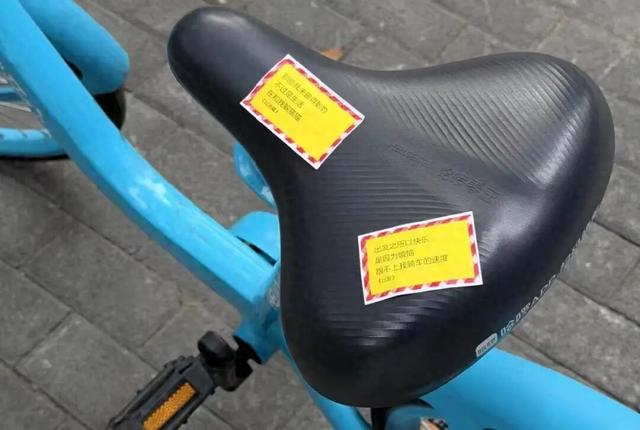
“用黄色温暖隔绝黄色污染”,上海两个年轻人自制诗句贴纸,不少人纷纷效仿
Huan Qiu Wang· 2025-12-11 00:54
你是否也对共享单车上的小广告不厌其烦?最近上海有两个年轻人自己用不干胶贴纸打印了诗句,贴在 车身小广告上,以隔绝视觉污染。 不少人苦车身小广告久矣,影响市容市貌带来视觉污染不说,还担心会脏到裙子裤子。因此,两名年轻 人此举被不少人点赞,不少人加入"用诗歌隔绝垃圾广告"的行动中,自制贴纸遮住小广告。 同时,随着企业、城管清除小广告力度的扩大,小广告已经逐渐从易撕除的贴纸"升级"为印戳、喷涂等 形式,清除难度更大。据共享单车企业介绍,目前1/3都是印戳、喷涂式小广告。 来源:新闻晨报 共享单车企业已经通过增加坐垫曲折度、加装防粘涂层增加张贴和印戳难度,但小广告依然防不胜防, 仅一家共享单车企业就介绍,单日最高可清理超2万辆车、近2.1万处小广告。 如果你也很厌烦车身小广告,可以在遇到小广告时,报修给客服,客服将派人进行清除处理。 "用黄色温暖隔绝黄色污染", 上海年轻自制诗句贴纸 "风声呼啸/那是单车在为你叫好""只要脚一蹬/我就拥有了这世上/兜不完的风""要允许自己休息,休息 也是前进的一部分"。如果共享单车上出现的是这些暖心诗句,而非不堪入目的小广告,你的骑行体验 是否会加分? 最近上海两个年轻人已经行动起来 ...
滑板车成“马路杀手”? 韩国多地加强整治
Xin Hua She· 2025-12-10 09:21
新华社北京12月10日电 韩国近期发生多起涉普通滑板车或电动滑板车的致人死亡交通事故,使用 这种代步工具出行的种种乱象再度引起舆论关注。不少人呼吁加大力度整治无照上路、不戴头盔等违章 行为,以期遏制相关交通事故增多的趋势。 悲剧频发 据《韩国先驱报》9日报道,京畿道安养市8日16时许发生一起交通事故,一名11岁男孩骑普通滑板 车在路口与一辆右转客车相撞。男孩送医急救后不治身亡。有关部门正着手调查涉事双方是否存在交通 违章行为。 韩国道路交通部门数据显示,该国与个人代步工具有关的交通事故量从2017年的117起升至2024年 的2389起,同期相关死亡人数从4人升至24人。这类事故往往涉及滑板车在人行道上行驶、使用者不戴 头盔、无照上路等违章情形。 今年10月18日,仁川市两名中学生骑行同一辆电动滑板车时不慎冲向一对母女。那名30多岁的母亲 为了护住女儿,自己被电动滑板车撞倒,头部受伤。她后来被送入医院,昏迷一周,伤情严重。 今年6月,釜山市一名少女骑一辆电动滑板车时撞上一对六旬夫妇,造成其中一名老人身亡。女孩 因此被判8个月监禁。 2023年,两名13岁男孩在人行道上无照骑行滑板车,撞上一名步行老妪,致其身亡 ...

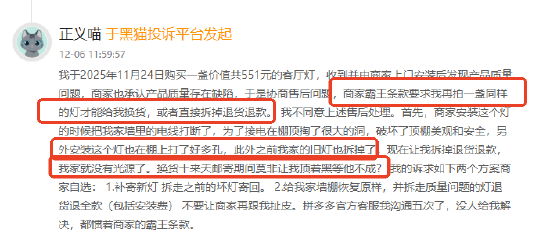
11月黑猫投诉家居家装红黑榜:雷士灯具质量问题消费者被要求自行拆装
Xin Lang Cai Jing· 2025-12-10 06:18
Core Insights - The article discusses the November complaint handling red and black list released by the Black Cat Complaint platform, reflecting the complaint resolution status of various companies [1][11]. Group 1: Complaint Statistics - As of November 2025, the Black Cat Complaint platform has received over 31.16 million valid consumer complaints, with more than 800,000 valid complaints in November alone [2][12]. - The red and black lists categorize companies by industry and highlight the most concerning areas based on recent consumer events, providing valuable consumer references [2][12]. Group 2: Industry-Specific Red and Black Lists - **Shared Services** - Blacklist: Guangyu Koste, Wisdom Xiaolian, Yunma Technology, Fujian Guoman Intelligent Technology, Xiaodian Technology, Yuekuai Flash Charge, Wukong Fast Charge, Xiaoliu Shared, Street Power, Xiu Power [5][14]. - Whitelist: Hello, Monster Charging, Songguo Electric Bicycle, Beidian, Soudian, Jubao Charge, Pumpkin Hero [5][14]. - **Shopping Platforms** - Blacklist: Taobao Mall, Xianyu, Tmall, 1688, Miaosu Da Electric Appliances, Alibaba Business Advisor, JD Mall, JD Home Delivery, Zhongjia Rental Machine, Shengdao Sports [5][15]. - Whitelist: Xinyuehui Mall, Qianshanji, Digua Rental Machine, Yougouxuan, Hangzhou Zaidao, Aizhuji, Dongfang Welfare Network, Tmall Supermarket, Duty-Free Shop, Caihuoxia [5][15]. - **Travel and Accommodation** - Blacklist: Shanghai Paifenle Network Technology, Shenzhen Airlines, Capital Airlines, Western Airlines, Chengdu Airlines, Agoda, Halo Youxing, Kunming Airlines, China United Airlines, Qixiang Rental [5][16]. - Whitelist: Chengdu Ocean Travel, Four Seasons VIP, Ctrip Travel Service, Yihai Rental, Shenzhou Rental, Airbnb [5][16]. - **Entertainment and Lifestyle** - Blacklist: WeChat, Chaimi Life Housekeeping, Shanghai Yongchu Network Technology, Weishang Album APP, Tencent, Aurora Ticket, Fun Play Island, Leket Sports, Shanghai Jianji Network Technology, Qianniu [5][17]. - Whitelist: Shenzhen Youshu Zhihui Technology, iQIYI, Miantu Technology, Guangdong Fuqi Lawyer Firm, Driving Test Treasure, Hunan Jianghaiyang Lawyer Firm, Yunxi Technology, Litchi Cloud Service, Guangdong Tianchen, Scan All-in-One [5][17]. - **Education and Training** - Blacklist: Zhonggong Education, Duolingo, Shijiazhuang Xuede Vocational Education Technology, Dongao Accounting Online, Shijiazhuang Jingsu Education, Hongen Literacy, Yixue Academy, Akaso Foreign Teacher Network, Zhengzhou Boan Zhiyu Education, Chengdu Huisi Education [5][18]. - Whitelist: Henan Zhong'an Construction Training, Nayun Culture, Fenbi Public Examination, Yuan Tutor, Jiao Ge Friends E-commerce Academy, Hot Sweat Dance, Homework Help, Beijing Easy Learning, Guangzhou Jianxiaozhi Information Technology [5][18].
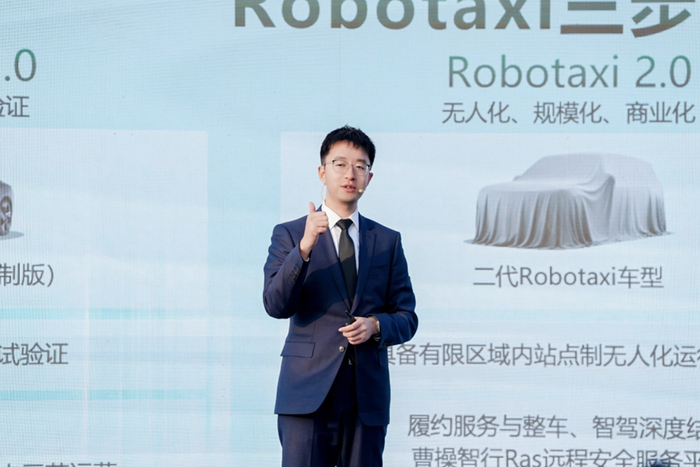
冲击“十年百城千亿”战略目标 曹操出行加速Robotaxi商业化落地
Zhong Guo Jing Ying Bao· 2025-12-05 11:12
Core Insights - The competition in the Robotaxi sector is intensifying, with major players like Tesla and Waymo launching services in key markets, while domestic companies like Cao Cao Mobility are also ramping up their efforts [1][2][4] Group 1: Industry Developments - Tesla has officially launched its Robotaxi service in Austin, the San Francisco Bay Area, and Arizona, currently available only on iOS [1] - Waymo has opened paid operations on highways in San Francisco, Los Angeles, and Phoenix [1] - Cao Cao Mobility has announced a "Ten Years, One Hundred Cities, One Hundred Billion" strategic goal, aiming to establish Robotaxi services in 100 cities and achieve a total transaction value of 100 billion RMB over the next decade [5][6] Group 2: Strategic Initiatives - Cao Cao Mobility's "three-step" strategy for Robotaxi includes initial technology validation and small-scale testing, transitioning to mixed operations of human and autonomous driving, and eventually launching fully customized Robotaxi models globally [5][7] - The company has introduced the "Green Intelligent Transit Island," which integrates various automated functions and aims to create a foundational infrastructure for future urban mobility [6] Group 3: Market Potential - The Robotaxi market in China is projected to exceed 709.6 billion RMB by 2035, with a potential for long-term growth reaching several trillion RMB [2] - The competition in the Robotaxi space is evolving beyond just algorithms and hardware to include a comprehensive ecosystem involving smart vehicles, driving technology, and operational platforms [7][8] Group 4: Collaborations and Global Expansion - Cao Cao Mobility has signed strategic partnerships with Yujiang Technology and Qianli Zhijia to enhance the application of robotics and accelerate the commercialization of smart driving technology [8] - The company has also announced its first overseas Robotaxi deployment in Abu Dhabi, marking a significant step in its global expansion strategy [9]

济南哈行网络科技有限公司成立
Zheng Quan Ri Bao· 2025-12-05 06:45
Group 1 - A new company, Jinan Hahxing Network Technology Co., Ltd., has been established with a registered capital of 2 million USD [1] - The company's business scope includes shared bicycle services, small micro-car rental services, manufacturing of auto parts and components, and centralized fast charging stations [1] - The company is wholly owned by Hong Kong Ride Tech Limited, a subsidiary of Hello Chuxing [1]