
股权投资

Search documents
创投圈年终交卷了
第一财经· 2025-12-01 03:06
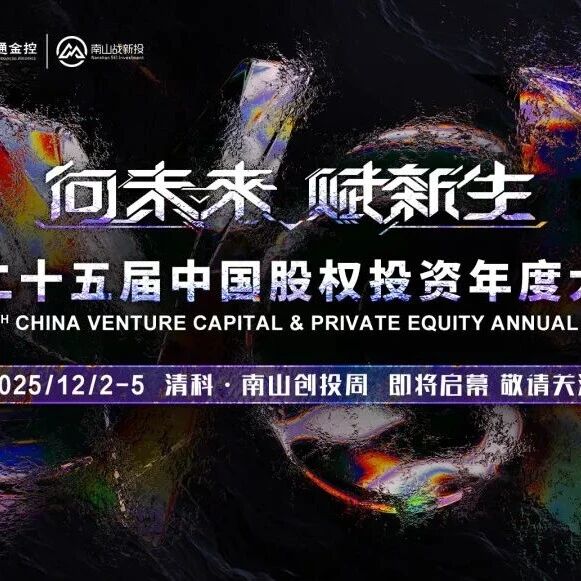
Core Insights - The 25th China Private Equity Annual Conference will be held in Shenzhen from December 2-5, 2025, organized by Qingke Holdings and Investment界 [2] - The event features various forums and summits, including the Investment Trend Forum, AI Summit, and Innovation Drug and Life Science Summit, aimed at enhancing the investment ecosystem [2][10] Agenda Highlights - The Investment Trend Forum will include a 90-minute dialogue focusing on future challenges and opportunities, alongside the release of the "2025 China Private Equity Development Report" [4][6] - Keynote speeches will be delivered by prominent figures such as Ni Zhengdong, founder of Qingke Group, and Jin Haitao, chairman of Qianhai Ark Asset Management [6][7] - Roundtable discussions will cover topics like cyclical strategies, international perspectives, and exit strategies, featuring industry leaders from various investment firms [8][10] AI Summit Focus - The AI Summit will address breakthroughs in the industry, exploring the integration of AI with hard technology and investment logic behind technological advancements [10][12] - Discussions will include the opportunities presented by embodied intelligence and AI applications in real-world scenarios [10][12] Innovation Drug and Life Science Summit - The summit will focus on key advancements in biotechnology, including AI in drug development, cell and gene therapy, and innovations in medical devices [20][21] - Notable speakers include He Fuchu, an academician from the Chinese Academy of Sciences, discussing international scientific initiatives [20][21] Networking Opportunities - The event will feature diverse networking activities, allowing participants to engage with industry leaders and explore innovative technologies [22][24] - Over 20 cutting-edge technology companies will showcase their products, enhancing interaction between investors and startups [24][25]

东方明珠、合肥产投等新设股权投资企业,出资额10亿
Zheng Quan Shi Bao Wang· 2025-12-01 01:51
人民财讯12月1日电,企查查APP显示,近日,合肥华芯明珠股权投资合伙企业(有限合伙)成立,出资额 10亿元,经营范围包含:以自有资金从事投资活动。企查查股权穿透显示,该企业由东方明珠、合肥市 产业投资控股(集团)有限公司等共同出资。 ...

4家股权投资机构,完成科创债发行!
Sou Hu Cai Jing· 2025-11-30 13:37
继今年6月首批民营创投机构科创债顺利发行后,第二批民营创投科创债也于11月26日—28日在银行间 市场完成发行。 据了解,本次发行科创债的4家民营股权投资机构为基石资产管理股份有限公司("基石资本")、深圳 同创伟业资产管理股份有限公司("同创伟业")、盛景嘉成投资管理有限公司("盛景嘉成")和上海道 禾长期投资管理有限公司("道禾长期")。发行规模方面,基石资本发行规模4亿元,期限为10年,同 创伟业发行规模为3亿元,期限同样为10年。4家机构合计发行规模约为9.3亿元。 据了解,此次发行科创债的4家创投机构里,3家由科创债风险分担工具提供增信,1家由中债信用增进 投资股份公司提供市场化增信;此外,风险分担工具还将积极参与全部4家企业科创债的投资,充分释 放"政策性+市场化"、"增信+投资"协同发力的驱动效应。 对于成功发行科创债,基石资本执行总裁、合伙人王启文介绍,本次募集资金将以出资创投基金、股权 基金,或直接投资等方式专项支持科技企业发展。资金将重点投向半导体、人工智能、机器人、合成生 物、脑科学等国家战略科技方向。 长期以来,缺乏长期、耐心的资本来源是制约创投机构深度支持硬科技企业的关键瓶颈。王启文 ...
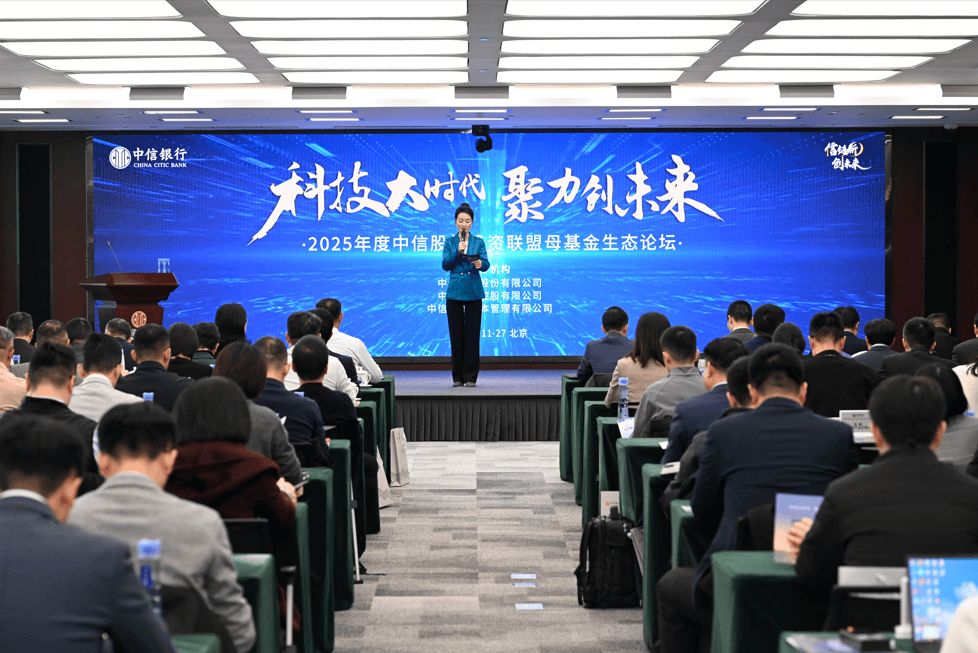
2025年度中信股权投资联盟母基金生态论坛成功举办
Sou Hu Cai Jing· 2025-11-29 07:38
Core Insights - The forum held on November 27, 2023, focused on discussing new opportunities in the industry and exploring high-quality development paths for financial support of technological innovation [1][3] Group 1: Forum Highlights - The forum featured over 150 representatives from government-guided funds, central enterprise venture capital, industrial capital, market-oriented private equity institutions, and well-known investors [1] - CITIC Group's investment director and CITIC Bank's business director delivered speeches emphasizing the importance of collaboration in the equity investment ecosystem [1] - CITIC's wealth management department outlined the service system of the CITIC Equity Investment Alliance, aiming to build a robust, efficient, professional, and responsible new ecosystem for equity investment [3] Group 2: Investment Focus - CITIC Investment Holdings and CITIC Construction Investment promoted eight mother fund businesses, focusing on sectors such as artificial intelligence, semiconductors, high-end manufacturing, new energy, new materials, and next-generation information technology [3] - The total scale of the related mother funds is approximately 20 billion yuan, distributed across regions including Jiangsu, Zhejiang, Guangdong, Guangxi, Fujian, and Sichuan [3] Group 3: Strategic Goals - The CITIC Equity Investment Alliance aims to implement national strategies for enhancing the technology finance service system and promoting high-quality development of venture capital [5] - The alliance currently manages funds exceeding 320 billion yuan and has incubated over 1,100 enterprises, successfully supporting leading companies in various industries [5] - CITIC Bank has developed specialized products such as credit card loans and achievement transformation loans, with a technology enterprise loan balance reaching 982.77 billion yuan by the end of September 2025 [5]

2026年股权投资市场怎么走?最新研判来了
Shang Hai Zheng Quan Bao· 2025-11-28 13:29
Core Insights - The 19th China Investment Annual Conference highlighted trends in the private equity market, emphasizing the importance of economic, political, and technological drivers in asset allocation, with expectations for stability until 2026 [1] - The report indicated a significant increase in newly established venture capital funds, reaching 1.78 trillion yuan in the first three quarters of 2025, a year-on-year increase of 10.25%, and investment events totaling 912 billion yuan, up 19.98% [1] Group 1: Investment Trends - The report predicts three major trends in asset allocation: industry concentration, regional decoupling, and stable allocation [1] - The participation of state-owned capital in venture capital has reached a stable phase, with state-owned platforms and guiding funds accounting for 59% of the funding structure by Q3 2025 [2] - The willingness of listed companies to invest in private equity funds has decreased, with average annual contributions dropping from 288 million yuan to 192 million yuan from 2022-2023 to 2024 [3] Group 2: M&A and Fund Dynamics - The Chinese M&A fund market is expected to grow significantly, with a focus on cash flow and operational management, presenting numerous opportunities due to a favorable financing environment and increasing demand for corporate restructuring [4] - S funds are becoming a critical component of the market, with a peak in global S transactions in the first half of 2025, indicating a growing demand for secondary fund transactions [5][6] - The report suggests that the Chinese hard technology sector will undergo a competitive phase, with a shift from scale to technological innovation and a focus on building systematic capabilities [7][8]
衢州东峰拟出资9.8亿元设立衢州智峰
Zhi Tong Cai Jing· 2025-11-28 13:07
衢州东峰(601515.SH)发布公告,公司及全资子公司汕头东峰消费品产业有限公司(简称"东峰消费品")拟 与衢州智盛产业投资有限公司(简称"衢州智盛")共同出资设立衢州智峰股权投资合伙企业(有限合伙)(简 称"衢州智峰")。公司作为衢州智峰之有限合伙人拟认缴出资9.8亿元,占衢州智峰认缴出资总额的 49%。 设立合伙企业主要是为持续优化在新型材料及I类医药包装等相关领域的布局,寻找细分行业内优质的 标的进行投资,进一步夯实公司的产业基础、并探索发掘协同价值,以衢州智峰作为对科技创新型企业 以及其他有重大市场发展潜力的企业进行投资的平台。 衢州东峰(601515.SH)发布公告,公司及全资子公司汕头东峰消费品产业有限公司(简称"东峰消费品")拟 与衢州智盛产业投资有限公司(简称"衢州智盛")共同出资设立衢州智峰股权投资合伙企业(有限合伙)(简 称"衢州智峰")。公司作为衢州智峰之有限合伙人拟认缴出资9.8亿元,占衢州智峰认缴出资总额的 49%。 ...

东方明珠拟参与设立合伙企业 受让新华三部分股权
Zhi Tong Cai Jing· 2025-11-28 12:55
Core Viewpoint - Oriental Pearl (600637.SH) has announced a partnership to establish a new investment fund, aiming to enhance asset value through strategic investments in Xinhua San [1] Group 1: Investment Details - The company signed a partnership agreement with Hefei Huaxin Shiheng Enterprise Management Consulting Partnership (Limited Partnership) and five other firms to set up the Hefei Huaxin Mingzhu Equity Investment Partnership (Limited Partnership) [1] - The total fund size is set at 1 billion yuan, with the company committing to contribute 499.9 million yuan, representing approximately 49.99% of the total fundraising [1] Group 2: Strategic Objectives - The partnership aims to invest in Xinhua San through equity investments to achieve asset appreciation [1] - This investment is expected to leverage the strengths of all parties involved, utilizing a professional investment management team to optimize the company's investment structure and enhance investment returns and asset operation capabilities [1]
创投圈年终交卷了
投资界· 2025-11-28 08:59
Core Insights - The 25th China Private Equity Annual Conference will be held in Shenzhen from December 2-5, 2025, organized by Qianhai Capital and Investment界, with various forums and summits focusing on investment trends, AI, and life sciences [2][4]. Agenda Highlights - The conference will feature a 90-minute impactful dialogue at the Investment Trend Forum on December 3, discussing the future of investment with the release of the "2025 China Private Equity Development Report" [4][6]. - Keynote speeches will include prominent figures such as Ni Zhengdong, founder and chairman of Qianhai Group, and Jin Haitao, chairman of Qianhai Ark Asset Management [6][7]. - Roundtable discussions will cover topics like cyclical games, the rise of corporate venture capital (CVC), and hard technology investments, featuring industry leaders from various investment firms [8][18]. AI Summit - The AI Summit on December 3 will focus on breakthroughs in the industry, discussing the "computing power revolution" and the integration of AI with hard technology, providing a platform for investment institutions and enterprises [10][12]. Innovation in Life Sciences - The Innovation Drug and Life Science Summit on December 4 will address key advancements in biotechnology, including AI in drug development and innovative medical devices, offering insights for investors [20][21]. Exhibition and Networking - The conference will feature over 20 innovative technology companies, providing opportunities for networking and engagement through various interactive formats, including discussions with industry leaders and technology showcases [22][24].

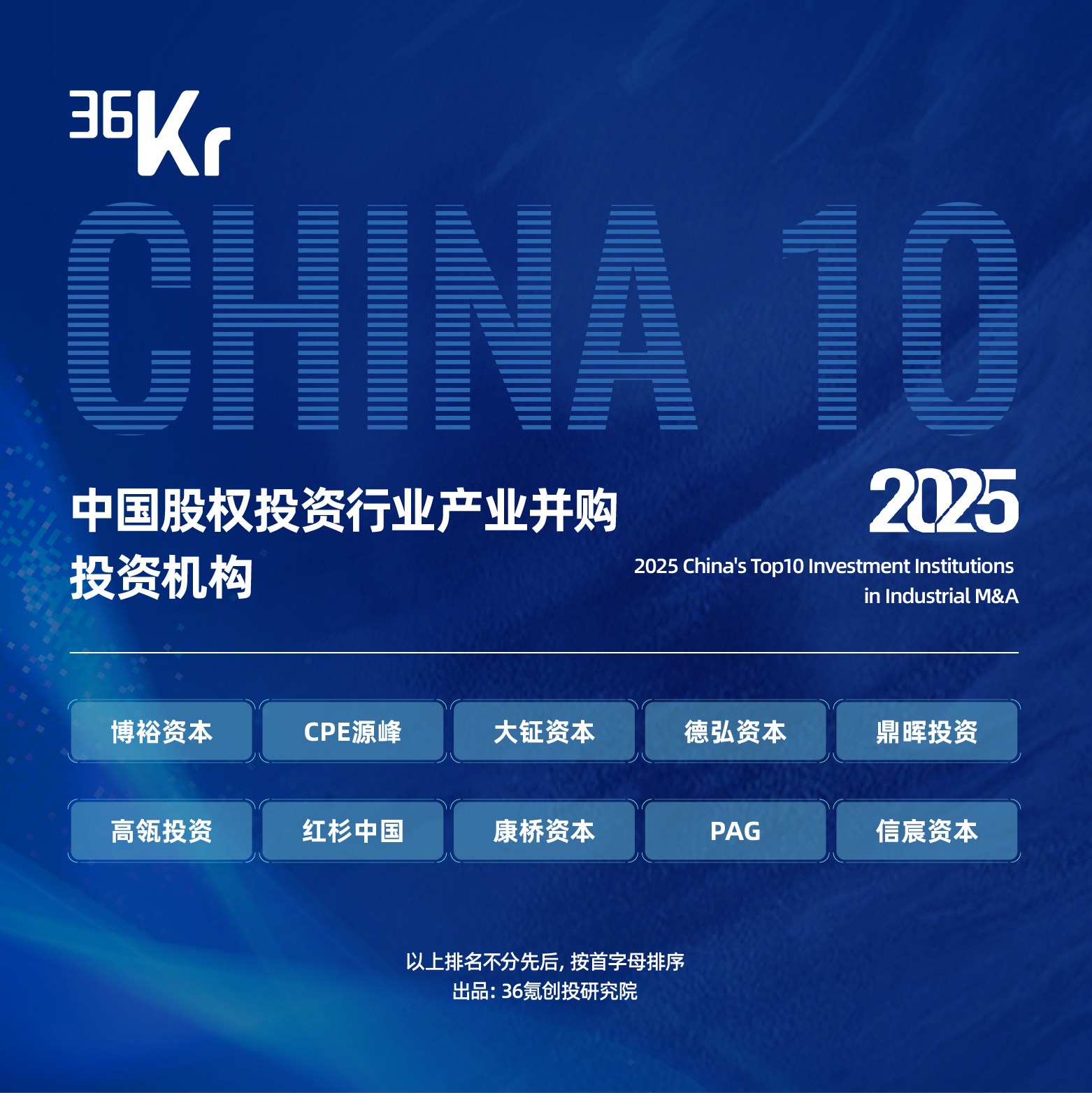
2025年度中国股权投资行业「产业并购」投资机构系列名册揭晓!
3 6 Ke· 2025-11-27 12:36
Core Insights - The year 2025 marks a significant turning point for China's M&A market, transitioning from "strategic attempts" to "systematic prosperity" due to supportive policies and resilient macroeconomic conditions [1][2] - Capital is increasingly focused on high-quality assets with strong cash flow, brand equity, and market share, moving away from merely seeking high returns [2] - The pressure for exits in the primary market has led to innovative liquidity solutions, with M&A becoming a widely accepted exit strategy for investors and entrepreneurs [2] M&A Trends - VC/PE institutions are undergoing a transformation, actively seeking control or leading stakes in quality assets rather than passively waiting for financial returns [2] - As of 2025, there have been over 25 significant M&A cases exceeding 5 billion, which redefine the relationship between investment institutions and the companies they invest in [2][3] Notable Transactions - CPE Yuanfeng's acquisition of 83% of Burger King's China operations is a strategic move to enhance digital operations and local menu innovation [3] - The partnership between Boyu Capital and Starbucks aims to leverage local market insights to drive growth in lower-tier markets and digital transformation [3] - Sequoia China’s acquisition of a majority stake in British audio brand Marshall for 1.1 billion euros highlights the trend of utilizing China's supply chain advantages to empower global brands [3] Investment Institutions - A list of notable investment institutions involved in M&A activities includes Boyu Capital, CPE Yuanfeng, Sequoia China, and others, reflecting their commitment to reshaping corporate DNA through acquisitions [6][9]
培育壮大新兴产业和未来产业是实现可持续发展的关键
Zhong Guo Zheng Quan Bao· 2025-11-26 20:20
Group 1 - The cultivation and expansion of emerging and future industries are key to achieving sustainable development [1] - Private equity funds play a crucial role in promoting innovation and allowing for trial and error in the development of new productive forces [1] - Government investment funds are an important part of China's venture capital market, combining effective markets with proactive government roles [1] Group 2 - Corporate venture capital (CVC) has significant importance in promoting technological innovation and industrial development, particularly in matching with cutting-edge projects [2] - CVC can leverage its inherent industry resources to empower startups comprehensively [2] - The private equity fund industry should seize opportunities for sustainable development through innovative thinking and practical actions [2] Group 3 - Suggestions for the sustainable development of the private equity fund industry include improving the financial service system and enhancing the capacity to empower sustainable development [2][3] - There is a need to cultivate patient capital, which aligns naturally with private equity funds, by optimizing investment duration, exit channels, and assessment mechanisms [2] - The banking sector should innovate financial tools and business models to convert a portion of its assets into long-term patient capital [3]