
种植业

Search documents
山东省应急管理厅挂职干部:守好 “粮袋子” 护航三秋生产
Qi Lu Wan Bao· 2025-10-24 08:24
Core Viewpoint - The article highlights the proactive measures taken by the Shandong Provincial Emergency Management Department to ensure food security during the critical autumn agricultural season amidst continuous rainfall challenges. Group 1: Response to Rainfall Challenges - The first secretary and selected officials developed a comprehensive investigation plan covering all villages, conducting in-depth visits to assess the progress of autumn harvests, crop lodging conditions, machinery needs, and wet grain storage pressures [3][5] - They established a demand list and responsibility ledger to coordinate with local party committees, agricultural departments, and emergency services to secure resource support for villagers [3] Group 2: Mitigation of Agricultural Issues - In response to reported waterlogging in fields, they coordinated with the county emergency bureau to secure two mobile drainage pumps for urgent support, facilitating the quick removal of water to clear the way for harvesting [5] - They addressed the shortage of drying spaces for wet grain by negotiating with relevant departments to open idle office spaces for villagers to use for drying, and organized volunteer teams to assist vulnerable populations [7] Group 3: Disaster Response and Support - The first secretary and selected officials educated themselves on disaster assessment and reporting procedures, promoting winter-spring relief policies through community meetings and home visits to ensure eligible farmers received assistance [9] - They are committed to focusing on autumn sowing management and winter wheat field maintenance to further safeguard food security and contribute to high-quality agricultural development [11]


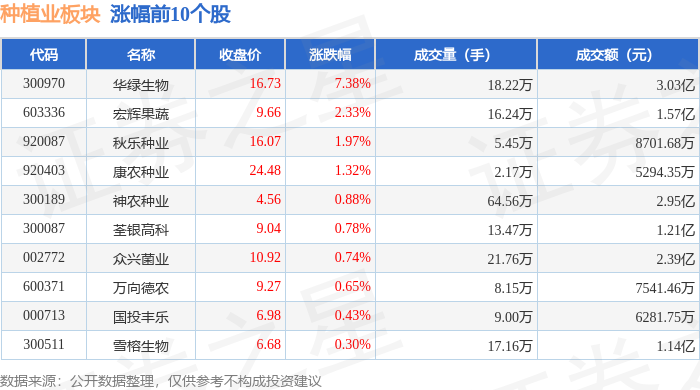
种植业板块10月24日跌0.19%,亚盛集团领跌,主力资金净流出2649.63万元
Zheng Xing Xing Ye Ri Bao· 2025-10-24 08:21
Core Insights - The agriculture sector experienced a slight decline of 0.19% on October 24, with Yasheng Group leading the losses [1] - The Shanghai Composite Index closed at 3950.31, up 0.71%, while the Shenzhen Component Index closed at 13289.18, up 2.02% [1] Sector Performance - Notable gainers in the agriculture sector included: - Hualu Biological (300970) with a closing price of 16.73, up 7.38% and a trading volume of 182,200 shares, totaling 303 million yuan [1] - Honghui Fruits and Vegetables (603336) closed at 9.66, up 2.33% with a trading volume of 162,400 shares, totaling 157 million yuan [1] - Conversely, Yasheng Group (600108) led the declines, closing at 3.10, down 1.59% with a trading volume of 399,200 shares, totaling 125 million yuan [2] Capital Flow - The agriculture sector saw a net outflow of 26.5 million yuan from institutional investors, while retail investors experienced a net outflow of 10.8 million yuan [2] - Speculative funds recorded a net inflow of 37.3 million yuan into the sector [2] Individual Stock Capital Flow - Notable capital flows included: - Zhongxing Fungi Industry (002772) with a net inflow of 30.3 million yuan from institutional investors, but a net outflow of 36.6 million yuan from retail investors [3] - Shennong Seed Industry (300189) had a net inflow of 17.9 million yuan from institutional investors, but a net outflow of 8.2 million yuan from retail investors [3]


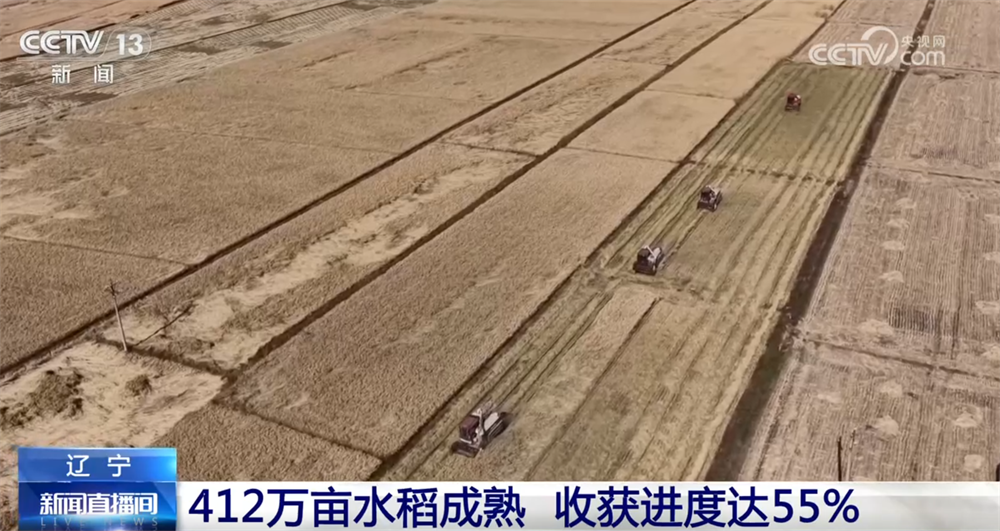
秋日沃野铺展好“丰”景 机械化助力让乡村振兴跑出“加速度”
Yang Shi Wang· 2025-10-24 07:51
Group 1: Rice Harvest in Liaoning - Liaoning is a major grain-producing region in China, with rice harvesting area reaching 4.12 million acres and a harvesting progress of 55% as of now [8] - In Tieling, the rice planting area is 520,000 acres, with an estimated total yield exceeding 600 million pounds [6][8] - The average yield per acre in Tieling is expected to reach over 1,350 pounds, with an increase of approximately 150 pounds per acre compared to previous years [6] Group 2: Harvesting Efficiency - The use of combine harvesters in Tieling significantly increases efficiency, with machines capable of harvesting 50-60 acres per day, which is 50-60 times more efficient than manual labor [4] - After harvesting, straw is processed into various forms, contributing an additional income of 20-30 yuan per acre for farmers [6] Group 3: Other Regions' Harvest Updates - In Jiangsu, the autumn grain harvest has reached 14.46 million acres, with over 30% completion, and rice is entering the harvesting phase [9][13] - Continuous rainy weather in Jiangsu has led to 24-hour operation of grain drying equipment to ensure timely processing [11][13] - In Ningxia, 800,000 acres of potatoes are being harvested, with an expected yield of over 1.25 million tons, despite challenges posed by wet soil conditions [18]
江阴税务:税惠润农迎丰仓
Yang Zi Wan Bao Wang· 2025-10-24 03:48
Core Insights - The article highlights the proactive measures taken by the Jiangyin Taxation Bureau to support farmers through tailored tax policies and services, enhancing agricultural modernization [1][2] - The implementation of "screen-to-screen" policy push and business guidance aims to address the specific needs of farmers, ensuring they can efficiently manage tax-related processes [1] Group 1: Tax Support Initiatives - The Jiangyin Taxation Bureau has initiated the "惠企助农" (Support Enterprises and Farmers) action, focusing on the actual needs of farmers [1] - A dedicated "助农税宣服务队" (Tax Promotion Service Team for Farmers) has been established to extend services to various agricultural settings, promoting tax benefits for farmers [1] Group 2: Farmer Experiences - Farmers, such as Wang Xiaohuan, express concerns about tax operations affecting their credibility, emphasizing the importance of timely invoicing and tax compliance [1] - The tax bureau provides practical demonstrations on how to apply for invoices through the electronic tax system, alleviating farmers' worries about tax procedures [1] Group 3: Agricultural Success Stories - The article mentions the successful grape harvest in Jiangyin, with local farmers efficiently managing invoicing thanks to the tax bureau's guidance [2] - Cooperative leaders, like Liu Deyu, highlight the importance of adhering to tax regulations to enhance their product's reputation and marketability [2]
山东发布小麦田杂草科学防控技术指导意见
Qi Lu Wan Bao Wang· 2025-10-24 02:01
Core Viewpoint - The article discusses the impact of continuous rainfall on wheat planting in Shandong, leading to delayed sowing and increased weed emergence, prompting the issuance of scientific guidelines for weed control in wheat fields for the 2025-2026 period [1] Group 1: Weed Control Strategies - The guidelines emphasize a "prevention first, integrated control" approach, focusing on key periods such as sowing and green-up stages, and employing both agricultural and chemical measures for effective weed management [1][2] - The goal is to control weed damage to below 5% through sustainable and green management practices [1] Group 2: Agricultural Measures - Recommended practices include cleaning fields, reasonable planting density, using well-composted organic fertilizers, and implementing crop rotation to reduce weed harm [2] - Improving soil preparation and management techniques is crucial for enhancing wheat seedling competitiveness against weeds [2] Group 3: Chemical Control Techniques - Specific herbicides are suggested for different types of weeds, such as using sulfentrazone and glyphosate for pre-emergence control, and selecting appropriate herbicides based on weed species during the green-up period [3][4] - The guidelines caution against using certain herbicides during adverse weather conditions to prevent damage [4] Group 4: Application Techniques - Proper application techniques are highlighted, including using suitable spraying equipment and ensuring even distribution of herbicides to avoid waste and local damage [5] - Recommendations include using fan-shaped or anti-drift nozzles and adhering to specific environmental conditions for effective herbicide application [5]
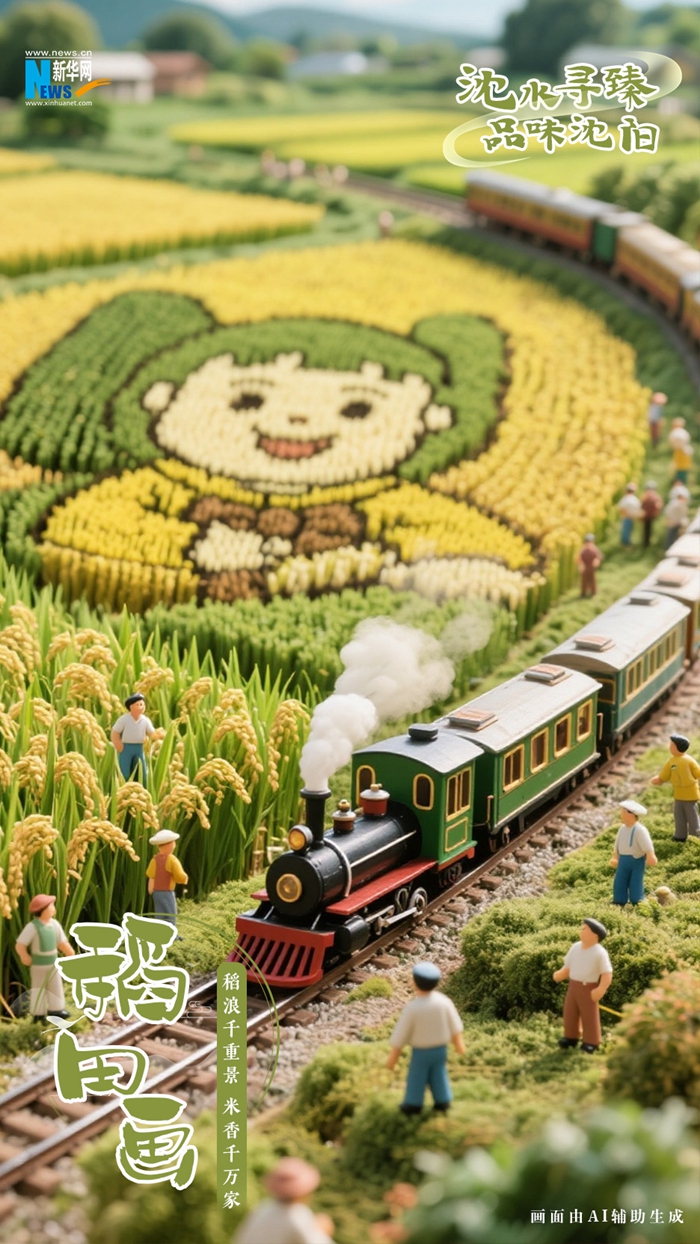
沈水寻臻 品味沈阳丨稻田画:稻浪千重景 米香千万家
Xin Hua Wang· 2025-10-24 01:12
Core Viewpoint - Shenyang is focusing on becoming a leading modern agricultural development area and a strong agricultural city, aiming to enhance its food industry through high-quality development of its unique agricultural sectors, which include edible fungi, facility vegetables, soybeans, and more [3] Group 1: Agricultural Development Goals - Shenyang is committed to building a strong agricultural city and a major food industry hub, with a focus on high-quality development of its "1+8" agricultural specialty industries [3] - The city is integrating resources from various districts to promote the rice paddy painting industry, combining creative agriculture, rice culture, and rural tourism [3] Group 2: Economic Impact and Tourism - The "Rice Dream Space" has become a popular tourist destination, attracting hundreds of thousands of visitors annually and turning Shenyang rice into a trending food product [3] - The development strategy of "Rice Dream Space" is being replicated across the region, enhancing the local economy through agricultural production, cultural experiences, and scenic tourism [3]
辽宁盘锦稻香蟹肥迎丰收
Zhong Guo Xin Wen Wang· 2025-10-24 01:12
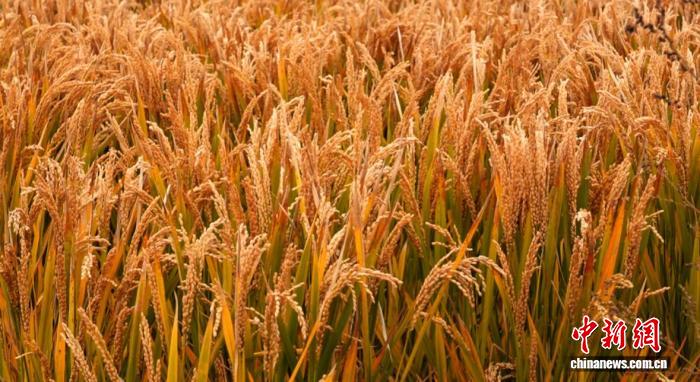
Core Insights - The article highlights the successful harvest season in Panjin, Liaoning, with increased rice yields and high-quality river crabs, showcasing the effectiveness of the integrated rice-crab farming model [1][4][5] Rice Production - Panjin's rice planting area remains stable at over 1.6 million mu, with a significant increase in yield expected this year compared to previous years [3] - The new rice from Panjin is being sold nationwide through e-commerce platforms, with one farm reporting sales of over 8 million jin within a week of launching a new product [3] Crab Farming - The river crab farming in rice paddies has led to a symbiotic relationship where crabs feed on pests and weeds, while their waste serves as organic fertilizer for the rice [3][4] - Farmers like Zhang Shuang report high-quality crab production, with yields of 30 jin per mu from an initial investment of 10 jin of juvenile crabs [4] Economic Impact - The dual harvest of rice and crabs has not only improved the economic benefits for farmers but also boosted confidence in promoting this farming model [5] - The integration of tourism with agriculture, such as the rice art in the Red Beach National Rice Park, has attracted visitors and enhanced brand value while generating additional income from rice sales [5]
脱贫户家门口就业收入更稳(迈向“十五五”的民生图景)
Ren Min Ri Bao· 2025-10-23 21:57
Core Insights - The article highlights the importance of ensuring livelihood security and promoting stable employment for key groups through various channels, including addressing wage arrears and enhancing public services to meet urgent needs of the population [1] Group 1: Employment and Livelihood - The bamboo shoot industry in Guangxi has become a significant source of employment, providing over 4,000 job opportunities annually, with local workers earning around 4,000 yuan per month [3][4] - The area under bamboo shoot cultivation has expanded from over 600 acres to 850 acres, with plans for further investment to enhance infrastructure and diversify agricultural production [4][6] - The local government encourages enterprises to prioritize hiring from vulnerable groups to stabilize their income and support poverty alleviation efforts [4][5] Group 2: Economic Development Initiatives - The local government has invested over 3 million yuan in infrastructure development, including road construction, to support the growth of the bamboo shoot and other agricultural industries [4][6] - Since 2025, the county has attracted 12 enterprises with an actual investment of over 180 million yuan, creating an industrial cluster and multiple job opportunities for the local population [6]
努力让每寸耕地都成为稳产田(话说新农村)
Ren Min Ri Bao· 2025-10-23 21:51
Core Insights - The article emphasizes the importance of maintaining stable and secure supply of key agricultural products through enhanced resilience in the agricultural industry, particularly in the face of climate change and extreme weather events [1][2]. Group 1: Agricultural Production Status - As of October 21, nearly 80% of the autumn grain harvest has been completed nationwide, with the Huang-Huai-Hai region also nearing 80% completion [1]. - Continuous adverse weather conditions, such as prolonged rain, have necessitated urgent harvesting efforts in key agricultural areas [1]. Group 2: Agricultural Resilience and Supply Security - The resilience of the agricultural industry is crucial for ensuring stable supply and security of important agricultural products, which has improved over time through various measures [2]. - To further strengthen agricultural resilience, it is essential to address industry shortcomings and enhance disaster prevention and mitigation systems [2]. Group 3: Infrastructure and Technological Advancements - Significant investments have been made in agricultural infrastructure, with over 1 billion acres of high-standard farmland established nationwide [2]. - The development of drought-resistant crop varieties and the application of smart management technologies are key to improving agricultural resilience [2]. Group 4: Adaptive Strategies and Farmer Preparedness - Farmers are increasingly adapting their practices to cope with climate variability, focusing on improving weather prediction accuracy and enhancing drainage and drought resistance [3]. - The article highlights the need for detailed implementation of agricultural strategies during critical periods, such as the autumn harvest, to achieve annual grain production targets [3].
忙碌在霜降的田野上
Xin Hua She· 2025-10-23 15:44
Group 1 - The article highlights the arrival of the last solar term of autumn, "Frost's Descent," on October 23, 2025, indicating a transition to cooler weather [1] - Farmers across various regions are actively engaged in agricultural activities such as crop management and harvesting, showcasing their diligence [1]