养老服务

Search documents
我省持续推进居家社区养老服务提质扩容
Hai Nan Ri Bao· 2025-08-07 01:20
Core Points - The article discusses the ongoing efforts in Hainan Province to enhance and expand community-based elderly care services, aiming for significant improvements by 2025 [2][3][4] Group 1: Elderly Assessment and Services - Over 170,000 elderly individuals have undergone capability assessments, achieving an over 80% completion rate [2] - The assessments are based on national standards, evaluating self-care ability, basic mobility, mental state, sensory perception, and social participation across 26 specific indicators [3] - The results of these assessments will be used to provide personalized services, including nursing care subsidies and tailored care plans [3] Group 2: Infrastructure Development - Construction of regional elderly service centers and community service stations is underway, with significant progress reported [4] - The regional service center in Baoting is equipped with multifunctional activity rooms and rehabilitation rooms, with 80% of construction completed [4] - Two community service stations in Chengmai County are nearing completion, expected to provide comprehensive services by September [4] Group 3: Funding and Future Plans - The provincial government has allocated 2.52 million yuan for establishing precise service records for elderly individuals over 80 years old [3] - An additional 20 million yuan has been earmarked for the establishment of 10 regional service centers and 30 community service stations in 2024 [5] - The initiative aims to create a "15-minute" community elderly care service network, enhancing accessibility and convenience for elderly residents [5]
成都优护家健康科技有限公司成立,注册资本1000万人民币
Sou Hu Cai Jing· 2025-08-06 11:43
天眼查App显示,近日,成都优护家健康科技有限公司成立,法定代表人为吴恒松,注册资本1000万人 民币,成都优护家健康管理有限公司、四川焱昇万物科技有限公司持股。 序号股东名称持股比例1成都优护家健康管理有限公司70%2四川焱昇万物科技有限公司30% 经营范围含数字技术服务;养老服务;企业管理;健康咨询服务(不含诊疗服务);软件开发;网络与 信息安全软件开发;信息技术咨询服务;酒店管理;餐饮管理。(除依法须经批准的项目外,凭营业执 照依法自主开展经营活动) 企业名称成都优护家健康科技有限公司法定代表人吴恒松注册资本1000万人民币国标行业卫生和社会工 作>社会工作>提供住宿社会工作地址成都高新区科园二路10号3栋2单元16层2号企业类型其他有限责任 公司营业期限2025-8-5至无固定期限登记机关成都高新区市场监督管理局 来源:金融界 ...
北京健康(02389.HK)中标安徽省广德市养老服务中心,新增290张养老床位
Ge Long Hui· 2025-08-06 09:37
Group 1 - Beijing Health (02389.HK) announced the successful bid for the Anhui Guangde Elderly Care Center project, which is expected to be completed by July 30, 2025 [1] - The project covers a total construction area of approximately 10,000 square meters and is designed to accommodate around 290 beds [1] - The project is part of the Anhui provincial government's initiative to establish Guangde City as a leading ecological and green elderly care base in the Yangtze River Delta region [1] Group 2 - With the successful bid for the Guangde Elderly Care project, the number of the company's elderly care institutions will increase to 9, raising the total bed capacity to 2,138 [1] - The project is strategically located in the core area of the Yangtze River Delta, catering to the elderly care needs from major cities like Shanghai and Nanjing [1] - The total construction period for the project is estimated to be around 16 months [1]
北京健康(02389) - 自愿公告有关中标安徽省广德市养老服务中心新增290张养老床位
2025-08-06 09:24
香港交易及結算所有限公司及香港聯合交易所有限公司對本公告的內容概不 負 責,對 其 準 確 性 或 完 整 性 亦 不 發 表 任 何 聲 明,並 明 確 表 示,概 不 對 因 本 公 告 全部或任何部份內容而產生或因倚賴該等內容而引致的任何損失承擔任何責 任。 二 零 二 四 年,安 徽 省 將 廣 德 市 定 位 為 長 三 角(安 徽)生 態 綠 色 康 養 基 地 先 行 區 及 首 批 國 家 森 林 康 養 基 地,全 力 打 造「全 齡 康 養」的 康 養 名 城,而 廣 德 養 老 項 目 正 位 於 長 三 角 核 心 區 域,未 來 將 承 載 來 自 上 海 市、南 京 市 等 周 邊 大 城 市 的 老 齡 康 養 需 求。 隨 著 廣 德 養 老 項 目 的 成 功 中 標,本 集 團 康 養 機 構 數 量 增 加 至9個,總 床 位 增 至 2,138張。 – 1 – 有關本集團之養老業務 (股份代號: ) (於開曼群島註冊成立的有限公司) 2389 自願公告 有關中標安徽省廣德市養老服務中心 新 增290張養老床位 本 公 告 由 北 京 健 康(控 股)有 限 公 司(「本 ...
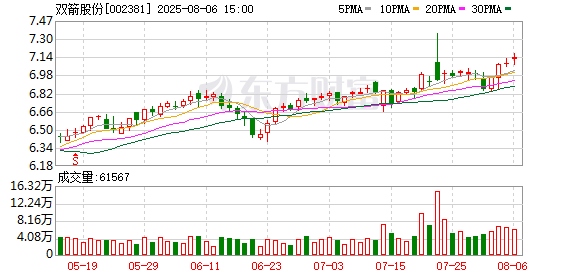
双箭股份:公司以全资子公司桐乡和济颐养院有限公司为平台从事养老服务相关业务
Mei Ri Jing Ji Xin Wen· 2025-08-06 08:58
Group 1 - The company is engaged in the elderly care industry through its wholly-owned subsidiary, Tongxiang Heji Yiyangyuan Co., Ltd, focusing on various elderly service-related businesses [2] - The company operates 6 elderly care institutions and 5 nursing homes in Tongxiang and Suzhou, with approximately 2,300 beds available [2] - The company manages home care service centers for 92 villages and communities in Tongxiang, providing long-term care insurance, family bed services, and home care services for around 60,000 to 70,000 visits per year [2] Group 2 - The company aims to effectively combine institutional care, community care, and home care to create a comprehensive, multi-level, and three-dimensional elderly care model [2]


广东拟出台养老机构预收费管理办法 预收服务费最长不超过6个月
Nan Fang Ri Bao Wang Luo Ban· 2025-08-06 08:21
Core Points - Guangdong Province is drafting the "Management Measures for Pre-collection of Fees in Elderly Care Institutions (Draft for Comments)" to enhance regulation of pre-collected fees in elderly care facilities [1] - The draft stipulates that the maximum period for pre-collecting elderly care service fees should not exceed 6 months, and the deposit for a single elderly person should not exceed 20,000 yuan [2][3] - Membership fees cannot exceed six times the highest monthly service fee of the institution and must not be collected through misleading promotions [2][3] Fee Collection Regulations - Pre-collected fees include service fees, deposits, and membership fees, and should respect the wishes of the elderly or their agents without coercion [2] - Monthly collection is preferred for service fees, with specific charges based on actual consumption for items like meal fees [2] - Institutions must provide clear information about fee collection and usage, including a written agreement detailing refund conditions and responsibilities [4] Investment Restrictions - Membership fees can only be used for facility construction and core business, prohibiting high-risk investments or loans to related enterprises [3] - Institutions that are not yet built or do not meet conditions cannot collect membership fees [3] Refund and Notification Policies - Refunds must be processed within specified timeframes, with full refunds for cancellations before admission and partial refunds after admission [4] - Institutions must notify elderly individuals or their agents 30 days in advance of any operational changes, including closures [4]
民政部:做好全国养老机构防汛工作,将养老机构纳入优先救援对象
Xin Jing Bao· 2025-08-06 04:44
要落实"以防为主",健全应急工作机制,完善应急预案,加强与属地应急部门的联动,将养老机构纳入 优先救援对象,纳入本地区防汛物资总体储备及配备范围。要强化应急值守,落实24小时值班制度,严 格落实信息报告要求,确保信息畅通处置高效。要夯实养老机构安全基础,强化分类管理,对基础条件 薄弱的农村、闲置资产改建的养老机构等,要强化资金投入、内部管理、风险防控,提高本质安全。 新京报讯 据民政部消息,日前,民政部召开进一步做好全国养老机构防汛工作电视电话会议,对全国 养老机构防汛工作进行再调度、再安排、再督促。 会议强调,各地民政部门要深刻认识抓好防汛工作的重要性和紧迫性,坚决克服麻痹思想、侥幸心理, 把人民生命安全放在更高处,以"时时放心不下"的责任感和"事事心中有底"的行动力,慎终如始抓好养 老机构防汛工作。 各地民政部门要不折不扣落实包保责任制,切实把安全管理责任压实到人、落实到机构。要全面建立涉 汛风险养老机构清单、应急准备清单,提高风险防范能力。要充分考虑老年人特点,把工作做在前,严 格执行"四个一律",果断转移安置,最大限度保障老年人生命安全。 ...
中青宝上(天津)养老服务有限公司成立,注册资本8800万人民币
Sou Hu Cai Jing· 2025-08-06 02:32
Core Viewpoint - Recently, Zhongqingbao Shang (Tianjin) Elderly Care Service Co., Ltd. was established with a registered capital of 88 million RMB, fully owned by Beijing Silk Road Zhongqingbao Shang Supply Chain Management Co., Ltd. [1] Company Summary - Company Name: Zhongqingbao Shang (Tianjin) Elderly Care Service Co., Ltd. [1] - Legal Representative: Wang Meiyan [1] - Registered Capital: 88 million RMB [1] - Shareholding Structure: 100% owned by Beijing Silk Road Zhongqingbao Shang Supply Chain Management Co., Ltd. [1] - Business Scope: Includes elderly care services, nursing institution services (excluding medical services), health consulting services (excluding diagnostic services), engineering management services, and earthwork engineering construction [1] - Company Type: Limited liability company (sole proprietorship) [1] - Business Duration: From August 5, 2025, to indefinite [1] - Registration Authority: Tianjin Xiqing District Market Supervision Administration [1] Industry Summary - Industry Standard: Health and social work > Social work > Providing accommodation social work [1] - Address: 35 Caizhi Road, Hailande Building, Room 2302, Xiqing University Industrial Zone, Tianjin [1]

许维鸿:让银发流量成为民生红利
Sou Hu Cai Jing· 2025-08-05 22:50
2025年是中国经济转型升级的重要一年,在中美贸易博弈升级与"双循环"体系建设的双重背景下,深挖 内需成为中国经济发展的重要方向。其中,旨在激活中老年消费潜力的银发经济与银发产业,既是产业 升级的增量市场,更是关乎民生福祉的重要领域。然而,发展银发经济,绝不能将老人视为"韭菜"肆意 收割,唯有立足中国文化背景、发挥制度优势,才能让我们的银发流量真正转化为普惠城乡、持续发展 的民生红利。 发展银发经济、银发产业,本质上是以人为本、提升中老年生活质量的民生政策,并不鼓励投机者利用 相关概念牟取短期利益。说白了,不要光盯着中老年人的钱包,还要考虑他们的文化背景,回应他们对 幸福生活的真实追求。从经济学最基本的研究角度出发,银发产业的周期基于中国人口结构的生命周 期。当前银发经济的主体是50后、60后和70后,他们是中国改革开放最初的建设者,是中国从农耕文明 步入制造业大国的奉献者。这几代人用省吃俭用的生活态度,为中国工业化进程积累了超高的储蓄率、 为"基建狂魔"的崛起提供了持续的资金积累。他们的消费选择理应得到尊重,而非被算计。 理解当前银发群体的消费特征,首先需要看懂他们刻在骨子里的"贫穷记忆"。"银发族"的成长 ...
金融活水精准滴灌实体经济
Ren Min Ri Bao· 2025-08-05 22:21
Group 1 - The production line for silicon photonic engines in Wuhan can process over 100,000 units monthly, supporting high-speed network construction essential for data centers and communication bases [1] - The production line's launch was facilitated by a loan from the Construction Bank's Wuhan branch, enabling the company to upgrade its production line with high-precision equipment [1] - The introduction of advanced equipment at Wuhan Special Industrial Pump Factory was supported by a 20 million yuan loan from Zhongbang Bank, aiding in technology research and development [1] Group 2 - As of June 30, the green loan balance in Hubei reached 222.8 billion yuan, an increase of 38.9 billion yuan since the beginning of the year [2] - Wuhan Zhongbang Bank is enhancing its support for technology finance by developing specialized credit products for tech enterprises, focusing on intellectual property and core technology [2] - The Construction Bank's "Shan Ying Loan" product aims to assist small agricultural enterprises and individual businesses facing funding shortages in rural areas [2] Group 3 - The Agricultural Bank of China's Jingmen branch provided a 4 million yuan loan to Kang Le Nursing Home to support its expansion and meet the growing demand for elderly care services [3] - The focus on five key financial areas—technology finance, green finance, inclusive finance, elderly finance, and digital finance—is crucial for supporting high-quality economic development [3]