
公建民营

Search documents
养老院运营难,1.2亿农村老人怎么办?|小家大家
经济观察报· 2026-03-02 08:40
Core Viewpoint - The rural elderly care institutions are facing significant challenges due to high operational costs and low income levels among the elderly population, leading to a lack of market-driven development and investment opportunities in this sector [2][3][12]. Summary by Sections Current Situation of Rural Elderly Care Institutions - Most rural elderly care institutions operate on a welfare model, charging monthly fees between 2000 to 5000 yuan, which is still high compared to the average pension of 214 yuan per month for urban and rural residents in 2023 [1][5]. - A survey conducted by Zhang Pengfei revealed that the majority of rural elderly care institutions are either government-subsidized or operate under a public-private partnership model, with very few being market-driven [2][3]. Challenges Faced - The staffing situation is dire, with one caregiver often responsible for over ten elderly residents, limiting the quality of care to basic needs such as meals and hygiene [2][10]. - The economic burden of care is significant for families, often equating to an additional mortgage payment, which discourages many from utilizing these services [5][8]. - Rising operational costs, including compliance with safety regulations, have made it increasingly difficult for rural institutions to remain profitable, leading to a decline in the number of institutions [9][10]. Policy and Market Dynamics - Despite the challenges, there is a growing recognition of the potential market for rural elderly care, especially as the aging population in rural areas is higher than in urban settings [3][12]. - The government is expected to enhance support for rural elderly care services, with initiatives aimed at improving policies and encouraging the development of mutual aid systems [3][12][14]. Potential Solutions - Transitioning existing public elderly care facilities to a public-private partnership model could attract market forces and improve service quality while reducing initial investment burdens [12][13]. - Implementing targeted financial support for elderly individuals, such as monthly subsidies for those with moderate to severe disabilities, has shown to alleviate some financial pressures [14][15]. - Developing specialized elderly care facilities that cater to specific needs, such as dementia care, has proven successful in attracting higher occupancy rates despite higher fees [13].


泗阳探索“乡院县管、公建民营”模式走出县域养老服务体系创新路
Xin Hua Ri Bao· 2026-02-10 21:54
Core Viewpoint - Siyang County is innovating its elderly care service system by implementing a "county-managed, publicly built, privately operated" model, addressing traditional bottlenecks in elderly care and supporting 214,000 elderly individuals in their later years [1] Group 1: Government and Market Roles - The government focuses on "basic protection, bottom-line security, system establishment, and strong regulation," while the market is dedicated to providing "diversified, professional, and personalized" elderly care services [1] - The introduction of the "county-managed, publicly built, privately operated" model allows for the activation of existing resources without changing ownership of township elderly care assets [1] Group 2: Investment and Infrastructure - Siyang County has revitalized 10 idle nursing homes, added 1,059 new elderly care beds, and attracted over 12 million yuan in social capital investment [1] - The county has extended the contract period for entrusted operations to 10 years, stabilizing operational expectations and addressing the long-standing issue of insufficient investment motivation in the elderly care industry [1] Group 3: Support Measures and Technological Integration - The county has invested over 90 million yuan to enhance elderly care facilities, increasing the number of nursing beds by 190, with nursing beds now accounting for 72.3% of total beds [1] - A smart elderly care service platform has been established, enabling "one network management, one-click response" for elderly care services [1] - 35 elderly care institutions have signed cooperative agreements with medical institutions, achieving full coverage of integrated medical and elderly care services [1] Group 4: Structural Changes in Management - Through a series of reforms, Siyang County has established a three-tiered elderly care service network and digital management system, transitioning the civil affairs department from "directly managing institutions" to "comprehensively managing the industry" [1]
一餐热饭,暖胃更暖心
He Nan Ri Bao· 2026-01-15 23:29
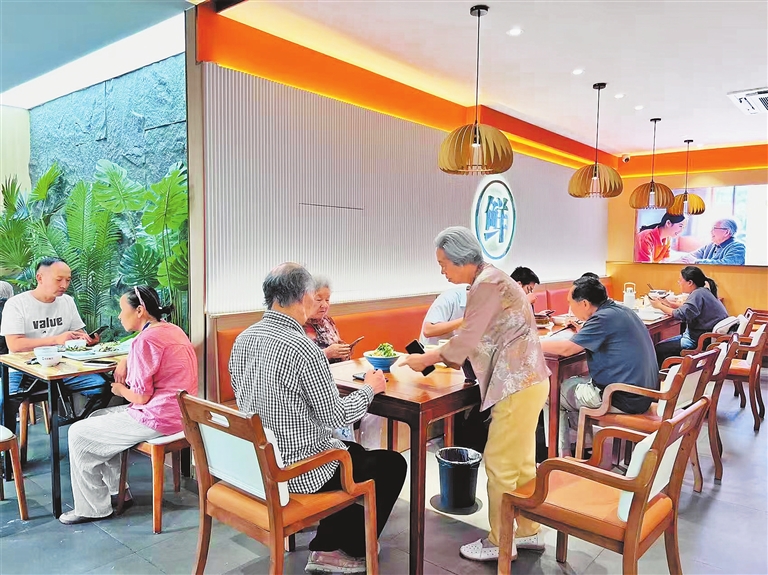
Core Insights - The "Mama Restaurant" has become a popular dining option for elderly residents in the community, addressing their daily meal needs and providing a convenient alternative to cooking at home [2][3] Group 1: Community Impact - The restaurant serves a significant number of elderly individuals, with 83-year-old patrons expressing satisfaction with the service, highlighting the convenience it offers for those who struggle with cooking [2] - The establishment is designed to cater to the elderly, featuring accessible dining arrangements and a variety of healthy meal options, which helps alleviate the challenges faced by seniors living alone [2][4] Group 2: Operational Model - The community has adopted a "public-private partnership" model, allowing a professional organization to operate the restaurant while the community waives rent, ensuring affordability for residents [3] - Discounts are provided for elderly diners, with those over 60 receiving a 10% discount, those over 80 receiving a 20% discount, and those over 90 dining for free, promoting inclusivity and support for the aging population [3] Group 3: Design Considerations - The restaurant incorporates age-friendly features, such as hooks for canes, armrest-equipped chairs, and accessible food counters, enhancing the dining experience for elderly patrons [4] - The social aspect of dining is emphasized, as patrons not only enjoy meals but also the companionship of fellow diners, fostering a sense of community among the elderly [4]
广东从化:探索县域养老新模式 从“兜底保障”迈向“品质养老”
Xin Lang Cai Jing· 2026-01-10 10:12
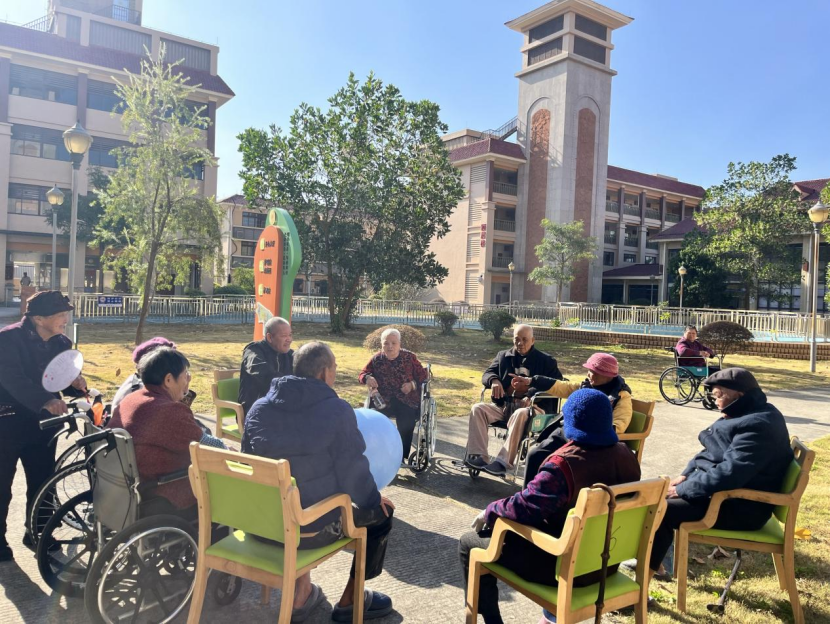
Core Viewpoint - The "public-private partnership" reform in Guangzhou's Conghua District has significantly improved the quality of elderly care services, enhancing operational efficiency and increasing resident satisfaction while alleviating the financial burden on the government [5][9][10]. Group 1: Reform Implementation - The "public-private partnership" model allows for the government to maintain ownership of elderly care facilities while transferring operational responsibilities to social capital, thus eliminating the need for government funding for daily operations [8]. - The introduction of a KPI assessment mechanism has linked the income of management and care staff to resident satisfaction, resulting in a substantial increase in the number of residents from 18 to 204 and a rise in staff from 14 to 96 [7]. - The reform has led to a significant increase in bed occupancy rates, from 8% to 77%, and an expansion of nursing beds from 48 to 300 within a two-year period [9]. Group 2: Service Quality and Diversity - The reform has enabled the provision of comprehensive services, including medical care, rehabilitation, and cultural activities, tailored to meet the diverse needs of the elderly population [9]. - The establishment of a multi-dimensional supervision and evaluation mechanism ensures that service quality is maintained, with third-party assessments in place to monitor performance [8]. - The focus on "zero government funding" and "full social operation" has allowed for a market-oriented approach to elderly care, enhancing service quality and accessibility for the elderly [9][10]. Group 3: Broader Implications - The success of the Conghua District model has inspired similar initiatives in other regions, such as Nansha and Baiyun Districts, indicating a growing trend towards public-private partnerships in elderly care across Guangdong Province [10]. - As of 2024, Guangdong Province has seen a significant increase in the elderly population, with 18.99 million residents aged 60 and above, highlighting the urgent need for improved elderly care services [10]. - The ongoing reforms aim to transition from basic safety nets to high-quality elderly care, reflecting a broader shift in the province's approach to aging populations [10].
首个“公建民营”落子深圳 远洋椿萱茂中标深圳龙岗区养老护理院
Xin Lang Cai Jing· 2026-01-08 08:55
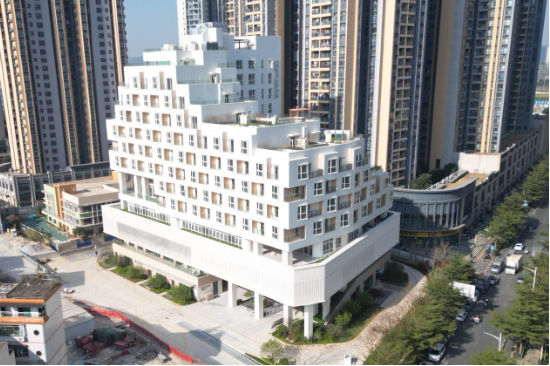
Core Insights - Ocean Group's high-quality health and elderly care service brand, Chuanxuanmao, has won the bid for the public-private partnership elderly care project in Longgang District, Shenzhen, marking a significant expansion in the Guangdong-Hong Kong-Macao Greater Bay Area [1][11] - The public-private partnership model in elderly care combines government leadership with market-oriented professional operations, requiring higher standards for operators compared to traditional elderly care facilities [1][11] Group 1: Benchmark Creation - The Longgang District elderly care facility will cover an area of 26,000 square meters with 350 planned beds, benefiting from excellent transportation links and proximity to major hospitals [2][12] - The project aims to create a smart, green, and ecological elderly care environment, featuring diverse living spaces for various needs, including independent and assisted living, as well as specialized care for dementia patients [2][13] - The design incorporates a "vertical forest" concept to integrate nature into the architecture, enhancing the living experience for residents [2][13] Group 2: Model Breakthrough - Winning the public-private partnership project reflects Chuanxuanmao's over ten years of experience and international perspective in the elderly care sector [5][16] - The company has collaborated with leading international elderly care institutions to develop a differentiated service model, offering over 220 services and 500 service details, establishing a high professional barrier in dementia care and health management [6][16] Group 3: Strategic Significance - The trend of "cross-border elderly care" is rising, with nearly 100,000 Hong Kong seniors choosing to settle in Guangdong Province, a 40.5% increase over the past decade, indicating a growing demand for high-quality health management in the aging population [7][18] - Chuanxuanmao, designated by the Hong Kong government as a mainland elderly care service provider, has developed a mature service system tailored for the elderly in the Greater Bay Area, positioning itself to meet regional demands effectively [7][18] Group 4: National Expansion - Chuanxuanmao's national presence includes coverage in five major urban clusters and twelve core cities, operating over 30 chain facilities with more than 11,000 beds and employing over 2,200 professional elderly care staff [10][20] - The company is expanding its service offerings from institutional care to home-based smart health management and travel care, continuously broadening its service boundaries to provide high-quality living for the elderly [10][20]
首个“公建民营”项目落子深圳 远洋椿萱茂中标深圳龙岗区养老护理院
Zheng Quan Ri Bao· 2026-01-08 06:37
Group 1 - The core viewpoint of the news is that Chuanxuanmao, a high-quality health and elderly care service brand under Ocean Group, has successfully won the bid for a public-private partnership elderly care project in Longgang District, Shenzhen, marking a significant expansion of its elderly care service system into the public-private sector [1][2][3] Group 2 - The Shenzhen Longgang District elderly care facility will cover a total construction area of 26,000 square meters and is planned to have 350 beds, benefiting from excellent transportation links and proximity to major hospitals [2] - The project aims to create a smart, green, and ecological comprehensive elderly care apartment, featuring shared spaces for living, rehabilitation, and recreational activities, catering to various elderly care needs [2] - Chuanxuanmao has established a high professional threshold in dementia care and health management, with over 220 professional service personnel and a service capacity exceeding 16,000 elderly individuals [3]
闲置空间改造 回龙观社区托育服务中心建成
Xin Jing Bao· 2025-08-31 22:51
Core Insights - The establishment of the Huilongguan Community Nursery Service Center addresses the shortage of childcare resources while efficiently utilizing urban space and reducing family childcare costs [1][2] - The center is designed to comply with national standards and offers a variety of services, including personalized parenting consultations and workshops led by professionals [1] Group 1: Facility Overview - The Huilongguan Community Nursery Service Center is located at the intersection of Longyu Middle Road and Longyu South Street, converted from an idle cleaning station [1] - It provides 80 inclusive childcare spots, organized into five classes with an average of 16 children per class [1] - The center includes comprehensive service areas such as a mother-baby room, health observation room, meal preparation area, and indoor activity hall [1] Group 2: Operational Model - The center operates under the principles of "government guidance, professional operation, inclusive accessibility, and safety quality" [1] - It explores a sustainable development path for community-inclusive childcare services under a "public-private partnership" model [1] Group 3: Community Impact - The construction of the center serves as a practical example of addressing public service gaps and innovating community governance in large communities [2] - Future collaborations with operating institutions will focus on optimizing management and enhancing service quality to create a nurturing environment for children and a trustworthy space for parents [2]
北京健康(02389) - 自愿公告有关中标安徽省广德市养老服务中心新增290张养老床位
2025-08-06 09:24
香港交易及結算所有限公司及香港聯合交易所有限公司對本公告的內容概不 負 責,對 其 準 確 性 或 完 整 性 亦 不 發 表 任 何 聲 明,並 明 確 表 示,概 不 對 因 本 公 告 全部或任何部份內容而產生或因倚賴該等內容而引致的任何損失承擔任何責 任。 二 零 二 四 年,安 徽 省 將 廣 德 市 定 位 為 長 三 角(安 徽)生 態 綠 色 康 養 基 地 先 行 區 及 首 批 國 家 森 林 康 養 基 地,全 力 打 造「全 齡 康 養」的 康 養 名 城,而 廣 德 養 老 項 目 正 位 於 長 三 角 核 心 區 域,未 來 將 承 載 來 自 上 海 市、南 京 市 等 周 邊 大 城 市 的 老 齡 康 養 需 求。 隨 著 廣 德 養 老 項 目 的 成 功 中 標,本 集 團 康 養 機 構 數 量 增 加 至9個,總 床 位 增 至 2,138張。 – 1 – 有關本集團之養老業務 (股份代號: ) (於開曼群島註冊成立的有限公司) 2389 自願公告 有關中標安徽省廣德市養老服務中心 新 增290張養老床位 本 公 告 由 北 京 健 康(控 股)有 限 公 司(「本 ...
实探广州普惠托育园:定价低托位爆满,公建民营发展仍有挑战
Nan Fang Du Shi Bao· 2025-07-23 14:46
Core Viewpoint - The recent issuance of guidelines by the National Health Commission and other departments aims to accelerate the construction of an inclusive childcare service system, promoting a public-private partnership model to support diverse and quality childcare services [1] Group 1: Current Situation - The first "public-private" street inclusive childcare center in Guangzhou has opened, with all 18 centers in the Yuexiu District now operational [1] - Many inclusive childcare centers are experiencing full enrollment, with some centers reporting waiting lists for admission [2][3] - The pricing for inclusive childcare slots has been reduced to 50% to 80% of market rates due to the public-private model, making it more affordable for families [8] Group 2: Operational Challenges - Some childcare centers have temporarily relocated due to environmental issues, such as construction nearby [3][4] - The high standards for building requirements and space constraints pose significant challenges for the establishment of inclusive childcare centers [5][6] Group 3: Financial Aspects - The operational costs for inclusive childcare centers have significantly decreased, with rental costs reduced to as low as 5 yuan per square meter, compared to previous market rates [8] - The monthly fees for full-day care range from 1,450 to 4,200 yuan depending on the age group, indicating a competitive pricing strategy [8] Group 4: Future Considerations - The subsidies for inclusive childcare institutions are set to decrease annually, creating uncertainty for the sustainability of these services [10] - Industry experts suggest that childcare centers need to explore sustainable operational models and find suitable venues to ensure long-term viability [11][12] Group 5: Recommendations - There is a call for inclusive childcare services to be integrated into basic public services, enhancing community support and accessibility for families [12][13] - The government is encouraged to provide further support in terms of training for childcare staff and financial incentives to maintain service quality [13]