两轮电动车

Search documents
小牛电动的科技标签旧了
Xin Lang Cai Jing· 2025-04-05 12:38
Core Viewpoint - The article discusses the challenges faced by Niu Technologies, highlighting its declining sales, continuous losses, and the impact of competition in the electric scooter market. Group 1: Sales and Financial Performance - Niu Technologies experienced a significant decline in sales after reaching a peak of 1.0379 million units in 2021, with a recovery to 924,000 units in 2024 [3][6] - The company reported a revenue of 3.288 billion yuan in 2024, a 24% increase year-on-year, with Q4 revenue reaching 819 million yuan, marking a 71.1% increase [5][6] - Despite the revenue growth, Niu Technologies continued to incur losses, with a loss of 193 million yuan in 2024, following a loss of 272 million yuan in 2023 [4][9] Group 2: Market Position and Competition - Niu Technologies initially gained popularity as a high-end electric scooter brand but has struggled to maintain its market position due to increased competition from both established brands like Aima and Yadi, and emerging brands like Ninebot [24][27] - Ninebot, which entered the market later, has surpassed Niu Technologies in sales, achieving 2.1347 million units in the first three quarters of 2024 [28] - The competitive landscape has shifted, with Niu's high-end positioning becoming less distinct as competitors offer similar technological features and designs [31] Group 3: Product Quality and Brand Perception - There has been a noticeable decline in product quality, with consumers reporting issues such as battery performance and overall reliability, leading to negative perceptions of the brand [1][21] - The average selling price of Niu's scooters has dropped from 4,928 yuan in 2019 to around 3,000 yuan in 2024, indicating a shift towards a price-sensitive market strategy [10] - The company's focus on cost-cutting measures has affected its brand image and product quality, raising concerns about its long-term viability in the high-end market [22][23] Group 4: Research and Development - Niu Technologies' R&D investment has decreased over the years, with only 130 million yuan allocated in 2024, which is significantly lower than its competitors [19][20] - The company has struggled to innovate and maintain product quality, which is critical for sustaining its competitive edge in the rapidly evolving electric scooter market [21][22] Group 5: Future Outlook - Niu Technologies aims to shift its strategy towards high-quality growth in 2025, as stated by its CEO, but faces significant challenges in overcoming its current market position and financial difficulties [32] - The company's stock price has plummeted from a peak of over $50 in 2021 to around $3.325, reflecting investor concerns about its future prospects [31][32]
绿源天津展发布新战略:全面推进"全场景轻出行方案"——以场景化、智能化、生态化开拓两轮出行新范式
Ge Long Hui· 2025-04-02 08:45
Core Viewpoint - Green Source Group has announced a new strategy to extend its business from product manufacturing to mobility services, aiming to create a comprehensive "all-scenario light mobility solution" in response to structural changes in the industry [1][6]. Group 1: Strategic Shift - The strategic upgrade is a proactive response to industry structural changes, driven by ongoing product update demands from the implementation of new national standards [6]. - The future competition will focus on scenario coverage capabilities, technology penetration rates, and the completeness of service ecosystems [6]. Group 2: Product and Service Integration - The "all-scenario light mobility solution" is not merely an extension of product lines but a comprehensive solution that integrates hardware, software, and services centered around user needs [7][15]. - Green Source has developed a product matrix to meet diverse user needs across various scenarios, including daily commuting, leisure, outdoor activities, and family outings [9][14]. Group 3: Product Innovations - The company has launched a new generation of liquid-cooled electric vehicles that can achieve over 100 kilometers of range on a single charge, addressing range anxiety for urban short-distance travel [14]. - The LYVA brand targets the high-end market with smart features and emphasizes a balanced lifestyle, potentially leading to significant profit growth [24]. Group 4: Service Ecosystem - Green Source has established a service ecosystem centered around a "3-kilometer service circle," with 13,000 smart stores nationwide providing battery rental and on-site repair services [14]. - The company aims to enhance user experience through efficient service management and rapid response capabilities [14]. Group 5: Market Positioning - The strategic shift includes transitioning from a single brand operation to a multi-brand structure, targeting different market segments with specific brands [16]. - The electric vehicle segment will focus on durable, cost-effective products priced between 2,000 to 5,000 yuan, while LYVA and Yuanxingzhe will cater to mid-to-high-end markets and ecological services, respectively [21][27]. Group 6: Market Opportunity - With approximately 425 million two-wheeled electric vehicles in China and annual sales of about 49.5 million units, the market for two-wheeled mobility products and services is expected to expand significantly [28]. - Green Source is well-prepared to seize this market opportunity through its strategic upgrades and technological innovations [28][29]. Group 7: Global Expansion - The company is advancing its global market strategy, exporting products to 80 countries and regions, and plans to implement localization strategies in Southeast Asia, South Asia, and Latin America [40]. - The "all-scenario light mobility solution" represents both a direction for product innovation and a shift from traditional sales models to user services [40].


绿源集团控股(2451.HK)"全场景轻出行"战略升维:一场打破内卷桎梏的产业突围战
Ge Long Hui· 2025-04-01 05:32
Core Viewpoint - The article discusses the strategic transformation of Luyuan, a leading player in the Chinese two-wheeled electric vehicle market, as it shifts from a traditional manufacturing model to an integrated ecosystem service provider, focusing on "all-scenario light travel" solutions to adapt to new market dynamics and consumer needs [1][3][4]. Group 1: Strategic Transformation - Luyuan is transitioning from a "manufacturer" to an "ecosystem service provider," creating a comprehensive travel solution centered around user needs through a product matrix and service system [4]. - The company aims to construct a pyramid-shaped profit model, opening up growth potential and opportunities for value reassessment [5][15]. - Luyuan's business structure will evolve from a single brand operation to a multi-brand architecture, including Luyuan Electric Vehicles, LYVA (smart sports), and Yuanxing (ecosystem services), which will enhance its profit model [15][26]. Group 2: Market Position and Financial Performance - Luyuan has maintained its market leadership in the two-wheeled electric vehicle sector, with a reported total revenue of approximately 5.1 billion RMB in 2024, remaining stable year-on-year [20]. - The primary revenue source, electric bicycle sales, exceeded 3 billion RMB, reflecting a year-on-year growth of about 12% [20]. - The company is expected to benefit from the upcoming "new national standard" in 2025, which is anticipated to stimulate market demand and facilitate a new round of expansion for leading brands [20][21]. Group 3: Technological Innovation - Luyuan has established itself as a technology leader in the two-wheeled electric vehicle industry, particularly with its innovative liquid cooling technology, which enhances durability and positions the brand favorably in the market [16][21]. - The company has a robust patent portfolio, with 729 patents and 313 new applications, focusing on core technologies such as electric motors and batteries [33]. - Luyuan plans to continue investing in key systems, including liquid cooling motor systems and smart connectivity, to enhance product durability, safety, and battery life [33][34]. Group 4: Market Expansion and Ecosystem Development - Luyuan is targeting the middle-class consumer market with its LYVA brand and is actively exploring international opportunities, having added 66 new international clients and entered seven new countries in 2024 [22][23]. - The "Yuanxing" brand introduces a new model of "rent, exchange, sell, and repair," enhancing its competitive edge in the two-wheeled mobility service market [26][27]. - The company is also focusing on establishing a battery swapping network, which is seen as a critical solution to address charging safety and range anxiety in the electric vehicle sector [26][27].
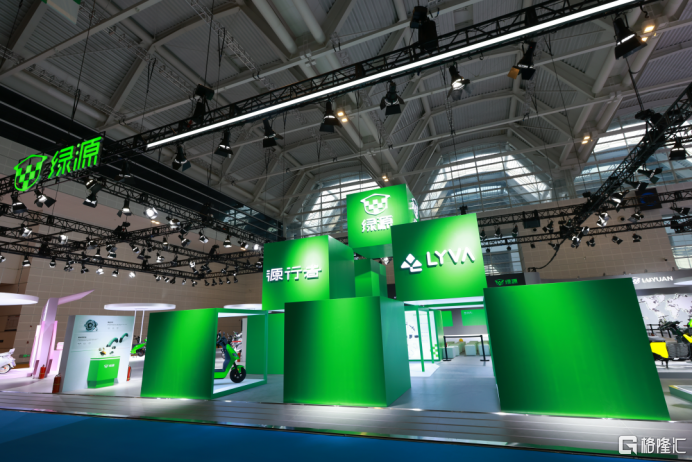
绿源集团控股多轮驱动开启成长新篇章
Zheng Quan Ri Bao· 2025-03-30 08:45
Core Viewpoint - The company, Green Source Group Holdings, reported stable revenue in 2024 despite a 10% decline in the overall two-wheeled electric vehicle industry, showcasing its resilience and strategic positioning for future growth [2][3]. Group 1: Financial Performance - In 2024, the company achieved an operating income of 5.072 billion yuan, with net profit slightly declining after excluding share-based payment impacts [2]. - The overall two-wheeled electric vehicle industry faced significant pressure due to macroeconomic fluctuations and industry chain adjustments, leading to a 10% year-on-year decline in sales [2]. Group 2: Strategic Initiatives - The company is entering the high-end market represented by electric assist vehicles and is strategically laying out plans for battery swapping, rental services, and after-sales services to drive high-quality development in the new national standard era [2][3]. - To comply with the new national standards, the company has prepared new models, materials, and processes, and has arranged product transitions in advance according to the "8+3" transition period [3]. Group 3: Market Outlook - The new national standards will enforce stricter requirements on battery safety and production qualifications, likely leading to the exit of non-compliant small and medium enterprises, which may benefit industry leaders like the company by increasing market share [2]. - The company plans to launch its high-end smart mobility brand, LYVA, by the end of 2024, leveraging its 28 years of experience in the two-wheeled electric vehicle sector to drive product innovation [3]. - The year 2025 is anticipated to be a watershed moment for the two-wheeled electric vehicle industry, with the new standards and industry chain adjustments promoting a more regulated market, benefiting compliant leading manufacturers [3].
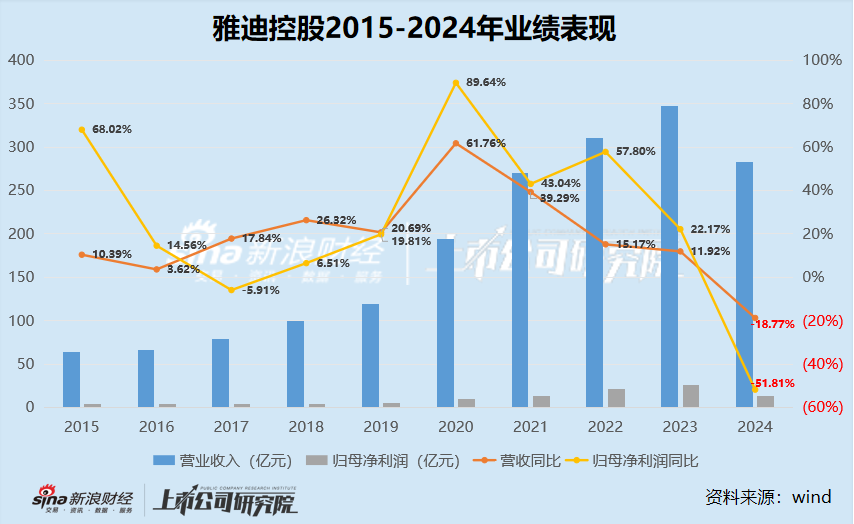
雅迪控股交出“史上最差”答卷:营收下滑18.8%、净利润”腰斩“51.8% 量价齐跌降价却少卖350万台电动车
Xin Lang Zheng Quan· 2025-03-28 02:44
Core Viewpoint - Yadea Holdings has reported a significant decline in both revenue and net profit for 2024, marking one of the worst performances in its history, with revenue down 18.8% to 28.236 billion yuan and net profit halved by 51.8% to 1.272 billion yuan [1][2][4] Group 1: Financial Performance - Yadea's revenue for 2024 was 28.236 billion yuan, a decrease of 18.8% year-on-year, while net profit fell to 1.272 billion yuan, a drop of 51.8% compared to the previous year [1][2] - The company's performance in 2024 is described as the worst since its listing, with both revenue and net profit showing negative growth for the first time since 2016 [1][2] - The gross profit margin for Yadea reached a five-year low, with margins decreasing from 18.08% in 2022 to 15.19% in 2024, indicating increased cost pressures despite reduced sales [4][5] Group 2: Market Dynamics - The overall market for electric two-wheelers in China saw a total sales volume of 49.5 million units in 2024, down 11.6% year-on-year, reflecting a saturated market with diminishing new demand [2][4] - Yadea's sales volume dropped to 13.0205 million units in 2024, a decrease of 350,000 units from 2023, with electric bicycle sales falling by approximately 21.4% [7][8] - The competitive landscape has intensified, with rivals like Aima Technology and Ninebot gaining market share, while Yadea struggles to maintain its position [1][4] Group 3: Strategic Responses - Yadea has implemented a price reduction strategy to clear existing inventory, with electric bicycles' average selling price dropping from 1,380 yuan in 2023 to 1,347 yuan in 2024 [6][7] - Despite these efforts, the company still faced a 20% decline in sales volume, indicating that price cuts alone were insufficient to stimulate demand [6][7] - Inventory levels remained high at 1.279 billion yuan by the end of 2024, an increase of 33.91% from the previous year, suggesting challenges in inventory management [9]

对话爱玛:如何给2000多家经销商“建壁垒”
虎嗅APP· 2025-03-27 10:21
Core Viewpoint - The two-wheeled electric vehicle industry has shifted from scale expansion to efficiency competition, prompting companies like Aima to focus on digital transformation to enhance operational efficiency and decision-making processes [3][4]. Digital Transformation Journey - Aima began its digital transformation in 2012 with the establishment of an ERP system, followed by the "361 Digitalization Project" in 2019, and is now exploring AI integration for business operations [3][6]. - The company faced challenges such as data silos and slow decision-making, which it aims to overcome through comprehensive digital strategies [3][4]. Financial and Business Integration - Aima prioritized financial and business integration to enhance operational efficiency, transitioning from a control-focused finance department to a service-oriented model that collaborates closely with business units [6][8]. - The integration allows for real-time business analysis, improving decision-making speed and accuracy, with sales forecasts achieving over 80% accuracy [4][8]. Dealer Relationship Transformation - Aima is shifting from a competitive dealer relationship model to a collaborative one, focusing on empowering dealers through data-driven insights and operational support [12][13]. - The company has implemented predictive models to help dealers optimize inventory and sales strategies based on local market conditions [13][14]. New Retail Strategy - Aima's new retail strategy integrates online and offline channels, enhancing customer engagement and streamlining the purchasing process [15][16]. - The company leverages data to inform product offerings and marketing strategies, ensuring alignment with consumer preferences [15][16]. AI and Future Directions - Aima views AI as a critical component of its digital transformation, emphasizing the need for a solid data foundation to effectively implement AI solutions [16][17]. - The company aims to utilize proprietary data to develop tailored AI models that address specific operational challenges [17][19]. Recommendations for Digital Transformation - Companies are encouraged to maintain strategic focus, learn from industry benchmarks, and identify quick-win scenarios to facilitate successful digital transformation [19][20].

小牛电动2024年再亏1.93亿:“以价换量”后毛利率下滑、缩减研发但营销费用高企 门店数量仍远少于同行
Xin Lang Zheng Quan· 2025-03-25 10:02
近日,小牛电动发布了2024年财报,昔日的"行业鲶鱼"在连续多年业绩掉头向下之后,终于迎来了 一定回暖。 但实际上,如果结合近几年小牛电动以及对比同行的业绩表现来看,当下的小牛电动的确不容乐 观。与2024年的高增长所对比的是公司连续两年的营收缩水,而公司在2022年由盈转亏后至今仍未走出 亏损泥淖,已经连续3年亏损。对比2021年小牛电动"巅峰"时期的业绩表现来看,2021年实现营收37.05 亿元,同期净利润2.26亿元,而3年后小牛电动如今的业绩表现显然已远不如前。 更何况,在小牛电动跌落神坛极力自救的过程中,也已经被同行远远甩下。两轮电动车赛道的雅 迪、爱玛、九号在过去几年中基本均保持了收入的增长与盈利,尽管有个别季度的调整,但整体业绩表 现稳中有升。其中特别是当年与小牛电动一同出圈的九号公司,已经连续3年实现超百亿营收,销售净 利率也在持续增长。而对比之下,小牛电动的业绩规模与盈利能力、成长能力均较为逊色。 高端化背后:平均单价持续降价、毛利率下滑、缩减研发但营销费用高企 尽管小牛电动在2024年业绩有所回暖,但相比之前年度以及公司曾经的预期,仍存在不小的差距。 2023年公司CEO李彦曾表示,公司 ...

小牛电动逆势增长,营收同比增超70%,如何接招出海路上的“明礁暗涌”?
美股研究社· 2025-03-18 11:25
Core Viewpoint - The Chinese two-wheeled electric vehicle market is experiencing a structural shift from "scale-driven" to "value-driven," with Niu Technologies achieving impressive growth amidst industry challenges [1][5]. Group 1: Market Performance - In Q4 2024, Niu Technologies reported revenue of 819.2 million RMB, a year-on-year increase of 71.1% [3]. - The total sales volume for Niu in 2024 reached 924,340 units, with a 26.3% increase in the Chinese market and a 52% increase in international sales [6][4]. - The average selling price of Niu's products in China rose by 1%, indicating strong competitive positioning amid consumer upgrades [6]. Group 2: Strategic Initiatives - Niu Technologies is focusing on high-end positioning and global expansion, leveraging partnerships with retail giants like BestBuy to penetrate the young consumer market in Europe and America [4][6]. - The company has introduced innovative products tailored to different consumer segments, with over 70% of Q4 sales coming from new models designed for various demographics [4][7]. - Niu's R&D investment exceeded 130 million RMB, primarily aimed at enhancing battery management systems and smart connectivity features [7]. Group 3: Future Outlook - For Q1 2025, Niu expects revenue between 631 million and 707 million RMB, with annual sales projected to grow by 40% to 70% [3][9]. - The company plans to integrate more AI technologies into its products and expand its presence in emerging markets through localized operations [10]. - Achieving the sales target of 1.6 million units in 2025 could increase Niu's global market share from 1.8% to 3.5% [10].