
信贷

Search documents
报告谈平台经济:平台已成为传统金融机构有益补充
Zhong Guo Xin Wen Wang· 2025-09-24 13:07
Core Insights - The report highlights that platform economy has become a beneficial supplement to traditional financial institutions, leveraging its advantages in traffic, technology, and data [1][2] Group 1: Platform Economy Value - The core value of platform economy lies in reshaping resource allocation efficiency through digital technology, significantly reducing transaction costs and enhancing matching efficiency [1] - Platforms have transitioned numerous economic activities online, such as shopping, transportation, and dining, while also giving rise to emerging industries like digital marketing and smart logistics [1] - Platforms have created a vast ecosystem connecting millions of consumers, tens of thousands of merchants, and flexible employment groups, playing a crucial role in empowering small businesses, promoting rural development, and facilitating entrepreneurship and employment [1] Group 2: Financial Sector Impact - In the financial sector, platforms have driven a leap in digital payment development, with the usage rate among Chinese adults increasing from 49% to 89% over the past decade [1] - Platforms have introduced technological innovations in the credit field, significantly improving credit accessibility for long-tail customer groups, with the proportion of adults obtaining credit from formal financial institutions rising from 20% to 41% in the last ten years [1] Group 3: Challenges and Solutions - Despite the vitality released by the platform economy, it faces new challenges, which the report suggests can be addressed by moving away from a "zero-sum game" mindset towards building a "win-win ecosystem" [2] - In the business realm, platforms and offline stores can create a positive complementarity through online traffic generation and offline experiences [2] - The concept of "win-win" also emphasizes the importance of addressing consumer concerns such as data privacy and price discrimination, shifting the service focus from mere "accessibility" to "appropriateness" [2] - For millions of flexible workers, recognizing their value as "ecosystem partners" and addressing social security gaps is essential [2]
《中国普惠金融发展报告(2025)》:平台经济的主旋律是融合而非冲击
Bei Jing Shang Bao· 2025-09-24 09:42
Core Insights - The platform economy in China has evolved from an "emerging phenomenon" to a "core driving force" over the past two decades, significantly impacting various industries and connecting millions of merchants, flexible workers, and a vast consumer base [1] - The "2025 China Inclusive Finance International Forum" highlighted the report titled "Platform Economy and Inclusive Finance," which emphasizes the role of digital technology in reshaping resource allocation efficiency [1][2] - The report indicates that platforms have become a valuable supplement to traditional financial institutions, particularly in the areas of digital payments, credit accessibility, and insurance [2] Summary by Sections Platform Economy Development - The platform economy has enabled a large-scale online transformation of economic activities such as shopping, transportation, and dining, leading to the emergence of new business models like digital marketing and smart logistics [1] - Platforms have created a vast ecosystem connecting hundreds of millions of consumers, millions of merchants, and flexible employment groups, playing a crucial role in empowering small businesses and promoting rural development [1] Financial Sector Impact - Platforms have driven a leap in digital payment adoption, with the percentage of adults using digital payments in China increasing from 49% to 89% over the past decade [2] - The proportion of adults obtaining credit from formal financial institutions has risen from 20% to 41% due to technological innovations in digital risk control and alternative data applications [2] - In the insurance and wealth management sectors, platforms have enhanced consumer access to a wider range of financial products through innovative channel strategies [2] Challenges and Solutions - The report identifies new challenges arising from the platform economy, advocating for a shift from a "zero-sum game" mindset to building a "win-win ecosystem" [3] - The evolution of the platform economy is characterized by structural changes that emphasize integration rather than disruption, fostering a complementary relationship between online platforms and offline stores [3] - The focus on "win-win" solutions includes addressing consumer concerns about data privacy and price discrimination, as well as recognizing the value of flexible workers and improving social security measures [3]
打击金融“黑灰产”首次披露案例 “职业背贷人”“代理退保”浮现
Zhong Guo Jing Ying Bao· 2025-09-22 14:20
Core Viewpoint - The article highlights the prevalence of illegal financial activities, particularly in the form of "proxy insurance cancellation" and "fake loan applications," which exploit vulnerable individuals seeking financial relief [1][2][3]. Group 1: Illegal Financial Activities - Social media platforms are being used to promote illegal services such as "proxy insurance cancellation" and "credit repair," which are often fronts for financial crime [1]. - Individuals like Lin and Ma have been identified as orchestrators of illegal schemes, encouraging clients to pursue unwarranted insurance refunds and charging high commissions of 20%-30% on the total premiums [2]. - A case involving Ning and others illustrates the fraudulent practice of creating fake down payment certificates to secure loans for individuals lacking repayment capability, resulting in a total fraud of over 7.38 million yuan [3]. Group 2: Regulatory Response - The Financial Regulatory Bureau and the Ministry of Public Security are intensifying efforts to combat illegal financial activities, emphasizing the need for strict penalties against those disguising illegal profits as "proxy rights protection" [3]. - The article notes that these illegal activities disrupt normal complaint channels and mislead policyholders, necessitating a robust regulatory response [3]. Group 3: Recommendations for Financial Institutions - Legal experts suggest that financial institutions should enhance their processes and risk warning systems to prevent exploitation by illegal financial entities [4][5]. - Institutions are advised to improve due diligence on intermediaries and develop risk models that include scenarios like "professional debtors" and "fake insurance cancellations" [5]. - Consumer education is crucial, as scammers increasingly use relatable and social media-driven tactics to lure victims into fraudulent schemes [5][6].
香港信贷附属授出4000万港元的贷款
Zhi Tong Cai Jing· 2025-09-22 11:10
Core Viewpoint - Hong Kong Credit (01273) announced a loan agreement with a client, indicating ongoing lending activities and potential growth in its loan portfolio [1] Group 1: Loan Agreement Details - The loan agreement was established on September 22, 2025, between Hong Kong Credit (Private Lending) as the lender and Client E as the borrower [1] - The principal amount of the loan is set at 40 million Hong Kong dollars [1]
香港信贷(01273)附属授出4000万港元的贷款
智通财经网· 2025-09-22 11:08
Core Viewpoint - Hong Kong Credit (01273) announced a loan agreement with a client, providing a loan of HKD 40 million, effective September 22, 2025 [1] Group 1 - The loan agreement is between Hong Kong Credit (Private Loans) as the lender and Client E as the borrower [1] - The principal amount of the loan is set at HKD 40 million [1]
鋑联控股附属授出1100万港元的贷款
Zhi Tong Cai Jing· 2025-09-22 10:34
Core Viewpoint - The company announced a mortgage loan agreement with a borrower, indicating a strategic move to expand its lending operations in the financial sector [1] Group 1 - The company’s indirect wholly-owned subsidiary, Junlian Credit, has entered into a mortgage loan agreement [1] - The loan amount granted to the borrower, Mr. He Zhenbei, is HKD 11 million [1] - The loan carries an annual interest rate of 10% and has a repayment period of 12 months [1]
鋑联控股(00459)附属授出1100万港元的贷款
智通财经网· 2025-09-22 10:32
Core Viewpoint - The company, Zhenlian Holdings (00459), has announced a mortgage loan agreement involving a principal amount of HKD 11 million with borrower He Zhenbei, indicating a strategic move to expand its lending operations [1] Group 1 - The loan agreement was established between the company's wholly-owned subsidiary, Junlian Credit, and the borrower [1] - The loan amount is set at HKD 11 million, with an annual interest rate of 10% [1] - The repayment period for the loan is 12 months [1]
鋑联控股(00459.HK)授出1100万港元贷款
Ge Long Hui· 2025-09-22 10:20
Group 1 - The company announced a mortgage loan agreement with a borrower, providing a loan amount of HKD 11 million at an annual interest rate of 10% for a repayment period of twelve months [1] - The loan agreement is established through the company's indirect wholly-owned subsidiary, Junlian Credit [1] - The agreement is set to be executed on September 22, 2025, indicating a future financial commitment [1]
拉美版“阿里”Meli: “假”电商、“真”放贷?
3 6 Ke· 2025-09-17 00:12
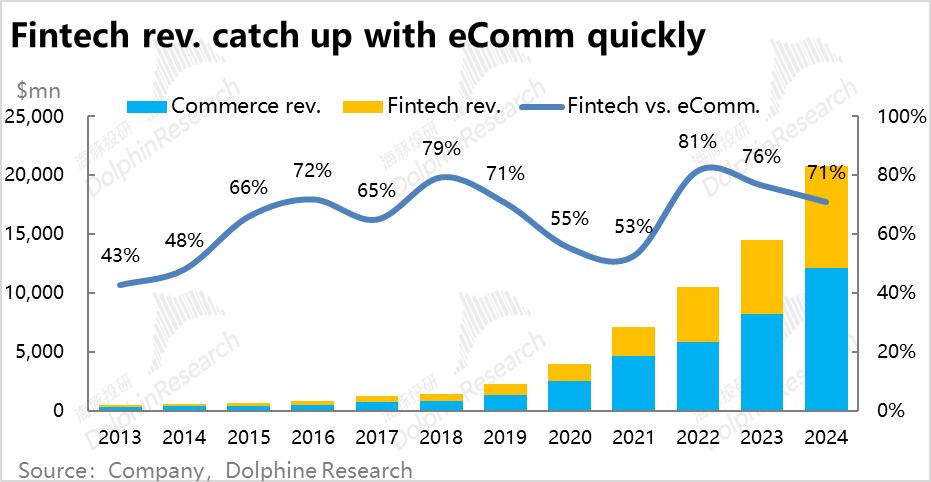
Core Insights - The financial business of Mercado Libre, particularly its payment and credit segments, is crucial for the company's growth and market valuation [1][3] - The payment business serves as a traffic entry point rather than a primary revenue generator, while the credit business is expected to drive profitability [7][42] Financial Business Overview - Mercado Libre's financial business is categorized into three main segments: payment services, credit services, and digital wallet services [3][4] - Payment services include on-platform payments, off-platform payments, and Buy Now Pay Later (BNPL) options, with revenue generated primarily through transaction fees [5][6] - Credit services focus on loans to consumers and merchants, with significant revenue derived from interest on outstanding loan balances [4][50] - Digital wallet services provide users with various functionalities, enhancing customer engagement and data collection for credit services [44][46] Payment Business Dynamics - The payment business operates on a low-margin model, with net profit margins typically ranging from 20% to 40% of the total fee rate [11][12] - Payment fees are under pressure to decrease due to market maturity and competition, making it challenging to increase revenue through higher fees [14][18] - The growth of payment services is largely dependent on expanding the merchant base rather than increasing transaction fees [21][22] Credit Business Potential - The credit business has a high profit margin, with a net interest margin (NIMAL) exceeding 20%, indicating significant profitability potential in the Latin American market [50][73] - The total outstanding loans reached approximately $9.35 billion, reflecting a growth rate of over 90% year-on-year [56] - Credit card loans have become the primary growth driver within the credit segment, with a user base that has doubled in recent years [62][64] Market Position and Competition - Mercado Libre's market share in the credit sector remains low, with significant growth potential as it captures a larger portion of the market [64][65] - The competitive landscape in Brazil shows a shift towards fintech companies, with Mercado Pago's market share growing but still lagging behind competitors like PagSeguro and Stone [37][38] - The company's strategy focuses on leveraging its existing user base from e-commerce and payment services to drive growth in credit offerings [76][77]


首批金融领域“黑灰产”典型案例公布
Qi Huo Ri Bao· 2025-09-15 16:11
Group 1 - The core viewpoint is that the National Financial Regulatory Administration and the Ministry of Public Security are intensifying efforts to combat illegal activities in the financial sector, particularly focusing on "black and gray" industries [1][2] - The first batch of typical cases includes loan fraud and credit card fraud involving individuals posing as "professional debtors" and extortion cases disguised as "insurance refund agency" [1] - There is a commitment to a comprehensive crackdown on illegal activities in the credit sector, particularly targeting illegal loan intermediaries that disrupt financial order and security [1] Group 2 - Criminals are using "agency rights protection" as a cover for illegal profit motives, misleading policyholders and disrupting the financial market [2] - These activities involve false claims of high refund amounts and coercing insurance companies to pay more than the cash value of insurance contracts, which undermines normal complaint channels [2]