
代理退保

Search documents
“全额退保”真能实现?已有消费者钱保两空
21世纪经济报道· 2026-03-15 14:48
Core Viewpoint - The article highlights the increasing prevalence of fraudulent "agent refund" schemes in the insurance industry, which exploit consumers' lack of understanding and dissatisfaction with insurance products, leading to significant financial losses and personal information risks for consumers [1][3]. Group 1: Definition and Impact of "Agent Refund" - "Agent refund" activities are defined as actions taken by individuals or groups to illegally profit under the guise of protecting insurance consumers' rights, often involving malicious complaints and coercive tactics to force insurance companies to refund premiums [3]. - Fraudsters lure consumers with promises of "full refunds" or "high percentage refunds," leading them to sign "full agency" agreements that sever their normal channels for rights protection, resulting in high service fees and potential identity theft [3][5]. Group 2: Case Study and Consumer Awareness - A case study involving a consumer named Ms. Tang illustrates the dangers of falling for "illegal agent refund" schemes, where she was misled into believing she could receive a full refund for her critical illness insurance after being denied a claim [4][5]. - The article emphasizes the importance of consumers being cautious and not trusting unverified information regarding "agent refunds," as it can lead to financial loss and personal data exposure [5]. Group 3: Digitalization of Fraudulent Activities - The article discusses how the "agent refund" black market has become increasingly digitalized, with organized crime groups using social media and video platforms to disseminate misleading information and attract potential victims [7][8]. - These groups employ sophisticated marketing strategies, including creating fake success stories and using targeted advertising to reach individuals who have previously expressed concerns about their insurance [7][8]. Group 4: Industry Response and Prevention Measures - Insurance companies are enhancing their strategies to combat these fraudulent activities by implementing a combination of technology monitoring, manual checks, and collaborative governance to identify and report illegal "agent refund" information [10]. - The industry is also focusing on building a database of fraudulent video characteristics and sharing intelligence with regulatory bodies to improve the detection and prevention of such schemes [10][11]. Group 5: Regulatory Actions Against Fraud - Regulatory and law enforcement agencies have initiated significant crackdowns on the "agent refund" black market, resulting in numerous arrests and the dismantling of organized crime groups involved in insurance fraud [13][14]. - The article notes that various government departments have issued warnings about the risks associated with "agent refund" schemes, urging consumers to seek information only from official channels and to be wary of misleading marketing tactics [15].



中国人寿寿险天津市分公司金融风险提示:“代理退保”危害有哪些
Xin Lang Cai Jing· 2026-02-09 08:56
Core Viewpoint - The article highlights the dangers of "agent insurance refund" practices, which are misleading and can lead to financial losses and risks to personal safety for consumers [1][2]. Group 1: Dangers of Agent Insurance Refund - "Agent insurance refund" refers to individuals or organizations that falsely claim to facilitate full refunds on insurance policies for profit, often involving traditional life and health insurance products [1]. - These illegal practices disrupt normal complaint channels and resources, infringing on consumer rights and threatening social stability [1][2]. Group 2: Methods of Deception - Fraudulent agents use false promises and forged evidence to obstruct consumers' legitimate claims, impersonating regulatory bodies or financial institutions to gain trust [2]. - Such actions not only mislead consumers but also violate legal boundaries, potentially leading to criminal activities [2]. Group 3: Financial Risks - The "agent refund" schemes pose risks to consumer financial safety, as they may encourage clients to cancel valid insurance contracts and charge high fees for their services [2]. - Consumers may also be lured into purchasing high-yield financial products under false pretenses, risking their refund funds and exposing them to potential fraud [2]. Group 4: Information Security Risks - Fraudulent organizations often require sensitive personal information from consumers, which can lead to identity theft or unauthorized use of data [3]. - The risk of personal information leakage can result in significant losses and threats to consumer safety, especially if financial details are compromised [3].
金融领域“黑灰产”违法犯罪典型案例发布,非法购买公民个人信息“代理退保”案上榜
Bei Jing Shang Bao· 2026-01-23 11:46
Group 1 - The core issue highlighted is the illegal purchase of personal information for the purpose of insurance policy cancellations, which is part of a broader black and gray industry chain operating under the guise of "full refund rights protection" [1][2] - A specific case involved individuals illegally acquiring 67,207 pieces of personal information from insurance policyholders, leading to a profit of 68,749 yuan for the perpetrators [1] - The case emphasizes the need for strict legal repercussions for those who infringe on personal information rights, aiming to strengthen the security of citizens' personal data [2] Group 2 - The article discusses the collaborative efforts required to combat the black and gray industry of insurance policy cancellations, advocating for a robust mechanism that integrates administrative regulation and criminal justice [2] - It suggests that insurance institutions should play a proactive role in identifying leads, while public awareness campaigns are essential for consumer education and prevention [2] - The establishment of a cooperative defense model involving industry, law enforcement, and public participation is proposed to effectively tackle the issues of information theft and fraudulent commission earnings [2]
合力打击“代理退保”黑灰产(财经眼)
Ren Min Wang· 2025-09-29 22:31
Core Viewpoint - The article highlights the increasing prevalence of illegal "agent退保" scams in the insurance industry, where individuals and organizations mislead consumers into believing they can recover high amounts of insurance premiums through fraudulent means, ultimately leading to financial losses and loss of insurance coverage for the victims [4][8][9]. Summary by Sections Consumer Experience - A 73-year-old woman from Chongqing fell victim to an illegal "agent退保" scam after being misled by a lawyer on social media, believing she could recover 90% of her premium [5][6]. - After paying a service fee, she was instructed to file a complaint with the financial regulatory authority, which led to an investigation revealing the scam [6][7]. Regulatory Response - The article discusses the actions taken by the Chongqing financial regulatory bureau, which identified the fraudulent activities and assisted the victim in reporting the crime [7][8]. - The financial regulatory authority emphasizes that any complaints must be based on factual evidence and warns against the consequences of providing false information [11][12]. Legal Actions - A case in Fujian Province resulted in the conviction of individuals involved in a "agent退保" scam, marking a significant legal response to such fraudulent activities [10][11]. - The court found that the defendants caused significant financial losses to insurance companies and profited illegally from their actions [11]. Industry Impact - The rise of "agent退保" scams disrupts the insurance market, harms consumer rights, and creates a need for stricter regulations and enforcement [8][9]. - The financial regulatory authority is working with law enforcement to enhance cooperation and improve the effectiveness of combating financial crimes [12][15]. Technological and Legislative Measures - The article mentions the use of technology and data analysis to identify and combat "agent退保" scams, with various financial institutions developing models to enhance detection and enforcement [13][14]. - Experts suggest the need for clearer legal definitions and regulations regarding illegal "agent退保" activities to improve enforcement and consumer protection [14][15].
起底金融黑灰产新套路:虚假退保、助贷广告渗透社交平台
第一财经· 2025-09-24 13:35
Core Viewpoint - The article highlights the ongoing issue of fraudulent activities in the financial sector, particularly through social media platforms, where schemes like "insurance policy cancellation" and "credit loans" mislead consumers and disrupt financial order [3][4][5]. Summary by Sections Regulatory Warnings - Regulatory bodies have issued multiple warnings over the past two years regarding fraudulent practices by intermediary agencies, emphasizing the need for strict action against such violations [3][4]. - Some agencies exploit consumer rights advocacy to profit, harming consumer interests and destabilizing the insurance market [3][4]. Fraudulent Practices - Social media platforms have become breeding grounds for financial scams, with numerous posts promoting "insurance cancellations" and "loan assistance" that appear to be peer advice but are actually marketing tactics for fraudulent services [4][5]. - Users are often lured into high service fees or directed to unlicensed financial institutions after being promised solutions to their financial issues [5][6]. Consumer Experiences - Consumers report being charged exorbitant fees for services that do not deliver on their promises, such as recovering funds from insurance policies [5][12]. - Many posts on these platforms mislead users into believing they can negotiate debt relief or defer payments, creating false expectations about managing their financial obligations [6][12]. Platform Challenges - Social media platforms face significant challenges in regulating financial content, as fraudulent activities often hide behind seemingly legitimate posts, making detection difficult [13][14]. - Despite efforts to combat these issues, the evolving tactics of fraudsters complicate the enforcement of compliance and consumer protection [13][14]. Regulatory Actions - Recent actions by regulatory authorities include the prosecution of individuals involved in fraudulent "insurance cancellation" schemes, highlighting the seriousness of these offenses [16]. - The government has reiterated that no organization or individual is allowed to engage in unauthorized insurance cancellation services, and violators will face severe penalties [16]. Industry Recommendations - Experts suggest that social media platforms should enhance user education and transparency regarding financial content to reduce the prevalence of fraudulent activities [14][15]. - Collaboration with licensed financial institutions for educational initiatives could help mitigate the risks associated with unregulated financial advice [14][15].

“职业代退人”泛滥:保险退保黑产链条揭秘
Hu Xiu· 2025-09-23 05:34
Core Viewpoint - The rise of "professional agents for policy cancellation" in the insurance sector is becoming increasingly concerning, with reports of fraudulent activities and significant financial losses for insurance companies [2][4][14]. Group 1: Fraudulent Activities - A recent case highlighted by the financial regulatory authorities involved individuals using "agent for policy cancellation" as a guise for extortion, resulting in a loss of 2.1762 million yuan for insurance companies and illegal profits of 489,600 yuan for the perpetrators [2][3]. - The phenomenon of "agent for policy cancellation" is prevalent on social media, with many posts claiming high success rates for policy cancellations, attracting numerous comments and interactions from users [4][9]. Group 2: Victim Experiences - Some policyholders reported success rates of 70% to 95% in obtaining refunds through intermediaries, while others faced scams, losing deposits in the process [5][10]. - A case study revealed a policyholder who received 18,000 yuan in refunds after paying a service fee of 1,900 yuan (approximately 10.6%) to the intermediary, despite lacking evidence of wrongdoing by the insurance agent [10][12]. Group 3: Legal Implications - Legal experts indicate that if intermediaries incite policyholders to fabricate or exaggerate claims against insurance companies, it constitutes a clear violation of the law [6][14]. - The insurance sales process is governed by strict regulations, and violations can lead to penalties, including fines ranging from 20,000 to 100,000 yuan for individuals and up to 300,000 yuan for agencies [15][16].
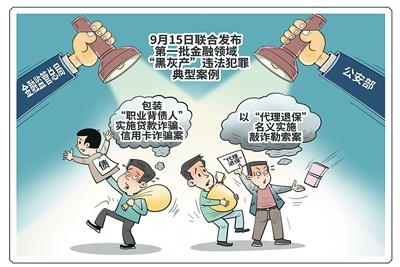
打击金融“黑灰产”首次披露案例 “职业背贷人”“代理退保”浮现
Zhong Guo Jing Ying Bao· 2025-09-22 14:20
Core Viewpoint - The article highlights the prevalence of illegal financial activities, particularly in the form of "proxy insurance cancellation" and "fake loan applications," which exploit vulnerable individuals seeking financial relief [1][2][3]. Group 1: Illegal Financial Activities - Social media platforms are being used to promote illegal services such as "proxy insurance cancellation" and "credit repair," which are often fronts for financial crime [1]. - Individuals like Lin and Ma have been identified as orchestrators of illegal schemes, encouraging clients to pursue unwarranted insurance refunds and charging high commissions of 20%-30% on the total premiums [2]. - A case involving Ning and others illustrates the fraudulent practice of creating fake down payment certificates to secure loans for individuals lacking repayment capability, resulting in a total fraud of over 7.38 million yuan [3]. Group 2: Regulatory Response - The Financial Regulatory Bureau and the Ministry of Public Security are intensifying efforts to combat illegal financial activities, emphasizing the need for strict penalties against those disguising illegal profits as "proxy rights protection" [3]. - The article notes that these illegal activities disrupt normal complaint channels and mislead policyholders, necessitating a robust regulatory response [3]. Group 3: Recommendations for Financial Institutions - Legal experts suggest that financial institutions should enhance their processes and risk warning systems to prevent exploitation by illegal financial entities [4][5]. - Institutions are advised to improve due diligence on intermediaries and develop risk models that include scenarios like "professional debtors" and "fake insurance cancellations" [5]. - Consumer education is crucial, as scammers increasingly use relatable and social media-driven tactics to lure victims into fraudulent schemes [5][6].
华泰人寿山东分公司2025年金融教育宣传周之消费者退保风险提示:警惕“全额退保”陷阱!守护您的保险权益
Qi Lu Wan Bao· 2025-09-17 05:20
Group 1 - The core issue highlighted is the rise of fraudulent "agent refund" schemes that mislead consumers into providing personal information and paying high fees under the guise of securing full insurance refunds [1][2][5] - A case study is presented where an individual was targeted by a fraudulent scheme, leading to legal action against the perpetrators, emphasizing the need for consumer awareness [1][2] - Four common tactics used by illegal intermediaries to deceive consumers are outlined, including false identity claims, creating anxiety about insurance products, soliciting sensitive information, and charging exorbitant fees [1][2][5] Group 2 - Legitimate refund processes are detailed, including a three-step approach for consumers to safely navigate insurance refunds, emphasizing the importance of using official channels [2][3][4] - Specific conditions under which consumers can claim full refunds are provided, such as during the cooling-off period or in cases of sales misconduct [2][4] - The potential risks associated with impulsive decisions to cancel insurance policies are discussed, including personal information theft, interruption of coverage, and legal repercussions [6][7] Group 3 - Recommendations for consumers include being cautious of promises of full refunds without losses, safeguarding personal information, and reporting fraudulent activities [5][6][7] - The essence of insurance as a risk management tool is reiterated, urging consumers to think carefully before opting for policy cancellations [7]
金融监管总局发布典型案例:以“代理退保”名义敲诈勒索被判刑
Bei Jing Shang Bao· 2025-09-15 09:53
Core Viewpoint - The article highlights the crackdown on illegal activities in the financial sector, specifically focusing on a case of extortion disguised as "insurance policy cancellation" services, which has resulted in significant financial losses for insurance companies and illegal profits for the perpetrators [1][2][3] Group 1: Case Details - From December 2020 to April 2023, individuals Lin and Ma engaged in extortion by falsely advertising full or high-value insurance cancellations, leading policyholders to believe they could receive substantial refunds [1] - The perpetrators fabricated evidence of wrongdoing by insurance companies and pressured policyholders to file complaints, resulting in insurance companies paying out a total of 2.1762 million yuan in damages [1] - Lin and Ma profited approximately 489,600 yuan from their illegal activities, taking a commission of 20% to 30% from the total premiums paid by policyholders [1] Group 2: Legal Proceedings - In November 2022, law enforcement initiated an investigation into the case, leading to a court ruling in May 2024 that convicted the main perpetrators of extortion [2] - Lin received an eleven-year prison sentence and a fine of 100,000 yuan, while Ma was sentenced to ten years and fined 60,000 yuan; accomplices received lesser sentences [2] Group 3: Regulatory Response - The Financial Regulatory Bureau emphasized the need to punish those using "agent rights protection" as a cover for illegal profit-making, reinforcing that no entity or individual should engage in unlawful insurance cancellation activities [3] - The Bureau noted that such illegal practices disrupt the insurance market and mislead policyholders, necessitating strict enforcement against these actions [3] - It is crucial to distinguish between legitimate complaints and fabricated claims, as the latter constitutes extortion and undermines the integrity of the insurance market [3]
平安人寿山东分公司2025年金融教育宣传周|风险提示:警惕陷阱,不法“代理退保”有风险
Qi Lu Wan Bao· 2025-09-12 02:06
Group 1 - Customer L purchased a whole life insurance policy in 2017 and recently encountered an advertisement for "professional insurance rights protection" promising "full refund" [1] - Facing financial difficulties, Customer L was tempted by the advertisement and provided personal information, leading to a complaint being filed [1] - Ping An Life's Tai'an branch promptly contacted the customer to discuss the complaint, but the customer refused to communicate directly [1] Group 2 - The insurance agent associated with Customer L had left the company years ago and denied any sales misrepresentation during the investigation [1] - The company staff suggested a meeting to explain the policy's responsibilities and offered strategies to alleviate the customer's financial pressure, ultimately leading to the customer deciding to retain the policy [1]
