
商超

Search documents
昔日风光不再,传统商超转型成了“必答题”
Qi Lu Wan Bao Wang· 2025-09-15 10:28
Core Insights - Traditional supermarkets are facing significant challenges, with many experiencing declining sales and closures, while some innovative players are thriving in the market [2][3][4] Industry Overview - The supermarket industry is currently divided into two extremes, with traditional players like Carrefour exiting markets and others like Walmart and emerging brands like "胖东来" performing well [2][3] - A survey by the China Chain Store and Franchise Association revealed that only 47.5% of supermarket enterprises saw sales growth in the first half of 2025, while 40% experienced declines [2] Company Performance - Walmart reported a global revenue of $177.4 billion for Q2 2025, a 4.8% increase year-on-year, with a notable 30.1% growth in its China segment [3] - "胖东来" achieved sales of nearly 17 billion yuan in 2024, with profits exceeding 800 million yuan [3] - Alibaba's Hema (盒马) has maintained profitability for nine consecutive months and plans to open nearly 100 new stores by 2026 [3] Consumer Behavior - Consumers are increasingly turning to online shopping and instant delivery services, leading to a decline in foot traffic at traditional supermarkets [4][5] - A significant shift in consumer preferences is noted, with younger shoppers favoring new retail formats that offer unique products and experiences [4] Market Innovations - The "胖改" trend is emerging, where traditional supermarkets are adopting new formats and product offerings to compete with successful models like "胖东来" [8][9] - Supermarkets are increasingly focusing on private label products as a strategy to attract customers and drive sales [10][11] Supply Chain Dynamics - New supermarket models are adopting "short-chain direct supply" strategies to reduce costs and improve efficiency, moving away from traditional multi-level distribution [11]
大润发高层调整继续!高鑫零售再调转“船头”,大卖场迷茫寻觅新航向
Hua Xia Shi Bao· 2025-09-13 13:28
Core Viewpoint - The recent investigation of a senior executive at RT-Mart highlights ongoing challenges within the retail sector, particularly regarding governance and operational efficiency, as the company shifts its strategy towards community lifestyle centers [2][3][4]. Company Developments - RT-Mart's Chief Operating Officer, Guan Mingwu, was taken by police for investigation related to alleged job-related crimes, prompting the company to emphasize its internal compliance mechanisms [2][3]. - Following Alibaba's exit from RT-Mart in February 2023, the company has undergone significant leadership changes, with Dehong Capital becoming the controlling shareholder [3][4]. - The company reported a net loss of 1.605 billion yuan for the fiscal year ending March 31, 2024, but turned a profit of 405 million yuan in the following fiscal year, largely due to cost-cutting measures [4][5]. Industry Context - The traditional retail sector is facing significant challenges, with many companies, including RT-Mart, reducing store numbers as part of their strategy to adapt to changing market conditions [5][6]. - The shift towards community lifestyle centers is seen as a necessary evolution for large-format stores like RT-Mart, although successful implementation remains uncertain due to a lack of proven models [5][6]. - Competitors such as Walmart are also exploring community store formats, indicating a broader industry trend towards smaller, more integrated retail spaces [6].

多点数智AI优品解决方案落地新华百货
Zheng Quan Ri Bao Zhi Sheng· 2025-09-12 06:09
Group 1 - The core viewpoint of the article highlights the launch of multiple AI products by Duodian Shuzhi (02586.hk) over the past year, including AI Smart Traffic, AI Smart Inspection, AI Clearance, and AI Cold Chain Intelligent Control [1] - The newly upgraded Xinhua Department Store in Wuzhong Wanda, set to open on September 19, will be the first to implement the latest AI Premium Solution, which integrates business strategies to enhance core categories and product competitiveness [1] - The AI Premium Solution utilizes big data and AI technology to analyze customer traffic in the store's business district, generating tailored sales plans that fundamentally change the operational logic of supermarkets and reshape the procurement and sales workflow [1] Group 2 - The solution aims to maximize the effectiveness of product categories and adapt to individual store needs, achieving a level of customization that was previously unattainable in traditional offline scenarios [1]

老牌商场直面闭店
Shen Zhen Shang Bao· 2025-09-11 18:03
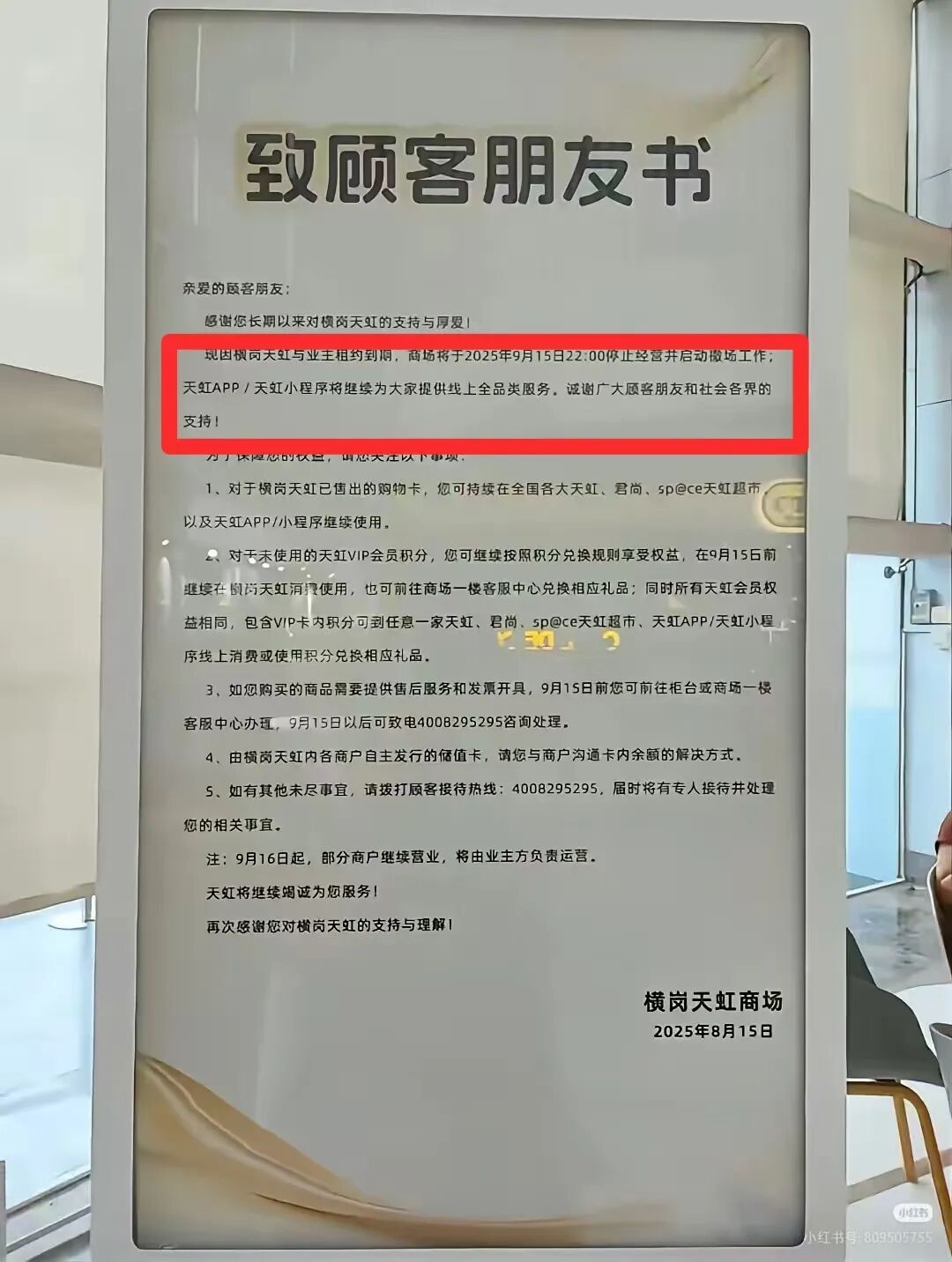
Group 1 - Shenzhen Honggang Tianhong Mall will close on September 15, marking a trend of traditional department stores declining [1] - Tianhong's closure is part of a broader strategy as the company seeks new development opportunities, focusing on shopping centers and supermarkets [1] - Tianhong has faced performance pressures, with closures of multiple stores this year, including Huizhou Junshang and Zhuzhou Tianhong, resulting in significant one-time losses [1][2] Group 2 - Tianhong is actively pursuing a transformation in its retail business, upgrading its SP@CE3.0 supermarket brand and enhancing shopping center experiences [2] - The company reported a revenue of 6.009 billion yuan for the first half of 2025, a decrease of 1.79% year-on-year, with a slight decline in net profit [2] - The overall retail sector is experiencing pressure, with traditional "department store + supermarket" models losing appeal, leading to a mix of new openings and closures [2][3] Group 3 - Other retail companies like Yonghui Supermarket and Lianhua Supermarket are also facing declines, with Yonghui reporting a 20.73% drop in revenue and closing 227 stores [2][3] - Lianhua Supermarket opened 95 new stores while closing 121 underperforming ones, indicating a trend of dynamic adjustments in the industry [3] - The traditional supermarket sector is under increasing competition due to e-commerce, changing consumer habits, and the rise of community commerce, necessitating a search for new growth points [3]

深圳一“人气地标”宣布闭店,最新消息!
Shen Zhen Shang Bao· 2025-09-11 14:44
Group 1 - Shenzhen Honggang Tianhong Mall will close on September 15, marking a trend of traditional department stores facing decline [1][3] - Tianhong's closure is part of a broader strategy, as the company is seeking new development opportunities and focusing on shopping centers and supermarkets [1][4] - Tianhong has already announced the closure of two other malls in July, resulting in a one-time loss of approximately 20.92 million yuan and 60.24 million yuan respectively [3][4] Group 2 - In the first half of 2025, Tianhong opened only one new shopping center, while operating 46 shopping centers, 58 department stores, and 106 supermarkets across seven provinces/cities [4][5] - The company is actively pursuing a transformation in its retail business, focusing on upgrading its SP@CE3.0 supermarket brand and enhancing shopping center experiences [4][6] - Tianhong's revenue for the first half of 2025 was 6.009 billion yuan, a year-on-year decrease of 1.79%, with a net profit of 154 million yuan, down 0.05% [5][6] Group 3 - The overall retail sector is experiencing pressure, with traditional "department store + supermarket" models losing appeal, leading to a wave of store closures [6][7] - Other listed companies in the supermarket sector, such as Yonghui Supermarket and Lianhua Supermarket, also reported significant revenue declines and store closures in their recent financial reports [6][7] - The industry is facing intensified competition due to e-commerce impacts, changing consumer habits, and the rise of community commerce, necessitating structural adjustments and new growth strategies [7]
银泰系拟减持武商集团不超过3%股权
Zheng Quan Shi Bao Wang· 2025-09-07 13:58
Group 1 - Wu Shang Group (000501) announced that its shareholder, Dazi Yintai Commercial Development Co., Ltd., plans to reduce its stake by up to 22.4971 million shares, accounting for 3% of the total share capital excluding the repurchase account, between September 30, 2025, and December 29, 2025 [1] - The reduction will occur through a combination of centralized bidding and block trading, with a maximum of 7.499 million shares (1%) to be sold via centralized bidding and 14.9981 million shares (2%) through block trading [1] - Dazi Yintai's involvement with Wu Shang Group dates back to 2005, when it acquired a stake through a joint venture with China Yintai and Yintai Department Store [1] Group 2 - The local government of Wuhan attempted to consolidate local supermarket assets and introduced the Yintai Group, leading to a fierce battle for control over Wu Shang Group [2] - By September 2006, the Yintai Group had become the nominal largest shareholder of Wu Shang Group, holding 20.24% of the shares, but the state-owned assets company regained control through strategic partnerships [2] - The Yintai Group's stake peaked at 24.48% in 2011, but the Wu Shang Alliance eventually increased its holdings to 34.32% through a premium offer, leading to Yintai's gradual exit from the control struggle [2] Group 3 - On May 30, a duty-free store operated by a joint venture between Wangfujing Group (600859) and Wu Shang Group was launched in Wuhan, marking Wu Shang Group's entry into the duty-free market [3] - Following this development, Wu Shang Group's stock price saw a significant increase of 27% from July 1 to the present [3]

浙江绍兴:在酒店举办宴席达到一定桌数和金额,给予分档补贴
财联社· 2025-09-02 12:25
Core Viewpoint - The city of Shaoxing is set to implement a consumption stimulation policy aimed at boosting the local economy, particularly in the restaurant sector, with various financial incentives and support measures [1][2][3]. Group 1: Restaurant Consumption Support - Shaoxing will provide tiered subsidies for consumers hosting banquets in hotels, with a minimum of 5 tables and a total expenditure of at least 10,000 yuan, offering a maximum subsidy of 5,000 yuan based on the hotel sales invoice [2][3]. - The policy aims to enhance employment in the restaurant industry, which is a key sector for job creation [2]. Group 2: Event-Driven Consumption - The city plans to leverage the ongoing "Zhejiang BA" basketball league to promote consumption, offering special discounts for attendees who present event tickets at participating restaurants and shops [3]. - Over 100 million yuan will be allocated for consumption stimulation policies, focusing on targeted distribution of consumption vouchers in sectors like automotive, retail, and dining [3]. Group 3: Night Economy and Student Support - Shaoxing will encourage the development of the night economy by rewarding businesses that extend their operating hours with a one-time bonus of 200,000 yuan if they meet certain criteria [3]. - A dedicated fund of 760,000 yuan will be allocated to provide consumption vouchers for university students, with each student eligible for up to 500 yuan in discounts for dining, accommodation, and retail [4].
商超新店热潮涌现,行业洗牌加速新老势力市场争锋
Sou Hu Cai Jing· 2025-08-27 13:11
Group 1 - The Shanghai supermarket industry is experiencing a wave of new store openings, injecting new vitality into the market [1] - Qingmei Group's "Pinshang Life" supermarket opened its second store in Shanghai, covering 7,000 square meters and offering over 6,000 products, attracting long queues of residents [1][2] - Yonghui Supermarket has opened three new stores in Shanghai, bringing the total number of "Fat Yonghui" stores to 10, intensifying competition in the supermarket sector [1] Group 2 - The new store openings indicate a recovery in the supermarket industry after a period of "slimming down," but a reshuffling era is also emerging, with both new and old players deploying strategies to capture market share [1][6] - Yonghui's new stores have undergone significant upgrades, with an 80% product elimination rate and the introduction of high-quality products that meet the standards of the "Fat Donglai" model [4] - High-end supermarkets like city'super are experimenting with new consumer experiences, such as hosting a global food and lifestyle market to attract customers [4] Group 3 - According to the China Chain Store & Franchise Association, the top 100 supermarket companies in China achieved a sales scale of approximately 900 billion yuan, with a year-on-year growth of 0.3% [6] - More than 60% of these companies reported improved store performance, indicating a shift in the retail landscape [6] - The retail industry is undergoing deep changes, with traditional supermarket business models facing severe challenges, while companies adapting to new consumer trends are gaining a competitive edge [6] Group 4 - Many supermarket companies are actively expanding, with "Pinshang Life" planning to open a third store in Shanghai and Hema announcing plans to open nearly 100 stores in the new fiscal year [8] - The industry is entering a phase of increased differentiation, with leading companies expanding rapidly while smaller supermarkets struggle to adjust or shrink [8] - Surviving and standing out in this competitive environment poses a significant challenge for all supermarket companies [8]

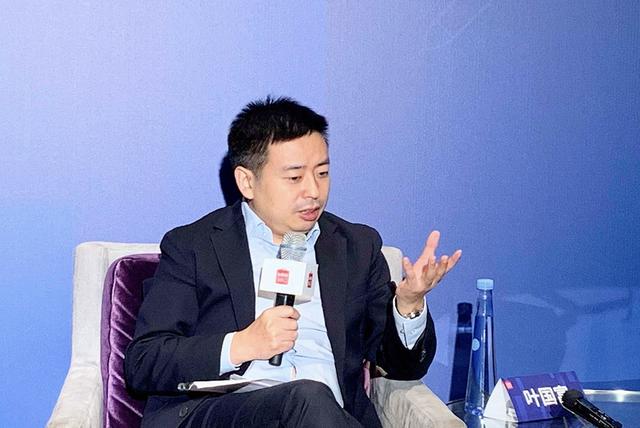
净利暴跌187%,叶国富“交卷”,“胖改”并不万能
3 6 Ke· 2025-08-22 06:11
Core Viewpoint - The core of the company's operations is profit-sharing, relying on high quality and employee engagement to maintain excellent service [1] - The transformation efforts of listed supermarket companies often face inherent contradictions between profit maximization and substantial profit-sharing [1] Company Performance - After the entry of Ye Guofu into Yonghui Supermarket, the company's performance did not significantly improve, and it experienced a market devaluation [3][4] - Yonghui Supermarket's revenue for the first half of 2025 was 29.948 billion yuan, a year-on-year decrease of 20.73%, with a net loss of 241 million yuan, a decline of 187.38% [5] - The company's net profit turned from profit to loss, indicating a worsening situation [7] Transformation Challenges - The losses were attributed to the impacts of transformation and reform, including the opening of 93 new stores and the closure of 227 underperforming stores, which incurred various costs [8] - The company is undergoing significant supply chain reforms, which involve upgrading suppliers and products [8] Market Sentiment - The market's patience with Ye Guofu is limited, as concerns about his acquisition of Yonghui have persisted since its announcement [9] - The retail industry is cyclical, and while innovation is crucial, the process can be challenging, as evidenced by past failures of similar transformations [10][16] Financial Strategy - Yonghui Supermarket announced a plan to raise up to 3.992 billion yuan through a private placement to fund store upgrades and repay bank loans [11] - The total investment for store upgrades is projected to be 5.597 billion yuan, with a significant portion allocated to various improvement projects [18] Future Outlook - Yonghui plans to complete the transformation of approximately 200 stores by the end of 2025, while closing 250 to 350 stores [17] - The company's past four years of losses raise concerns about the sustainability of its transformation efforts and the potential for further market devaluation if performance does not improve [19]
永辉超市上半年净亏超2亿元;飞猪AI“问一问”功能更新 | 消费早参
Mei Ri Jing Ji Xin Wen· 2025-08-22 02:54
Group 1 - Yonghui Supermarket reported a net loss of 241 million yuan in the first half of the year, with a revenue decline of 20.73% to 29.948 billion yuan, primarily due to the closure of 227 unprofitable stores [1] - The closure of loss-making stores has reduced the company's burden but also led to a significant drop in revenue, indicating challenges in the supermarket sector from community group buying, e-commerce, and new retail formats [1] - The future growth of Yonghui will depend on its ability to optimize supply chains, differentiate fresh products, and undergo digital transformation [1] Group 2 - Fliggy has updated its AI-driven travel product "Ask One," which now includes a heat map feature to help users discover destinations based on real-time data and AI predictions [2] - The enhancement of itinerary planning capabilities in "Ask One" considers user budgets and local traffic, showcasing the acceleration of AI applications in the online travel agency sector [2] - The effectiveness of AI applications in the complex travel consumption chain remains to be validated by the market [2] Group 3 - Louis Vuitton launched its makeup line "La Beauté" in China, with lipsticks and lip balms priced at 1,200 yuan, significantly higher than mainstream luxury beauty brands [3] - The pricing strategy indicates that LV views China as a testing ground for high-end consumer products, aiming to attract high-net-worth consumers through brand premium and scarcity [3] - The market's response to LV's pricing and product offering will determine its success in this segment [3] Group 4 - McDonald's in the U.S. has agreed with franchisees to implement a 15% discount on eight popular meal combos starting in September, with plans for additional low-priced promotions later this year [4] - The price reduction reflects increased consumer sensitivity to prices amid inflation, aiming to maintain customer traffic and market share [4] - Balancing price competition with profitability will be a significant challenge for global restaurant chains moving forward [4]