
铁路运输

Search documents
【新春走基层】2026年春运国铁济南局预计发送旅客2020万人次 持续优化便民惠民举措
Xin Lang Cai Jing· 2026-02-02 08:43
在1月26日全国铁路实行新列车运行图的基础上,国铁济南局今年春运图定开行旅客列车增至586.5对, 较去年春运同期增加30.5对。节前安排临时旅客列车运行线99.5对,节后安排临时旅客列车运行线97.5 对。其中,北京、上海、郑州、哈尔滨、齐齐哈尔、南昌、重庆西等方向安排跨省临时旅客列车53对, 青岛、日照、菏泽、聊城、烟台、临沂等方向安排省内临时旅客列车46.5对,春运旅客列车的通达范围 和覆盖广度进一步拓展。 春运期间,国铁济南局将持续提升服务品质,完善客运出行举措,创新推出多项暖心惠民服务。春运期 间,推出老年人12306电话购票服务,解决60周岁及以上老年人线上购票难的问题。试行12306官方线上 售票主渠道限时免费退票措施,旅客可线上自助办理误购车票的退票业务。山东各大火车站为符合条件 的学生、务工人员购买春运期间往返车票提供保障。 此外,高铁列车静音车厢扩展至动卧列车之外的"D"字头、"G"字头动车组列车;铁路"轻装行"服务覆 盖济南、济南西、济南东、青岛、青岛北5个车站;高铁宠物运输业务增至济南西、青岛、威海、烟 台、枣庄、日照、潍坊、淄博站8个车站,满足更多旅客的出行需求。 中国青年报客户端济 ...

【新春走基层】春运首日,长三角铁路六大车站同步开启“一碗好饭”行动
Xin Lang Cai Jing· 2026-02-02 08:43
Core Viewpoint - The 2026 Spring Festival travel season has officially begun, with the China Railway Shanghai Bureau Group Co., Ltd. launching the "A Bowl of Good Rice" themed activity across major stations in the Yangtze River Delta region [1] Group 1: Themed Activity Launch - The "A Bowl of Good Rice" themed activity is being held simultaneously at Shanghai Hongqiao Station, Shanghai South Station, Hangzhou East Station, Nanjing South Station, Hefei South Station, and Xuzhou East Station [1] - This initiative aims to enhance passenger experience during the Spring Festival travel period [1] Group 2: Culinary Offerings - Various regional specialty meals have been introduced, including Shanghai oil-exploded shrimp and home-style pork chop rice at Shanghai Hongqiao Station, Jinling salted duck at Nanjing South Station, and South braised pork at Hangzhou East Station [3] - New health-themed meal options such as five-finger peach and wolfberry stewed pork ribs, and yam and coix seed stewed old duck are being offered for the first time [5] Group 3: Service Improvement - The initiative reflects the railway department's ongoing efforts to enhance passenger service quality and meet traveler needs [5] - The company aims to ensure a "safe, orderly, and warm" travel experience for passengers during the Spring Festival [5]

海南环岛高铁东段清筛完工
Hai Nan Ri Bao· 2026-02-02 08:37
Core Viewpoint - The completion of the digital and intelligent screening construction on the eastern section of the Hainan Ring High-speed Railway addresses the maintenance challenges posed by the tropical marine climate, ensuring safe operation and facilitating passenger travel during the upcoming Spring Festival [2][3]. Group 1: Project Overview - The digital screening project on the eastern section of the Hainan Ring High-speed Railway has been fully completed, focusing on the 51-kilometer core section from Qionghai to Wenchang [2]. - The project took two years to complete, utilizing 60 construction windows and successfully screening and rehabilitating 81.5 kilometers of track, meeting all operational standards [2]. Group 2: Technological Advancements - The project employed a series of self-developed advanced tools, such as an inertial navigation vehicle integrated with gyroscopes and satellite positioning systems, achieving a measurement efficiency 20 times greater than traditional instruments, with the ability to measure 2 kilometers of track per hour [2]. - The use of two-dimensional laser rangefinders and intelligent track control devices allows for real-time monitoring of track elevation and horizontal data, achieving millimeter-level precision [2]. Group 3: Future Implications - The successful implementation of this project not only overcomes the high-speed rail maintenance challenges in Hainan's "three high" environment but also establishes a digital screening construction technology system with independent intellectual property rights, providing a replicable and promotable solution for similar lines in coastal and tropical regions [3].
(新春走基层)2026年春运启动 长三角铁路2月2日预计发送旅客245万人次
Zhong Guo Xin Wen Wang· 2026-02-02 08:32
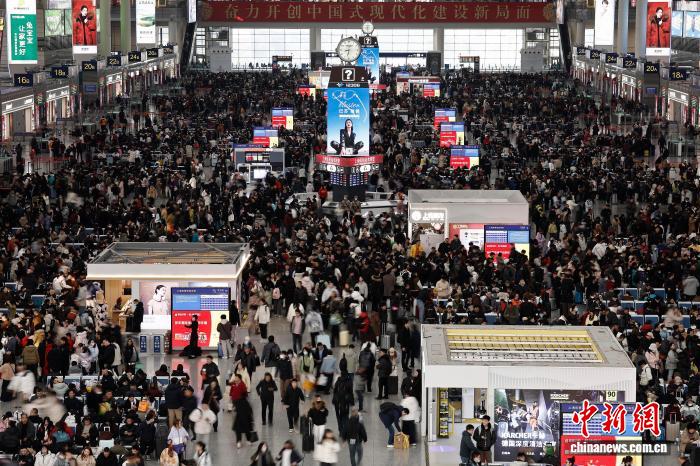
(新春走基层)2026年春运启动 长三角铁路2月2日预计发送旅客245万人次 中新网上海2月2日电 (记者 殷立勤)2026年春运于2月2日零时启动。中国铁路上海局集团有限公司(以下 简称上铁集团)精心组织,周密部署,多措并举温暖春运归途。 据上铁集团客运部工作人员介绍,长三角铁路旅客发送量迎来新突破,2026年春运40天预计发送旅客首 次突破1亿人次,达到1.03亿人次,日均发送旅客257.5万人次,较去年春运增长4%,客流规模创历年春 运新高。 华铁旅服公司工作人员为旅客送上新春红包。中新网记者 殷立勤 摄 此外,长三角铁路将持续提供普遍和普惠性服务,丰富便民利民惠民服务举措,完善个性化和差异化服 务,让旅客出行体验更美好。(完) 来源:中国新闻网 编辑:熊思怡 广告等商务合作,请点击这里 本文为转载内容,授权事宜请联系原著作权人 为高效应对春运大客流,全力保障旅客出行需求,长三角铁路部门在启用高峰运行图的基础上计划增开 旅客列车437.5对,高峰期单日最高将开行旅客列车超1700对,以充足运能筑牢春运出行保障防线。 旅客在铁路上海虹桥站等待验票上车。中新网记者 殷立勤 摄 上铁集团按照"适需安排、应急有 ...
中国首个跨省域高铁阅读网络在重庆投运
Zhong Guo Xin Wen Wang· 2026-02-02 08:27
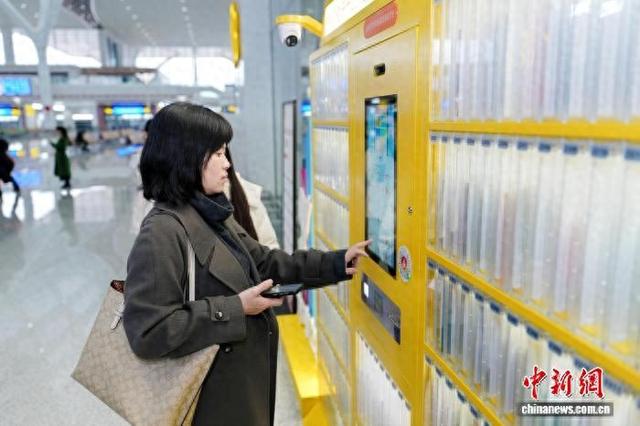
Core Insights - The "Book Fragrance Railway: Bashu High-speed Railway Reading Corridor" project has been launched in Chongqing, marking China's first cross-provincial high-speed rail reading network aimed at addressing the demand of over 50 million passengers annually on the Chengdu-Chongqing high-speed rail [1][3] Group 1: Project Overview - The project is a collaboration between the Chongqing Municipal Culture and Tourism Development Committee and China Railway Chengdu Group Co., Ltd., initially covering 17 high-speed rail stations in Chongqing [1][3] - On the launch day, 17 "Book Fragrance Railway: Chongqing 'Zhangshu' Reading Stations" were activated, equipped with customized smart self-service borrowing cabinets, providing free portable "Bashu Zhangshu" borrowing services for travelers [3] Group 2: Features and Services - The "Bashu Zhangshu" books are designed to be palm-sized, making them convenient for reading in train compartments, allowing for reading in fragmented time [3] - The project integrates with the Sichuan-Chongqing reading "One Card" system, enabling travelers to return books at 249 public libraries across the two regions using their ID or social security cards, and facilitating borrowing and returning at over 2,000 service points [3][4] Group 3: Future Plans - The project aims to enhance the integration of quality cultural resources with the railway network, with plans to expand high-speed rail reading spaces and conduct reading promotion activities during peak travel seasons like Spring Festival and National Day [4]
告别“电量焦虑”!高铁电子设备充电指南来了→
Sou Hu Cai Jing· 2026-02-02 08:20
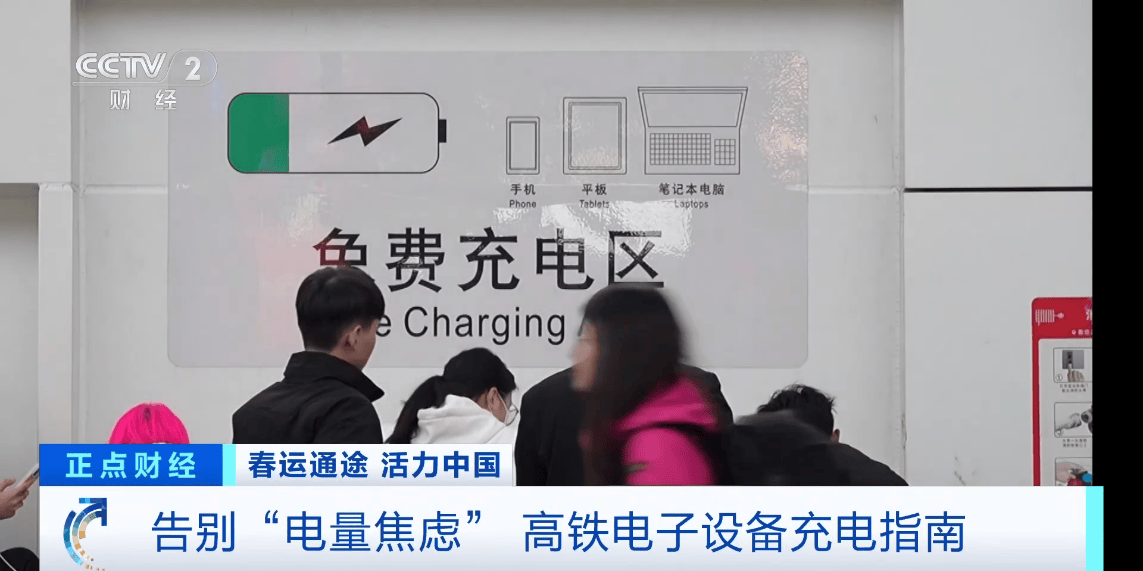
Core Viewpoint - The article discusses the upgrades made to charging facilities at train stations in China during the Spring Festival travel season to accommodate the increasing demand for charging electronic devices among travelers [3][5]. Group 1: Charging Facility Upgrades - The China National Railway Group has initiated a charging facility upgrade project, focusing on nearly 500 major train stations across the country to meet the rising charging needs of travelers [3]. - In the Kunming Railway Bureau, 108 charging devices have been strategically installed at 54 key passenger stations, including Kunming Station and Dali Station [3]. Group 2: Charging Interface Enhancements - New charging stations are becoming standard across major train stations, with an increase in direct interfaces such as USB and Type-C to support fast charging [5]. - On the Fuxing smart train models, both first-class and second-class seats have been equipped with independent USB and Type-C charging ports, while some business class seats feature wireless charging panels [9]. Group 3: Power Distribution on Trains - The distribution of power outlets on trains is closely related to the train model and seating arrangement, with specific designs for different classes of seats [7]. - The railway department has issued a reminder that the power load on trains is limited to small appliances like mobile phones and laptops, prohibiting the use of high-power devices to prevent circuit failures [9].
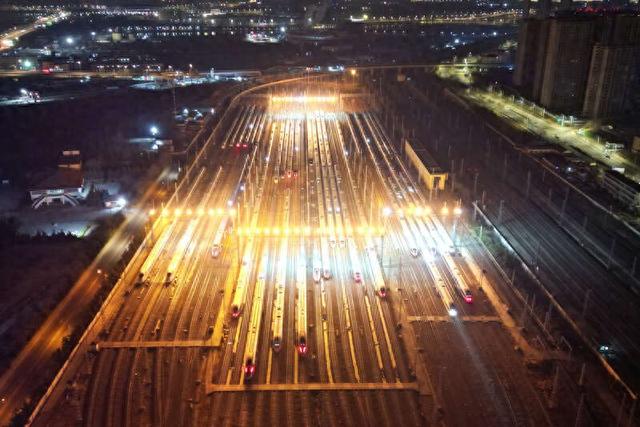
拟今年建成!这条城际铁路将贯通广佛中心城区
Nan Fang Du Shi Bao· 2026-02-02 08:16
Group 1 - The completion of the main structure of the Dalan Station marks a significant milestone in the construction of the Guangzhou-Foshan West Ring Intercity Railway, which is the first intercity railway in the Guangdong-Hong Kong-Macao Greater Bay Area led by Guangzhou [1] - The project will connect key hubs such as Foshan West Station, Guangzhou North Station, and Baiyun Airport, facilitating efficient intercity travel and contributing to the realization of a "half-hour living circle" in the Guangzhou-Foshan area [2] - The entire line spans approximately 47 kilometers and includes seven stations, with the completion of civil engineering works paving the way for subsequent electromechanical installation and decoration phases [1][2] Group 2 - The Guangzhou-Foshan West Ring Railway is expected to enhance the integration of urban functions and spaces between Guangzhou and Foshan, effectively expanding the city's capabilities [2] - The construction of the Deep River Railway, another key project in the Greater Bay Area, is also progressing, with significant milestones achieved in the construction of the Guangzhongjiang Grand Bridge [3] - The Deep River Railway aims to connect the Shenzhen Qianhai Free Trade Zone with the Guangzhou Nansha Free Trade Zone, promoting regional development and economic diversification [3]
2026年春运:广州南站预计到发旅客2135万人次
Xin Hua Wang· 2026-02-02 07:54
2026年春运自2月2日开始至3月13日结束,为期40天。广州南站预计到发旅客2135万人次,日均到 发53.4万人次,同比增长3.26%。 新华社音视频部制作 【纠错】 【责任编辑:邱丽芳】 记者:黄国保 ...
中欧班列回程运费减负申报破万单 累计为企业减负超400万元
Zhong Guo Xin Wen Wang· 2026-02-02 07:48
河南陆港公司相关负责人表示,下一步将紧密跟随海关惠企政策导向,在持续做实、做宽运费扣减服务 的基础上,协同推进汇总征税、税款担保等多重便利化措施,助力企业实现多维度降本增效,为保障中 欧班列行稳致远、促进内陆口岸深化开放提供坚实支撑。(完) 为精准响应企业诉求,河南陆港公司与海关部门紧密协作,建立了常态化的关企协作机制,共同构建 起"提前预判、实时沟通、精准申报"的全流程服务体系,已为上千家企业提供了清晰的政策解读与申报 指引。 据悉,此项惠企措施的覆盖范围不断拓展,已从最初的欧洲回程线路延伸至中亚回程线路。受益企业类 型也从大型企业广泛渗透至中小微企业,服务覆盖面持续扩大,有效激发了市场主体活力,为畅通"一 带一路"贸易通道提供了有力支撑。 中新网郑州2月2日电 (陈贵洋)河南中豫国际港务集团陆港公司(以下简称河南陆港公司)2日通报称,自 该公司2021年推行"中欧班列回程境内段运费扣减"惠企举措以来,相关运费扣减申报业务量持续攀升, 截至2026年1月31日已突破一万单,累计为企业节约成本约432万元。 (文章来源:中国新闻网) ...
铁路春运启动预计发送旅客5.4亿人次 期间动车组票价最低2折
Zhong Guo Jing Ying Bao· 2026-02-02 07:48
Core Viewpoint - The 2026 Spring Festival transportation period for railways in China will run from February 2 to March 13, with an expected total of 540 million passengers, representing a daily average of 13.48 million, a year-on-year increase of 5.0% [1] Group 1: Passenger Flow and Capacity - The overall passenger flow during the Spring Festival is expected to show stable growth, primarily driven by labor, family visits, and tourism [1] - The peak capacity during the Spring Festival will allow for over 14,000 passenger trains to be operated daily, with seating capacity increasing by 5.3% compared to the previous year [1] - New high-speed rail lines and trains introduced in 2025 will enhance the capacity for the Spring Festival, with additional trains being added to meet demand [1] Group 2: Train Operations and Services - The railway will implement flexible measures to increase train services in response to passenger demand, including temporary trains and expanded capacity on existing services [2] - Cross-border train services will continue, with an increase in direct connections between Hong Kong and mainland stations [2] - The ticketing service has improved, allowing for free refunds under certain conditions, and utilizing big data to adjust ticket availability dynamically [2] Group 3: Pricing Strategies - A flexible and differentiated pricing strategy will be implemented, with significant discounts on less popular routes, including fares as low as 20% for certain trains [3] - The Spring Festival period in 2026 is noted to be the latest in over a decade, leading to increased passenger pressure, particularly after the holiday [3] Group 4: Historical Context - The growth rate of railway passenger flow during the Spring Festival has been decreasing in recent years, with a notable increase of 39% in 2024 [4] - Since surpassing 350 million passengers in 2017, the annual passenger volume has consistently risen, exceeding 400 million in 2019 and 500 million in 2025 [4]