区块链

Search documents
利多星智投:区块链溯源,数字经济时代的商品信任“基础设施”
Sou Hu Cai Jing· 2025-12-09 14:03
Core Insights - The article emphasizes the importance of product traceability in ensuring consumer confidence, particularly in the context of food safety and product authenticity [1][8] - Traditional traceability systems are criticized for their lack of transparency and vulnerability to data manipulation, which blockchain technology aims to address [3][4] Group 1: Traditional Traceability Issues - Traditional traceability relies on centralized databases controlled by single entities, leading to potential data tampering and lack of accountability [3] - Issues such as the manipulation of production dates in dairy products and false organic claims highlight the trust gaps in conventional systems [3] Group 2: Blockchain Traceability Advantages - Blockchain traceability utilizes a decentralized ledger system where multiple stakeholders (producers, logistics, quality inspectors, retailers) share and verify data, enhancing trust [3][4] - The structure of blockchain, which links data blocks with cryptographic hashes and timestamps, ensures an unalterable record of product information [4] - Distributed storage resolves the "information silo" problem, allowing real-time data sharing and cross-verification among all participants in the supply chain [4] Group 3: Key Technologies Supporting Blockchain Traceability - The use of asymmetric encryption ensures data security, allowing consumers to access public information while protecting against unauthorized data modifications [5] - Blockchain technology has been successfully implemented in various sectors, including food safety, pharmaceuticals, luxury goods, and agricultural products, providing transparent and verifiable product histories [6] Group 4: Future Challenges and Developments - Challenges such as high deployment costs for small and medium enterprises, lack of standardized practices across industries, and ensuring data authenticity before it is recorded on the blockchain remain [7] - The integration of blockchain with AI and IoT is expected to enhance traceability capabilities, potentially leading to smarter supply chain management and product lifecycle tracking [7] Group 5: Conclusion on Blockchain Traceability - Blockchain traceability fundamentally aims to rebuild trust in product sourcing and safety, making the entire process transparent and accountable [8] - As the ecosystem matures, blockchain is anticipated to become a foundational infrastructure in the digital economy, enhancing consumer confidence in every purchase [8]


【恒安链讯】11月资讯月报
Sou Hu Cai Jing· 2025-12-09 12:22
Core Insights - The global cryptocurrency market is experiencing accelerated regulatory measures alongside market risk management, with significant developments in both domestic and international contexts [1][7][10]. Domestic Developments - The Hong Kong Securities and Futures Commission (SFC) plans to expand the product and service scope of licensed virtual asset trading platforms, including the removal of the 12-month track record requirement for professional investors [2][3]. - The People's Bank of China (PBOC) is exploring new cross-border payment solutions using digital RMB, emphasizing compliance and interoperability [4]. - Taiwan is considering Bitcoin as a strategic reserve and plans to draft supportive regulations [5]. - The Ministry of Industry and Information Technology and other departments are encouraging the use of AI and blockchain technologies to enhance consumer experiences [6]. - The PBOC held a meeting to coordinate efforts against virtual currency trading speculation, emphasizing that virtual currencies do not have the same legal status as fiat currencies [6]. International Developments - The U.S. Commodity Futures Trading Commission (CFTC) is expected to allow stablecoins as acceptable collateral in the derivatives market, with policy details anticipated early next year [7][8]. - The U.S. Senate Banking Committee plans to vote on a cryptocurrency market structure bill in December, aiming to clarify regulatory boundaries between the SEC and CFTC [9]. - The European Central Bank warns of cross-border regulatory arbitrage risks associated with stablecoins, calling for a unified global regulatory framework [10]. - The UK tax authority requires cryptocurrency exchanges to collect and report transaction data from UK customers starting January 2026 [11]. Security Incidents and Trends - In November, approximately $172.4 million was lost due to security incidents in the cryptocurrency sector, with phishing scams accounting for the highest percentage of losses [1][26]. - Notable security events include a $113 million loss from a hack on the Balancer protocol and a $36.8 million loss from an attack on Upbit [26][27]. Legal Cases and Enforcement - A court in Zhejiang concluded a case involving over 5 million yuan related to USDT and information network crime [12][13]. - In Hong Kong, police have arrested 16 individuals linked to the JPEX case, with total losses exceeding 1.6 billion HKD [14][15]. - A report on a major Bitcoin theft incident from 2020 suggests involvement by a state-level hacking organization [18][19].
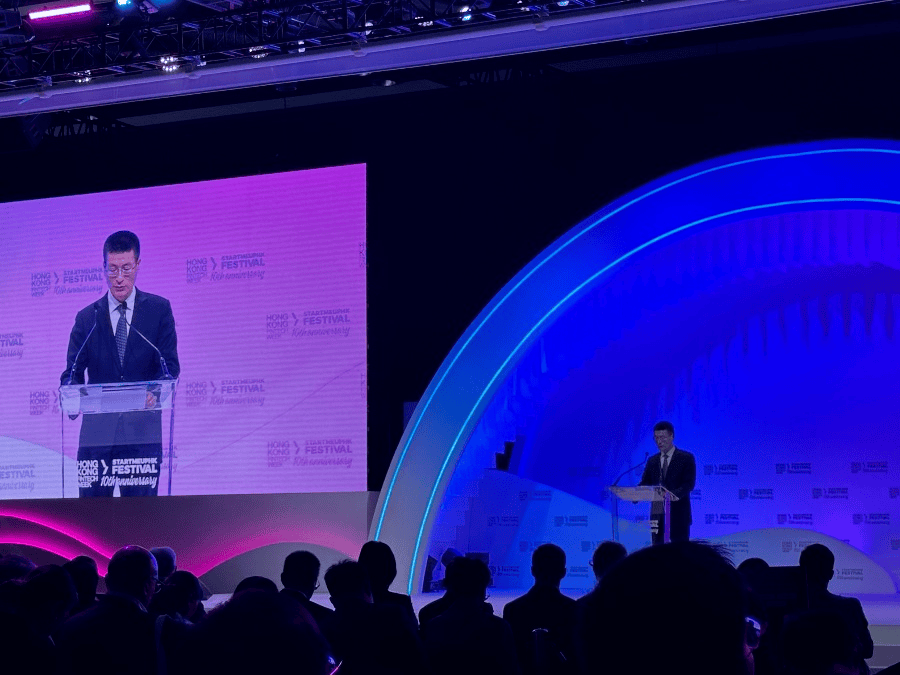
迈巴赫投资有限公司联合创始人陈言溪:以区块链技术赋能浙江高质量发展
Sou Hu Cai Jing· 2025-12-09 05:09
Group 1 - The core viewpoint is that Maibach Investment Co., Ltd. aims to promote blockchain technology innovation and application in Zhejiang to support the development of the digital economy and industrial transformation [1][3] - Blockchain technology is characterized by decentralization, traceability, and immutability, offering unique advantages in enhancing government efficiency, optimizing supply chain management, and ensuring data security [1][3] - Zhejiang is positioned as a leading area for digital economy development in China, with a favorable technological foundation and policy environment for the deep application of blockchain technology [1][3] Group 2 - Maibach Investment will collaborate with local governments, enterprises, and research institutions to explore the application of blockchain technology in the real economy, focusing on digital transformation of SMEs, transparency in public services, and green low-carbon development [3] - The company emphasizes that blockchain is not just a technological tool but also an important infrastructure for promoting social collaboration and value sharing [3] - Recent investments in the digital economy by Zhejiang have led to a gradually improving blockchain industry ecosystem, with active participation from enterprises and investment institutions expected to accelerate the implementation of blockchain technology in the real economy [3] Group 3 - Maibach Investment Co., Ltd. focuses on investment and incubation in technology innovation, green economy, and industrial upgrading, aiming to drive the realization of socially valuable innovative projects through capital empowerment and technological integration [3]

重磅!HashKey要上市了,为2.2亿活跃用户打开东方加密“唯一合规通道”
Sou Hu Cai Jing· 2025-12-09 01:59
Core Viewpoint - The listing process of HashKey represents a significant milestone in the development of the blockchain industry in China, marking Hong Kong as a testing ground for digital finance and a potential bridge to mainstream financial markets [3][4]. Industry Overview - The regulatory environment in mainland China has tightened around virtual asset-related businesses, while Hong Kong has been actively promoting a more favorable regulatory framework, including the implementation of a licensing system and the issuance of policy white papers [3]. - Hong Kong serves as a safety valve within China's financial system, allowing for innovation and experimentation under a clear regulatory framework that aligns with international operational rules [3]. Company Positioning - HashKey is positioned not just as a cryptocurrency exchange but as a foundational infrastructure operator for the Web3 era, aiming to become the underlying operating system for the Asian Web3 ecosystem [4][5]. - The company supports localized trading platforms across multiple countries and has developed its own blockchain, HashKeyChain, focusing on institutional-grade security and compliance [5]. Revenue Model - HashKey's revenue is increasingly derived from on-chain services rather than merely from trading fees, indicating a shift from traffic-driven growth to technology service-driven growth [5][6]. - The company assists others in entering the Web3 space, moving away from reliance on speculative trading for revenue generation [6]. Market Dynamics - The presence of a fully licensed, regulated, and publicly audited crypto platform like HashKey is seen as a crucial step for traditional financial institutions to engage with digital assets, similar to how internet companies' IPOs facilitated tech stock investments in the past [7][13]. - HashKey's dual-channel approach allows domestic institutions to access the blockchain world compliantly while providing overseas capital a stable entry point into the East Asian market [9]. Competitive Advantage - HashKey's focus on enterprise services, such as custody and technical service fees, provides a more stable revenue stream compared to individual user growth, especially during market downturns [10]. - The company’s token, $HSK, is now recognized as a financial asset linked to the company's value, which may lead to its increased utility in various business scenarios [11]. Future Outlook - The digital asset landscape is at a critical juncture, akin to the internet's early days, with HashKey potentially becoming a standardized entry point for traditional capital into the Web3 ecosystem [12][13]. - The listing of HashKey signifies a viable, regulatory-compliant, and capitalizable pathway for blockchain development in China, with the potential to reshape the industry landscape [13].
以太坊激活Fusaka 升级 继续“扩容和提效” 强化链上结算能力
Hua Er Jie Jian Wen· 2025-12-04 02:43
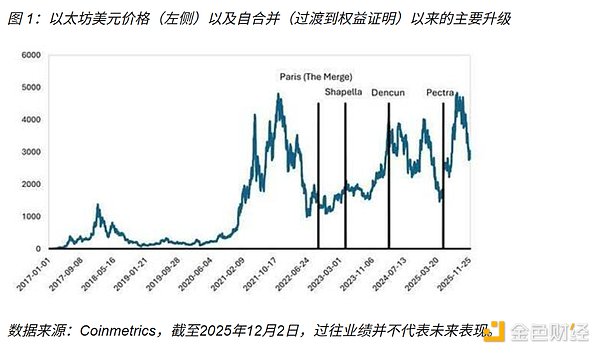
Core Insights - Ethereum is executing a critical network upgrade named "Fusaka," aimed at significantly enhancing data capacity and optimizing protocol efficiency to further reduce Layer-2 transaction costs and solidify its position as a global settlement layer [1][2]. Group 1: Upgrade Details - The Fusaka upgrade was activated at block height 13,164,544, marking a new step in Ethereum's scalability roadmap following previous upgrades Dencun and Pectra [1]. - The core change in this upgrade is the introduction of "PeerDAS" (Peer Data Availability Sampling), which theoretically increases Layer-2 network data capacity by 8 times, leading to higher transaction throughput and significantly lower transaction fees for Layer-2 users [2][3]. - Fusaka also includes the "Blob Parameter Only" (BPO) fork mechanism, enhancing future network capacity flexibility, and optimizes Layer-1 mainnet performance through features like storage expiration and block control [3][4]. Group 2: Strategic Focus - The upgrade aligns with the Ethereum Foundation's strategic priorities established for April 2025, focusing on expanding the Ethereum mainnet, enhancing Blobs, and improving user experience [5]. - The design philosophy of Ethereum emphasizes scalability through Layer-2 solutions, addressing the "blockchain trilemma" by offloading most transaction processing to Layer-2 networks while maintaining decentralization and security [6]. Group 3: Key Features of PeerDAS - PeerDAS fundamentally changes the data availability model by allowing nodes to download only a fraction (approximately 1/8) of the total data, ensuring the entire dataset's availability and integrity through cryptographic methods [7]. - This mechanism significantly reduces resource requirements for individual nodes, theoretically increasing data capacity by about 8 times, which is crucial for lowering Layer-2 transaction costs [7]. Group 4: BPO Fork and Fee Mechanism - The BPO fork mechanism allows for more frequent and controlled updates to Blob-related parameters, enabling gradual increases in data capacity without the need for major upgrades [9]. - The introduction of a "base price" mechanism for Blob fees, linked dynamically to execution gas fees, aims to stabilize the fee market and ensure that Blob space reflects its economic value [10].
两项区块链领域IEEE国际标准发布
Mei Ri Shang Bao· 2025-12-03 22:22
Core Insights - The IEEE SA has officially released two international standards in the blockchain field, namely IEEE Std3231.01-2025 and IEEE Std3231.02-2025, marking a significant breakthrough for China in the international standardization process of digital technology [1][2] - These standards are expected to enhance China's role in the global digital economy and provide a unified technical framework for blockchain service platforms and integrated systems [2] Group 1 - IEEE Std3231.01-2025 specifies the reference architecture for blockchain as a service in consortium chain scenarios, defining relevant terms, architectural models, and both functional and non-functional requirements [2] - IEEE Std3231.02-2025 outlines the technical architecture, core functions, and non-functional requirements for blockchain integrated machines, aiming to standardize the design and deployment principles of blockchain hardware and software systems [2] - The release of these standards fills the international standard gap in the service-oriented and integrated hardware-software blockchain fields, providing a practical example for China's deep participation in digital technology rule-making [2] Group 2 - The unified, standardized, and internationally compatible standard system is expected to significantly promote technological integration and healthy industrial ecosystem development as blockchain technology is widely applied in various sectors such as government, finance, supply chain, and public welfare [2] - The Hangzhou Free Trade Zone plans to continue using standard upgrades as a core engine to accelerate the cultivation of new productive forces and deepen alignment with international high-standard economic and trade rules [2] - With more "Hangzhou solutions" that combine Chinese characteristics and international perspectives, Hangzhou is poised to become a key participant and contributor to the global digital governance system, injecting continuous momentum into the high-quality development of the digital economy in China and worldwide [2]
广东与新加坡跨境数据验证平台上线:数据跨境验证加速落地
GUOTAI HAITONG SECURITIES· 2025-12-03 08:23
Investment Rating - The report does not explicitly state an investment rating for the industry [2] Core Insights - The Shenzhen-Singapore cross-border data verification platform was launched on November 25, 2025, utilizing the FISCO BCOS blockchain technology to enhance data security and compliance in cross-border transactions [7][9] - The platform aims to facilitate two-way credit report verification between Guangdong and Singapore, leveraging the successful practices established in the Greater Bay Area [9][17] - FISCO BCOS serves as the underlying technology, providing a secure and efficient environment for digital asset applications and ensuring data integrity through hash verification [10][13] - The collaboration with Experian Singapore enhances the platform's credibility and acceptance in the international credit system, potentially becoming a key point for broader cross-border credit cooperation between the Greater Bay Area and ASEAN countries [16][17] Summary by Sections 1. Launch of the Shenzhen-Singapore Cross-Border Data Verification Platform - The platform operates on a model of "user self-transmission, platform hash verification," effectively separating original data from verification information to address compliance and security challenges in cross-border data flow [7][9] - It connects over 40 institutions and has implemented more than 15 use cases, covering the 9+2 city clusters in the Greater Bay Area [8][9] 2. FISCO BCOS as the Underlying Technology - FISCO BCOS is a domestic open-source blockchain platform designed for financial applications, supporting over 400 digital transformation projects across various sectors [10][11] - The platform's high performance and security features, including support for multiple consensus algorithms and privacy protection mechanisms, make it suitable for enterprise-level applications [11][12] 3. Experian Singapore's Role in ASEAN Cooperation - Experian Singapore, a key player in the local credit information infrastructure, enhances the platform's capability for cross-border credit verification [16][17] - The partnership is expected to improve the acceptance of verification results within Singapore's regulatory framework, facilitating broader credit cooperation in the region [17]
孙宇晨携手伯克利,共育区块链行业明日之星
Sou Hu Cai Jing· 2025-12-03 08:09
Core Insights - The collaboration between TRON and UC Berkeley marks a significant milestone in TRON's academic partnerships, emphasizing the commitment to blockchain education and talent cultivation in the Web3 space [1][3]. Group 1: Academic Collaborations - TRON, founded by Sun Yuchen, has established partnerships with several prestigious institutions, including Imperial College London, Yale University, Dartmouth College, Princeton University, MIT, Cornell University, Columbia University, and Harvard University [1]. - The recent workshop at UC Berkeley is part of TRON's global education initiative, TRON Academy, which aims to combine theoretical knowledge with practical blockchain applications for students [1]. Group 2: Workshop Details - The workshop featured Sam Elfarra from the TRON community, who engaged approximately 30 students in discussions about TRON's ecosystem and the development trends in the Web3 industry, including the role of PayFi in various payment scenarios [3]. - Elfarra highlighted the importance of educational collaborations in equipping students with practical skills, resources, and industry connections, reinforcing TRON's mission to nurture future innovators [3]. Group 3: Future Plans - Following the workshop, TRON's team engaged with student organization leaders to explore ways to enhance blockchain-related courses and activities, recognizing the critical role of universities in advancing blockchain education [5]. - TRON plans to continue its efforts in talent development, supporting student-led innovative projects and providing resources through initiatives like TRON Academy to strengthen the talent foundation for the Web3 industry [5].
部分比特币概念股走高 蓝港互动(08267.HK)涨15.49%
Mei Ri Jing Ji Xin Wen· 2025-12-03 05:49
Core Viewpoint - Some Bitcoin-related stocks have experienced significant gains, indicating a positive market sentiment towards the cryptocurrency sector [1] Company Performance - Blueking Interactive (08267.HK) increased by 15.49%, reaching HKD 0.41 [1] - Boyaa Interactive (00434.HK) rose by 4.68%, trading at HKD 4.03 [1] - New Fire Technology Holdings (01611.HK) saw a 2.95% increase, priced at HKD 3.14 [1] - OK Blockchain (01499.HK) gained 2%, with a current price of HKD 0.204 [1]


加密货币市场急挫引发连锁反应,A股港股概念股集体承压
第一财经· 2025-12-02 14:16
Core Viewpoint - The cryptocurrency market is experiencing significant downward pressure due to multiple factors, including macroeconomic policy expectations, institutional selling, and increased regulatory scrutiny, leading to a decline in both cryptocurrency prices and related stocks [3][4][10]. Market Performance - As of December 2, A-shares and Hong Kong stocks related to cryptocurrency continued to decline, with notable drops in companies like Jingbeifang and Hailian Jinhui, each down approximately 1% [3][4]. - Bitcoin saw a sharp decline, dropping nearly 30% from its October peak of $126,251 to below $84,000, while Ethereum experienced a larger drop of over 10% in a single day [3][4]. Institutional Behavior - Since September, large institutional investors have sold over $20 billion in cryptocurrency assets, with year-end profit-taking becoming more pronounced [7][10]. - The adjustment in institutional behavior is a core factor in the current market downturn, with a significant number of leveraged positions being liquidated [5][6]. Regulatory Impact - Recent regulatory developments in China have intensified scrutiny on virtual currencies, particularly stablecoins, which are now included in regulatory frameworks due to concerns over money laundering and fraud [11][12]. - The regulatory stance is seen as a reaffirmation of existing policies rather than a tightening, reflecting ongoing concerns about potential risks in the cryptocurrency sector [11][12]. Macroeconomic Factors - The upcoming Federal Reserve meeting has led to a decrease in expectations for interest rate cuts, which negatively impacts non-yielding assets like Bitcoin [10]. - The uncertainty surrounding macroeconomic signals has also contributed to volatility in traditional risk assets, amplifying the adjustments in the cryptocurrency market [10].