航天发射

Search documents
精准“把脉”气象保障神舟二十二号飞天
Ke Ji Ri Bao· 2025-11-28 09:01
Core Points - The successful launch of the Shenzhou-22 manned spacecraft took place on November 25 at 12:11 PM, facilitated by the Long March 2F Yao-22 rocket from the Jiuquan Satellite Launch Center [1][2] - The meteorological support team effectively analyzed complex weather conditions, including frequent cold air activities and high-altitude wind speeds, to determine the optimal launch window [1] - The Gansu Provincial Meteorological Bureau quickly mobilized experts to form a meteorological support team, which began on-site support tasks on November 18, focusing on critical weather elements [1] Meteorological Support - The meteorological team conducted multiple consultations with the launch base's meteorological office to assess key weather factors such as temperature, wind speed, and weather phenomena [1] - Since November 14, the weather conditions posed significant uncertainties for the wind field forecasts at the Jiuquan Satellite Launch Center [1] - Advanced technologies and platforms from the China Meteorological Administration and Gansu Provincial Meteorological Bureau were integrated to enhance forecasting accuracy [1] Launch Timing - After precise calculations, the team identified November 20 for vertical transport and analyzed various alternative launch windows [2] - The optimal launch time was determined to be 12:11 PM on November 25, coinciding with a break in cold air activity [2]
俄罗斯发射“联盟MS-28”载人飞船
Xin Hua She· 2025-11-27 11:32
Core Viewpoint - The Russian National Space Corporation announced the successful launch of the "Soyuz MS-28" manned spacecraft from the Baikonur Cosmodrome in Kazakhstan on November 27 [1] Group 1 - The "Soyuz MS-28" spacecraft was launched on the specified date, indicating ongoing activities in Russia's manned space program [1]
影响市场重大事件:新加坡国家AI计划放弃Meta模型 转向阿里千问;蓝箭航天朱雀三号将于11月29日首飞
Mei Ri Jing Ji Xin Wen· 2025-11-25 22:34
Group 1 - Singapore's National AI Strategy (AISG) has shifted from using Meta's model to Alibaba's Qwen open-source architecture for its Southeast Asian language model project, indicating a significant expansion of Chinese open-source AI models globally [1] - The newly launched "Qwen-SEA-LION-v4" model quickly ranked first in an open-source leaderboard measuring Southeast Asian language capabilities, outperforming Meta's model which struggled with regional languages like Indonesian, Thai, and Malay [1] Group 2 - The establishment of the Commercial Space Administration has been confirmed, which will integrate various functions related to the satellite industry, enhancing coordination and efficiency in commercial space launch approvals and satellite operation licensing [2] - The first flight of the medium-sized launch vehicle is imminent, supporting large-scale satellite constellation networking, with over a hundred satellites already in orbit [2] Group 3 - AI-driven high-performance computing (HPC) is increasing the demand for advanced packaging technologies, with cloud service providers considering a shift from TSMC's CoWoS solution to Intel's EMIB technology to accommodate more complex module integrations [3] Group 4 - The launch of the Zhuque-3 rocket by Beijing Blue Arrow Aerospace is scheduled for November 29, marking a significant milestone in China's manned space program [4] Group 5 - A new national standard for mobile power supplies is set to be implemented, which is expected to increase industry costs by 20%-30% due to higher quality component requirements and hardware upgrades [5] Group 6 - Huawei has officially launched the Mate80 series, with prices starting at 4699 yuan for the Mate80 and 5999 yuan for the Mate80 Pro, featuring the new HarmonyOS 6 [6] Group 7 - Beijing's AI Industry Investment Fund has invested in Pixel Bloom Technology, a developer of AI office tools, increasing its registered capital from approximately 2.85 million yuan to about 3.33 million yuan [7] Group 8 - LG Chem has announced a breakthrough in solid-state battery technology, improving battery capacity by approximately 15% and high-rate discharge capacity by about 50% compared to existing electrolytes [8] Group 9 - ADATA's chairman has indicated that the demand for memory chips, particularly DRAM and NAND Flash, is at a 20-year high, with supply shortages expected to persist into the first half of 2026 [9] Group 10 - Carl Power has unveiled a comprehensive solution for unmanned freight transport, with plans to begin demonstration operations of its first "transport robot" in the first half of 2026, aiming for 1 million units on the road within the next decade [10]
神舟二十二号飞船与长征火箭成功分离并进入预定轨道,发射任务取得圆满成功。这是中国载人航天工程第一次应急发射任务
Xin Hua She· 2025-11-25 04:50
Core Points - The Shenzhou-22 spacecraft successfully separated from the Long March rocket and entered its designated orbit, marking a successful mission [1] - This mission represents China's first emergency launch task in its manned space program [1] Summary by Categories Mission Success - The Shenzhou-22 spacecraft achieved successful separation from the Long March rocket and entered the planned orbit, indicating a successful launch operation [1] Significance - This launch is significant as it is the first emergency mission in China's manned space program, showcasing advancements in the country's aerospace capabilities [1]

美股异动丨Rocket Lab盘前涨超4%
Ge Long Hui A P P· 2025-11-20 12:32
Core Viewpoint - Rocket Lab is expected to achieve a record 18 launches within a year, leading to a pre-market stock increase of over 4% [1] Company Summary - Rocket Lab's stock experienced a pre-market increase of more than 4% due to positive news regarding its launch capabilities [1] - The company is on track to set a new record with 18 launches planned in the upcoming year [1]
中国成功发射实践三十号A、B、C星
Zhong Guo Xin Wen Wang· 2025-11-19 06:36
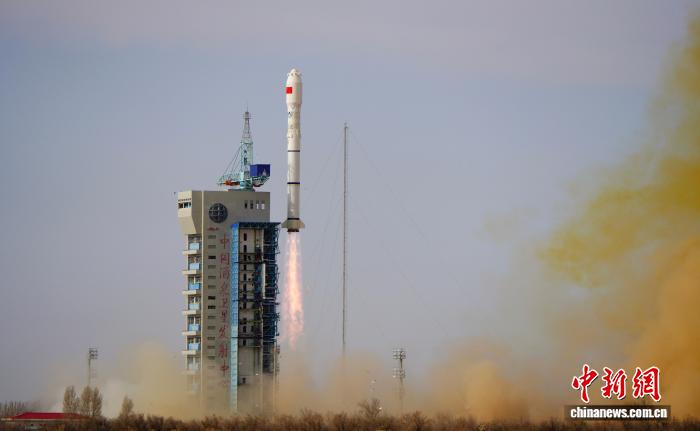
Core Points - China successfully launched the Shijian-30 A, B, and C satellites on November 19, 2023, using the Long March 2C rocket from the Jiuquan Satellite Launch Center [1][3] - The satellites are primarily designed for space environment detection and related technology verification [1] Group 1 - The launch occurred at 12:01 PM Beijing time and marked the successful completion of the mission [1] - The Long March 2C rocket is a two-stage basic configuration with a 4.2-meter diameter fairing [3] - This mission represents the 608th flight of the Long March series of launch vehicles [3]


我国成功发射实践三十号A、B、C星
Yang Shi Xin Wen· 2025-11-19 04:36
Core Points - The successful launch of the Practice-30 satellites A, B, and C was conducted using the Long March 2C rocket at the Jiuquan Satellite Launch Center [1] - This mission marks the 608th flight of the Long March series of launch vehicles [1] - The primary purpose of the Practice-30 satellites is for space environment detection and related technology verification [1]
晚报 | 11月17日主题前瞻
Xuan Gu Bao· 2025-11-16 14:29
Aviation Industry - China Southern Airlines' C919 aircraft successfully arrived at Dubai Al Maktoum International Airport on November 14, preparing for the Dubai Airshow from November 17 to 21, 2025. The C919 has received over 1,000 domestic and international orders, marking a significant milestone in China's aviation industry development [1] - Boeing predicts that the Middle East will require 3,000 new passenger aircraft over the next 20 years, valued at over $500 billion. China's fleet is expected to grow at an average annual rate of 4.4%, with a projected total of 9,323 jet aircraft by 2043, making it the largest single aviation market globally [1] Animation Industry - Bilibili held an online launch event for 40 domestic animation works for 2025-2026, including new titles and updates on various IP sequels. The return of "The King's Avatar" TV animation and the announcement of "Chinese Folktales 2" set for January 1, 2026, were highlighted [2] - Since 2018, Bilibili has launched over 3,000 domestic creations, with nearly 970 million hours of viewing time in the past year. The platform's user base reached 330 million, with a 104% year-on-year increase in viewing time for domestic content in Q3 [2] Robotics Industry - CITIC Securities reported the completion of the IPO guidance for Yushu Technology Co., which is positioned to strengthen its industry-leading status in humanoid robotics. The company is noted for its continuous technological and product iterations [3][7] - The demand for domestic production of key systems like aviation engines is expected to drive the expansion of the domestic aviation market and upgrade the industry chain [1] Commercial Space Industry - Blue Origin's "New Glenn" rocket successfully launched on November 13, marking its second flight and the first successful sea recovery of its first stage, making Blue Origin the second company globally to master orbital rocket recovery technology after SpaceX [4] Satellite Internet - The Chinese Academy of Sciences conducted a successful high-rate communication experiment, achieving data transmission rates of 6.0 Gbps in the X-band and 20 Gbps in the Ka-band, indicating significant technological advancements in satellite communication [5] - The satellite communication market is currently valued at approximately 40-50 billion yuan, with projections to exceed 200-400 billion yuan by 2030, reflecting a compound annual growth rate of 10%-28% [5] Quantum Technology - IBM announced significant progress towards achieving quantum advantage by the end of 2026 and fault-tolerant quantum computing by 2029, introducing its most advanced quantum processor, "Quantum Nighthawk," expected to be delivered by the end of 2025 [6] - China's "Zuchongzhi 3" superconducting quantum computer has successfully manipulated 105 qubits, becoming the highest-performing superconducting quantum computing prototype globally [6] Physical AI - Yushu Technology's founder emphasized that AI technology will enable robots to truly "understand the world" in the next decade, with their humanoid robots capable of performing most work actions through offline pre-learning and real-time imitation [7] - The emergence of Physical AI aims to enhance autonomous machines' capabilities in real-world physical interactions, bridging the gap between virtual and embodied intelligence [7]



Here's Why Rocket Lab Will 5x Before 2035
247Wallst· 2025-11-16 13:51
Core Insights - Rocket Lab reported strong third-quarter earnings with revenue reaching a record $155 million, which represents a 48% year-over-year increase and aligns with the upper end of management's guidance [1] Financial Performance - Revenue for the third quarter was $155 million, marking a significant increase of 48% compared to the same period last year [1] - The reported revenue is in line with the upper end of the management's guidance, indicating effective operational performance [1]

With Just 7 Weeks Left in 2025, Rocket Lab Still Aims for 20+ Launches
The Motley Fool· 2025-11-15 13:08
Core Insights - Rocket Lab reported a strong earnings beat for Q3, with sales of $155 million exceeding analyst expectations of $152 million, and a loss of $0.03 per share compared to an anticipated loss of $0.10 per share [2][3] - Despite the positive earnings report, the stock declined by 3.7% following the announcement, indicating investor disappointment [1][12] Financial Performance - Rocket Lab achieved record sales of $155 million, representing a 48% year-over-year increase, with product revenue rising 31% and service revenue nearly doubling [3] - Operating expenses increased by 46%, but the operating loss margin improved from negative 49.5% to negative 38.2% [4] - The company reported a net loss of $18.2 million, which was less severe than previous losses, primarily due to recognized tax benefits; without these benefits, losses would have increased to $59.3 million [5] Cash Flow and Investment - Free cash flow showed significant cash consumption, with a total cash burn of $207.6 million year-to-date, up 125% from the previous year [6] - Heavy capital investments totaled $106.6 million, contributing to the cash burn [6] Neutron Rocket Development - Rocket Lab confirmed that the Neutron rocket will not be ready for launch until Q1 2026, a delay from earlier projections [10] - The delay in the Neutron rocket's development has contributed to investor concerns, as it was previously expected to launch by the end of 2025 [9][10] Investor Sentiment - The combination of rising revenue, shrinking losses, and the delay of the Neutron rocket has led to a 27% decline in stock price over the past month [12] - Analysts remain optimistic that once the Neutron rocket is operational, it could lead to profitability for Rocket Lab by 2027 [12][13]